Artwork
The Lovers
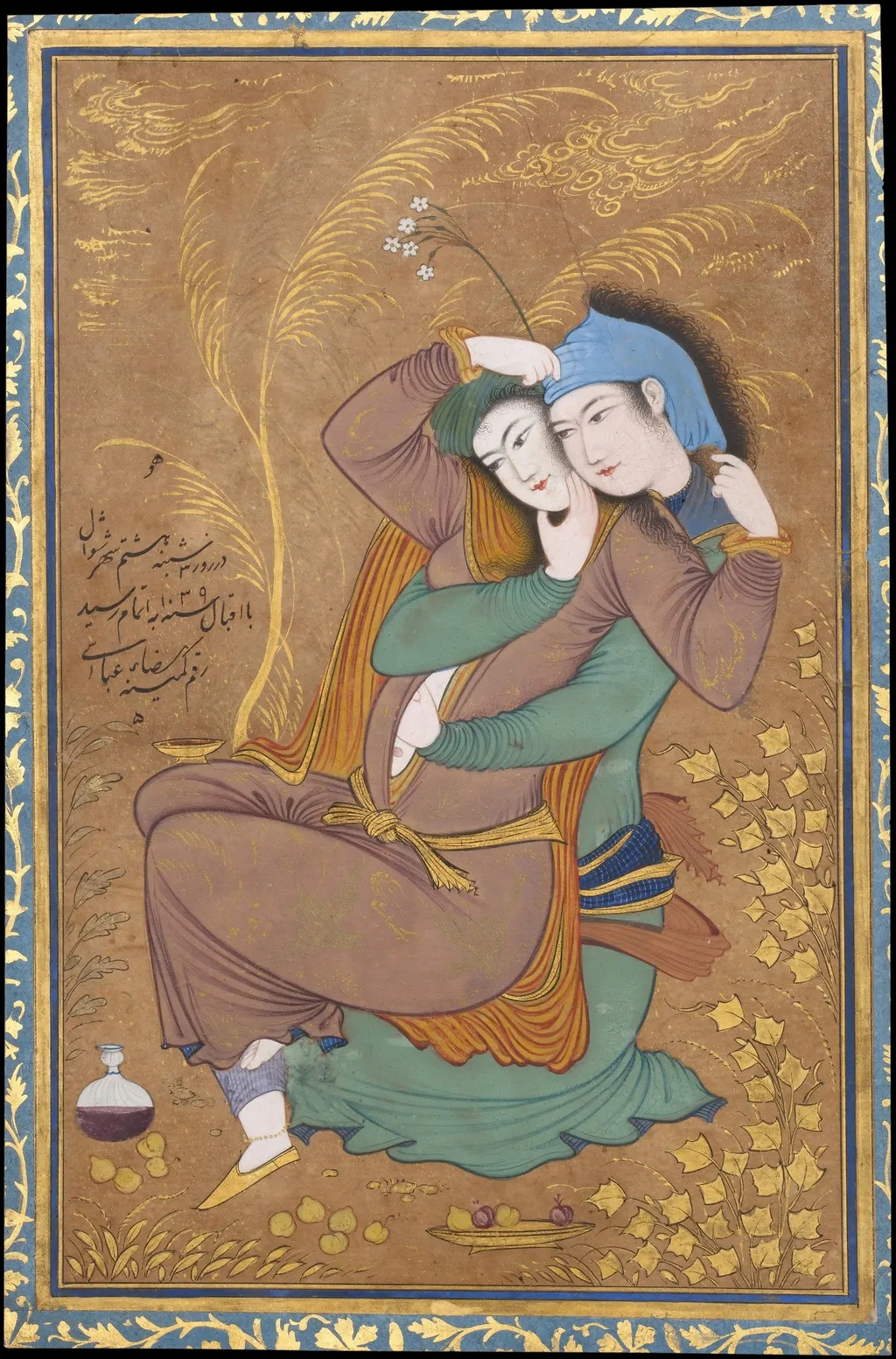
The Lovers is an unspecified painting by the Persian Miniature artist Reza `Abbasi. It dates from 1630 and is held in the collection of the Metropolitan Museum of Art.
About this work
Subject & Meaning
Sensual details reinforce this reading: the woman's partially exposed navel, uncovered feet, and the way the man's arm catches her breast.
The Lovers depicts an embracing couple seated in a garden, their bodies arranged to evoke passionate foreplay while their faces remain impassive, a stylistic convention of contemporary Safavid art. The man's rich attire signals wealth, while the woman's clothing suggests she may be a prostitute, a profession legal in Safavid Iran. Sensual details reinforce this reading: the woman's partially exposed navel, uncovered feet, and the way the man's arm catches her breast.
Surrounding clouds, flowers, and trees encircle the pair, and a carafe of wine alongside a half-empty plate of fruit at their feet implies that sexual congress has already taken place. The painting marks a transition in Abbasi's work: whereas his earlier nude female figures merely evoked erotic thought, the introduction of a male figure here represents active courtship. Scholars such as Delfin Öğütoğullari note that the lovers share strikingly similar almond-shaped eyes, heart-shaped mouths, arched brows, and curled locks, features tied to poetic ideals of beauty, and that this facial similarity, combined with body-concealing garments, renders the scene ambiguously homoerotic or heterosexual.
Technique & Style
The Lovers is executed in ink, watercolor and gold leaf on paper, a format typical of Safavid album miniatures. The work is painted on a small sheet of paper, the support on which the delicate washes and gilded highlights are applied. The composition places the embracing couple against a brown ground enlivened with gold‑toned accents; their impassive faces, almond eyes, heart‑shaped mouths and arched brows follow a stylized Persian visual vocabulary.
The richly patterned garments, partially exposed navel, bare feet and the inclusion of a wine carafe and half‑empty fruit plate convey a sensual narrative while reinforcing the figures’ social status. The painting’s condition is stable within the Metropolitan Museum of Art’s collection.
History & Provenance
The Lovers was created in 1630 in Isfahan by the Safavid painter Reza Abbasi, employing ink, watercolor and gold on paper as part of the courtly miniature tradition. The work remained in the possession of collector Friedrich Sarre and his wife Maria Sarre before entering the Metropolitan Museum of Art. In 1950 the painting was donated to the museum by philanthropist Francis M. Weld, a gift that was facilitated by Abbasi’s earlier favor at the court of Shah Abbas I. Its early provenance thus traces from Safavid Iran to European collectors and finally to the Met, where it remains on permanent display.
The Lovers (1630) by Reza Abbasi is held in the collection of the Metropolitan Museum of Art, New York, as a gift from Francis M. Weld in 1950. The work entered the museum’s holdings as part of its Department of Islamic Art, later redesignated as the Department of Arts of the Arab Lands, Turkey, Iran, Central Asia, and South Asia. Within the museum’s records, the painting is accessioned under the Islamic Art collection with inventory details aligned to its 1950 acquisition.
Context
Executed in 1630, The Lovers exemplifies Reza Abbasi's role as a bold innovator who broke from the traditional Safavid preference for crowded illustrations in favor of intimate album miniatures. Although his controversial style and depiction of sensual subjects posed career risks, Abbasi secured patronage from Shah Abbas I, allowing him to continue his work. Scholars note that while the painting's impassive faces align with contemporary Persian ideals of poetic beauty, the composition marks a significant shift from merely evoking erotic thoughts to actively representing courtly coupling.
Art historian Delfin Öğütoğullari highlights the work's gender ambiguity, suggesting the figures' similar features could imply either heterosexual or homoerotic intimacy. The painting's enduring influence is evident in modern adaptations by Iranian artist Farah Ossouli, who recontextualized Abbasi's lovers within themes of war and violence between 2010 and 2014.
Legacy
After its creation in 1630, Reza Abbasi’s Lovers entered the Metropolitan Museum of Art in 1950 as a gift from Francis M. Weld and has since been highlighted as one of the most celebrated works in the museum’s Islamic art collection. Contemporary Iranian artist Farah Ossouli has engaged with the painting’s legacy, re‑interpreting the embracing couple in two works made between 2010 and 2014, Seven Thousand Years Old and Reza, Ahmad and I, where she situates the figures amid scenes of violence and war, invoking poets such as Ahmad Shamlu/Shamlú to comment on modern conflict.
Overview
Reza Abbasi's early 17th-century Iranian painting, "The Lovers," depicts an intimate embrace between two figures. Executed with ink, watercolor, and gilding on paper, this work is held in the collection of the Metropolitan Museum of Art. Its alternative titles, "Two Lovers" or "Courtly Lovers," reflect its central theme of romantic connection, a common motif in Persian art.
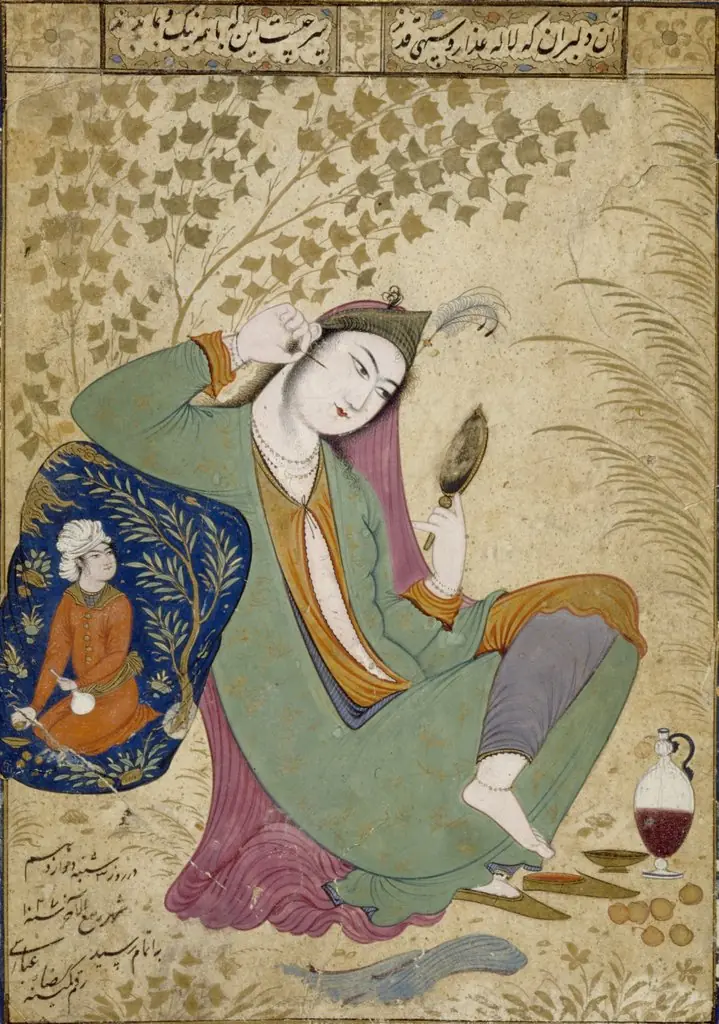
Own this work as a print
Artist & collection
Artist
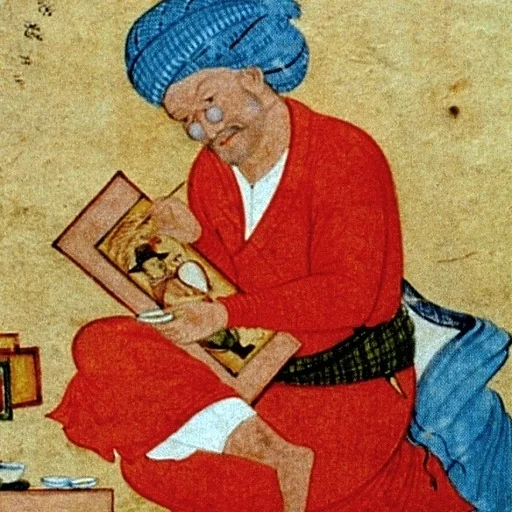
Reza Abbasi (Persian: رضا عباسی), also known as Agha Reza (c. 1565 – 1635), was the leading Persian miniaturist of the Isfahan School during the later Safavid period, spending most of his career working for Shah Abbas…

 Nuori ruhtinas seurueineen maisemassa, persialainen miniatyyri
 The young man of Baghdad reunited with his slave-girl, from a Tuti-nama (Tales of a Parrot): Forty-eighth Night
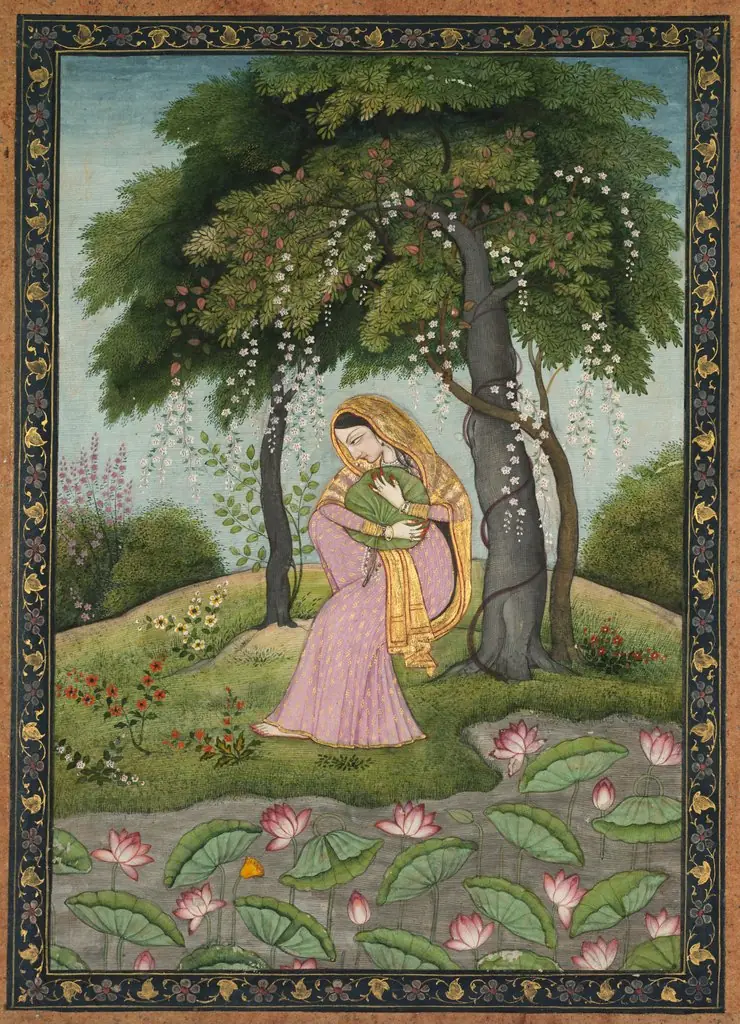 Virhini Nayika, Love-Torn Heroine
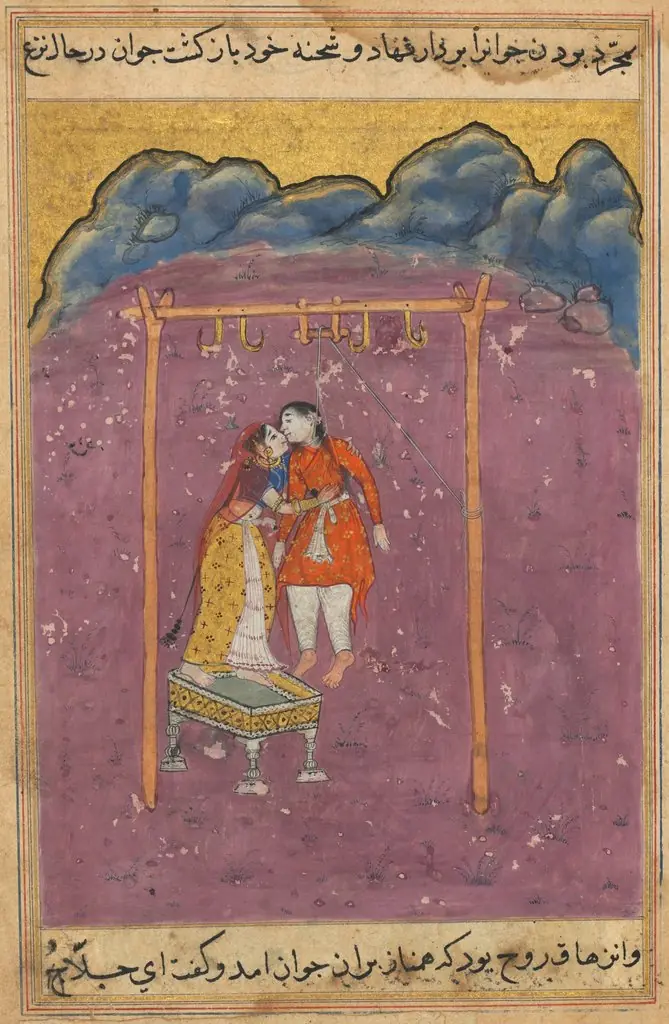 The lover of Hamnaz, who has been hanged from the gallows, bites off her nose when she kisses him, from a Tuti-nama (Tales of a Parrot): Twenty-fifth Night
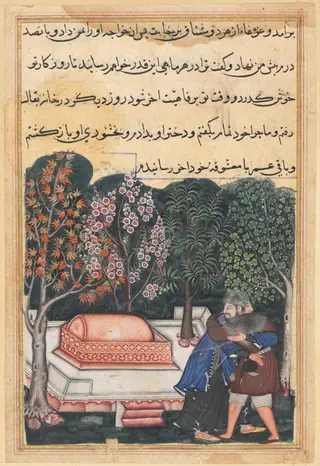 The young man of Baghdad reunited with his slave-girl, from a Tuti-nama (Tales of a Parrot): Forty-eighth Night
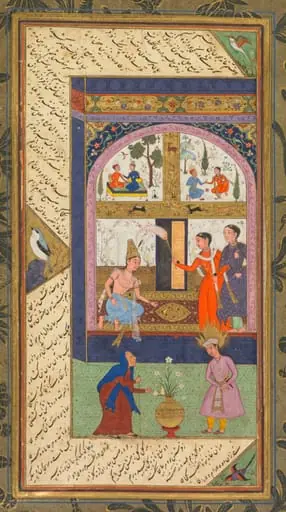 Folios A and B from the "Five Treasures" (Panj Ganj) of Jami
 Amidst Flowers
 Jehovah