Artwork
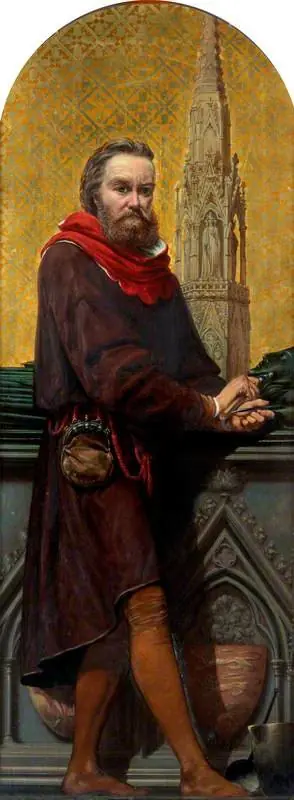
William of Wykeham (1320–1404) (design for a mosaic in the Victoria and Albert Museum)
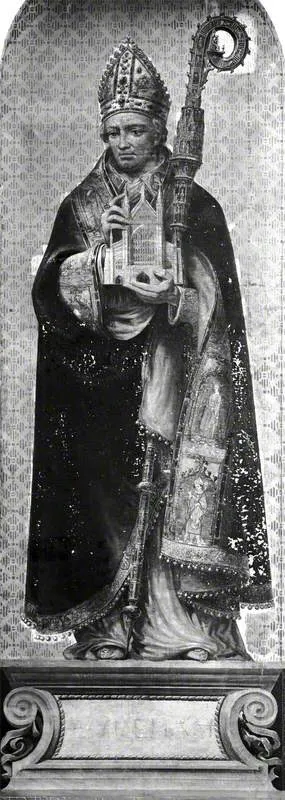
William of Wykeham (1320–1404) (design for a mosaic in the Victoria and Albert Museum) is an oil painting by the Pre-Raphaelite artist Richard Burchett. It dates from 1867 and is held in the collection of the Victoria and Albert Museum.
About this work
Overview
Painted in 1867 by Richard Burchett, this oil portrait was conceived as a preparatory study for a mosaic intended for display at the Victoria and Albert Museum.
Painted in 1867 by Richard Burchett, this oil portrait was conceived as a preparatory study for a mosaic intended for display at the Victoria and Albert Museum. It portrays William of Wykeham, a prominent 14th-century English bishop and administrator, rendered in formal attire to reflect his ecclesiastical and political stature. Though not a finished mosaic, the painting served as a detailed model for the intended decorative work.
Subject & Meaning
William of Wykeham, founder of Winchester College and New College, Oxford, is depicted as a figure of institutional authority. His richly detailed robes, tall mitre-like hat, and the staff and book he holds symbolize his dual roles as church leader and educator. The composition emphasizes dignity and legacy, aligning with Victorian ideals of reverence for historical patrons of learning and the Church.
Technique & Style
Burchett employed oil paint with meticulous attention to texture and color to replicate the luxurious fabrics and metallic accents of medieval ecclesiastical dress. The rendering of patterns on the robe, the sheen of the staff, and the subtle modeling of the face reflect a realist approach influenced by early Renaissance portraiture. The background remains subdued, directing focus entirely to the figure and his symbolic attributes.
History & Provenance
Commissioned as part of a larger decorative program at the Victoria and Albert Museum, the painting was created during Burchett’s tenure as head of what would become the Royal College of Art. Though the mosaic was never executed, the oil study remained in the museum’s collection, preserved as an example of 19th-century artistic practice in service of historical commemoration.
Context
In the mid-19th century, British institutions sought to visually connect modern education and design with medieval precedents. Burchett’s portrait of Wykeham aligned with this trend, honoring a medieval patron of learning during a period of renewed interest in Gothic revival and the moral authority of historical figures in shaping national identity.
Legacy
Though the mosaic was never realized, Burchett’s painting endures as a document of Victorian artistic pedagogy and historical representation. It reflects the era’s belief in art’s role in preserving and transmitting cultural memory, and it remains a key example of how academic artists engaged with medieval history through detailed, symbolic portraiture.
Artist & collection
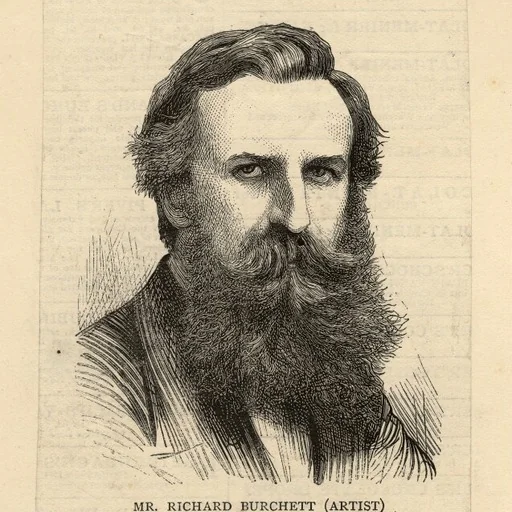
Artist
Richard Burchett (1815 – 27 May 1875) was a British artist and educator on the fringes of the Pre-Raphaelite movement, who was for over twenty years the Headmaster of what later became the Royal College of Art.

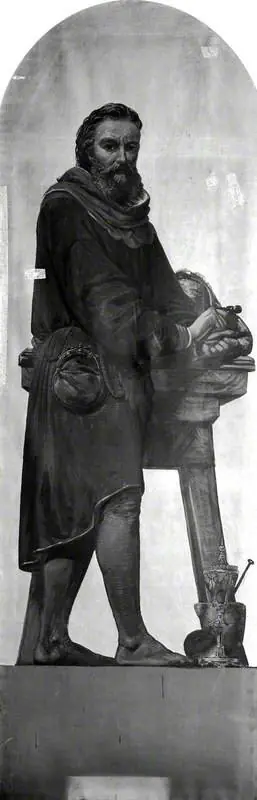
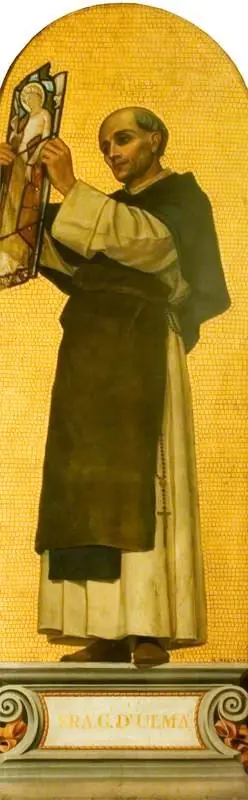
- Fra Giacomo da Ulma (design for a mosaic in the Victoria and Albert Museum)
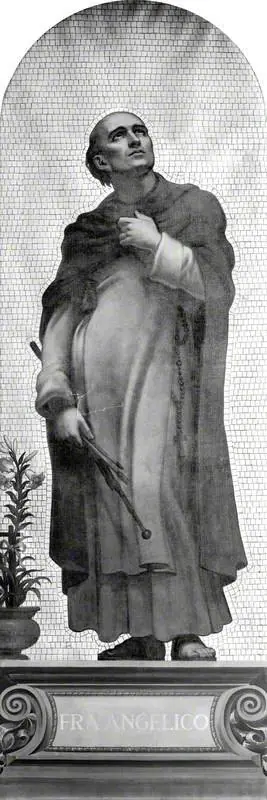 Fra Angelico (c.1395–1455) (design for a mosaic in the Victoria and Albert Museum)
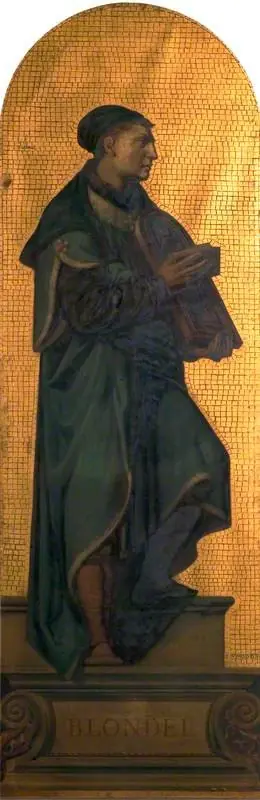 Lancelot Blondeel (1498–1561) (design for a mosaic in the Victoria and Albert Museum)
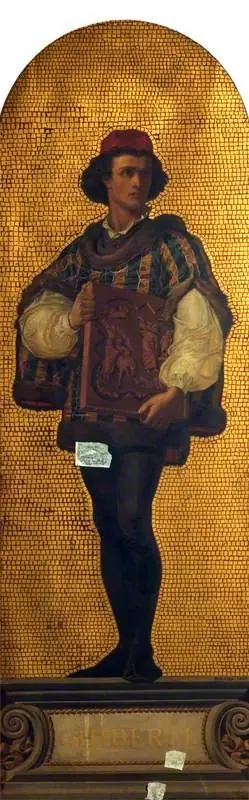 Ghiberti (1378–1455) (design for a mosaic in the Victoria and Albert Museum)
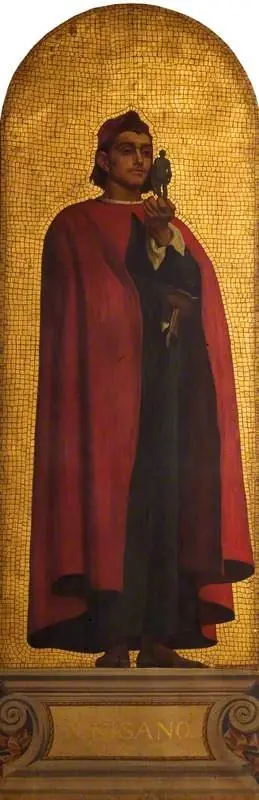 Nicola Pisano (c.1220/1225–c.1284) (design for a mosaic in the Victoria and Albert Museum)
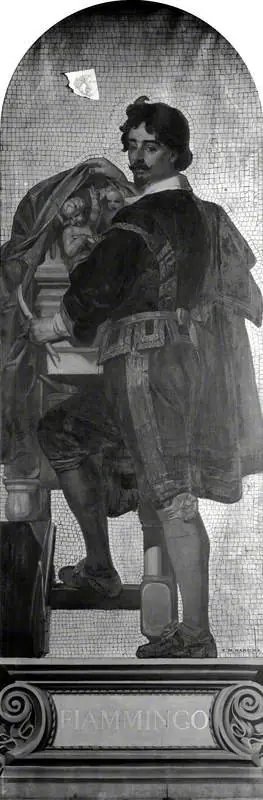 'Fiammingo' (François Duquesnoy) (1597–1643) (design for a mosaic in the Victoria and Albert Museum)
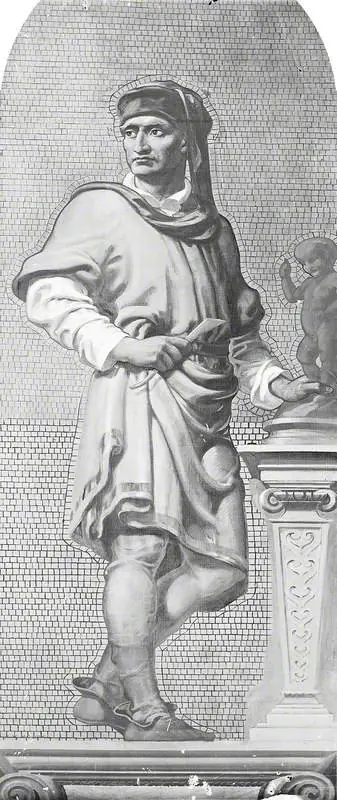 Luca della Robbia (1400–1481) (design for a mosaic in the Victoria and Albert Museum) (detail)
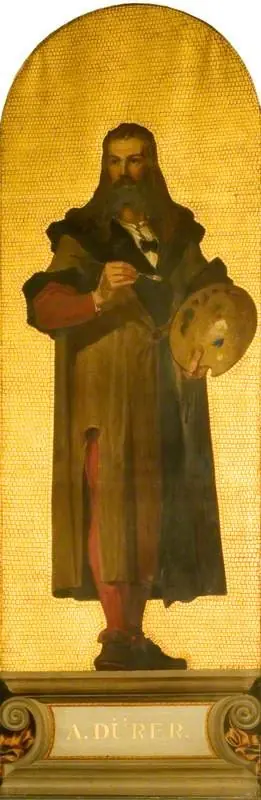 Albrecht Dürer (1471–1528) (design for a mosaic in the Victoria and Albert Museum)
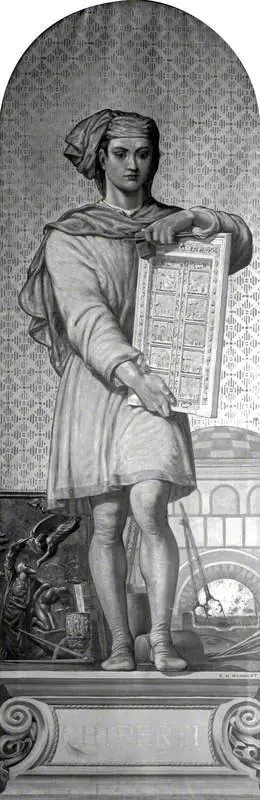 Ghiberti (1378–1455) (design for a mosaic in the Victoria and Albert Museum)
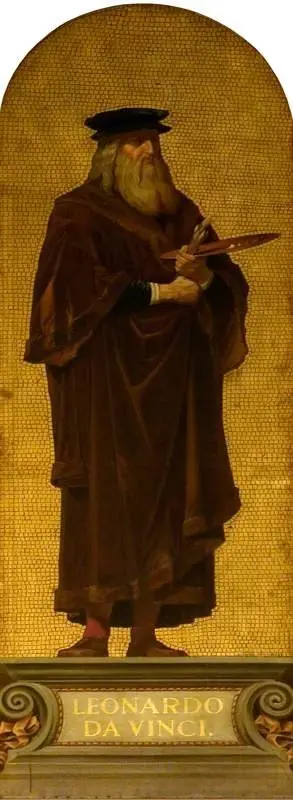 Leonardo da Vinci (1452–1519) (design for a mosaic in the Victoria and Albert Museum)