Artwork
The Ameya
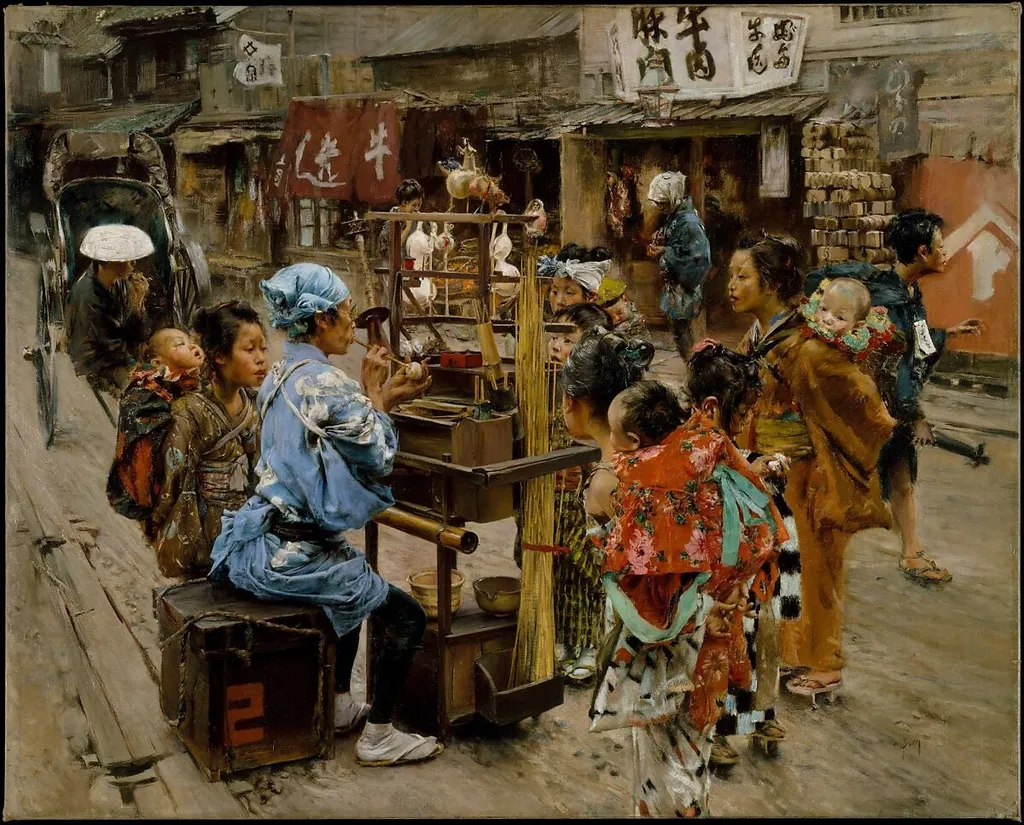
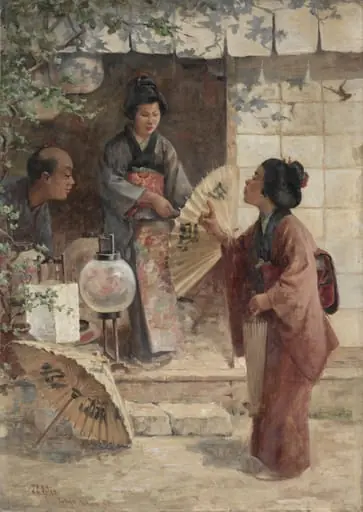
The Ameya is an oil painting by the Impressionist artist Robert Frederick Blum. It dates from 1893 and is held in the collection of the Metropolitan Museum of Art.
About this work
A woman sits on a stone step holding a baby while another child plays with a stick beside her. A narrow street with a cart and buildings stretches behind them. Blum painted this in Japan, where he arrived in 1890 and stayed three years, and the scene feels caught from life rather than posed.
Subject & Meaning
The painting depicts an ameya, a Japanese street vendor specializing in amezaiku, the traditional art of shaping hot malt candy into intricate figures.
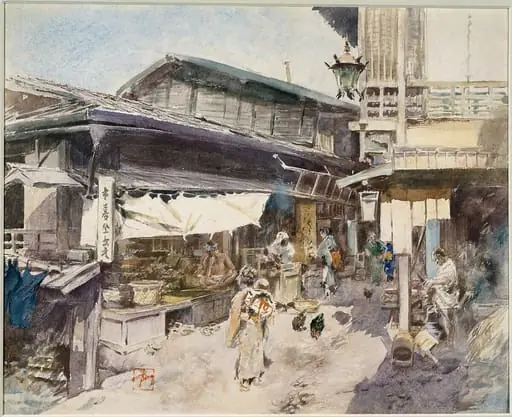
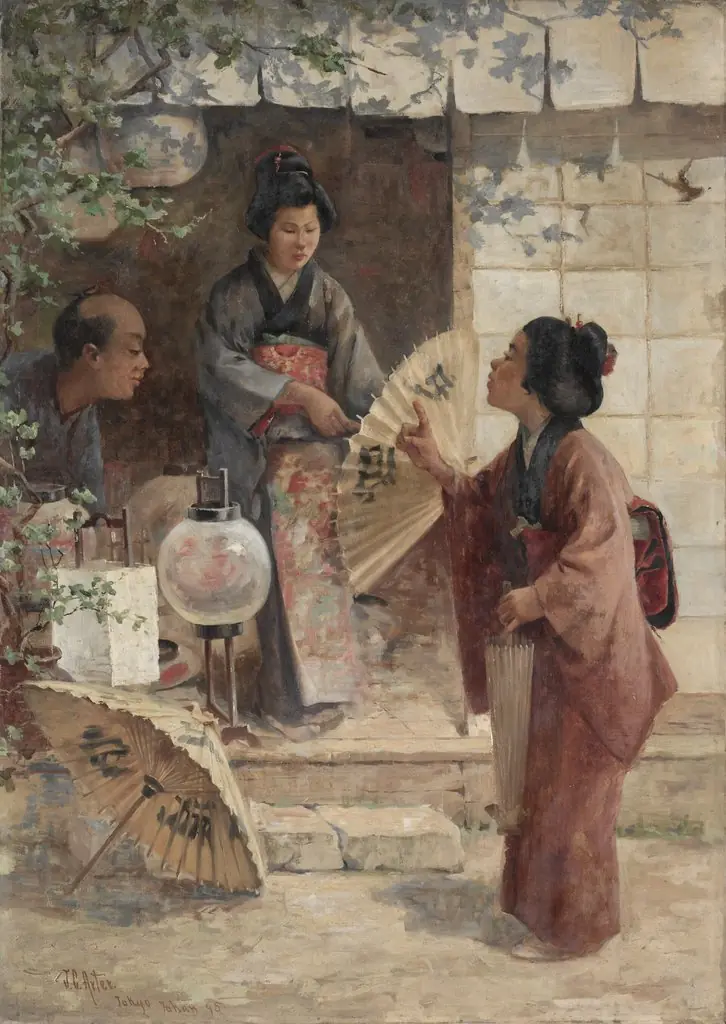
The painting depicts an ameya, a Japanese street vendor specializing in amezaiku, the traditional art of shaping hot malt candy into intricate figures. The subject is shown actively working, a process the artist Robert Frederick Blum likened to glassblowing due to the manipulation of heated sugar. The composition centers on this candy maker alongside an observing infant and a woman within a bustling street scene, capturing a moment of daily labor and cultural practice.
By focusing on the vendor at work, the piece serves as a genre scene that documents a specific aspect of 19th-century Japanese urban life. The work represents Blum's engagement with Japanese culture during his residency in Tokyo, highlighting the skill involved in this ephemeral craft and the interaction between the artisan and the local community.
Technique & Style
The Ameya is executed in oil on canvas, a medium Blum employed to capture the intricate details of Japanese street life. The composition features a Japanese candy maker (ameya) engaged in amezaiku, a traditional craft likened by Blum to glassblowing, rendered with precise brushwork that emphasizes the translucency and delicate forms of the candy. The scene includes multiple figures in varied attire, positioned within a bustling urban setting that demonstrates Blum’s skill in depicting group dynamics and individual expressions.
The handling balances naturalistic representation with atmospheric depth, using controlled, fluid strokes to convey both the textures of clothing and the ambient light of the street. The painting’s formal qualities reflect Blum’s synthesis of Western academic technique with Japanese subject matter, emphasizing clarity and narrative clarity.
History & Provenance
Robert Frederick Blum created The Ameya in 1893, during the later phase of a two-year residency in Japan that began in 1890. Dispatched by Scribner's Magazine to illustrate articles by Sir Edwin Arnold, Blum traveled extensively before producing this oil on canvas depicting an Amezaiku candy maker. Upon his return to the United States, the work gained significant acclaim at the 1893 National Academy of Design exhibition, an event Blum later credited with securing his election to the institution.
Following its exhibition success, the painting entered the collection of Alfred Corning Clark. After Clark's death, his estate donated the artwork to the Metropolitan Museum of Art in 1904, where it remains part of the American Wing.
The Ameya has been in the collection of the Metropolitan Museum of Art since 1904, when it was donated through the estate of Alfred Corning Clark. It is classified within the museum's American Wing. The painting was exhibited at the National Academy of Design in 1893, where it was well received; Blum later credited the work with securing his election to the Academy.
A New York Times critic praised the canvas at that exhibition, describing it as "admirably painted" and noting its effective use of multiple figures in varied dress.
Context
Robert Frederick Blum's The Ameya (1893) holds a significant position in the artist's career, notably securing his election to the National Academy of Design following its exhibition there in 1893. Contemporary critical reception was favorable; a New York Times critic praised the work's composition of varied figures in different dress and described the execution as "admirably painted." Art historical analysis highlights the painting as a prime example of Blum's skill in rendering complex group figures, a capability honed during his two-year residency in Japan commissioned by Scribner's Magazine.
The work captures the specific Japanese art of amezaiku, which Blum himself likened to glassblowing, reflecting his broader engagement with Japanese culture during the late 19th century. Its acceptance into the Metropolitan Museum of Art in 1904 via the Alfred Corning Clark estate further cements its status as a recognized genre scene within American art collections.
Legacy
Upon Robert Frederick Blum's return to the United States, The Ameya garnered significant critical acclaim, particularly during its display at the 1893 National Academy of Design exhibition. Blum himself attributed his subsequent election to the Academy to the success of this specific work. Contemporary reviews were favorable; a New York Times critic lauded the composition's varied figures and described the execution as admirable.
Art historical analysis subsequently cites the painting as a primary example of Blum's skill in rendering complex group figures within his illustrative oeuvre. The work's enduring institutional legacy was solidified when it entered the permanent collection of the Metropolitan Museum of Art in 1904, donated via the estate of its original owner, Alfred Corning Clark.
Overview
Robert Frederick Blum's late 19th-century oil painting, The Ameya, captures a scene of daily life in Japan. Also known as The Candy Blower, this work depicts a traditional Japanese candy artisan at work, surrounded by onlookers. Executed in oil on canvas, the artwork is part of the collection at The Metropolitan Museum of Art, housed within The American Wing.
Artist & collection

Artist
Robert Frederick Blum was an American artist. He was one of the youngest members of the National Academy of Design and was President of the Painters in Pastel and a member of the Society of American Artists and the…