Artwork
Wood-burner in a forest before a palace
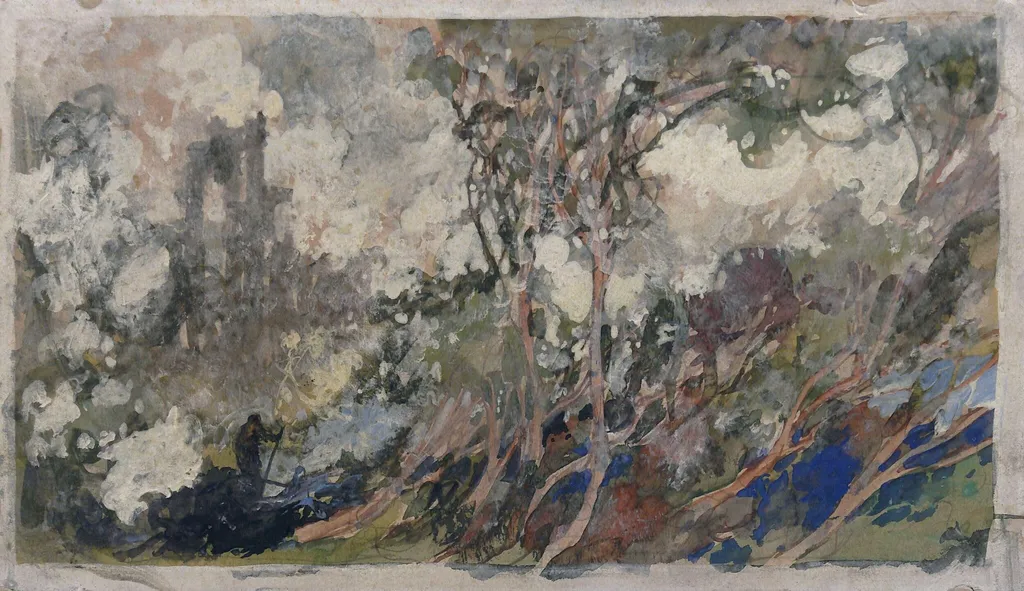
Wood-burner in a forest before a palace is a watercolor work on paper by the Regionalist artist Charles Robinson. It dates from 1930 and is held in the collection of the Victoria and Albert Museum.
About this work
Overview
This watercolour painting, created by Charles Robinson in 1930, depicts a forest scene with a wood-burner and a palace in the background. The work is characteristic of Robinson's loose and expressive style.
Subject & Meaning
The scene shows a wood-burner in a forest, with trees bearing white flowers and a dark, indistinct form in the background, possibly a palace. The image conveys a sense of natural surroundings and human presence.
Technique & Style
Robinson's watercolour technique is marked by thick, uneven brushstrokes and a predominantly blue and brown colour palette. The artist's use of loose strokes and light spots creates a sense of movement and sunlight filtering through the trees.
History & Provenance
The painting was bequeathed to the Victoria and Albert Museum in 1982 by Edith Mary Robinson, the artist's daughter. Charles Robinson was a watercolour painter, illustrator, and decorator, trained in lithography and influenced by various artistic traditions.
Artist & collection
Artist
Charles Robinson painted dreamy watercolors in the 1930s, soft hills, medieval villages, and gentle nudes all in delicate washes.

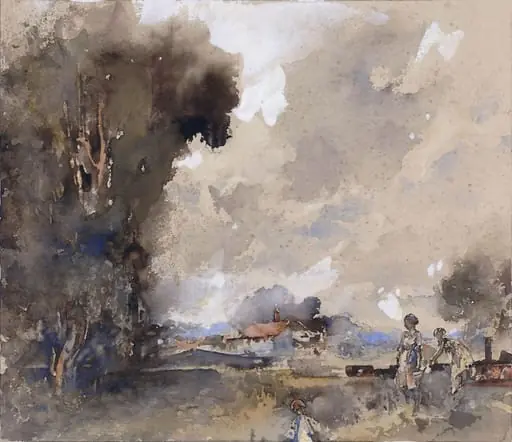
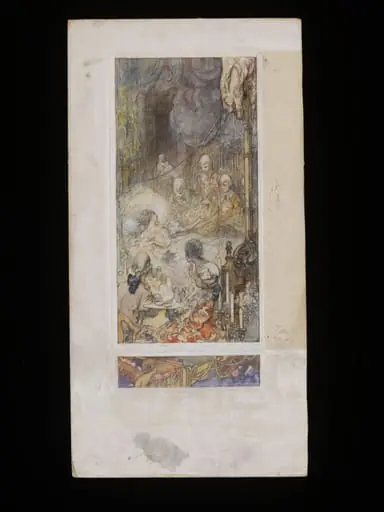
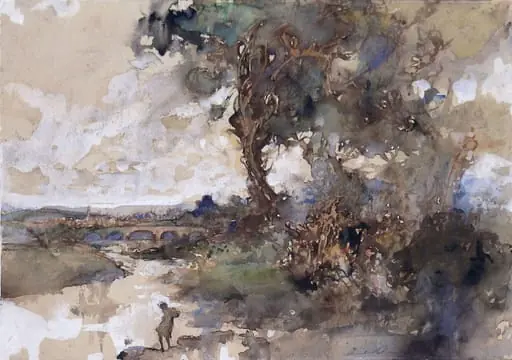 Figure by a river with a distant view of bridges and a town
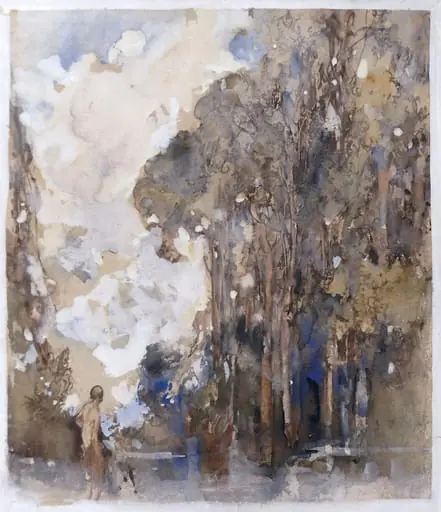 Figure in a Pool in a Wood
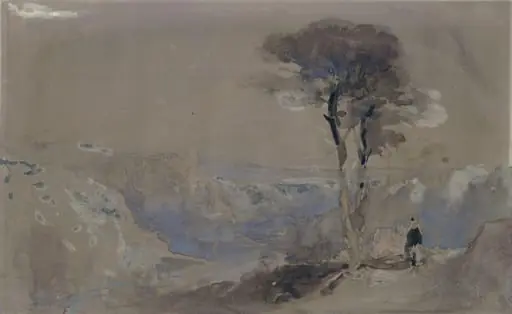 Landscape with River and Ruined Tower
 Paisaje/Atardecer
 Frontier Cabin
 View from the Studio's Window – two-sided painting
 The Burn near Milngavie
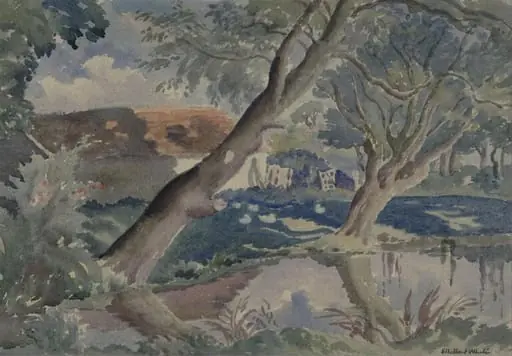 A pond overshadowed by two trees; buildings in the background
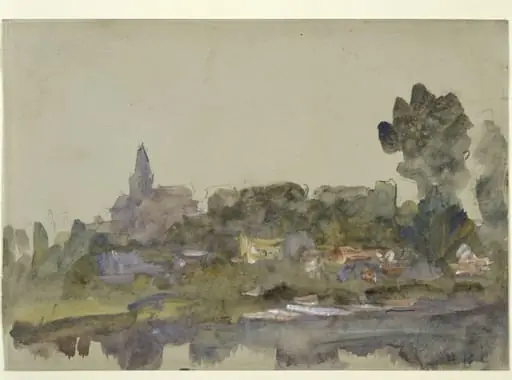 Picquigny
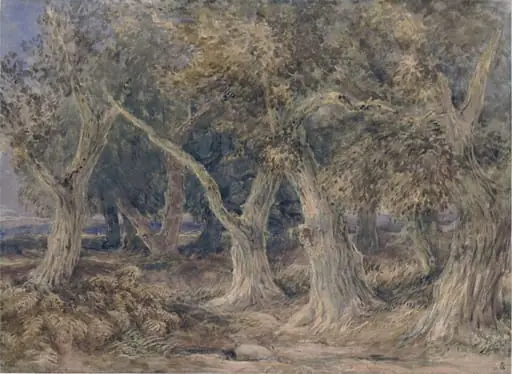 A Forest Scene