Artwork
Country Scene
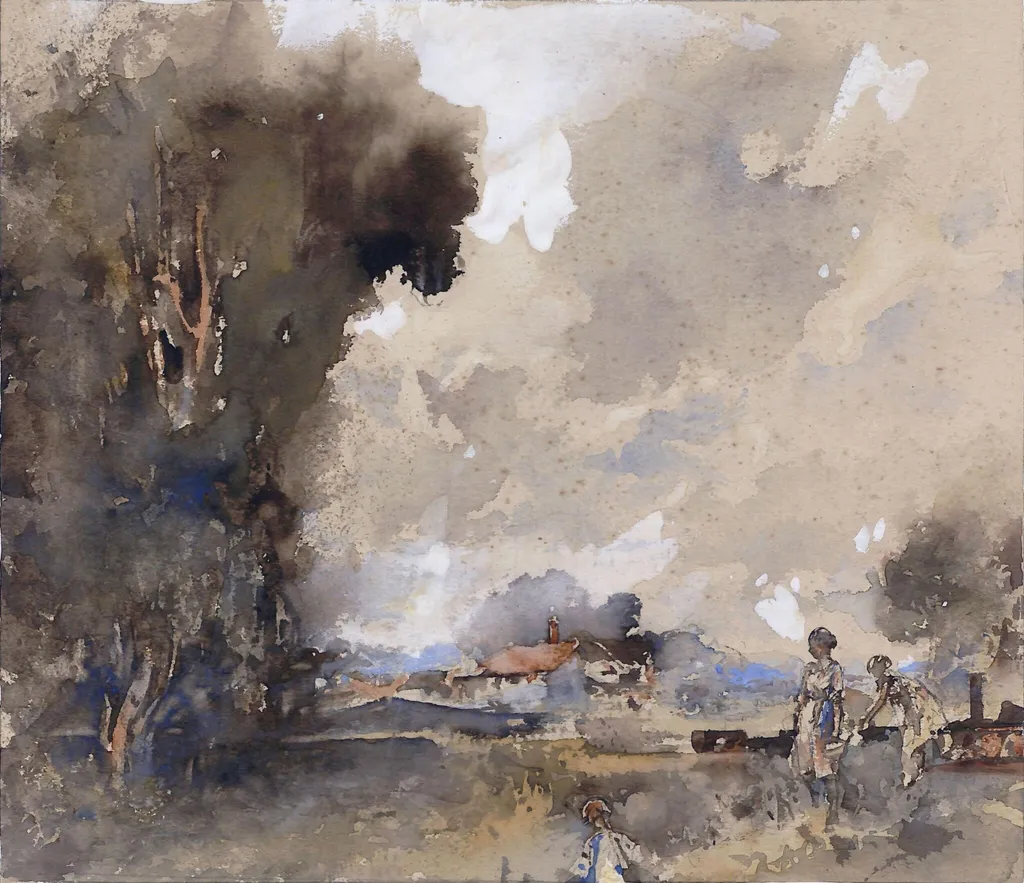
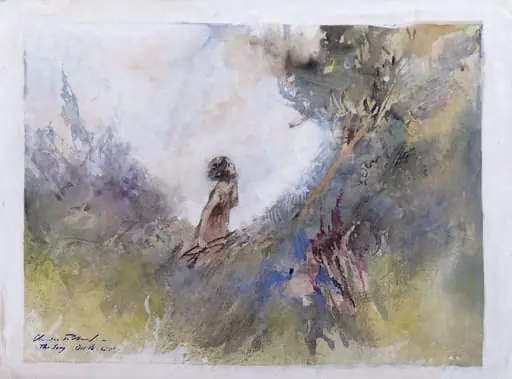
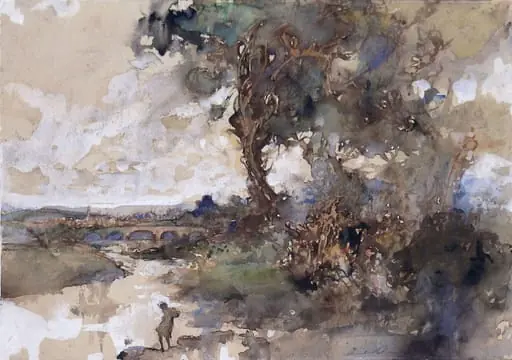
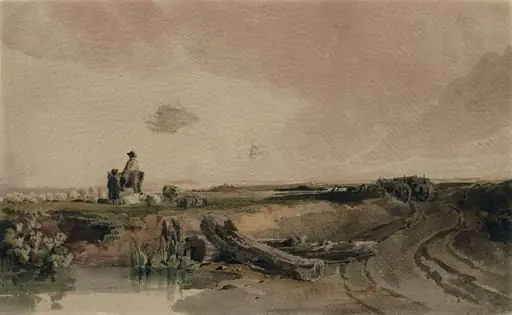
Country Scene is a watercolor work on paper by the Regionalist artist Charles Robinson. It dates from 1930 and is held in the collection of the Victoria and Albert Museum.
About this work
Overview
The piece entered the Victoria and Albert Museum’s collection in 1982 as part of a bequest from the artist’s daughter.
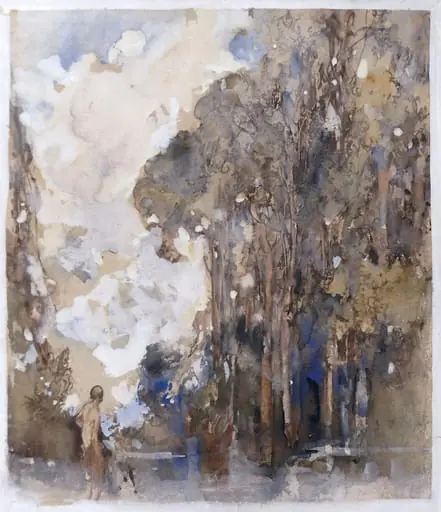
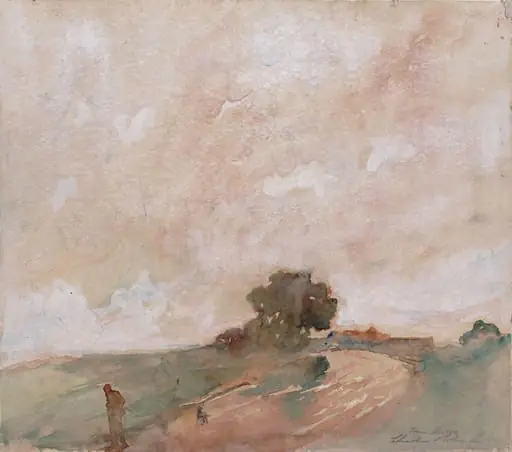
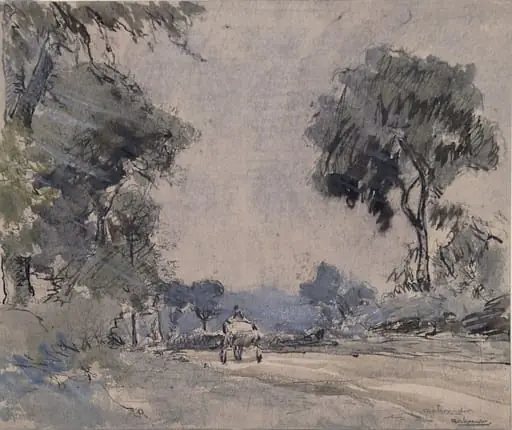
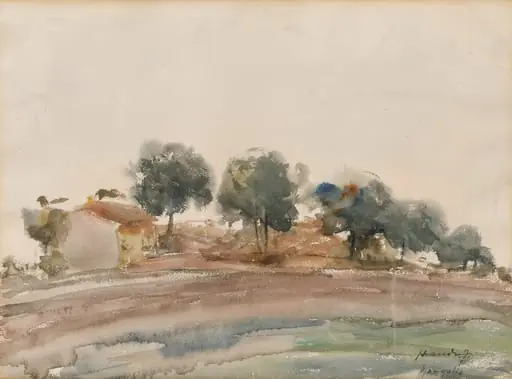
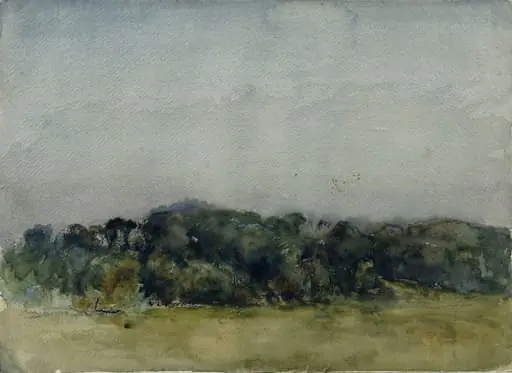
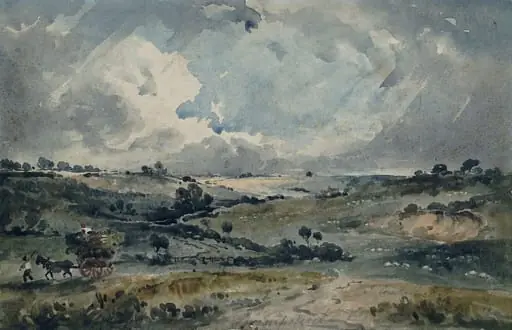
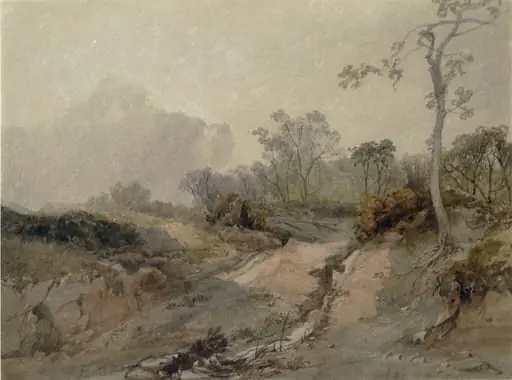
Created in 1930, this watercolour by Charles Robinson captures a quiet rural moment with minimal detail. Executed in muted tones of brown, gray, blue, and white, the work conveys atmosphere over precision. Its loose, sketch-like quality suggests a spontaneous observation rather than a polished composition.
The piece entered the Victoria and Albert Museum’s collection in 1982 as part of a bequest from the artist’s daughter.
Subject & Meaning
The scene portrays three indistinct figures in a riverside setting: two near a small boat on the bank, one seated in the water. The lack of clear identity or narrative implies a focus on stillness and solitude rather than action. The blurred forms and ambiguous environment evoke a sense of transient, everyday life in the countryside, typical of Robinson’s interest in quiet, unremarkable moments.
Technique & Style
Robinson employed a fluid, impressionistic watercolour technique, allowing pigments to bleed and blend naturally. Forms are suggested through soft washes and smudged edges rather than defined lines. The palette is restrained, emphasizing tonal variation over color saturation. The apparent lack of finish reflects a deliberate aesthetic choice, prioritizing mood and immediacy over detailed rendering.
History & Provenance
The work was donated to the Victoria and Albert Museum in 1982 by Edith Mary Robinson, the artist’s daughter, as part of a group of 27 watercolours from his estate. Charles Robinson, active in the early 20th century, was known for his illustrations and watercolours, though he remained less prominent than his brothers. His association with the Royal Institute of Painters in Watercolours, to which he was elected in 1932, underscores his standing within the medium.
Context
Robinson worked during a period when British watercolour painting emphasized lyrical landscapes and domestic scenes over grand historical themes. His style aligns with a tradition of intimate, observational art, influenced by the Pre-Raphaelites and later Impressionist approaches. Unlike his brothers, who gained fame in illustration, Charles focused on quiet, personal depictions of rural life, often without narrative climax.
Legacy
Though not widely exhibited during his lifetime, Robinson’s watercolours, including this one, contribute to a broader understanding of early 20th-century British watercolour practice. His work reflects a quiet, personal response to the landscape, distinct from the more commercial illustration for which his family was known. The V&A’s holding preserves his contribution to a modest, yet enduring, artistic tradition.
Artist & collection
Artist
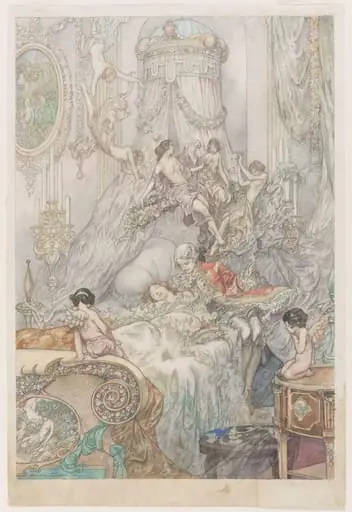
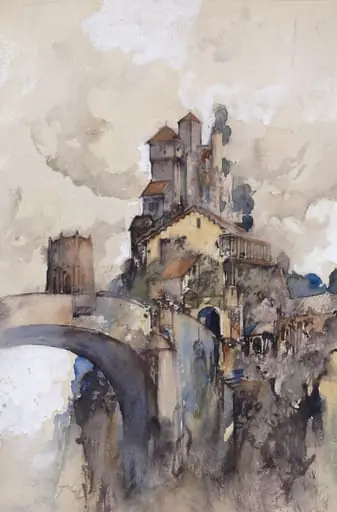
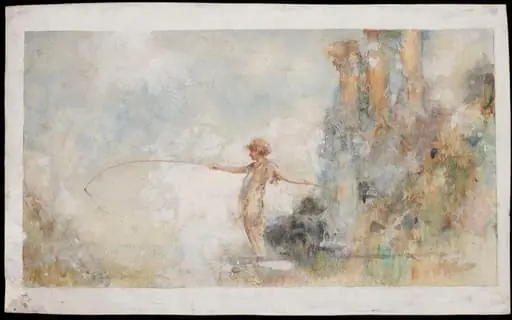
Charles Robinson painted dreamy watercolors in the 1930s, soft hills, medieval villages, and gentle nudes all in delicate washes.