Artwork
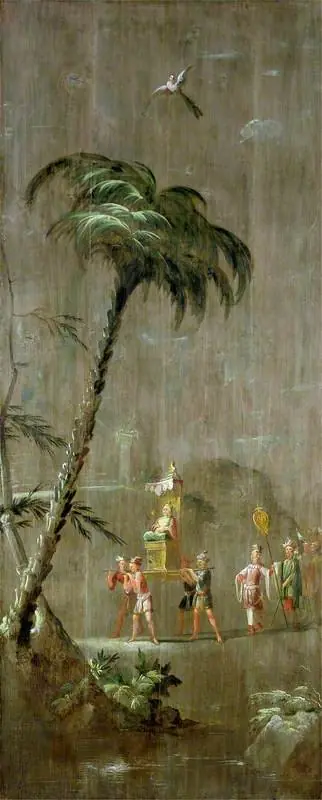
A Chinese Dignitary Seated on a Throne (one of eleven panels with Chinoiserie decoration)
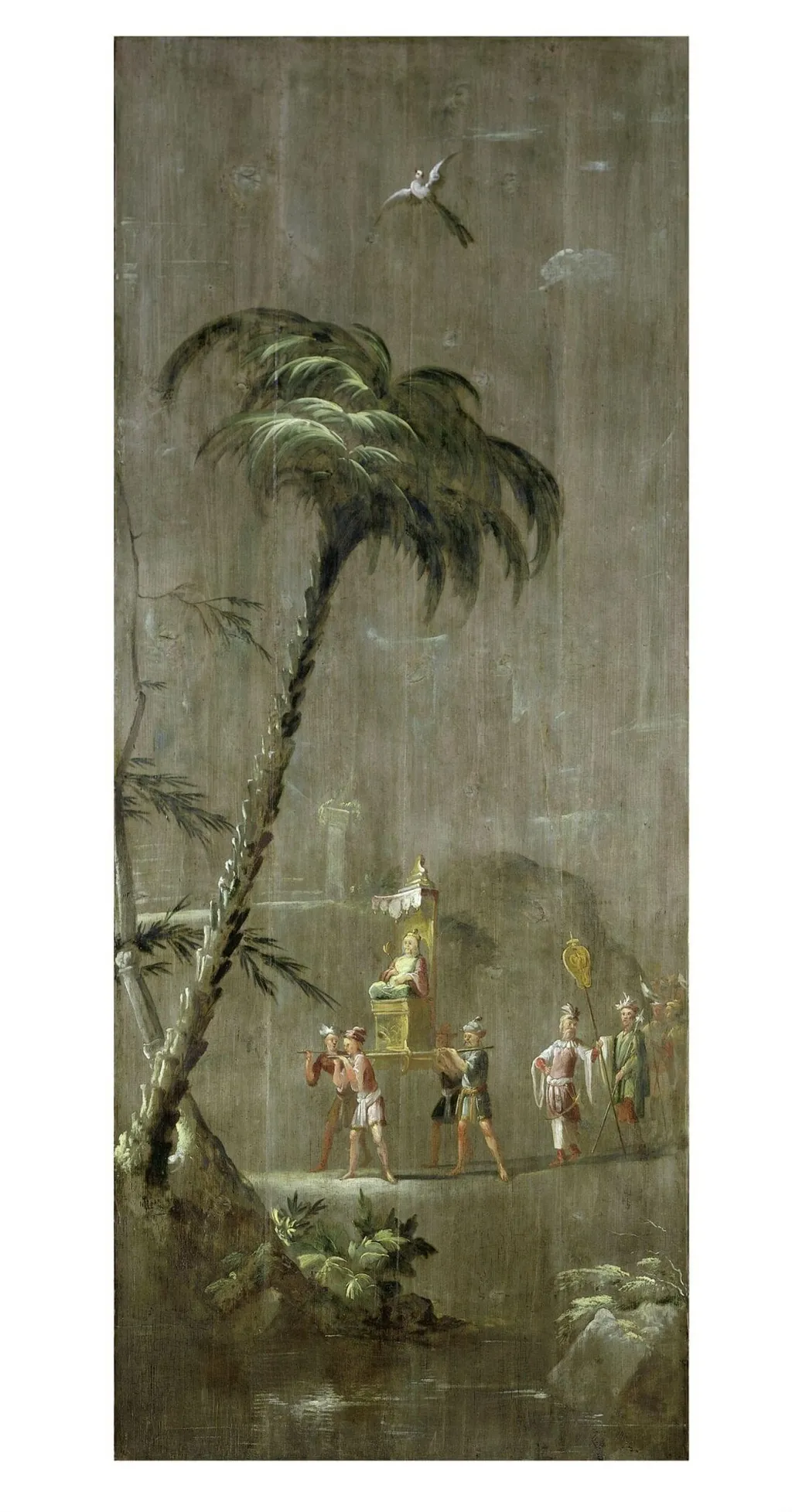
A Chinese Dignitary Seated on a Throne (one of eleven panels with Chinoiserie decoration) is an oil painting by the Baroque artist Robert Robinson. It dates from 1696 and is held in the collection of the Victoria and Albert Museum.
About this work
Overview
One of eleven oil-on-panel decorations, this work belongs to a rare series attributed to Robert Robinson, acquired by the museum in 1954.
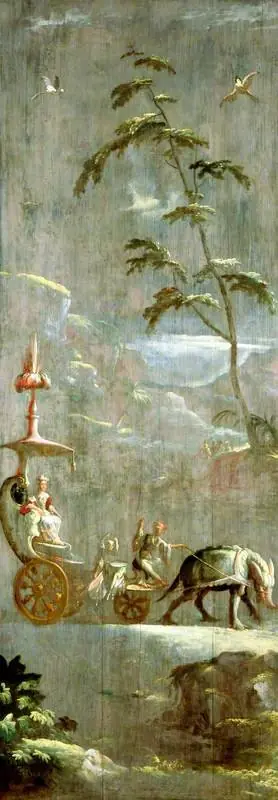
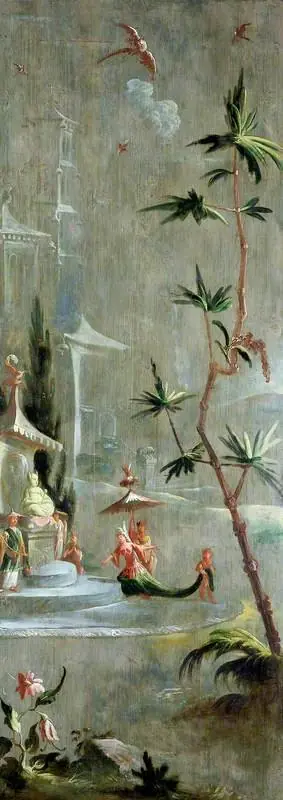
One of eleven oil-on-panel decorations, this work belongs to a rare series attributed to Robert Robinson, acquired by the museum in 1954. The panels, dating to the late 17th century, form a cohesive decorative ensemble whose original architectural context remains unknown. They reflect a European interpretation of East Asian aesthetics, distinct from authentic Chinese craftsmanship, and are among the earliest examples of Chinoiserie in British interior decoration.
Subject & Meaning
The dignitary seated on a throne embodies an idealized, fantastical vision of Asian authority, blending imagined Chinese, Tartar, and Indian elements into a theatrical composition. His elaborate attire and elevated position convey status, but the imagery is not grounded in ethnographic accuracy. Instead, it serves as a decorative fantasy, reflecting European fascination with the exotic rather than any attempt at cultural representation.
Technique & Style
Executed in oil paint on wooden panels, the work exhibits a theatrical lighting and dramatic posture characteristic of Robinson’s background in stage design. Figures are rendered with stylized precision, and backgrounds are densely populated with ornamental motifs drawn loosely from Asian sources. The palette is rich but restrained, emphasizing pattern and silhouette over naturalism, reinforcing the decorative intent of the series.
History & Provenance
The panels were acquired by the museum in 1954, with no documented provenance prior to that. Robinson, a painter and printmaker, is known only through two surviving sets of panels, one in London with mixed Chinese and Peruvian themes, the other exclusively Chinese-inspired. His career outside these commissions is poorly documented, and no other works by him are definitively identified.
Context
In late 17th-century England, imported porcelain, lacquer, and textiles from Asia fueled a taste for all things Eastern. These panels emerged not as reproductions but as imaginative reinterpretations, part of a broader trend where European artists freely mixed motifs to create exoticized interiors. Unlike true lacquerwork or porcelain, Chinoiserie was a decorative invention, prioritizing fantasy over fidelity.
Legacy
Robinson’s panels stand as early examples of Chinoiserie’s transition from object-based decoration to painted interior schemes. Though his personal legacy is minimal, the series illustrates how European artists engaged with distant cultures through imagination rather than observation. The set remains a significant, if obscure, artifact of Britain’s early decorative fascination with the East.
Artist & collection



 the Boy with a bird
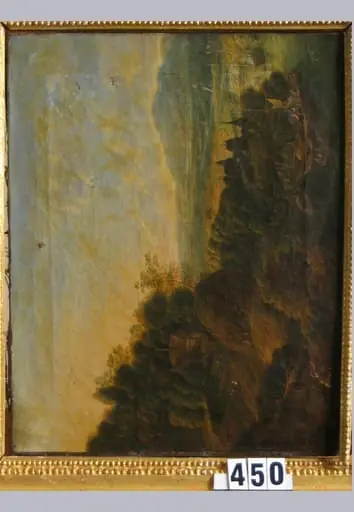 Ținutul Rinului cu corăbii (în registrul inventar: Ținutul Rhinului cu corăbieri)
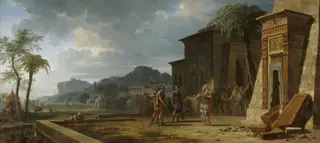 Alexander at the Tomb of Cyrus the Great
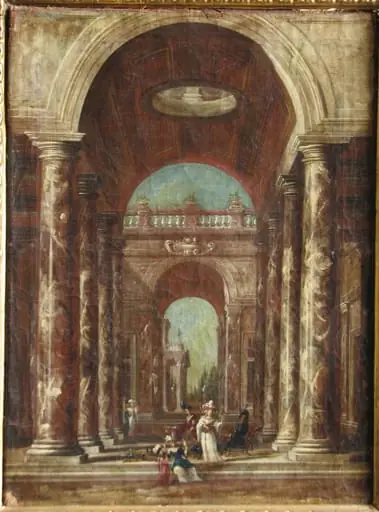 Clădire cu coloane în ordin toscan; pandant: Clădire cu coloane în ordin doric
 Hunter loading his rifle
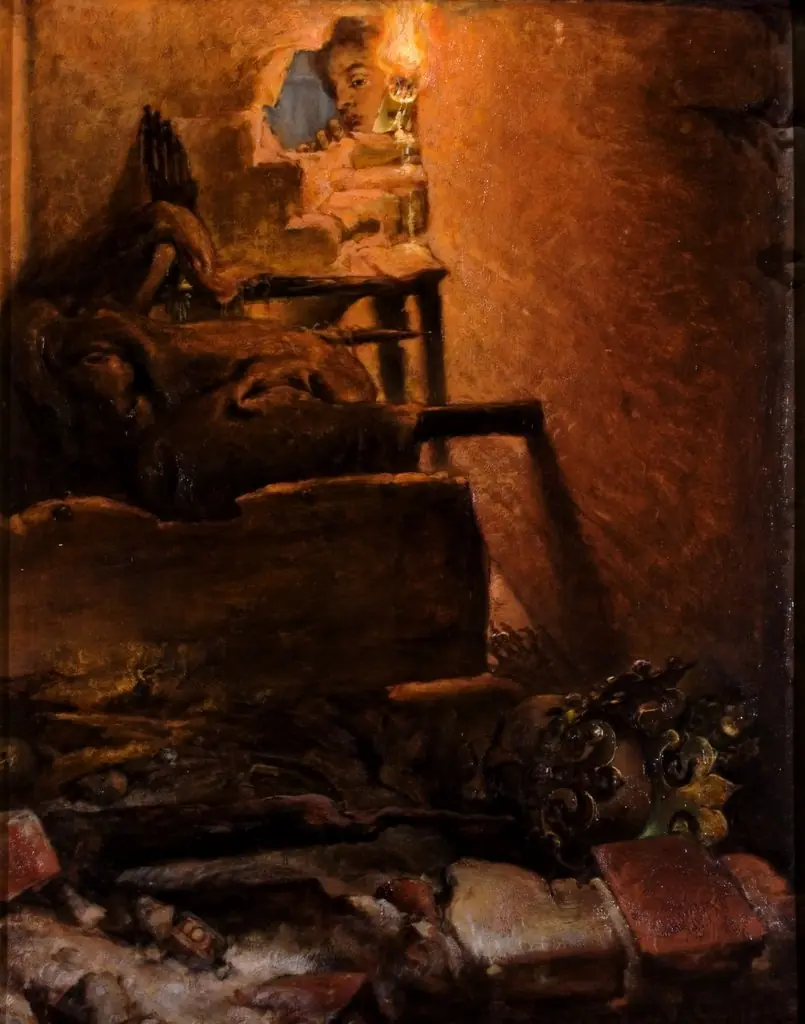 The Interior of the Tomb of King Casimir the Great
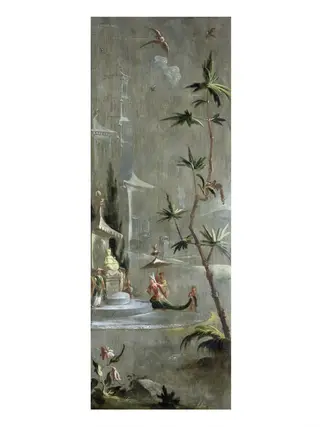
- A Chinese Princess at a Shrine (one of eleven panels with Chinoiserie decoration)