Artwork
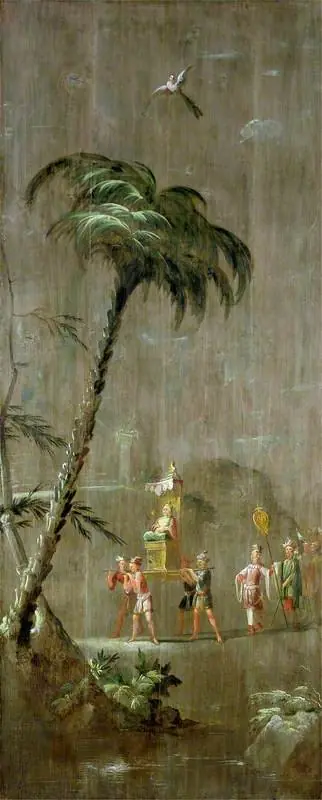
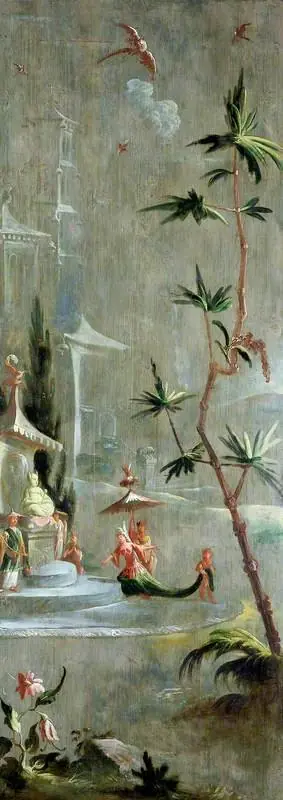
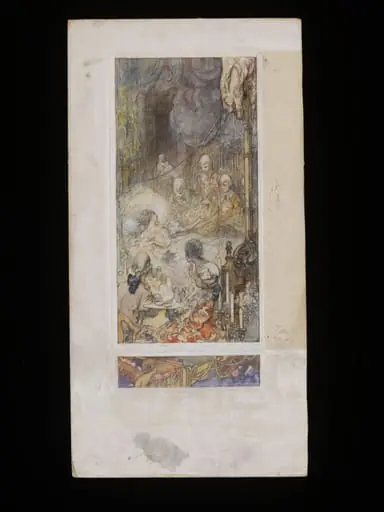
A Chinese Princess at a Shrine (one of eleven panels with Chinoiserie decoration)
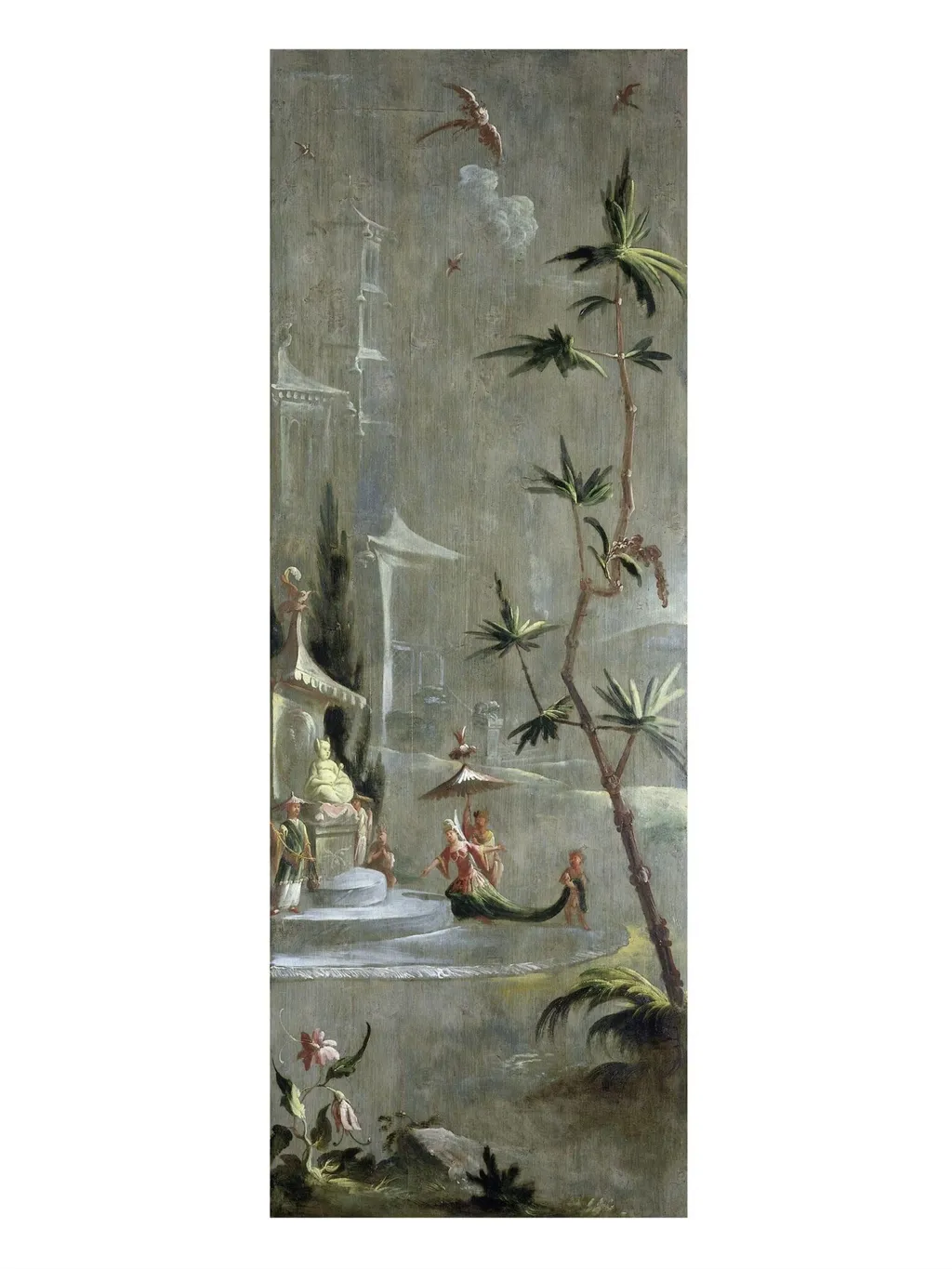
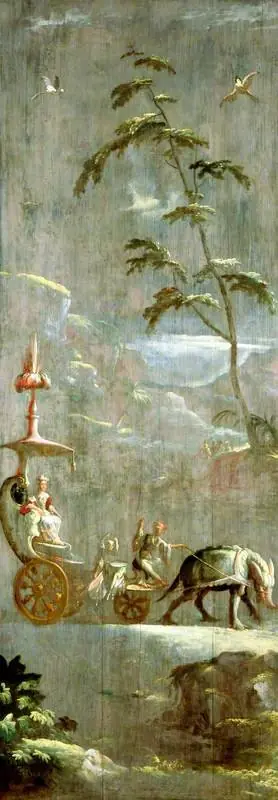
A Chinese Princess at a Shrine (one of eleven panels with Chinoiserie decoration) is an oil painting by the Baroque artist Robert Robinson. It dates from 1696 and is held in the collection of the Victoria and Albert Museum. This oil painting is one of eleven decorative panels acquired by the museum in 1954.
About this work
Overview
This oil painting is one of eleven decorative panels acquired by the museum in 1954.
This oil painting is one of eleven decorative panels acquired by the museum in 1954. Created in the late 17th century, the set belongs to an early wave of European Chinoiserie, decorative fantasies inspired by imagined Asian aesthetics rather than direct observation. The panels share stylistic ties with another known set from 1696, suggesting a shared workshop or artistic tradition, though their original commission remains undocumented.
Subject & Meaning
The scene depicts a Chinese princess in contemplation before a shrine, surrounded by architectural elements and figures drawn from a blend of Chinese, Tartar, and Indian motifs. These are not accurate representations but rather European inventions, combining exoticized forms into a theatrical fantasy. The imagery reflects 17th-century European fascination with the East as an abstract realm of mystery and luxury, not cultural authenticity.
Technique & Style
The panels employ glazing techniques to achieve luminous, layered color effects, enhancing their theatrical atmosphere. The artist, Robert Robinson, likely applied skills honed in stage design, resulting in dramatic lighting and stylized figures. Compositionally, the scenes prioritize decorative harmony over spatial realism, with flattened perspectives and ornamental details arranged to please the eye rather than narrate a story.
History & Provenance
Very little is known about Robert Robinson beyond his association with these two sets of panels. No other significant works by him survive, and records of their original placement are lost. The Botolph Lane set, dated 1696, includes Peruvian subjects alongside Chinese ones, indicating a broader, eclectic approach to exoticism.
The museum’s set, however, focuses almost exclusively on East Asian themes, suggesting a shift in taste or patron preference.
Context
During the late 1600s, imported Chinese porcelain, silks, and lacquerware fueled a European craze for all things ‘Chinese.’ These panels emerged not as ethnographic records but as decorative luxuries, responding to demand for novelty. Chinoiserie here functions as cultural imagination, mixing distant references into a coherent, if invented, visual language that satisfied aristocratic tastes for the exotic.
Legacy
Robinson’s panels stand as rare surviving examples of early Chinoiserie in British decorative art. Their survival offers insight into how European artists interpreted distant cultures through fantasy rather than fact. Though overshadowed by later, more refined interpretations, these works mark a formative moment in the Western adoption of Asian motifs as aesthetic tools rather than cultural artifacts.
Own this work as a print
Artist & collection



 Copy of painting inside the caves of Ajanta (Cave 2)
 Frontispiece Painting of the Sutra of Meditation on Samantabhadra from the Threefold Lotus Sutra, Chusonji Version
 Wall painting: Perseus and Andromeda in landscape, from the imperial villa at Boscotrecase
 Night
Night Family of Monkeys
 The Port of Pride
 Dawn
Dawn Ignis Fatuus - Zurumati
 Copy of painting in the caves of Ajanta (cave 16)
- A Chinese Dignitary Seated on a Throne (one of eleven panels with Chinoiserie decoration)