Artwork
Wall painting: Perseus and Andromeda in landscape, from the imperial villa at Boscotrecase
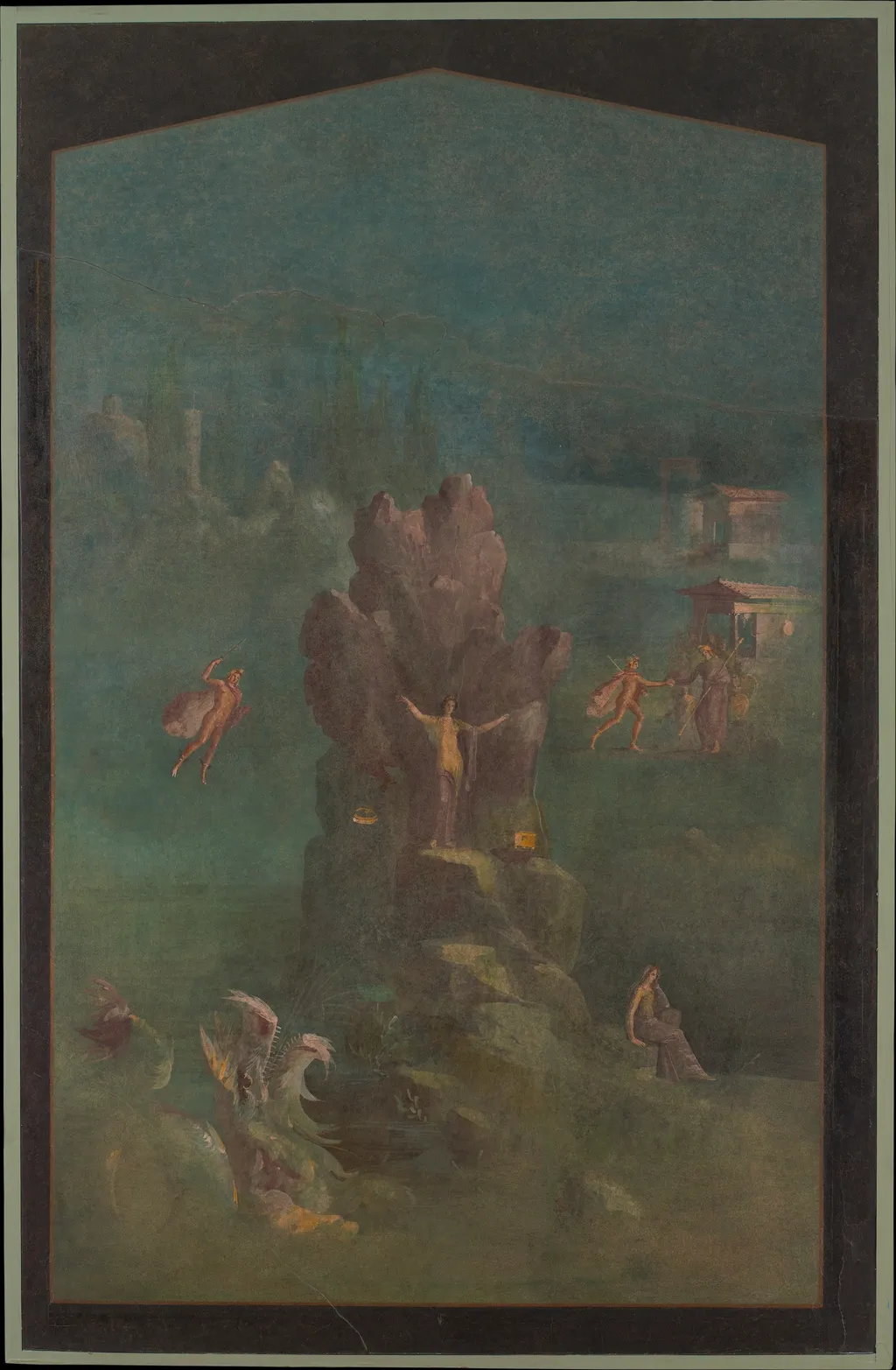
Wall painting: Perseus and Andromeda in landscape, from the imperial villa at Boscotrecase is a fresco painting. It dates from -2 and is held in the collection of the Metropolitan Museum of Art. This wall painting, executed in fresco, depicts the mythological narrative of Perseus and Andromeda.
About this work
Subject & Meaning
Created around 2 BCE, the artwork serves as a visual representation of this ancient story, preserving the iconography of the hero rescuing the chained princess.
The fresco depicts the mythological narrative of Perseus and Andromeda set within a landscape environment. As a work of mythological painting, the scene illustrates the specific figures of Perseus and Andromeda, capturing a moment from classical legend. The composition integrates these heroic characters into a broader scenic setting, characteristic of the genre.
Created around 2 BCE, the artwork serves as a visual representation of this ancient story, preserving the iconography of the hero rescuing the chained princess. The piece functions as a mythological painting that brings the legendary encounter to life through the medium of fresco, emphasizing the dramatic interaction between the figures and their natural surroundings.
Technique & Style
Executed in the fresco technique, the wall painting depicts the mythological figures Perseus and Andromeda within a landscape setting. Created around 2 BCE at the imperial villa in Boscotrecase, the work is classified as a mythological painting. The medium consists of pigment applied to wet plaster, a standard method for Roman wall decoration that ensures durability and integration with the architectural support.
The surviving fragment measures approximately 159.4 cm in height. Stylistically, the composition emphasizes the figures against a scenic background, reflecting the artistic conventions of the late Augustan period. The painting's preservation highlights the formal qualities of the landscape genre, where natural elements frame the narrative action.
Its current location at the Metropolitan Museum of Art allows for the study of its material integrity and the handling of color typical of imperial Roman frescoes.
History & Provenance
The fresco depicting Perseus and Andromeda in a landscape was painted circa 2 BCE within the imperial villa at Boscotrecase, Italy, as part of a decorative wall program. Its creation is attributed to an anonymous Roman artist and executed in the fresco medium. After its execution the work remained in situ until the late nineteenth-century excavations uncovered the wall paintings, after which the fragment entered the collection of the Metropolitan Museum of Art in New York, where it is now exhibited as a mythological fresco. The painting's provenance thus traces from a Roman imperial setting to modern museum custody.
Overview
This wall painting, executed in fresco, depicts the mythological narrative of Perseus and Andromeda. Originating from the imperial villa at Boscotrecase, the artwork presents a dramatic scene set within a landscape. The composition is characterized by a central rock formation and dynamically posed figures, creating a sense of tension.
Its muted color palette, dominated by blues and greens, contributes to the overall atmospheric quality of the ancient Roman artwork.
Artist & collection

- Untitled
 Ulysses
 Landskap
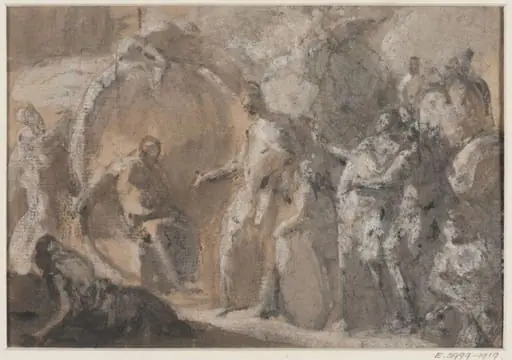 Diogenes visited by Alexander the Great
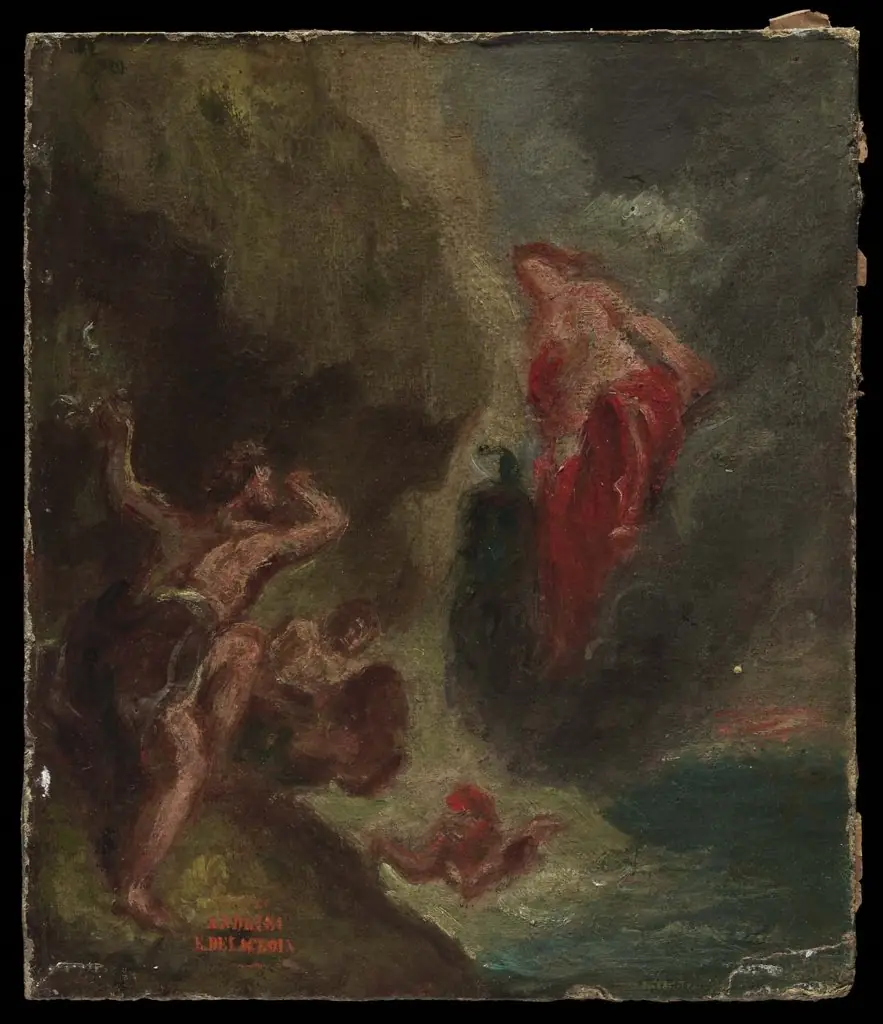 Winter: Juno Beseeching Aeolus to Destroy the Fleet
 Hermes and the Infant Dionysus
 Hermes and the Infant Dionysus
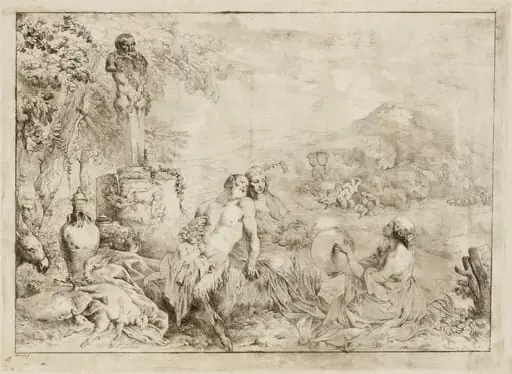 Landscape with a Satyr Family and Classical Sculpture
 Adventure
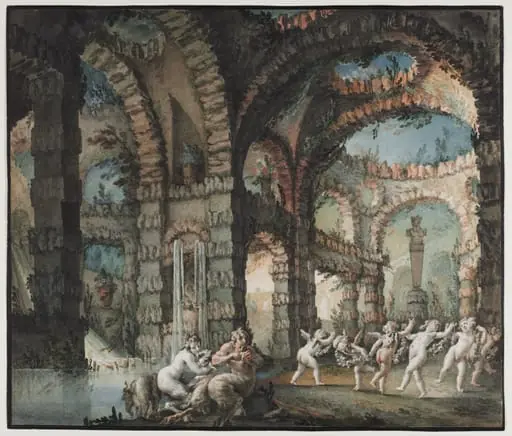 Family of Satyrs with Dancing Cherubs
 Freshness of the Wounded
 Mountain Landscape with Figures