Artwork
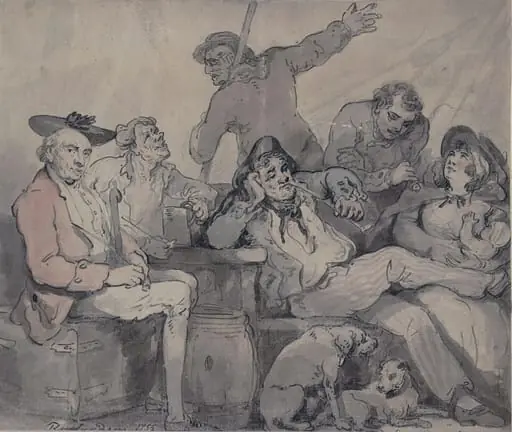
Grog on Board
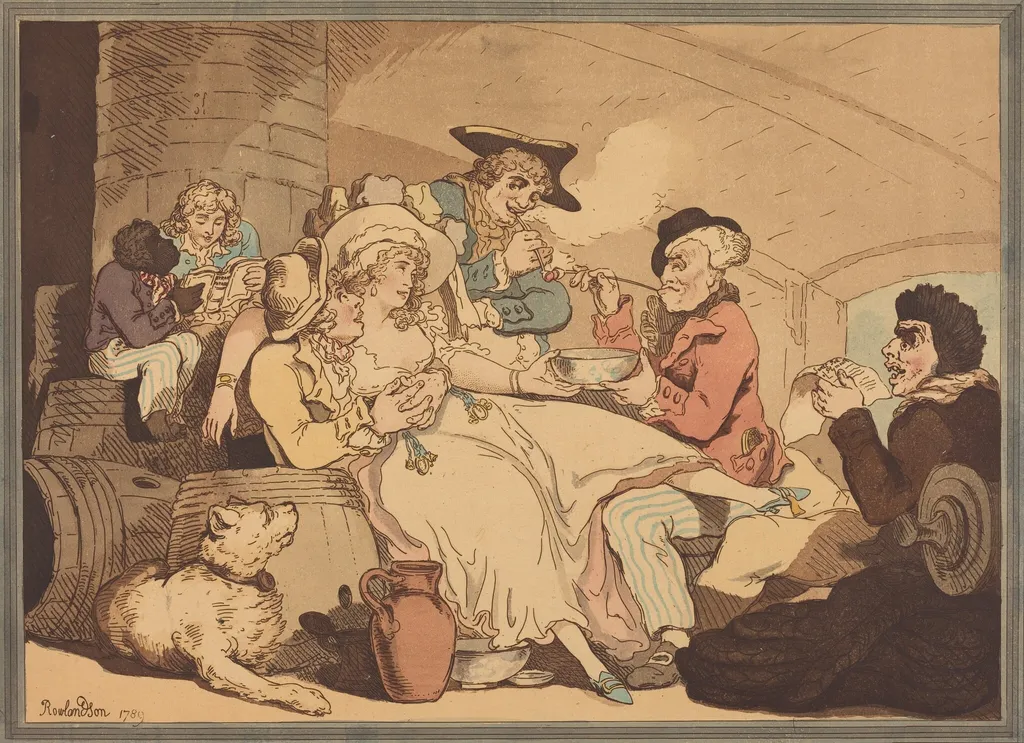
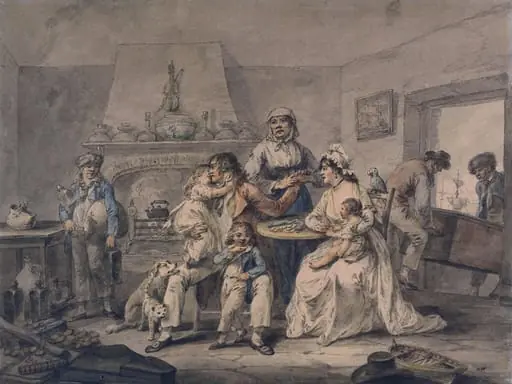
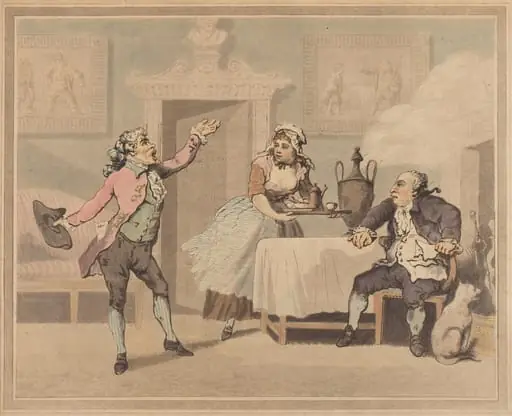
Grog on Board is an ink print by the Romanticist artist Thomas Rowlandson. It dates from 1789 and is held in the collection of the National Gallery of Art.
- Inscription
- Inscribed:recto: in plate, in image, at upper left, on book spine: BYRON / VOYAGE; in plate, in image, at right center, on paper: Sweet Poll of Plymouth; in plate, in imate, at lower left: Rowlandson 1789; in plate, below image, at center: Grog on Board; verso: at lower leftt, in graphite, in later hand: B-35751; at lower right, in graphite, in later hand: 5 [circled] / NO
- Markings
- Marked:recto: none; verso: in purple ink in oval: Eduard Fuchs Zehlendorf b. Berlin; Wannseebahn [not in Lugt]
About this work
Overview
Thomas Rowlandson’s 1789 print Grob on Board is an etching combined with stipple and aquatint, finished with hand‑applied colour on wove paper.
Thomas Rowlandson’s 1789 print Grob on Board is an etching combined with stipple and aquatint, finished with hand‑applied colour on wove paper. The composition shows a cramped interior where a group of exaggerated figures gather around a table, drinking and laughing amid rough brick walls and a sleeping cat. The scene is rendered in muted tones and rapid, scratchy lines that heighten its comic effect.
Subject & Meaning
The work satirises the consumption of “grog,” a diluted rum traditionally issued to sailors, by portraying a chaotic gathering of odd‑looking patrons. The exaggerated facial expressions and lively gestures mock the social habit of heavy drinking, suggesting a broader commentary on the indulgences of contemporary British society.
Technique & Style
Rowlandson employed a hybrid printmaking process: the primary image was etched, then enriched with stipple shading and aquatint to produce tonal variation, before individual sheets received hand colouring. The use of wove paper provides a smooth surface that supports the fine, hurried lines characteristic of his caricature style.
History & Provenance
Created during the Georgian era, the print reflects Rowlandson’s reputation as a leading English caricaturist whose work often targeted political and social subjects. Original impressions were likely sold as part of his series of humorous prints, circulating among the middle‑class market that consumed satirical imagery in the late eighteenth century.
Context
Grog on Board belongs to a broader tradition of British satirical prints that commented on everyday life and naval culture. The depiction of grog connects the image to naval provisioning practices, while the crowded tavern scene mirrors the public houses that served as social hubs in urban England.
Legacy
The print exemplifies Rowlandson’s contribution to the development of visual satire, influencing later caricaturists who adopted similar mixed techniques and social commentary. Its blend of etching, stipple, and aquatint remains a reference point for scholars studying the technical innovations of late eighteenth‑century British printmaking.
Own this work as a print
Artist & collection
Artist
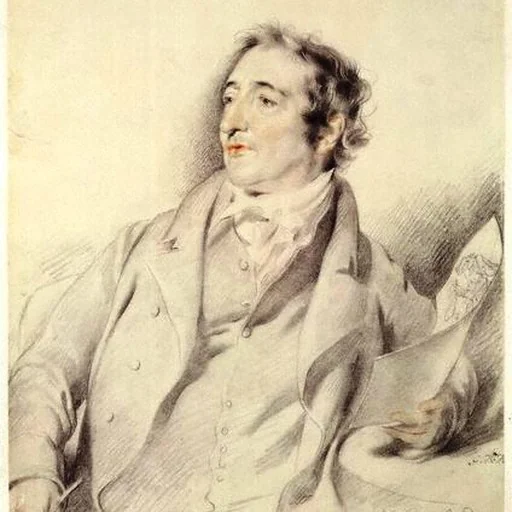
Thomas Rowlandson (; 13 July 1757 – 21 April 1827) was an English artist and caricaturist of the Georgian Era, noted for his political satire and social observation.