Artwork
Untitled
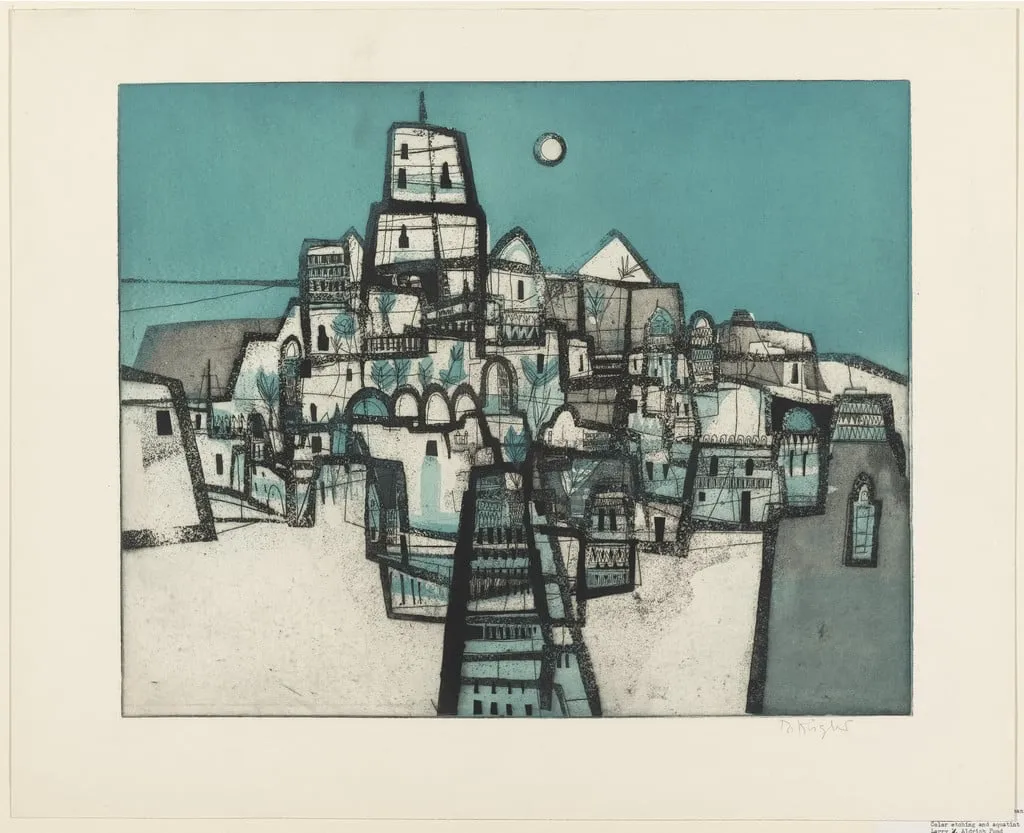
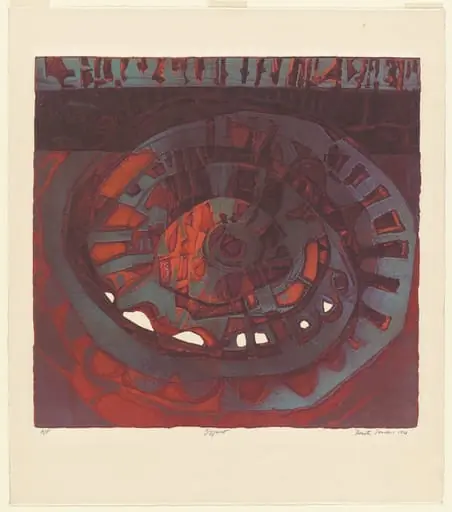
Untitled is an ink print by Rudolf Kügler. It dates from 1936 and is held in the collection of the Museum of Modern Art.
About this work
Overview
Subtle tonal gradations, achieved through aquatint, lend the scene a quiet, atmospheric quality, while the etched lines define structural edges with precision.
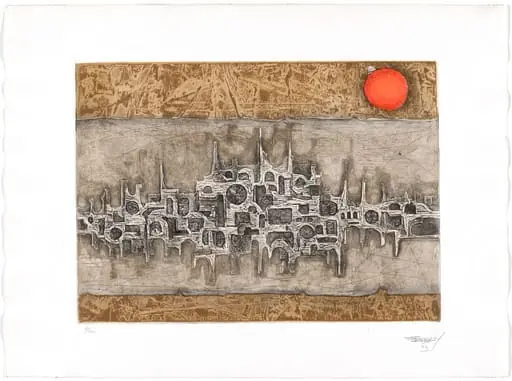
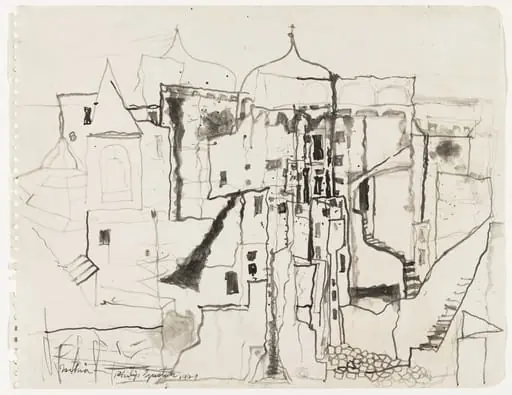
Created in 1936, this print by Rudolf Kügler combines etching and aquatint to depict an abstracted urban landscape. It resides in the collection of The Museum of Modern Art. The composition features irregular, stacked forms that suggest architecture without literal representation.
Subtle tonal gradations, achieved through aquatint, lend the scene a quiet, atmospheric quality, while the etched lines define structural edges with precision.
Subject & Meaning
The work presents a surreal arrangement of architectural fragments, leaning towers, arched openings, and irregular volumes, that resist clear interpretation. No human figures or functional details are present, suggesting a cityscape stripped of daily life. The pale moon above adds a contemplative, nocturnal tone, reinforcing an impression of isolation or quiet decay rather than bustling urban energy.
Technique & Style
Kügler employed aquatint to produce soft, graduated grays that mimic the diffusion of ink on damp paper, evoking a hazy, dreamlike texture. Etching provided sharp, linear contours for the building forms, contrasting with the muted, atmospheric backgrounds. The combination creates a tension between defined structure and indistinct space, enhancing the work’s psychological ambiguity.
History & Provenance
The print was made in 1936, during a period of increasing political tension in Europe. Kügler, an Austrian artist, was active in printmaking circles before emigrating to the United States. The work entered The Museum of Modern Art’s collection in the mid-20th century, where it has remained as part of its holdings in European modernist prints.
Context
Produced in the mid-1930s, the piece reflects broader European modernist interests in abstraction and psychological landscape, influenced by Expressionism and Surrealism. While not overtly political, its fragmented architecture may resonate with the era’s anxieties about urban life and societal instability, aligning with contemporaneous works that questioned rational order.
Legacy
Kügler’s use of aquatint in this print exemplifies a quiet, introspective strand of modern printmaking that prioritized mood over narrative. Though less widely known than his peers, his technical refinement and evocative compositions contributed to the medium’s development in the interwar period, influencing later artists exploring atmospheric abstraction in print.
Artist & collection