Artwork
Geburt Christi
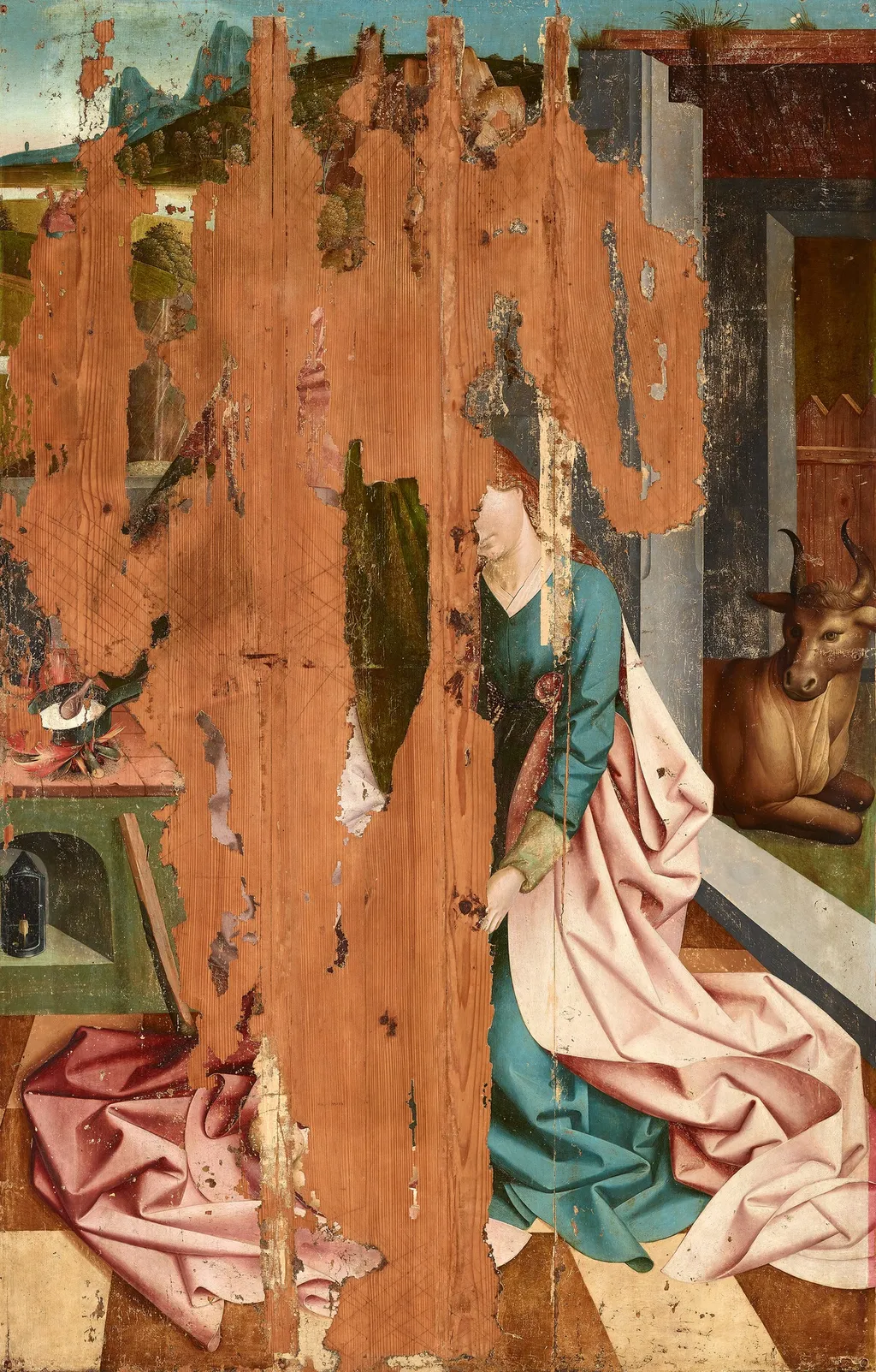
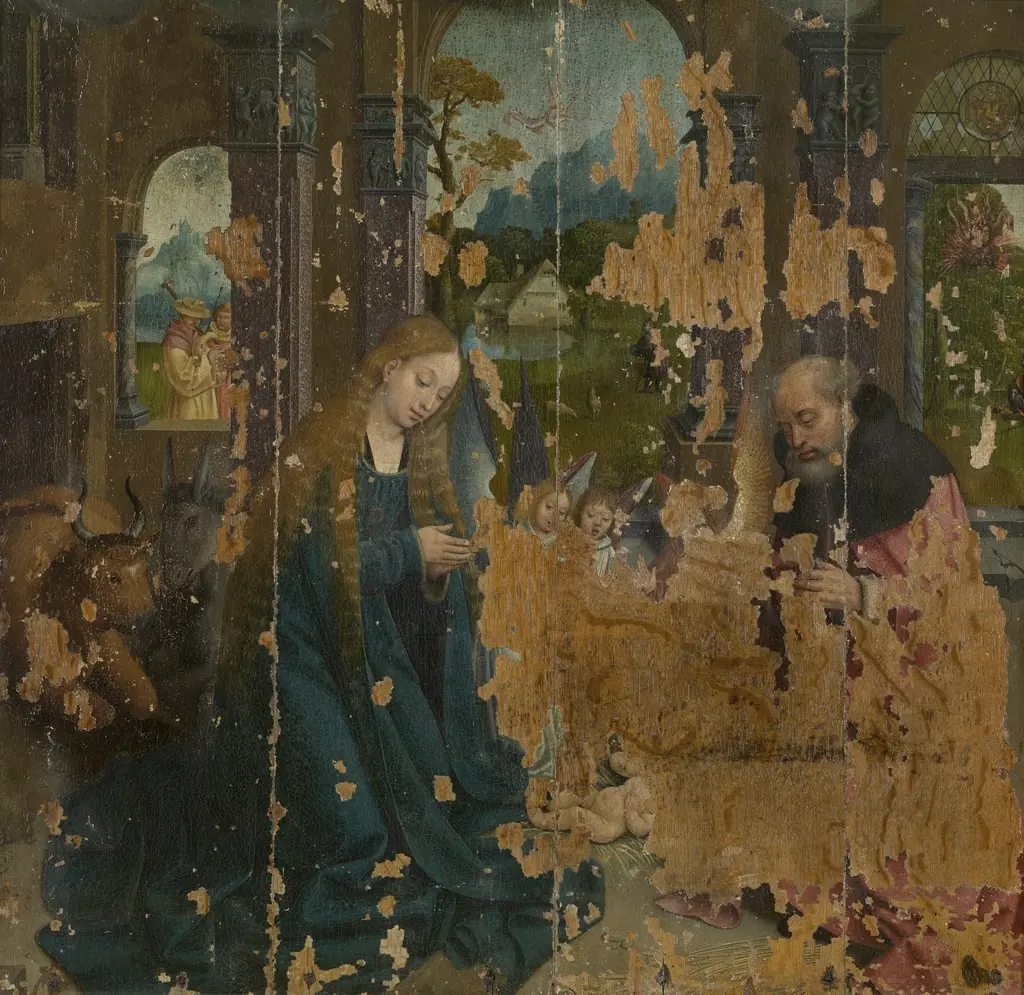
Geburt Christi is an unspecified painting by the Northern Renaissance artist Rueland Frueauf the Elder. It dates from 1496 and is held in the collection of the Kunsthistorisches Museum.
About this work
Subject & Meaning
Behind this figure, a bull lies in a recessed architectural space, an element that anchors the scene in the stable setting of the biblical narrative.
The panel depicts the Nativity of Jesus, a central subject in Christian art. In its current state, the composition preserves a robed figure in blue and pink drapery kneeling at the right, facing left with hands clasped in prayer, traditionally identifiable as the Virgin Mary in adoration of the Christ Child. Behind this figure, a bull lies in a recessed architectural space, an element that anchors the scene in the stable setting of the biblical narrative. To the left, fragmentary remains include a green structure with a lantern, scattered pink fabric, and a partial landscape with mountains and sky visible in the upper left corner. A small fire or light source appears in the lower left fragment, possibly alluding to the warmth of the stable or symbolic divine light. The iconography follows established late medieval conventions for Nativity scenes, with Mary as the primary adoring figure and the ox as one of the traditional animals present at Christ's birth. The surviving elements suggest a composition that once presented a fully realized sacred narrative, with careful attention to the emotional and devotional resonance of the scene.
Technique & Style
The work is painted on spruce wood, with vertical wood seams running through the panel, a characteristic construction method for late Gothic altarpiece panels. The medium is oil on panel, applied with smooth, detailed brushwork particularly evident in the surviving drapery folds and the bull's form. The palette consists of muted blues, pinks, greens, and browns. Light falls evenly across the surviving elements, with soft shadows in the architectural recess and beneath the figure's robes, demonstrating Frueauf's sophisticated understanding of volumetric modeling. The overall composition is vertical, with the figure dominating the right third of the panel. The panel is severely damaged, with large areas of paint loss revealing the wood grain beneath, which has made the physical structure of the support unusually visible and has prompted scholarly interest in the material construction of late medieval panel painting. The remaining paint shows the refined handling that characterizes Frueauf's mature style, developed after his six-year period of activity in Nuremberg working on the Augustiner-Altar in 1487, during which his art underwent significant transformation.
History & Provenance
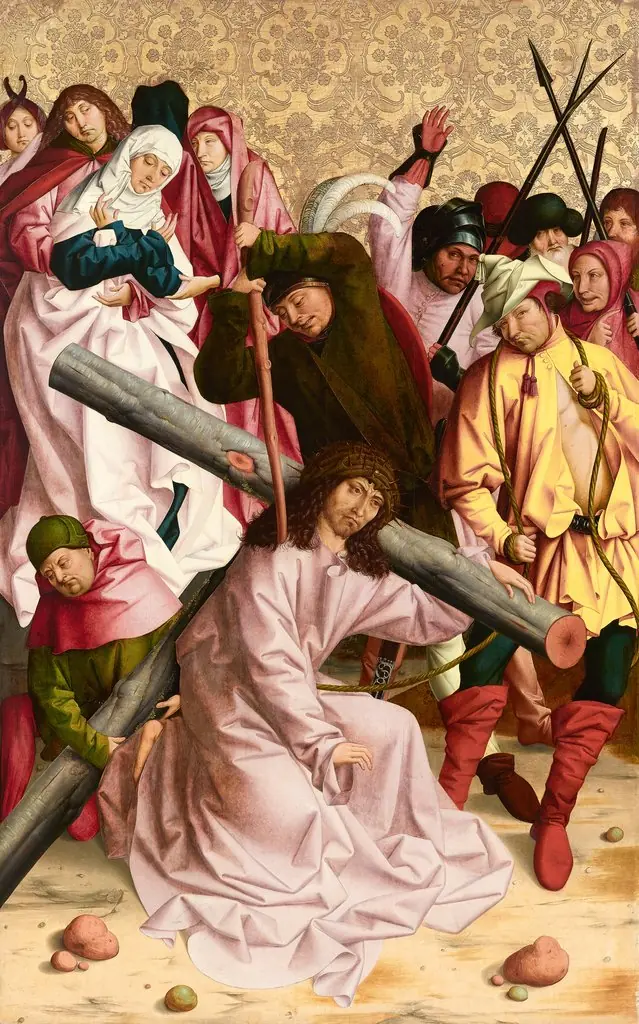
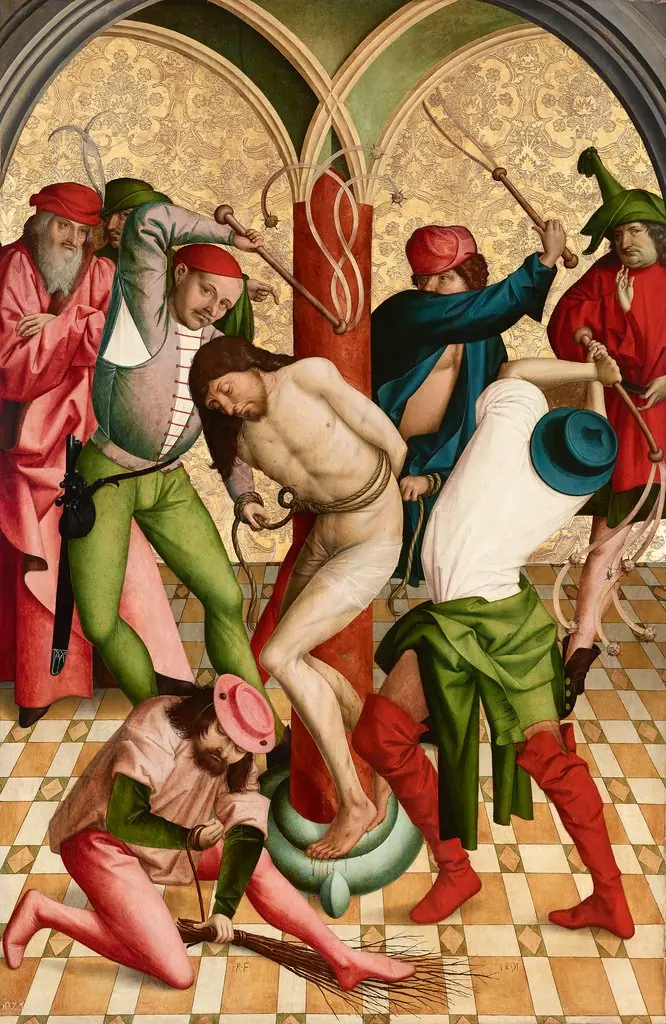
The panel was created around 1490/1491 as part of a winged retable cycle depicting scenes from the Life of the Virgin and the Passion of Christ for the high altar of the Franciscan church in Salzburg. The commission emerged from Frueauf's established relationship with ecclesiastical patrons in Salzburg, where he had worked since the 1470s, and his consultation role for the planned high altar of the Stadtpfarrkirche in 1484. The cycle includes the Verkündigung Mariens, Anbetung der Könige, Christus am Ölberg, Kreuztragung Christi, Kreuzigung Christi, Himmelfahrt Mariens, Geburt Christi, and Geißelung Christi. The panels are now held by the Österreichische Galerie Belvedere in Vienna. The Geburt Christi bears inventory number 4955. The work has been exhibited and studied as part of the Belvedere's holdings of late medieval Austrian painting, and in 2017-2018 was included in the exhibition 'Rueland Frueauf d. Ä. und sein Kreis' at the Upper Belvedere, which for the first time juxtaposed works by Frueauf the Elder and his son Rueland Frueauf the Younger.
Context
Rueland Frueauf the Elder (circa 1430/50-1507) was a German or Salzburg painter who first maintained a workshop in Salzburg and from approximately 1478 in Passau. Born in Salzburg or Obernberg am Inn, he was active in Salzburg from 1470, with documented work for the Benedictine Stift St. Peter in 1470, 1472, 1475, and 1476. His career trajectory reflects the mobility and interconnectedness of late medieval artists in the Alpine region. In 1484, he was summoned to Salzburg to provide an expert opinion on the planned high altar for the Stadtpfarrkirche, though the commission was executed by Michael Pacher from Bruneck. This competitive loss reportedly affected him deeply, and following a six-year creative pause during which he worked in Nuremberg on the Augustiner-Altar in 1487, his art transformed considerably. The Geburt Christi and its companion panels represent the mature phase of this transformed style. Frueauf operated within a network of workshops in Salzburg and Passau, and his name has been associated with the Master of Großgmain. His son Rueland Frueauf the Younger (circa 1470, after 1545) also became a painter, adapting and continuing his father's artistic legacy. Critical scholarship has emphasized Frueauf's role in bridging Gothic traditions with emerging Renaissance influences, and the 2017 Belvedere exhibition marked a significant reassessment of his oeuvre and circle.
Legacy
The fragmentary state of Geburt Christi has paradoxically enhanced its value as a physical document, prompting reflection on the materiality of late medieval panel painting. As the Museumsfernsehen commentary noted, the work makes explicit why such paintings are called 'Tafelbilder' (panel pictures), since the exposed wood grain reveals the fundamental structure of the support. The panel's damaged condition has become a subject of pedagogical and scholarly interest in its own right, questioning how we value and interpret incomplete works of art. Within Frueauf's oeuvre, the 1490/1491 cycle remains his most celebrated achievement, with the panels preserved in the Belvedere constituting a crucial corpus for understanding late Gothic painting in Central Europe. The 2017-2018 exhibition at the Upper Belvedere, 'Rueland Frueauf d. Ä. und sein Kreis,' represented the most significant scholarly reassessment of his work, juxtaposing his panels with those of his son for the first time and situating his production within the broader context of regional workshop practices. The work continues to be accessible through the Belvedere's digital collection, contributing to ongoing research into the material techniques and devotional functions of late medieval altarpieces.
Own this work as a print
Artist & collection
Artist
Rueland Frueauf the Elder (1440–1507) was an artist, born in Obernberg am Inn.

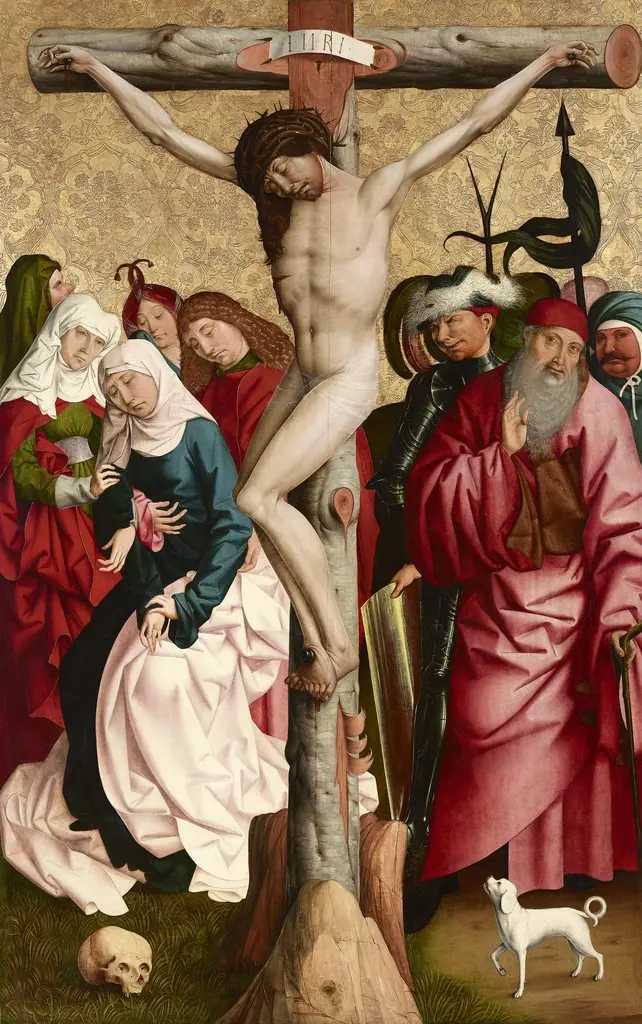
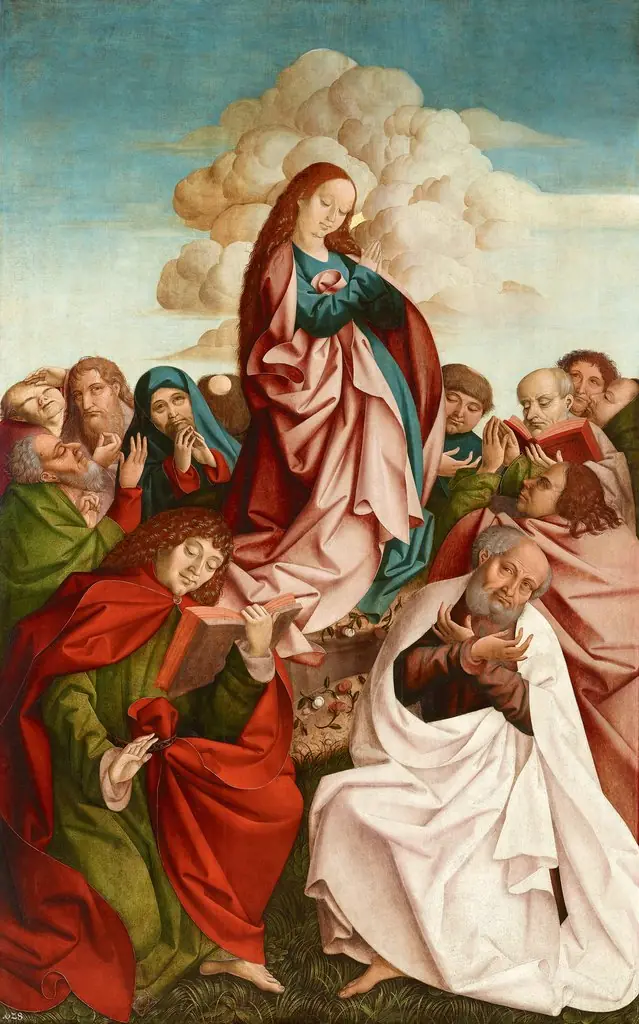
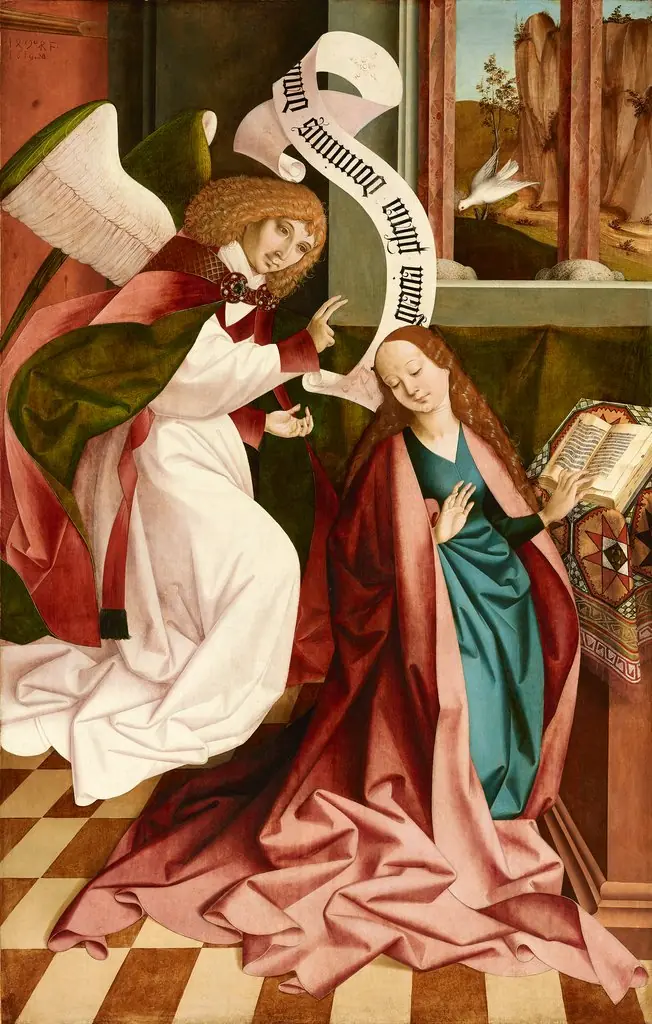
- Verkündigung an Maria
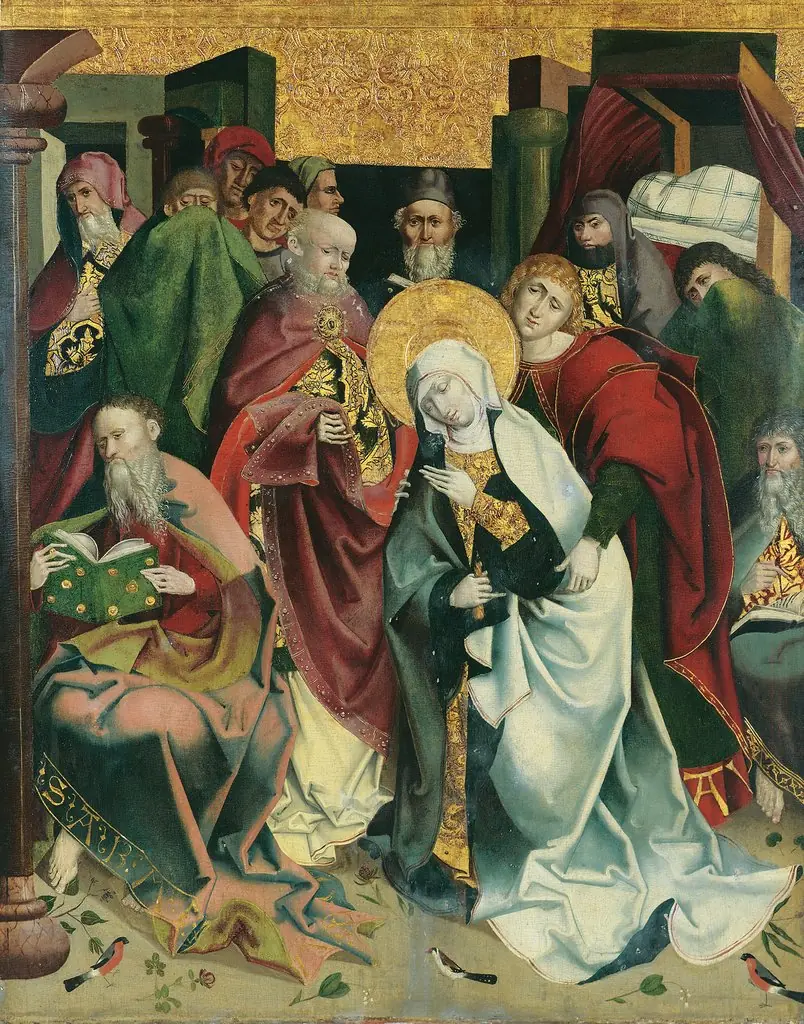 Tod Mariens
 The Nativity
 Adoration of the Magi; Presentation of the Christ-child in the temple
 Aanbidding door de koningen
 The Annunciation
 The Boppard Altarpiece: The Virgin and Christ Child (left panel); Saint Anne Offering a Pear (right panel) (triptych, closed)
 Twee altaarluiken
 The Birth of Christ
 Virgin and Child