Artwork
Kreuztragung Christi
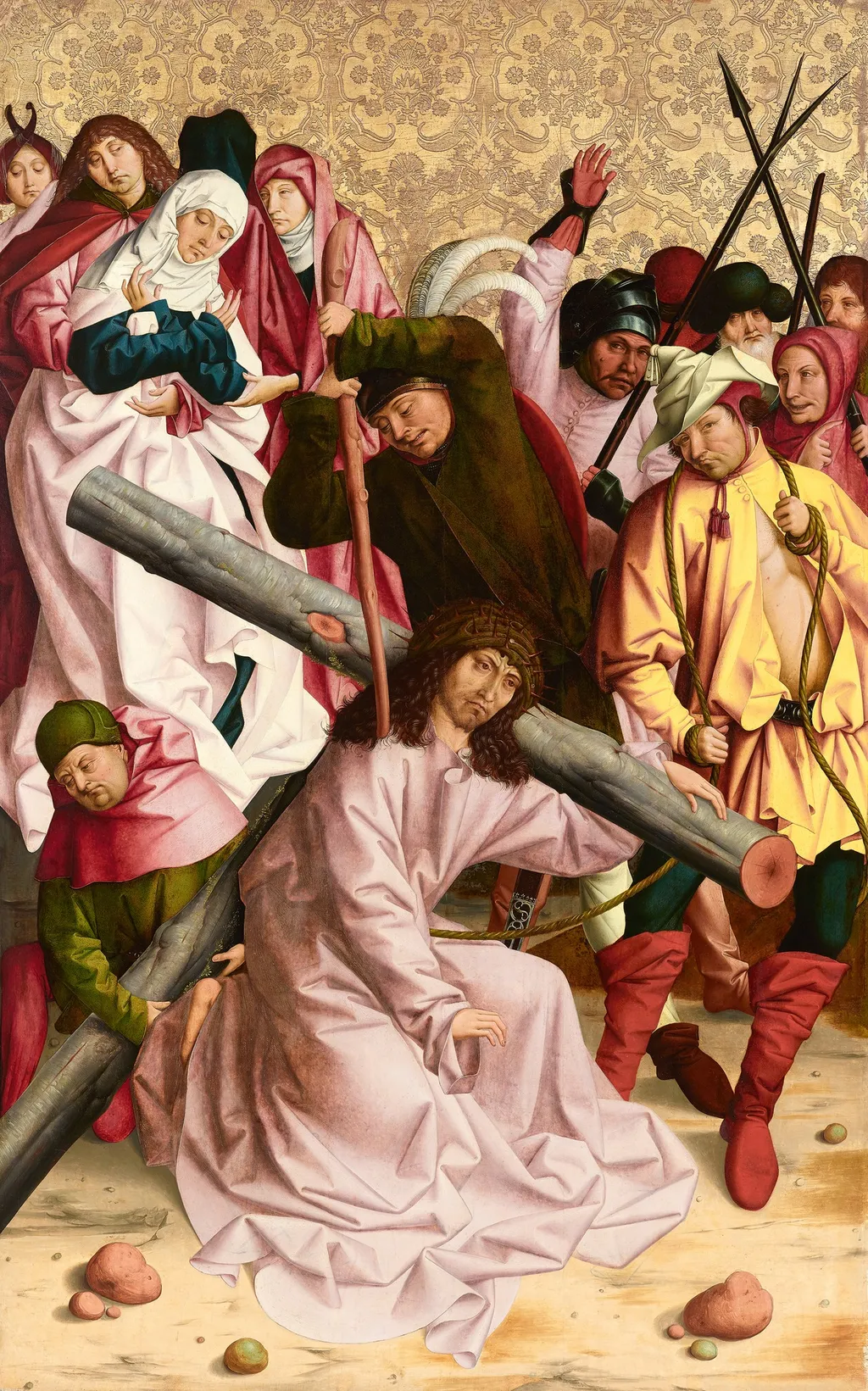
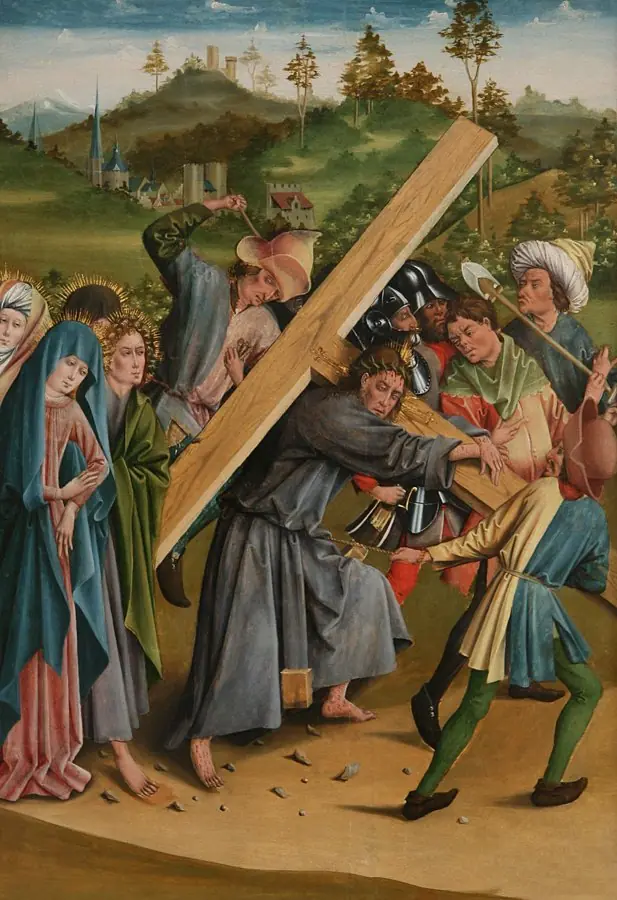
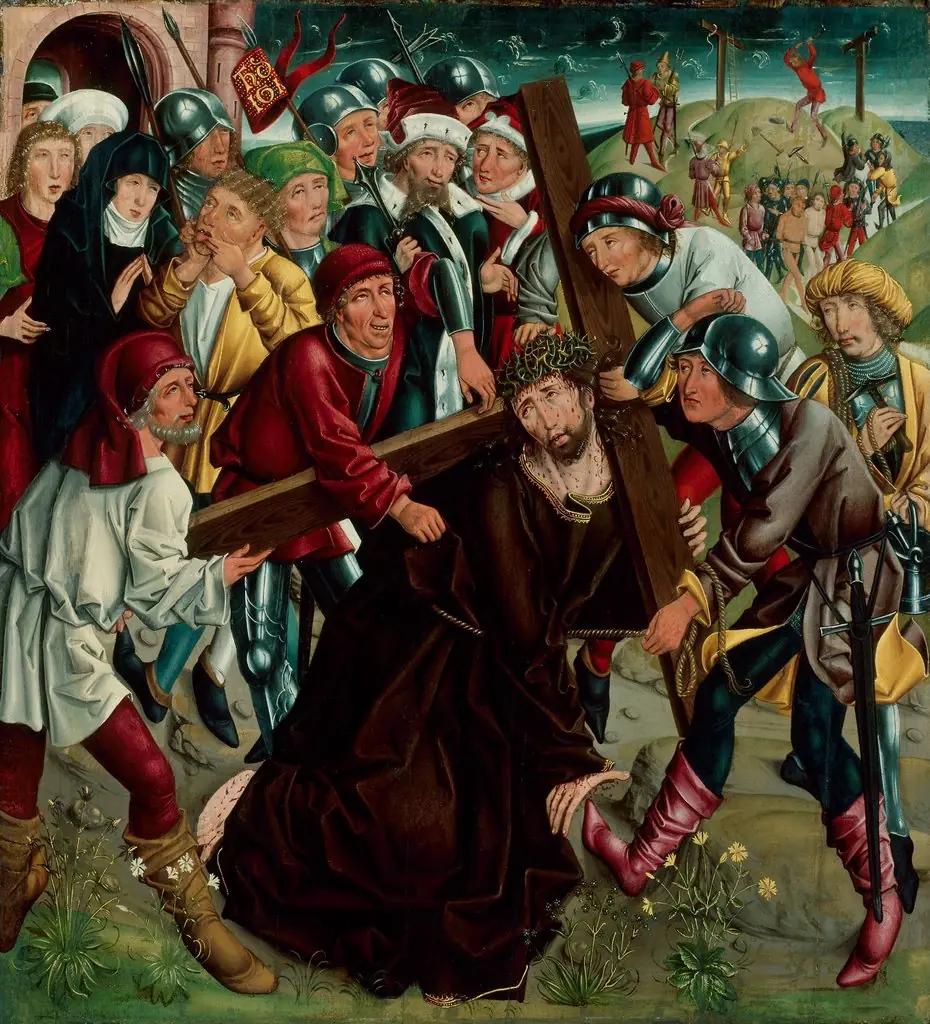
Kreuztragung Christi is an unspecified painting by the Northern Renaissance artist Rueland Frueauf the Elder. It dates from 1496 and is held in the collection of the Kunsthistorisches Museum.
About this work
Overview
Kreuztragung Christi is a religious painting created by the German late Gothic painter Rueland Frueauf the Elder around 1490 to 1491.
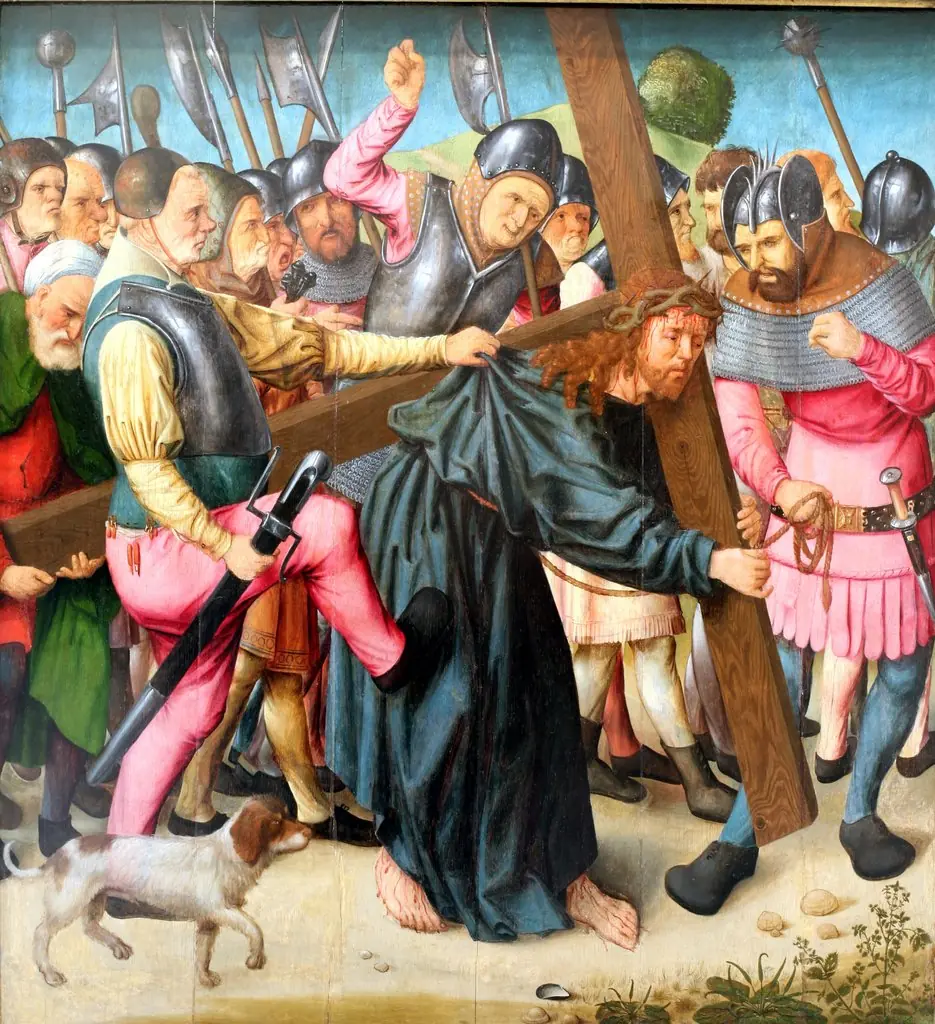
Kreuztragung Christi is a religious painting created by the German late Gothic painter Rueland Frueauf the Elder around 1490 to 1491. Executed as a painting on spruce wood, the work measures 211.7 by 134.7 centimeters. It forms part of a larger altarpiece depicting scenes from the Life of the Virgin and the Passion of Christ, which is widely considered the artist's principal masterpiece. The painting is held in the Belvedere in Vienna, where it carries the inventory number 4842.
Subject & Meaning
The artwork depicts Jesus Christ bearing the cross, a pivotal episode of the Passion narrative. Christ kneels on sandy ground strewn with small stones, his body twisting under the heavy gray wooden cross. A crown of thorns sits on his head, and he wears a pale pink robe. The composition is densely crowded with surrounding figures who enforce his suffering or express grief. A man in green and pink leans forward to assist or push, while a figure in dark green with a fur-lined hood presses down from behind. Another figure in yellow with red hose pulls a rope. Women in white and pink garments with veiled heads gesture in sorrow from the upper left, and spears are visible at the upper right.
Technique & Style
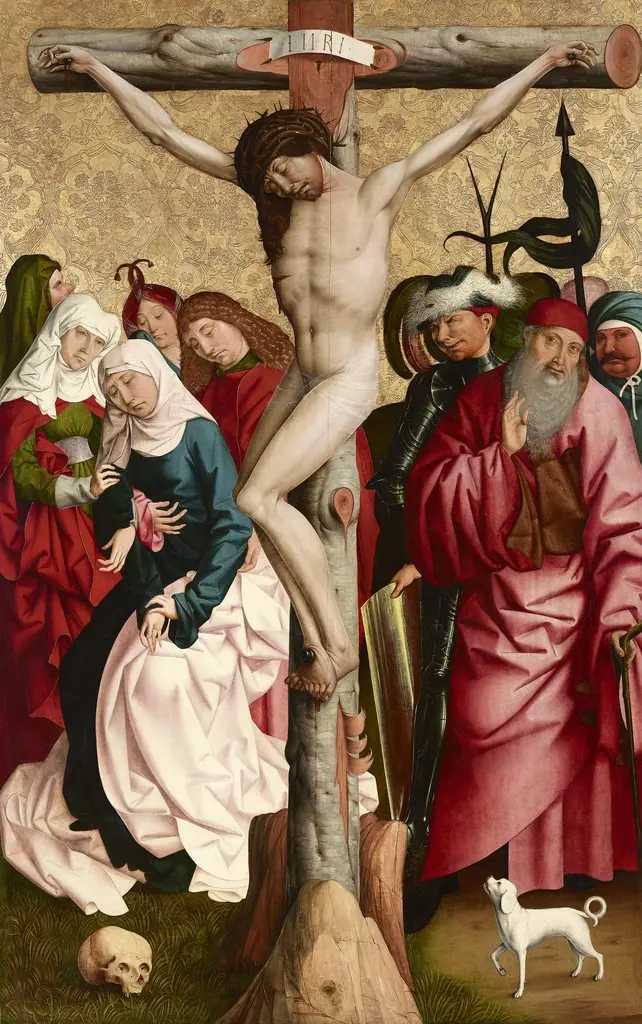
Frueauf the Elder painted the panel on a spruce wood support. The surface is characterized by smooth execution and fine detail, particularly in the rendering of fabrics and faces. Light falls evenly across the scene, modeling faces and drapery with soft shadows. The palette is rich, dominated by pinks, reds, greens, and yellows, which contrast with the ornate, tooled gold brocade pattern that covers the entire background. This combination of compressed spatial arrangement, ornamental gold, and vivid, descriptive color aligns the work with the late Gothic tradition in the German-speaking regions.
Own this work as a print
Artist & collection
Artist
Rueland Frueauf the Elder (1440–1507) was an artist, born in Obernberg am Inn.