Artwork
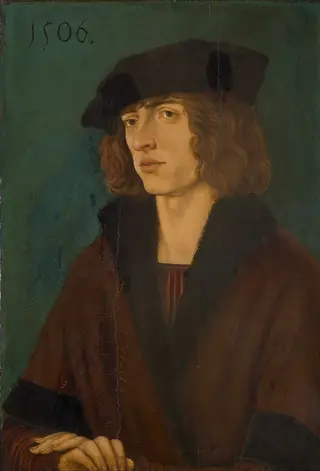
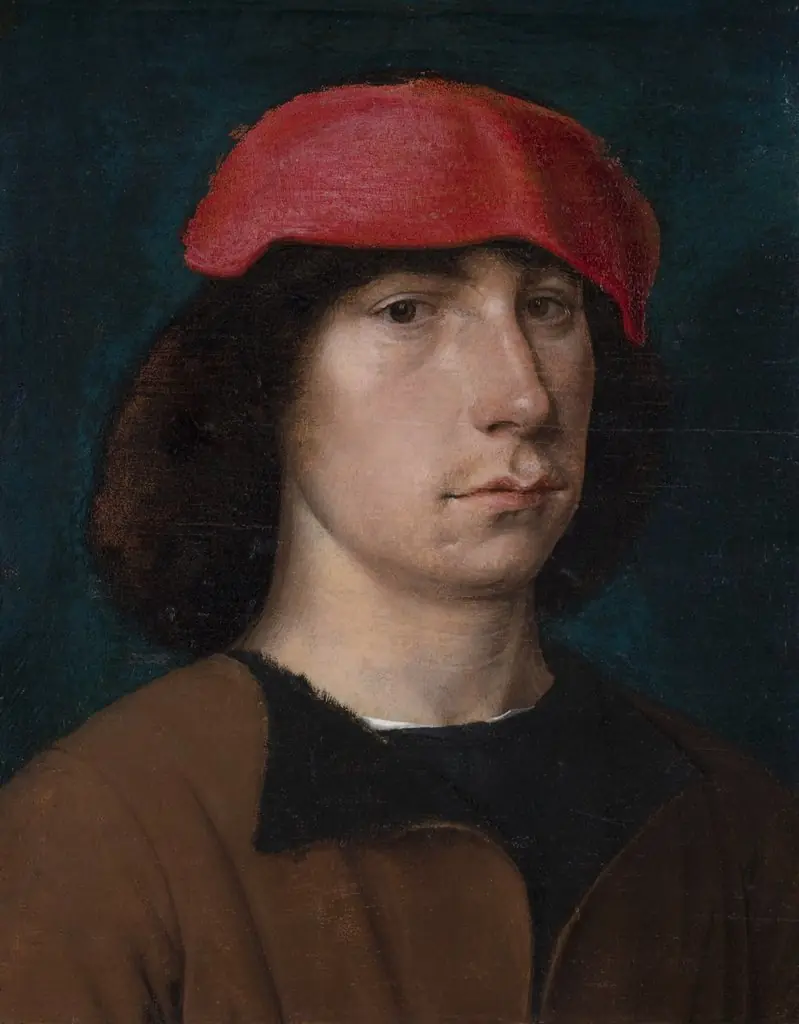
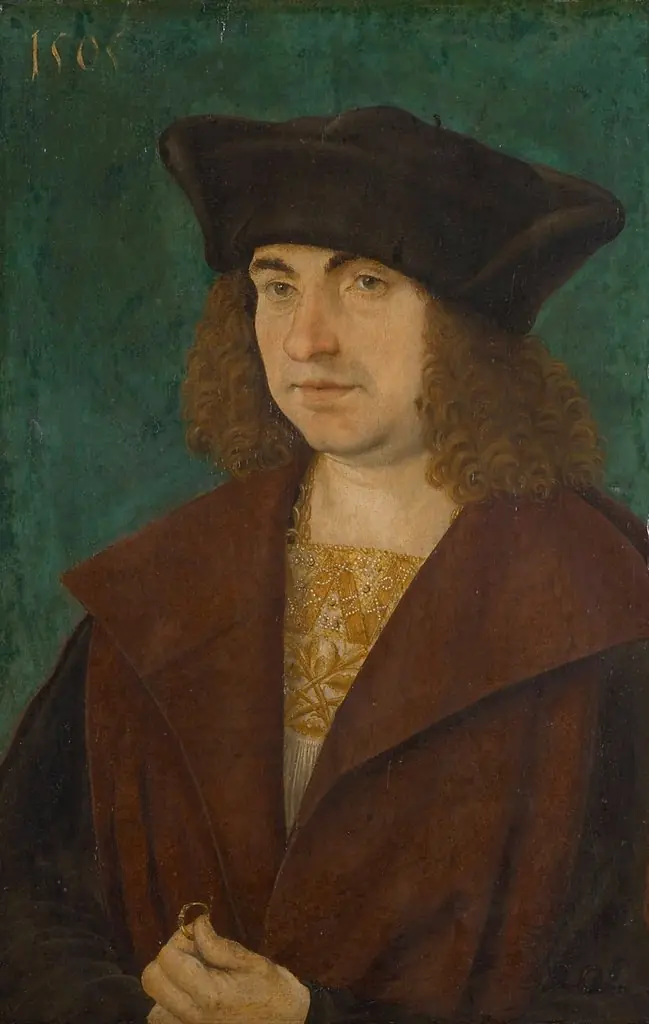
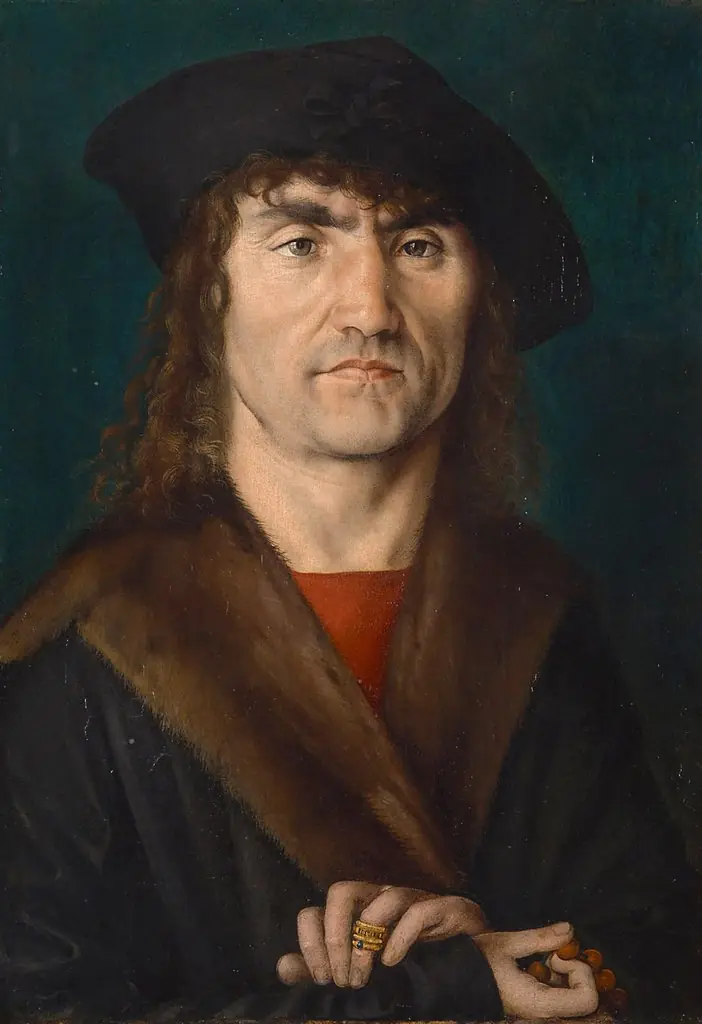
Bildnis des Malers Jobst Seyfrid
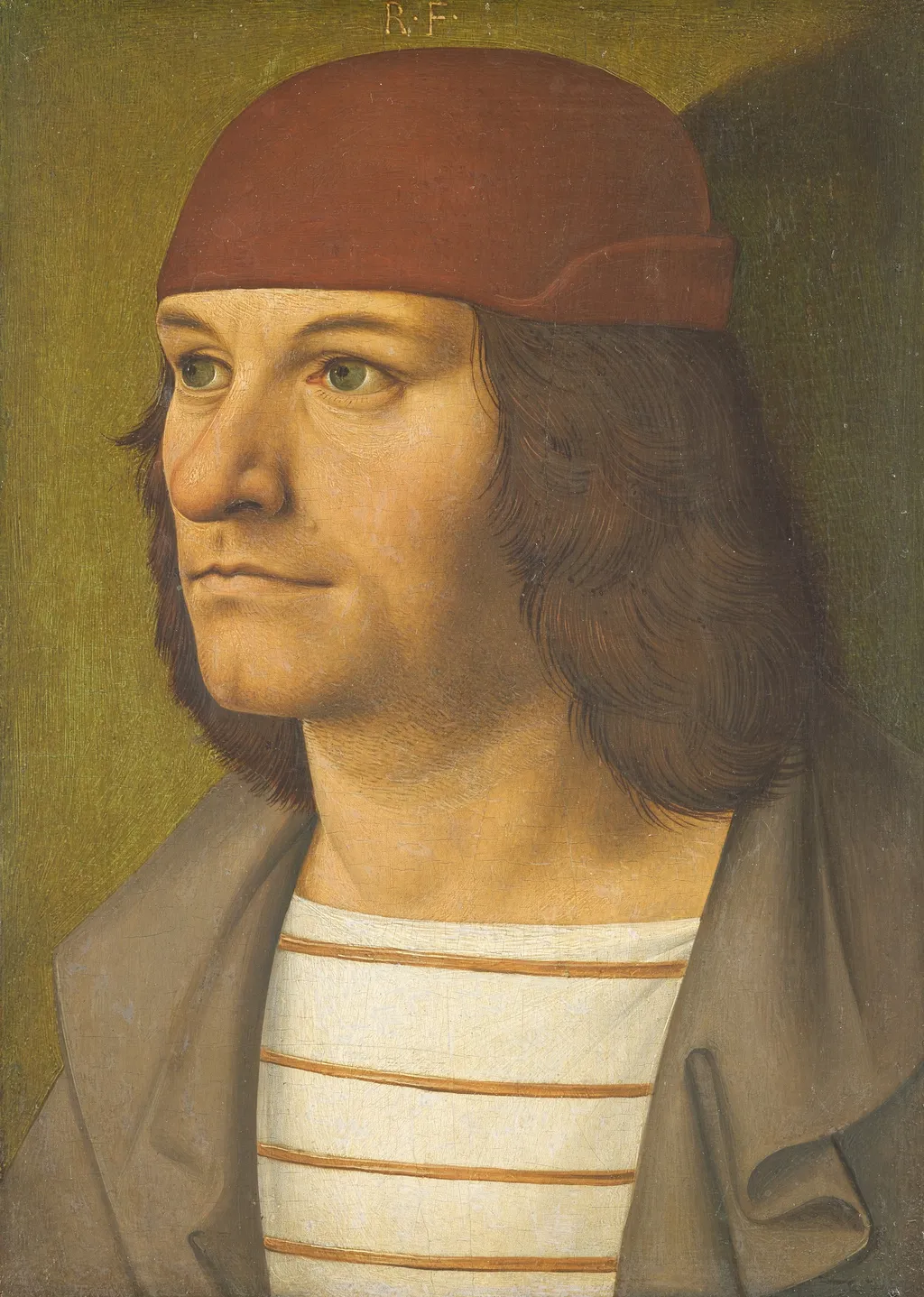
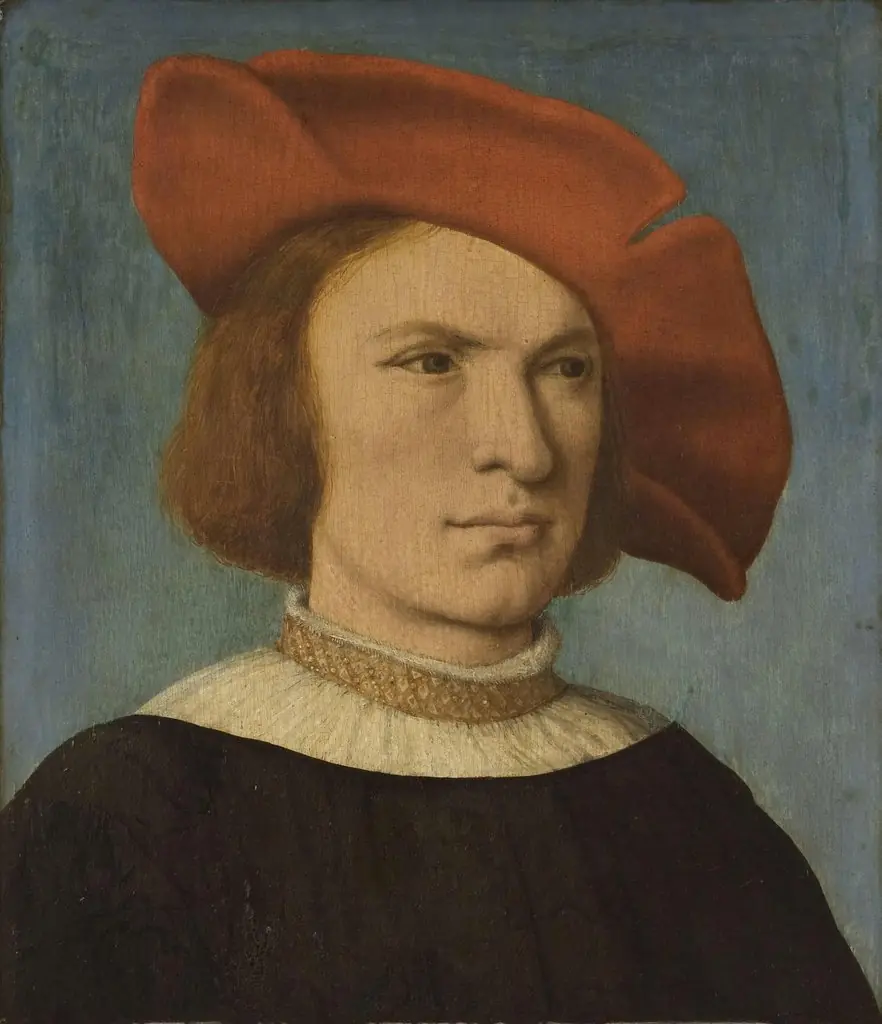
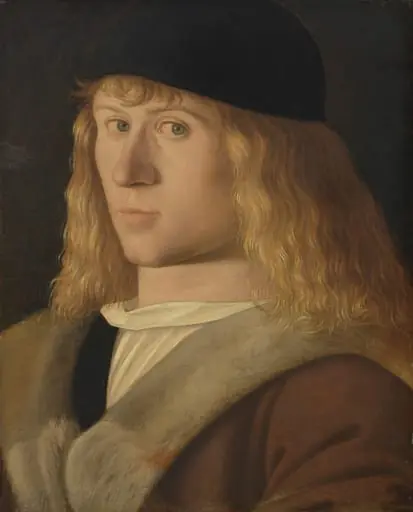
Bildnis des Malers Jobst Seyfrid is an unspecified painting by the Northern Renaissance artist Rueland Frueauf the Elder. It dates from 1496 and is held in the collection of the Kunsthistorisches Museum.
About this work
Subject & Meaning
The iconography is straightforward, centering on the identity of the sitter and his attire without additional narrative elements.
Created in 1490 by Rueland Frueauf the Elder, this work is a portrait depicting the painter Jobst Seyfrid. The composition focuses on the likeness of the male subject, who is shown wearing a hat. As a representation of a specific individual within the genre of portraiture, the painting serves primarily as a record of Seyfrid's appearance rather than an allegorical scene rich in complex symbolism.
The iconography is straightforward, centering on the identity of the sitter and his attire without additional narrative elements.
Technique & Style
The portrait depicts Jobst Seyfrid in a painted medium on a wooden support, reflecting early Netherlandish portraiture with meticulous detail in attire and facial expression. The work measures 25 cm in height and 18.3 cm in width, and is housed in the Belvedere, Kunsthistorisches Museum in Vienna. Its formal qualities include a restrained palette and precise rendering of texture, characteristic of Rueland Frueauf the Elder's style in the late 15th century.
History & Provenance
Bildnis des Malers Jobst Seyfrid is a portrait painted by Rueland Frueauf the Elder around 1490. The work entered the Belvedere gallery, which forms part of the Kunsthistorisches Museum in Vienna, where it remains today. No earlier owners or commission details are recorded in the available sources, so the known provenance begins with its creation by Frueauf and its current location in the Belvedere collection. The painting measures 25 cm in height and 18.3 cm in width.
Overview
Rueland Frueauf the Elder painted this portrait in 1496. The work is part of the collection of the Kunsthistorisches Museum in Vienna, where it is displayed among other late‑medieval pieces.
Context
Created at the close of the 15th century, the portrait reflects the transitional period between Gothic conventions and emerging Renaissance sensibilities in Austrian art, where attention to individual likeness began to gain prominence.
Own this work as a print
Artist & collection
Artist
Rueland Frueauf the Elder (1440–1507) was an artist, born in Obernberg am Inn.