Artwork
Anbetung der Heiligen Drei Könige
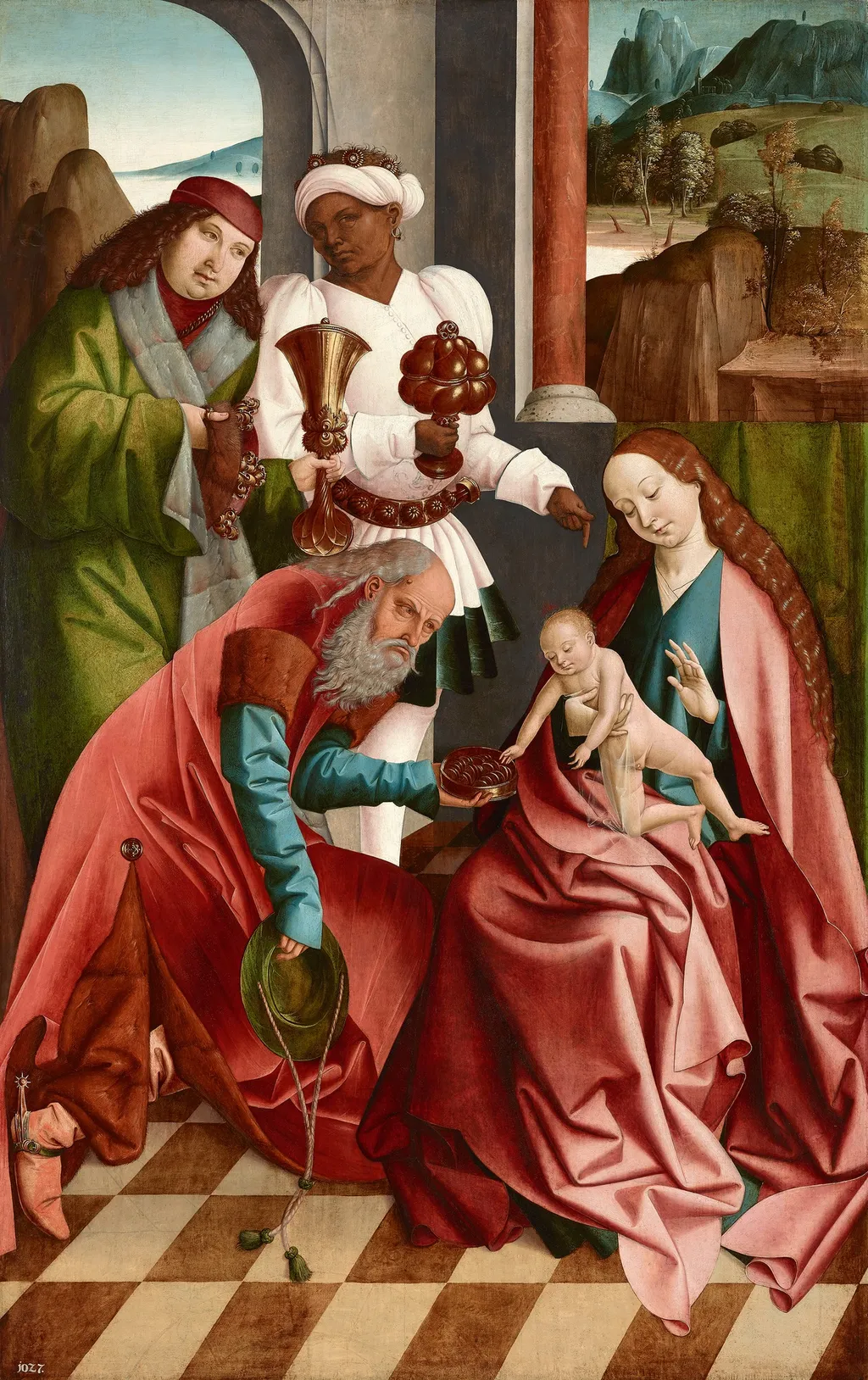
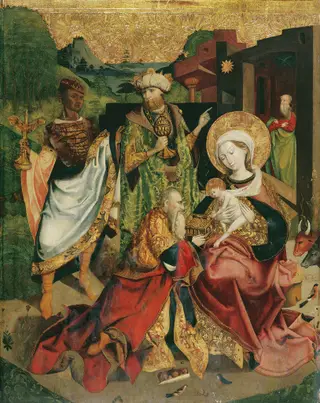
Anbetung der Heiligen Drei Könige is an unspecified painting by the Northern Renaissance artist Rueland Frueauf the Elder. It dates from 1496 and is held in the collection of the Kunsthistorisches Museum.
About this work
Subject & Meaning
The painting depicts the Adoration of the Magi, a central Christian subject in which the three wise men present gifts to the Christ Child.
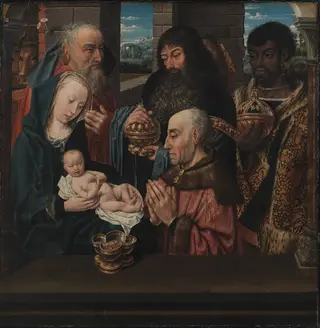
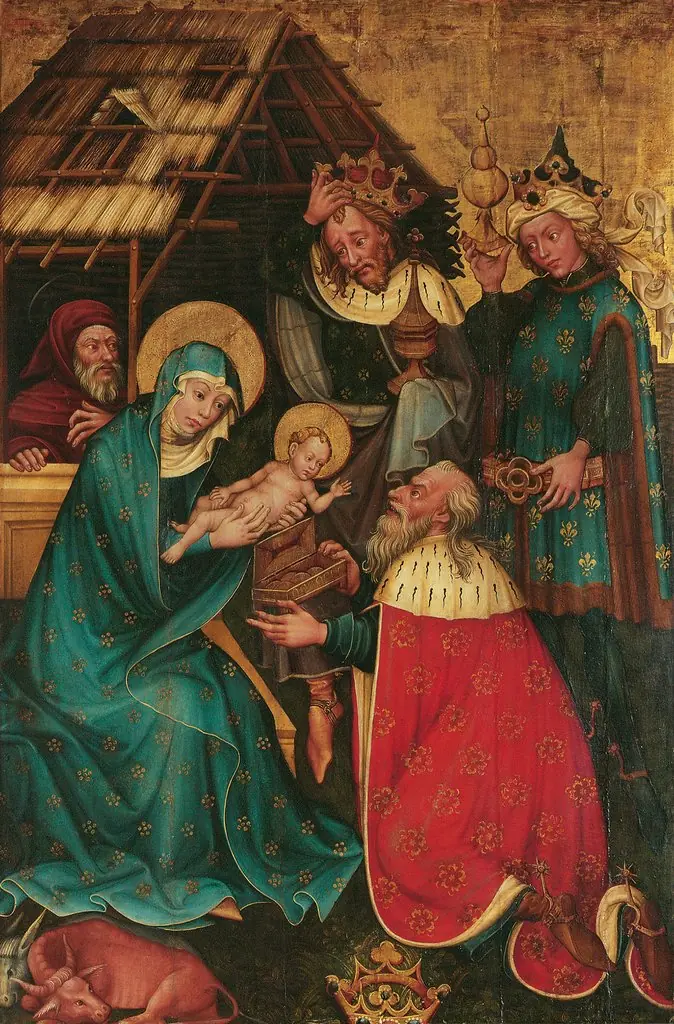
The painting depicts the Adoration of the Magi, a central Christian subject in which the three wise men present gifts to the Christ Child. The scene centers on the Virgin Mary holding the Christ Child, surrounded by the three kings in richly colored robes, one of whom kneels in reverence while another points upward toward the star that guided them. Symbolic details reinforce the narrative: the eldest king removes his turban, a gesture of humility before the divine, while a spur on his boot and a landscape background frame the encounter as both earthly and sacred.
The composition emphasizes the kings’ recognition of Christ’s kingship and divinity, aligning with medieval and early Renaissance traditions of representing this episode as an affirmation of faith and royal homage.
History & Provenance
The painting titled Anbetung der Heiligen Drei Könige was executed by Rueland Frueauf the Elder in 1490, as recorded in contemporary documentation. It was produced as a religious work intended for inclusion in the collection of the Belvedere, Kunsthistorisches Museum, where it has been housed since its creation. The composition portrays the adoration of the Magi, featuring the Christ Child, the three kings, Mary, and associated attributes such as a turban and spurs within a landscape setting. The work’s dating is explicitly given as 1490, and its provenance reflects continuous ownership by the museum.
The altarpiece titled Anbetung der Heiligen Drei Könige, painted by Rueland Frueauf the Elder around 1490, is housed in the Belvedere of the Kunsthistorisches Museum in Vienna. It belongs to the museum’s collection of religious paintings, though the specific inventory or accession number is not recorded in the available documentation. The work’s subject matter depicts the adoration of the Magi, featuring the Christ Child, the three kings, Mary, and accompanying figures.
No exhibition history is detailed in the sources consulted, so its display record outside the permanent collection cannot be confirmed from the provided information.
Overview
Anbetung der Heiligen Drei Könige, painted in 1496 by Rueland Frueauf the Elder, is a religious panel depicting the Adoration of the Magi. The artwork portrays the Virgin Mary and the Christ Child receiving homage from the three wise men, a pivotal scene from Christian scripture. This painting is currently housed in the collection of the Kunsthistorisches Museum.
Technique & Style
Frueauf the Elder employed a vibrant palette and precise draftsmanship to render this devotional scene. The figures are delineated with sharp lines, contributing to a sense of both grandeur and intricate detail. Rich colors, particularly in the garments of the Magi, draw the viewer's eye.
The composition is set against a receding landscape of hills and trees, framed by an architectural arch, which adds depth and structure to the narrative.
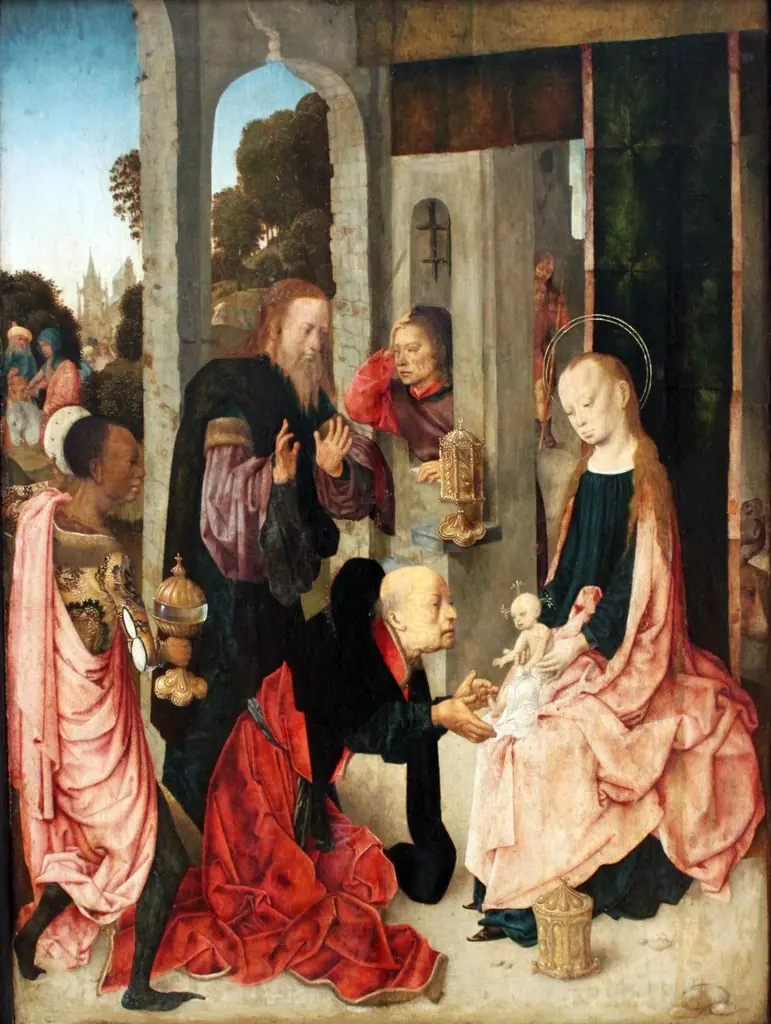
Own this work as a print
Artist & collection
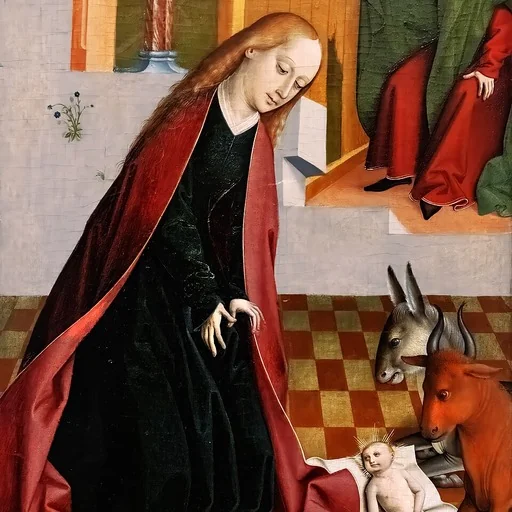
Artist
Rueland Frueauf the Elder (1440–1507) was an artist, born in Obernberg am Inn.

- Adoration of the Kings
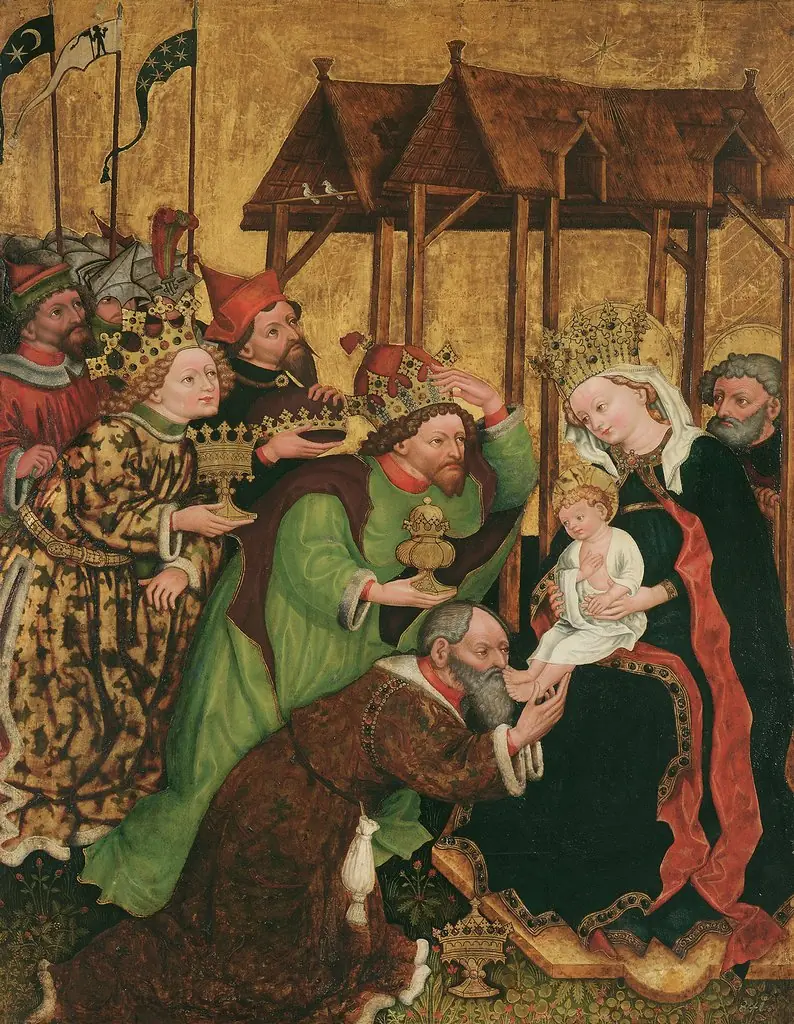 Anbetung der Heiligen Drei Könige (Innenseite); Erwählung Josephs und Vermählung Mariens (Außenseite)
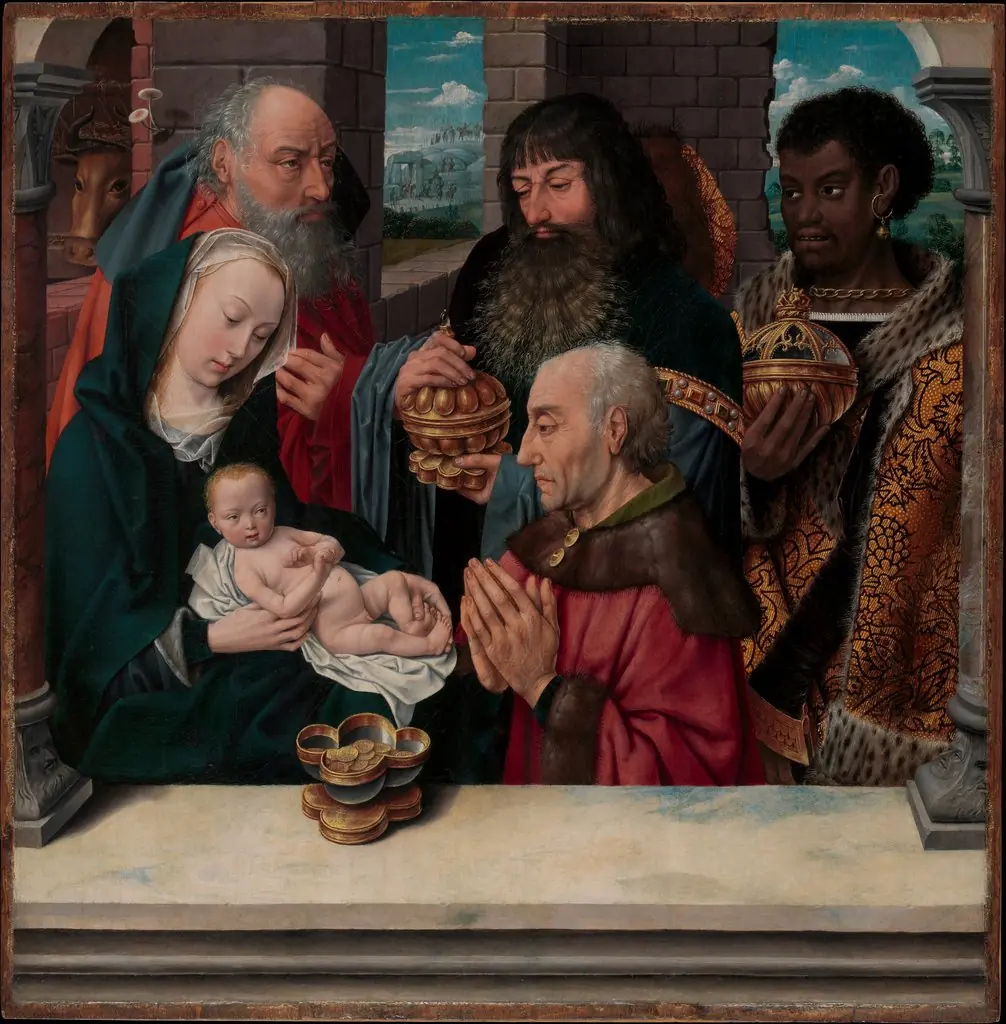 The Adoration of the Magi
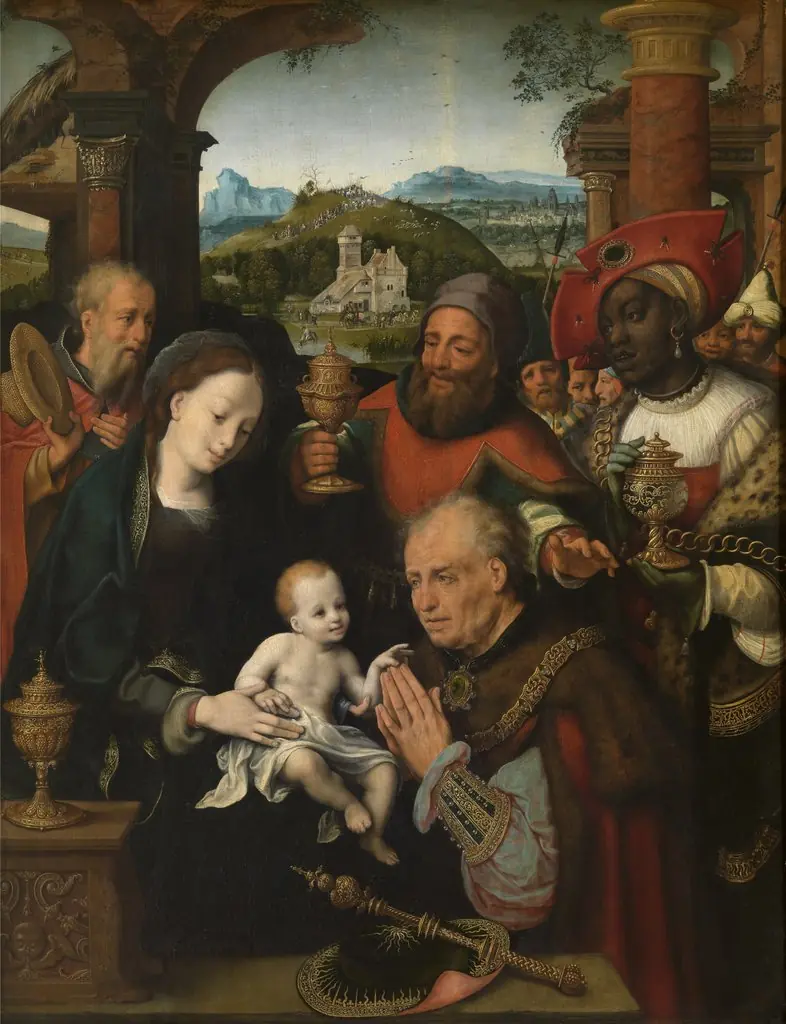 The Adoration of the Magi
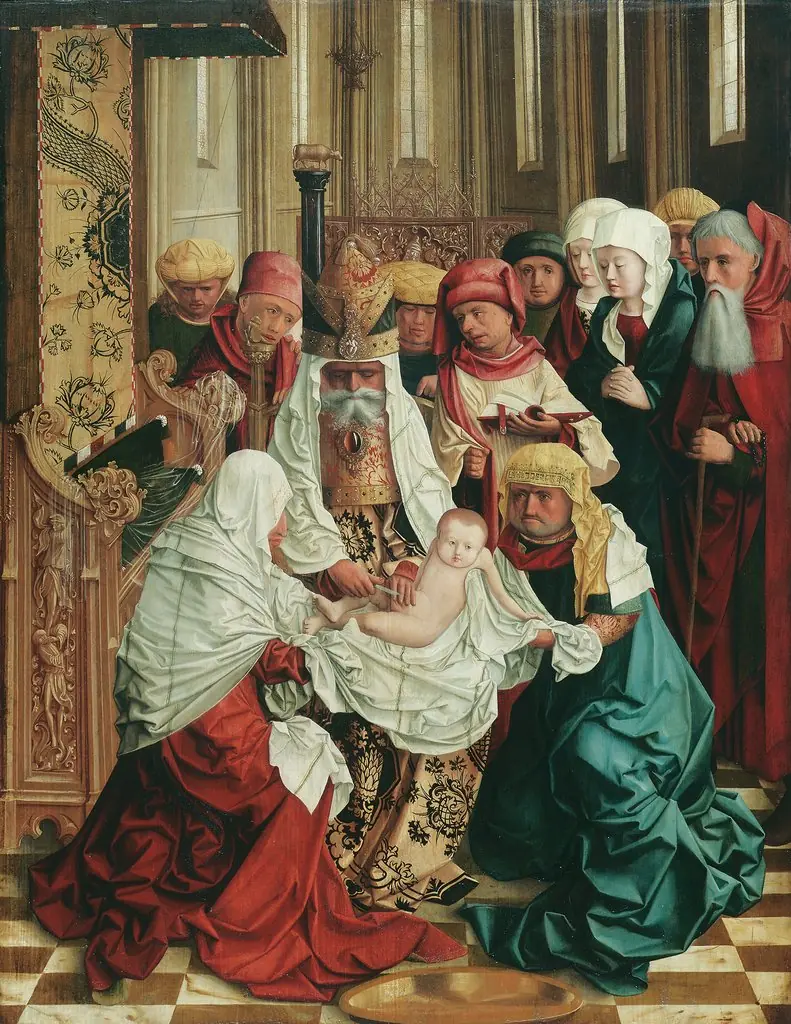 Beschneidung Christi
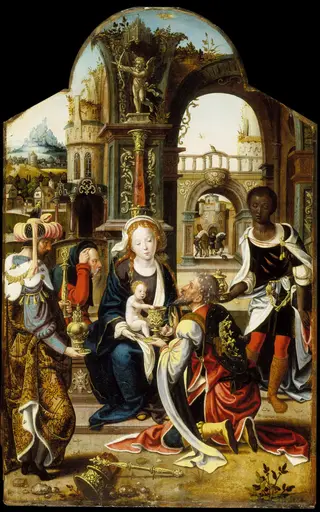 The Adoration of the Magi
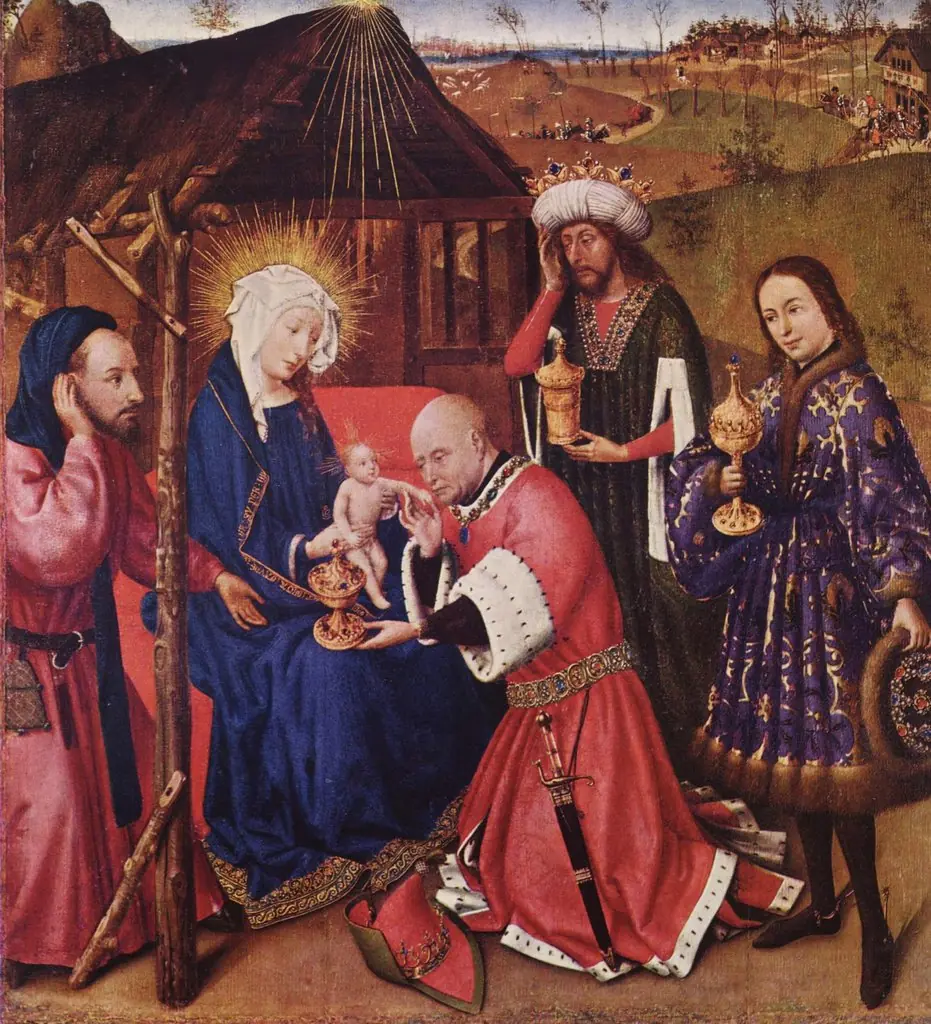 The Adoration of the Kings
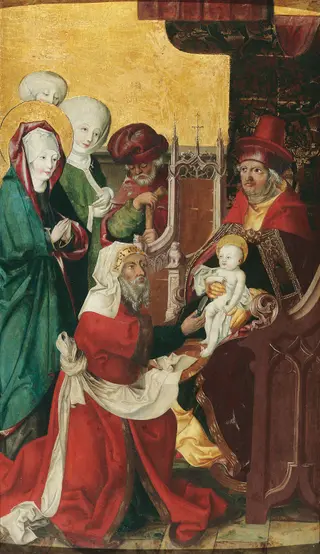 The circumcision of Christ
 Anbetung der Hl. Drei Könige
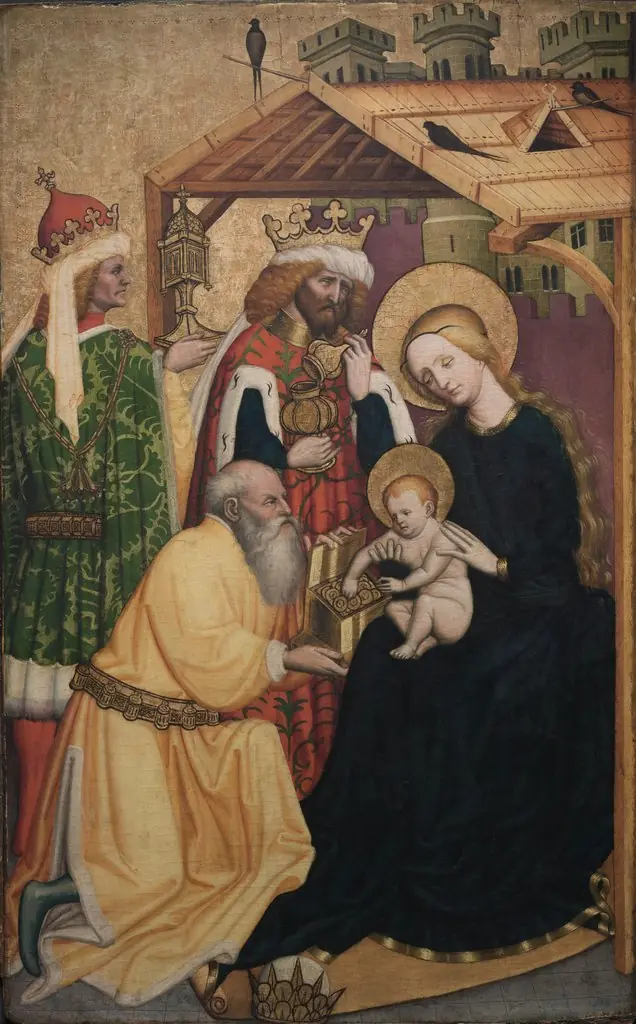 Adoration of the Magi
 The Adoration of the Kings
 Anbetung der Hl. Drei Könige