Artwork
Mending the Harness
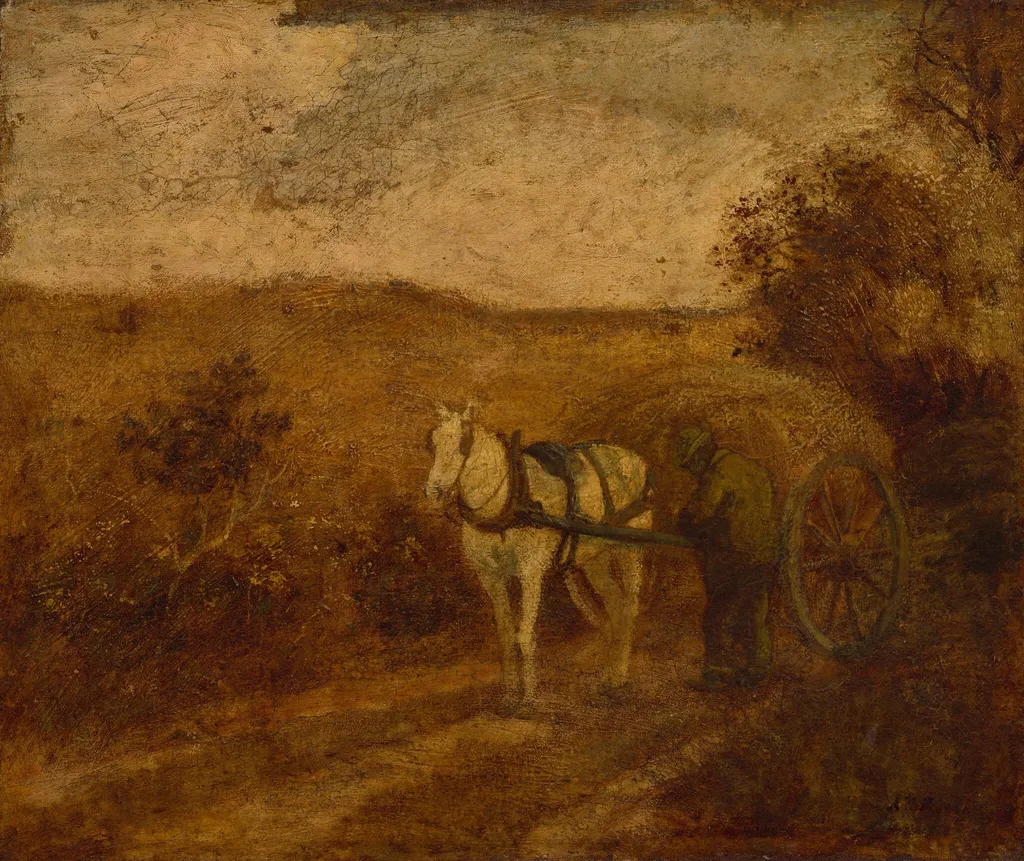
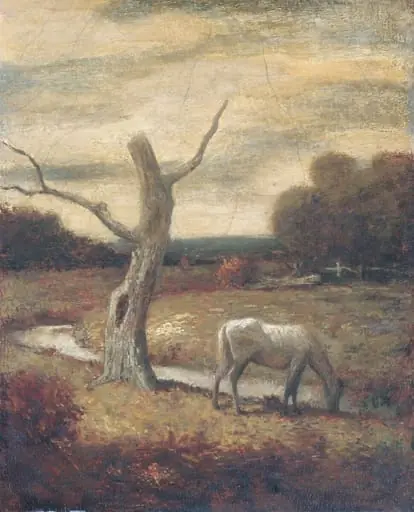
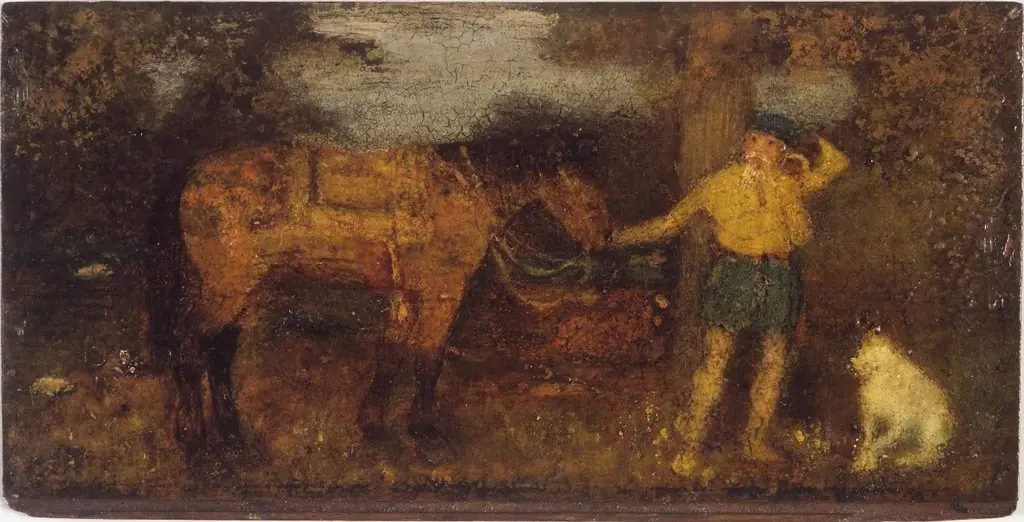
Mending the Harness is an oil painting by the Hudson River School artist Albert Pinkham Ryder. It dates from 1874 and is held in the collection of the National Gallery of Art.
- Inscription
- Inscribed:lower right: A. P. Ryder
About this work
Technique & Style
Executed in 1874, Mending the Harness is an oil painting on canvas by Albert Pinkham Ryder. The work measures 48.3 cm in height and 57.2 cm in width. The composition features a tree among its depicted elements. The piece is held in the collection of the National Gallery of Art, Washington, D.C.
History & Provenance
Earlier exhibition history includes its inclusion in a March 1910 exhibition at the Cottier Gallery and a loan by Walter P.
Mending the Harness was painted by Albert Pinkham Ryder in 1874 as an oil on canvas. The work was acquired directly from the artist by James Smith Inglis, president of Cottier & Co., New York. After Inglis's death the painting passed through Cottier & Co., then to Walter P. Fearon and the Fearon Galleries, and was held by M. Knoedler & Co. by October 1915.
It was sold in February 1917 to Adolph Lewisohn, inherited by his son Sam A. Lewisohn, and bequeathed to the National Gallery of Art in 1951. Earlier exhibition history includes its inclusion in a March 1910 exhibition at the Cottier Gallery and a loan by Walter P. Fearon to the inaugural exhibition of the Toledo Museum of Art in 1912.
Overview
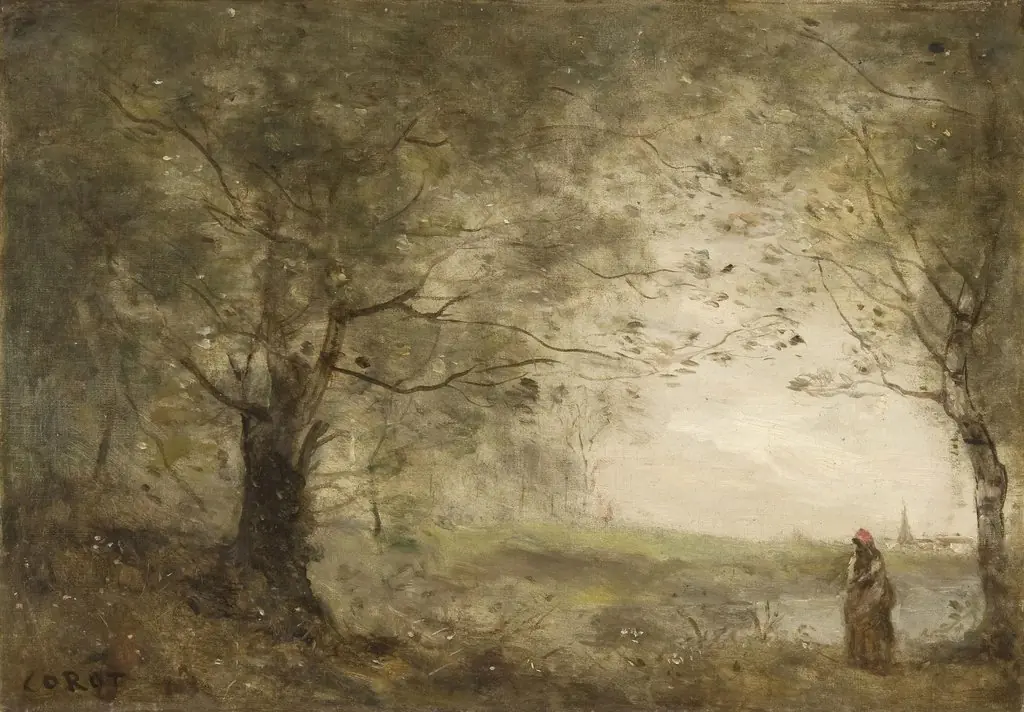
Mending the Harness (1874) by Albert Pinkham Ryder depicts a solitary figure kneeling beside a tree, engaged in the repair of leather straps. The composition centers on the man's focused labor, rendered with the artist's characteristic muted palette and soft, atmospheric lighting. Executed in oil on canvas, the work exemplifies Ryder's early interest in quiet, introspective moments drawn from rural life.
While the scene suggests an outdoor setting, Ryder frequently altered specific details to prioritize emotional resonance over strict realism, a technique that would define his mature style. Painted during a formative period in the artist's career, this piece bridges his initial academic training and his later, more dreamlike interpretations of narrative subjects. The work reflects Ryder's tendency to imbue mundane activities with a sense of timeless solitude, using the interplay of shadow and light to create a contemplative mood.
The tree framing the figure serves not merely as a backdrop but as an integral element that encloses the space, enhancing the intimacy of the scene. This painting remains a significant example of Ryder's ability to transform simple domestic or laborious tasks into profound meditations on human existence.
Subject & Meaning
The painting depicts a man kneeling beneath a prominent tree, his hands occupied with repairing leather straps. This seemingly simple act of mending is elevated by the composition, which emphasizes the man's focused concentration and the surrounding natural world. The tree itself dominates the canvas, suggesting a deep connection between the figure and his environment, and inviting contemplation on the quiet dignity of labor and introspection.
Own this work as a print
Artist & collection

Artist
Albert Pinkham Ryder was an American painter best known for his poetic and moody allegorical works and seascapes, as well as his eccentric personality.