Artwork
Benjamin
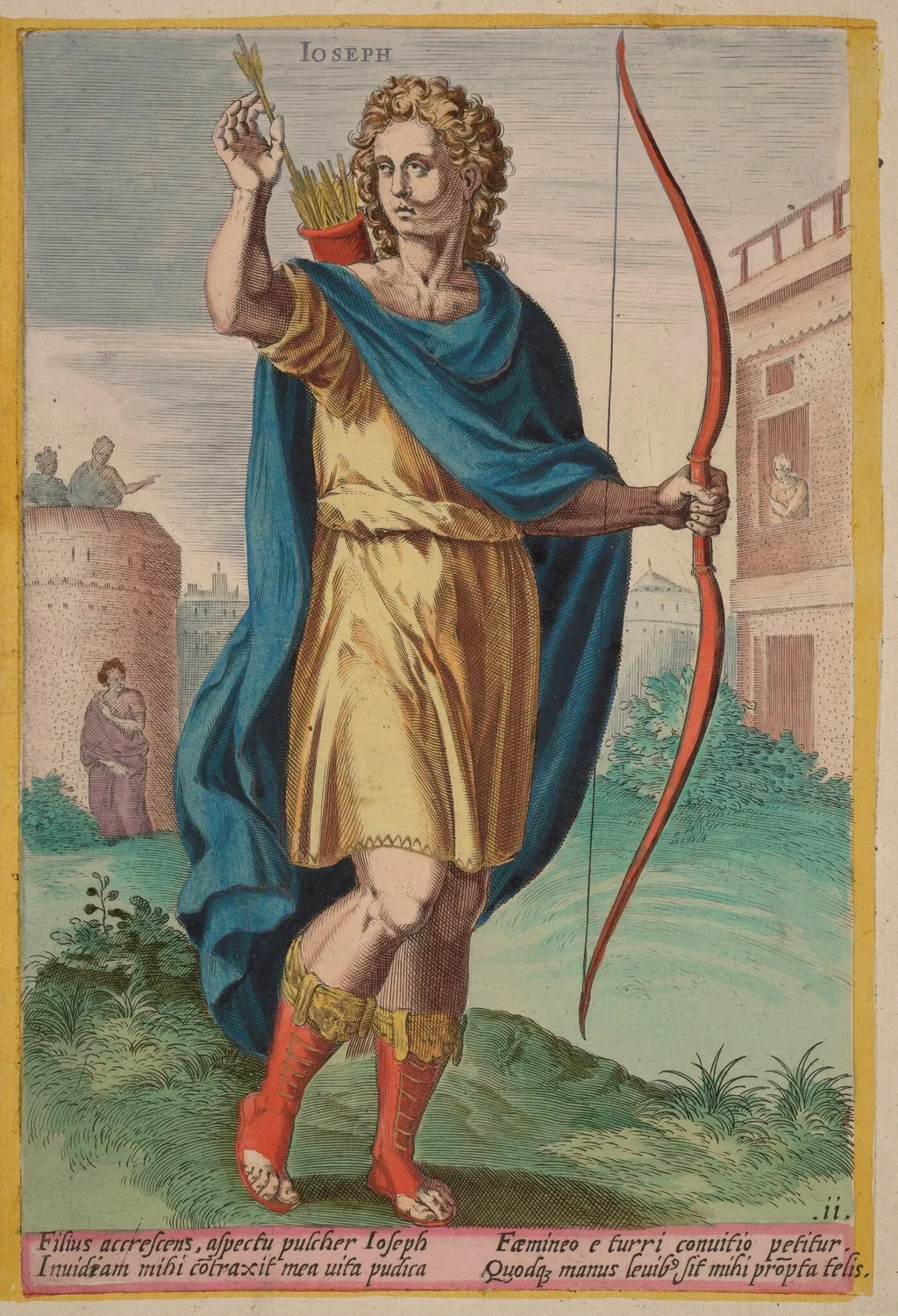
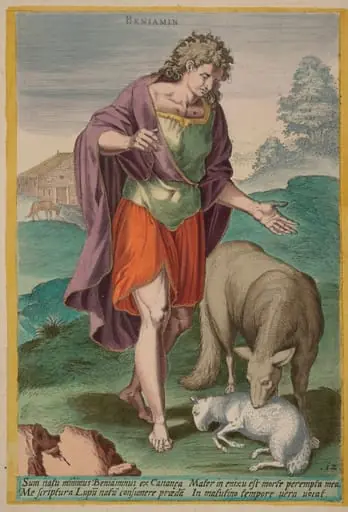
Benjamin is an ink print by the Renaissance artist Jan Sadeler I. It dates from 1585 and is held in the collection of the National Gallery of Art.
- Inscription
- Inscribed:upper center in plate: IOSEPH; lower right in plate: .ii.; in margin below image, in plate: Filius accrescens, aspectu pulcher Ioseph / Faemineo e turri co[n]vitio petitur. / Inuideam mihi co[n]traxit mea uita pudica / Quodq[ue] manus leuib[us], sit mihi pro[m]pta telis. (A growing son, fair of countenance, is Joseph. From the towers women abuse him. My chaste life has earned me hatred, as has my hand, so swift with light darts. [translation from Veldman, Ilja M., and H. J. de Jonge, "The sons of Jacob: the twelve patriarchs in sixteenth-century Netherlandish prints and popular literature," Simiolus, vol. 15 (1985), no. 3, p. 196.])
About this work
Overview
Jan Sadeler I’s hand‑coloured engraving, dated around 1585, depicts a youthful figure named Ioseph standing on a gently sloping, grassy knoll. He holds a red bow and arrow, with an arrow poised near his mouth, and is dressed in a blue‑gold cloak over a white tunic, complemented by red boots and a belt.
Subject & Meaning
The central figure, identified by the inscription “Ioseph,” appears as a classical or allegorical youth, perhaps alluding to the biblical Joseph or a generic heroic archetype. The presence of the bow and arrow suggests themes of readiness or pursuit, while the distant cityscape may hint at a narrative setting beyond the immediate scene.
Technique & Style
The image was produced by engraving metal plates, a process in which Sadeler incised fine lines that were then inked and pressed onto laid paper. After printing, the work was hand‑coloured, giving it bright yet now slightly faded hues, green for the grass, pale tones for the sky, and vivid reds for the bow and boots.
History & Provenance
Created in the late sixteenth century, the print belongs to the prolific Sadeler family of Flemish engravers who worked extensively across Europe. Its survival in a coloured state indicates careful handling and suggests it was intended for a market that valued decorative, narrative prints.
Context
The engraving reflects the late Renaissance interest in combining classical motifs with detailed landscape elements. Small figures in the background, a city on a hill, and the inclusion of Latin text align with contemporary practices of embedding moral or scholarly commentary within visual works.
Own this work as a print
Artist & collection

!["You Are Shooting at Heaven" [fol. 9 recto], by French early 16th Century](https://artifactworldgallery.com/img/french-early-16th-century--you-are-shooting-at-heaven-fol-9-recto--28e4ef6e8d8a696d-w320.webp)