Artwork
Portrait of Maharaja Pratap Singh (1764–1803)
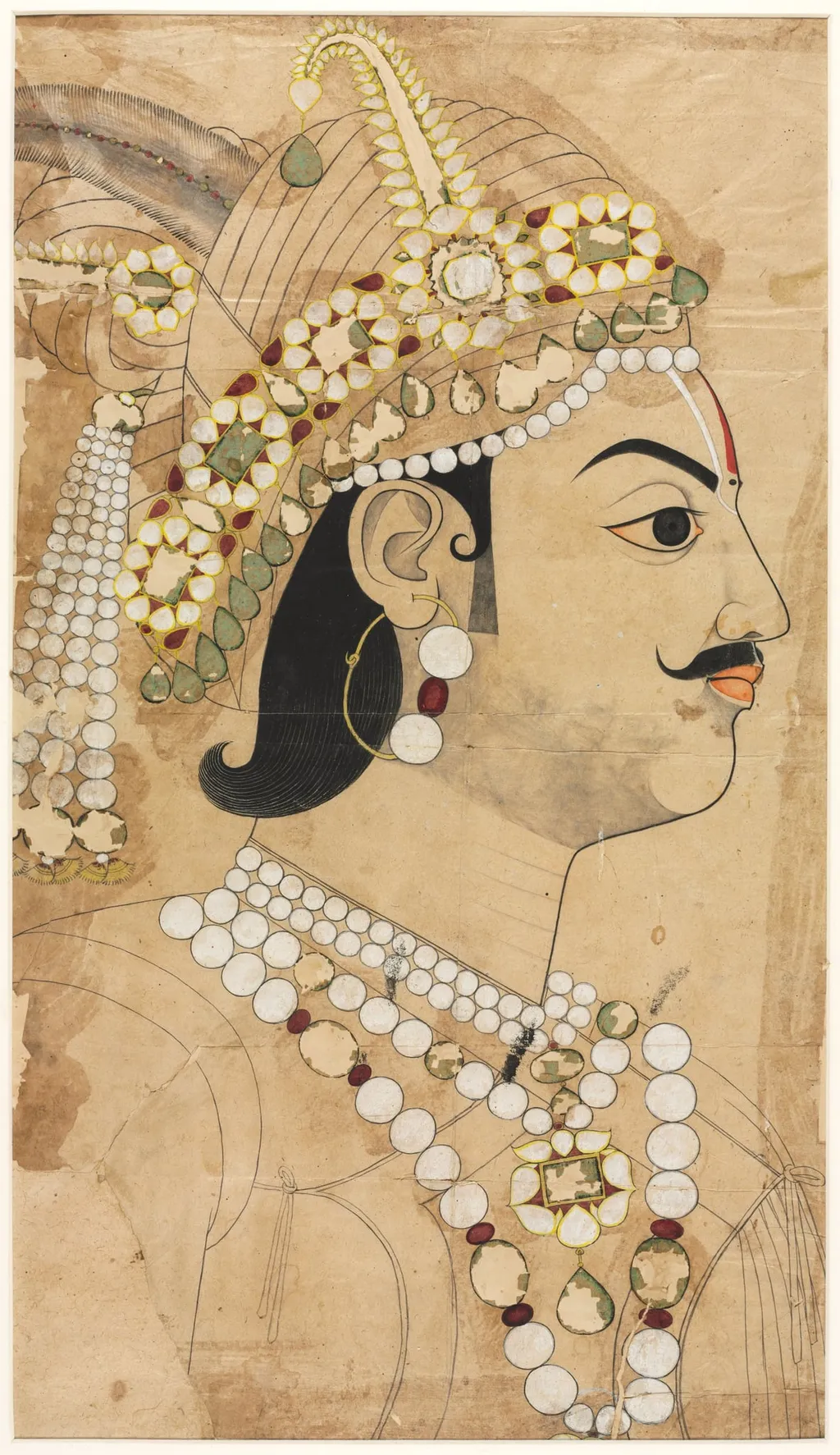
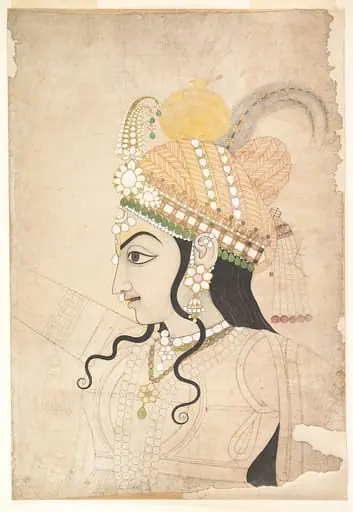
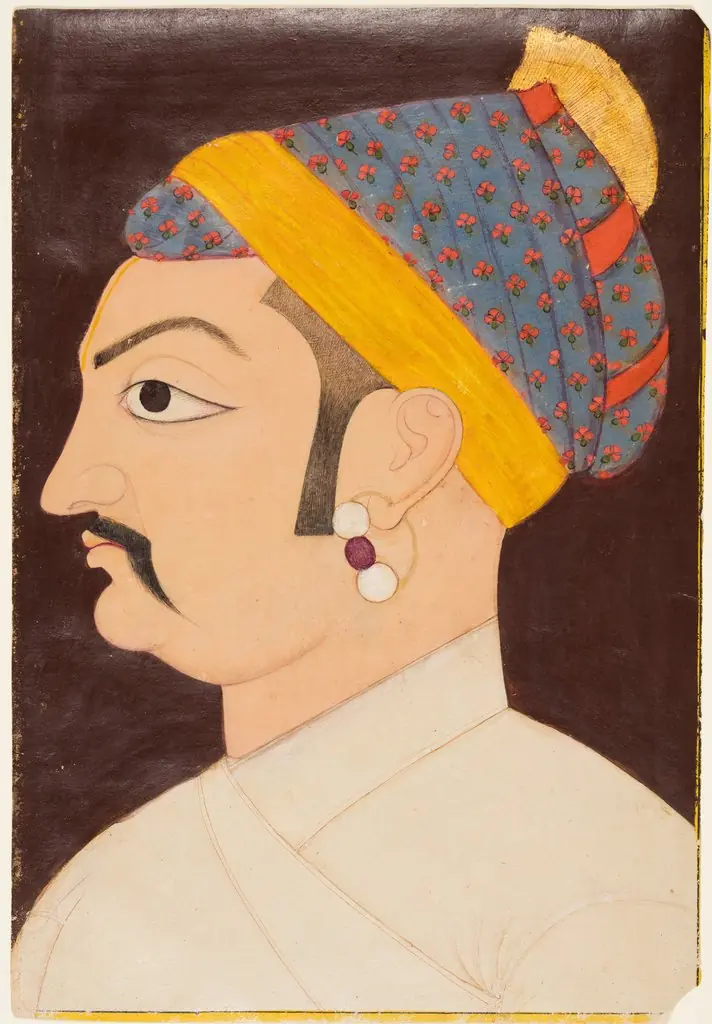
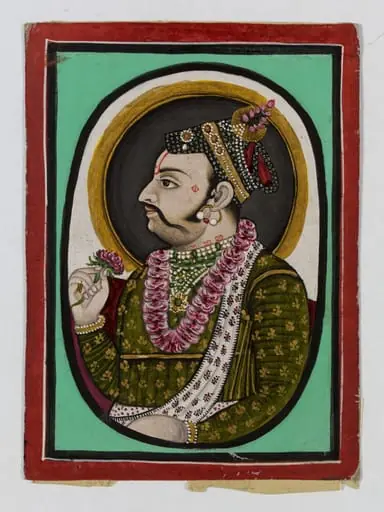
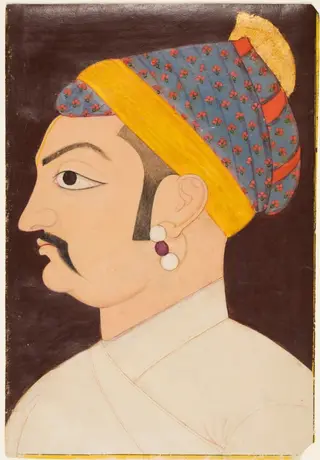
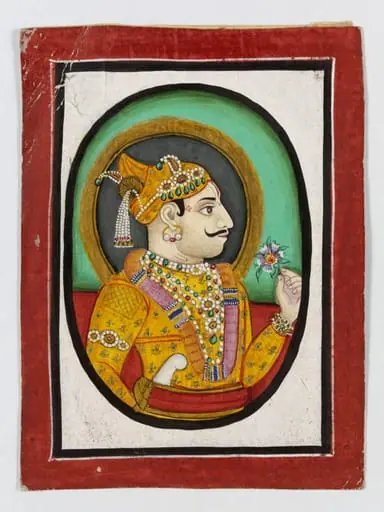
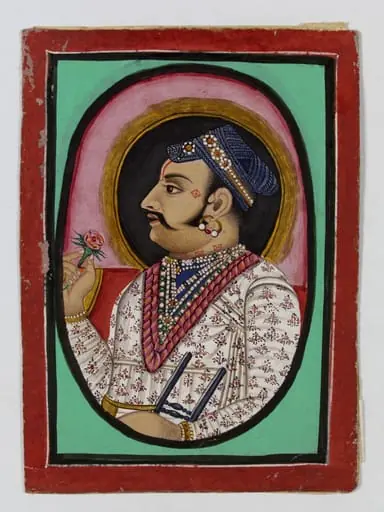
Portrait of Maharaja Pratap Singh (1764–1803) is an unspecified painting by the Patna School of Painting artist Sahib Ram. It dates from 1793 and is held in the collection of the Cleveland Museum of Art. The portrait depicts Maharaja Pratap Singh of Jaipur, painted roughly fifteen years after he ascended the throne in 1778.
- Accession no.
- 2011.207
- Credit line
- Gift of Dr. Norman Zaworski
About this work
Overview
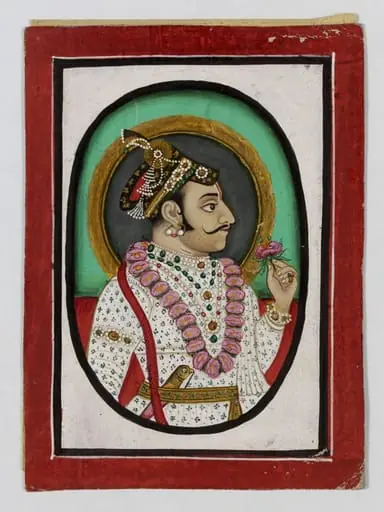
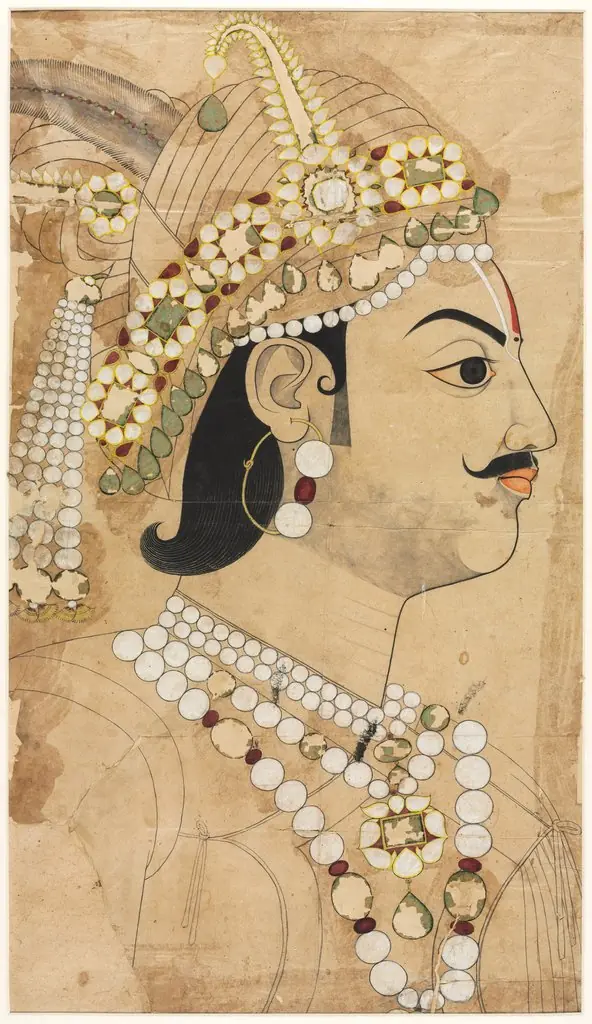
The portrait depicts Maharaja Pratap Singh of Jaipur, painted roughly fifteen years after he ascended the throne in 1778. The young ruler appears in profile, his hair curled at the nape, and bears a distinctive mark on his forehead indicating devotion to Krishna. Elaborate garments and jewelry emphasize his royal status.
Subject & Meaning
Pratap Singh, who became Maharaja at fourteen, was known for his poetry and patronage of the arts. The forehead mark identifies his affiliation with the Hindu deity Krishna, reflecting the personal piety that coexisted with his political role. The portrait’s stylized treatment still conveys his recognizable facial profile.
Technique & Style
Attributed to the court painter Sah ib Ram, a Muslim master among the Maharaja’s atelier of about fifty artists, the work combines precise detailing of textiles and ornaments with the conventional flatness of Rajput court portraiture. Fine brushwork renders the intricate jewelry, while the overall composition follows the profile format typical of the period.
History & Provenance
Created circa 1793, the painting emerged from the vibrant artistic workshop maintained by Pratap Singh in Jaipur. It later entered collections beyond India, eventually becoming part of the holdings of the Cleveland Museum of Art, where it is displayed as an example of late 18th‑century Rajput portraiture.
Context
The portrait belongs to a flourishing era in Jaipur under Pratap Singh’s rule, marked by architectural projects such as the famed Hawa Mahal. His support for a diverse group of artists, including Muslim painters, reflects the syncretic cultural environment of the court, which is evident in the painting’s blend of Hindu iconography and refined artistic execution.
Artist & collection

Artist
Sahib Ram was an Indian painter who led the royal atelier at the court of Jaipur in Rajasthan during the late eighteenth and early nineteenth centuries.