Artwork
Untitled
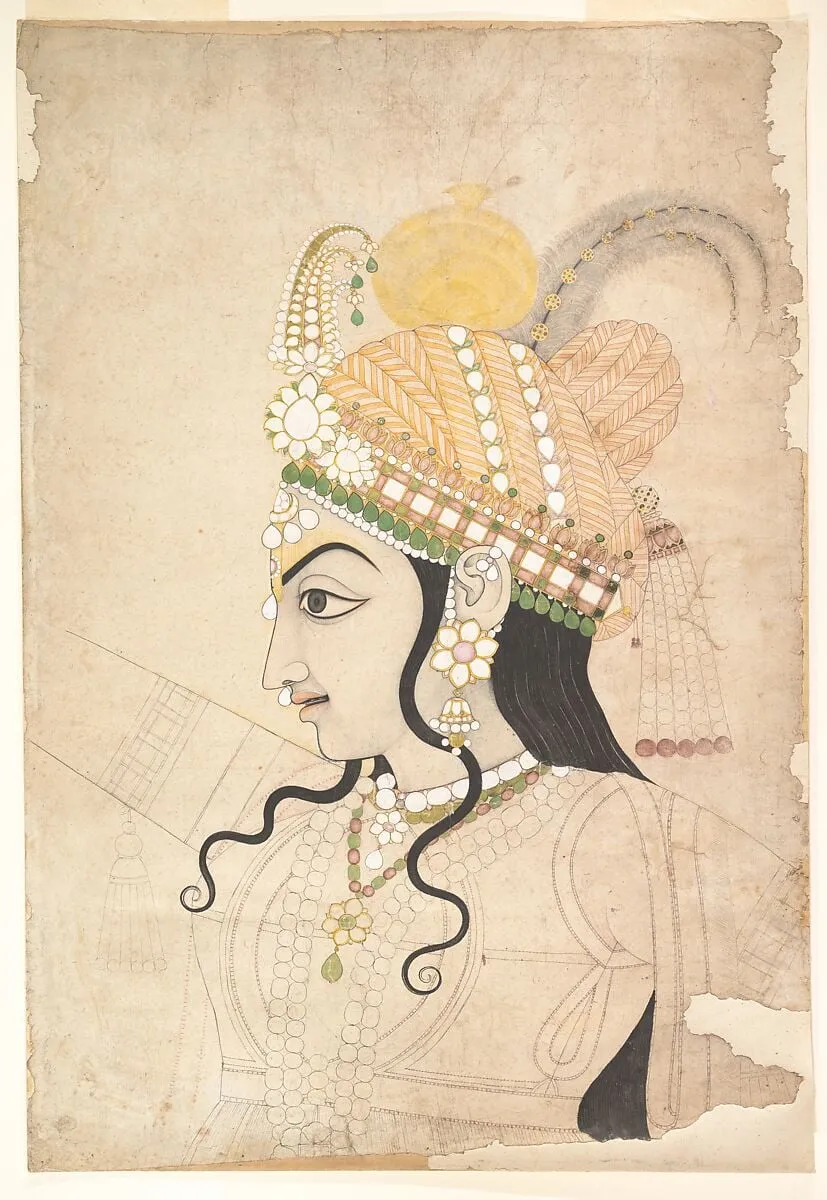
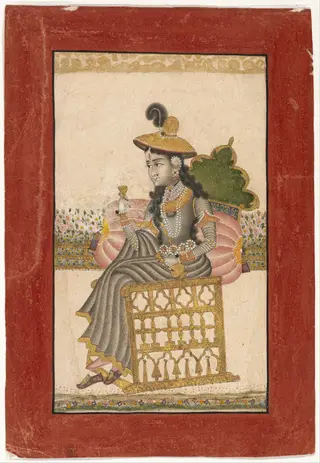
Untitled is a watercolor painting by the Mughal Painting artist Sahib Ram. It dates from 1800 and is held in the collection of the Metropolitan Museum of Art.
- Accession no.
- 18.85.2
- Credit line
- Rogers Fund, 1918
About this work
The snake and mountain aren’t just decoration; they’re part of a Hindu story where Krishna protects villagers from a storm.
You see Krishna standing on a coiled snake, lifting a mountain with one finger. His skin is blue, his clothes are bright yellow, and tiny figures gather below the mountain.
This painting comes from Jaipur, India, around 1800. The artist used thin, layered watercolor, called glazing, to make the colors glow. The snake and mountain aren’t just decoration; they’re part of a Hindu story where Krishna protects villagers from a storm.
If you like this, look up more paintings of Krishna.
Subject & Meaning
This untitled work by Sahib Ram is a religious painting that depicts Krishna, the Hindu deity venerated as an avatar of Vishnu and celebrated in Indian devotional traditions for his playful and pastoral associations. Classified within the religious genre and executed in ink and opaque watercolor on paper, the painting belongs to the visual tradition of Krishna iconography that flourished in Indian courtly and devotional art. Such depictions typically draw on narratives from texts like the Bhagavata Purana, presenting the deity in forms meant to inspire devotion (bhakti) and convey theological ideas about divine play (lila) and grace.
As a religious image, the work functions both as a representation of Krishna and as an object of veneration, situating itself within the broader iconographic vocabulary of late Mughal and early nineteenth-century Indian painting.
The painting is held in the collection of the Metropolitan Museum of Art and is dated to 1800.
Technique & Style
Created in 1800 by the artist Sahib Ram, this work is executed in ink and opaque watercolor on a paper support. The piece functions as a religious painting depicting the deity Krishna. Stylistically, the application of opaque pigments alongside ink outlines reflects traditional methods associated with Indian religious art of the period.
The composition focuses entirely on the figural representation of the divine subject without additional contextual scenery described in the available records.
History & Provenance
Created in 1800 by the artist Sahib Ram, this work was produced in India. The piece is executed in ink and opaque watercolor on paper and depicts the deity Krishna. It currently resides in the collection of the Metropolitan Museum of Art.
Untitled (1800) by Sahib Ram is part of the Metropolitan Museum of Art's collection in New York. The work, executed in ink and opaque watercolor on paper, belongs to the museum's Paintings department and is classified as a religious painting depicting Krishna. Its presence in the Met's holdings is documented in the institution's catalogue, which records the piece as part of the museum's permanent collection. No specific accession number or exhibition record is cited in the available documentation.
Overview
This "Untitled" painting, created around 1800 by Sahib Ram, is an example of Indian religious art. Executed in ink and opaque watercolor on paper, it portrays the Hindu deity Krishna. The artwork originates from Jaipur and showcases a significant episode from Hindu mythology, where Krishna demonstrates his divine power to protect his devotees.
Artist & collection

Artist
Sahib Ram was an Indian painter who led the royal atelier at the court of Jaipur in Rajasthan during the late eighteenth and early nineteenth centuries.