Artwork
Allégorie sur l'Erection de la Statue de Louis XV (Allegory on the Establishment of a Statue of Louis XV)
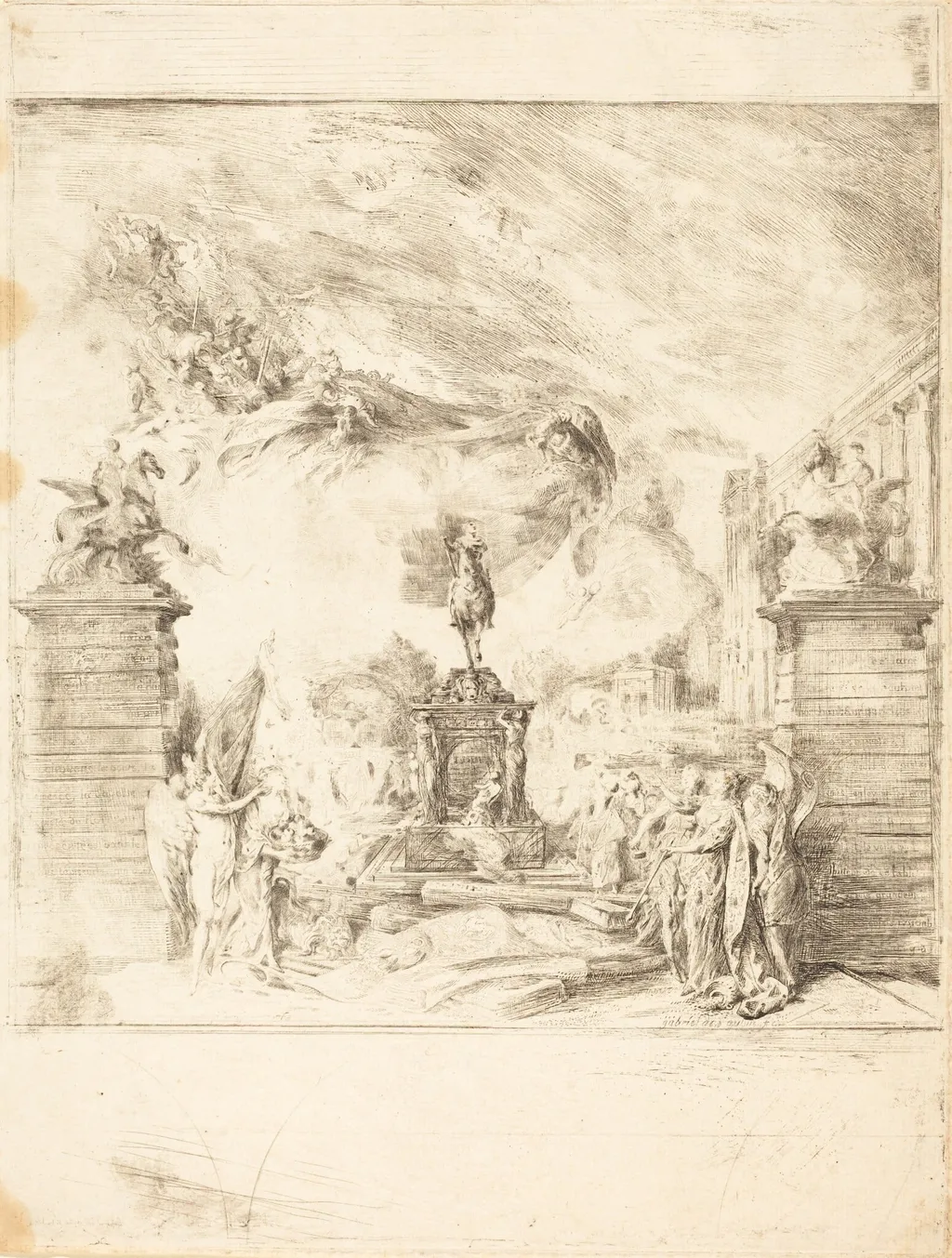
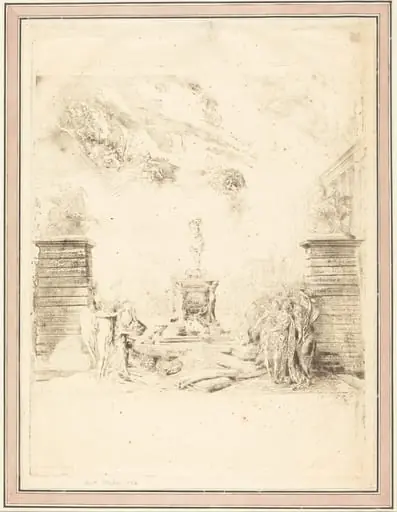
Allégorie sur l'Erection de la Statue de Louis XV (Allegory on the Establishment of a Statue of Louis XV) is an ink print by the Romanticist artist Gabriel de Saint-Aubin. It dates from 1763 and is held in the collection of the National Gallery of Art.
- Markings
- Marked:recto: none; verso: Henri-Jean Thomas (Lugt 1378)
About this work
Overview
Gabriel de Saint-Aubin's 'Allégorie sur l'Erection de la Statue de Louis XV' is a c. 1763 etching that commemorates the establishment of a statue of Louis XV through an allegorical scene of celebration.
Subject & Meaning
At the composition's center is the statue of Louis XV, encircled by figures carrying flags and other objects, symbolizing national pride and the monarch's revered status. The surrounding crowd and architectural backdrop evoke widespread jubilation and the integration of royal iconography into urban life.
Technique & Style
The print combines etching with traces of roulette and engraving on laid paper, yielding intricate details, nuanced textures, and a deep sense of dimensionality. Strategic use of light and shadow enhances the dramatic and energetic atmosphere of the celebration.
History & Provenance
Created around 1763, the work's specific commission history and early ownership are not detailed in available records, though its production coincides with the height of Louis XV's reign and the proliferation of royal imagery in 18th-century France.
Context
This allegory reflects the 18th-century French practice of using public art and festivities to bolster monarchical legitimacy. The print likely served as a disseminated tribute to Louis XV's rule, reaching a broader audience beyond the physical location of the statue.
Legacy
While not widely recognized as a singular landmark in Saint-Aubin's oeuvre, the etching contributes to the broader understanding of 18th-century French artistic responses to monarchy and public celebration, offering insights into the period's visual rhetoric of royal admiration.
Own this work as a print
Artist & collection


 Nella Venuta in Roma: pl. 6
 Sacrifice to Love
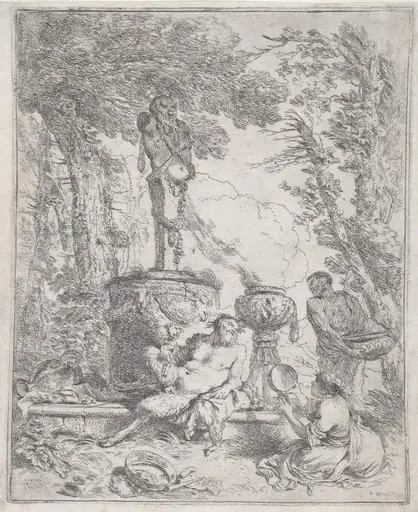 Pan Reclining before a Herm
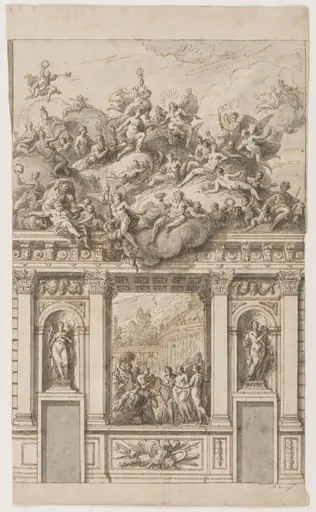 Design for a wall and ceiling painting, possibly for Chatsworth, Derbyshire
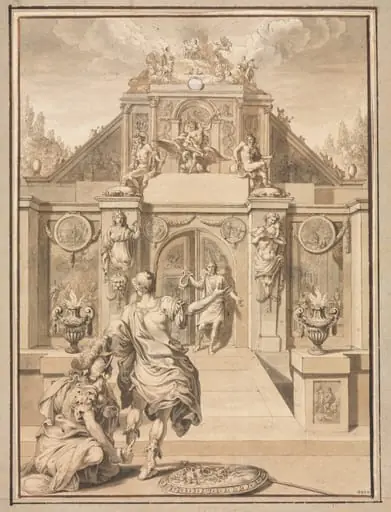 Perseus and Minerva before a Temple
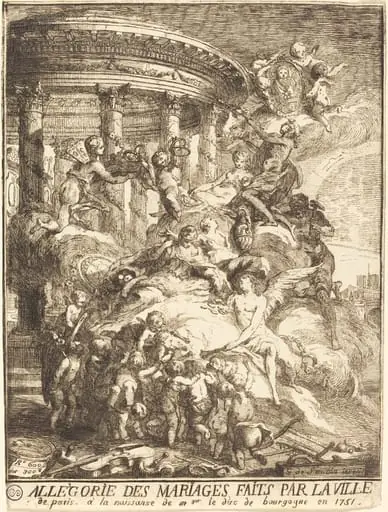 Allégorie des mariages faits par la ville de Paris à la naissance du duc de Bourgogne (Allegory of the Marriages Performed by the City of Paris in Honor of the Birth of the Duc de Bourgogne in 1751)
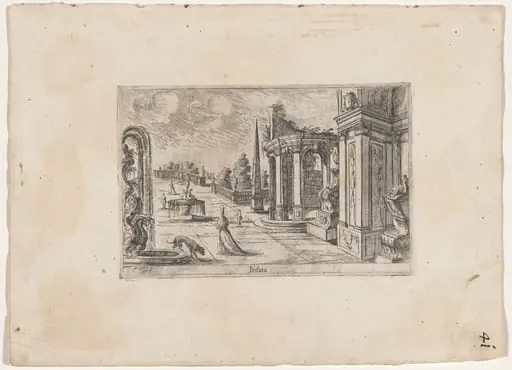 Design for a Garden Court
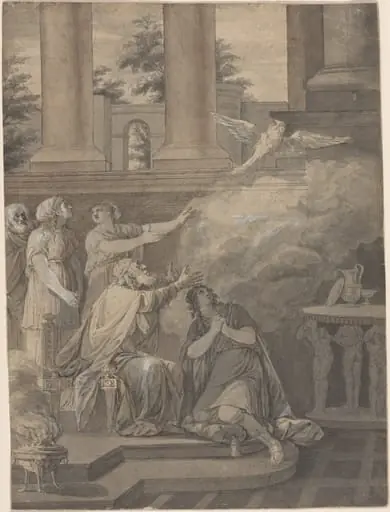 Pallas Athene in the Form of a Bird Leaving Nestor and Telemachus
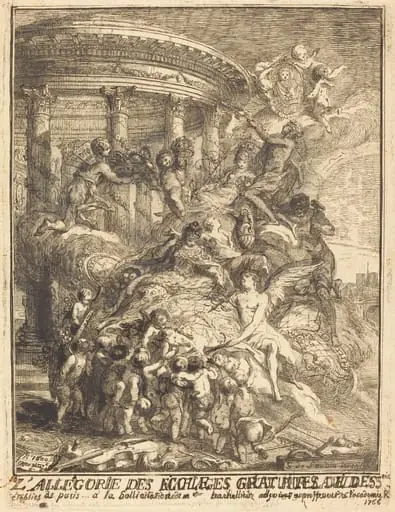 Allégorie des Ecoles gratuites du dessein (Allegory of the Free Drawing Schools)
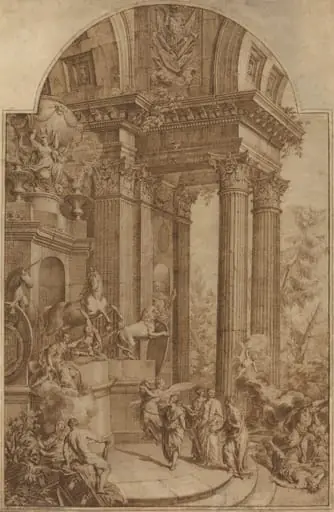 Monument to King George I