Artwork
Sacrifice to Love
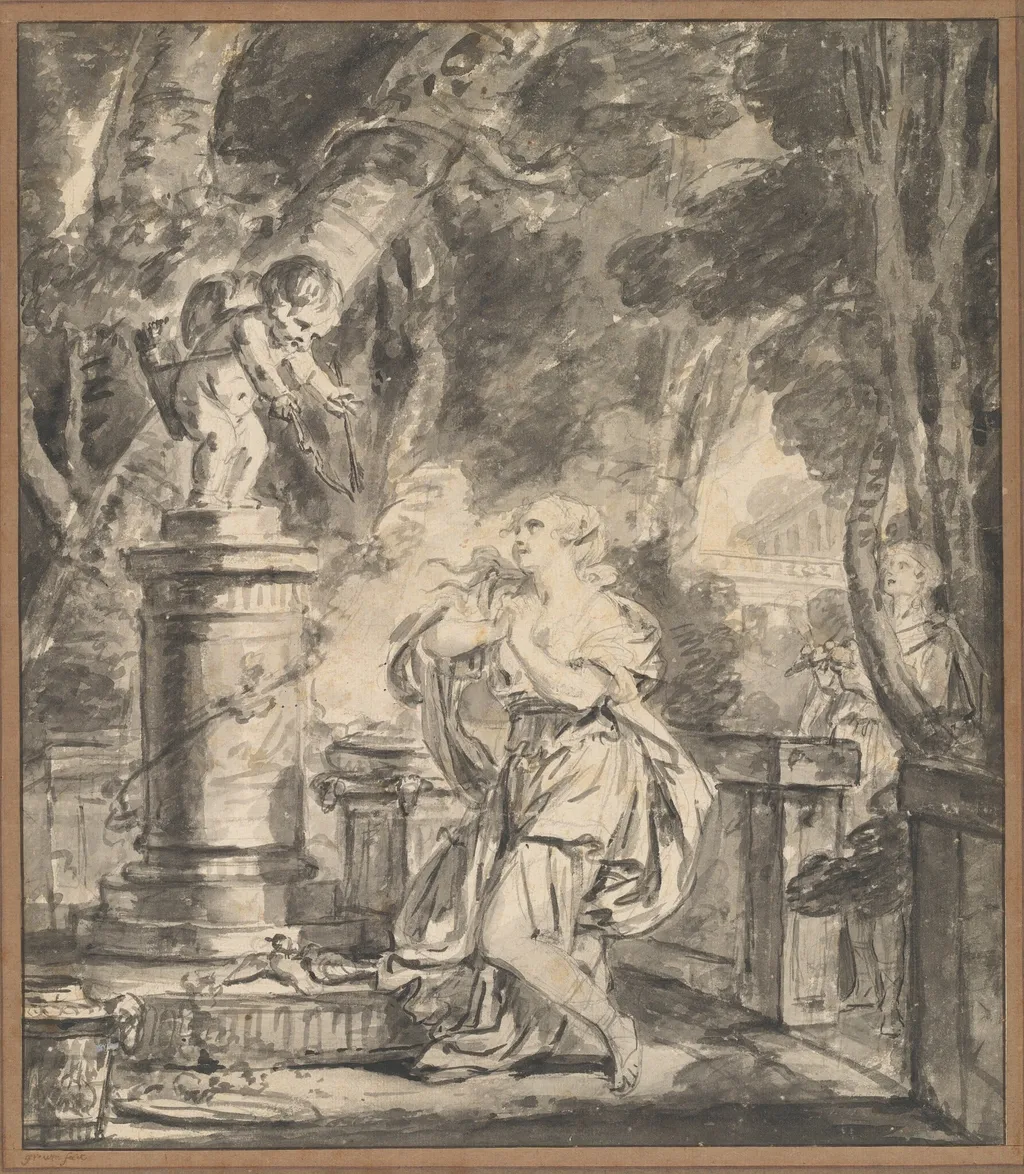
Sacrifice to Love is a graphite drawing by the Romanticist artist Jean-Baptiste Greuze. It dates from 1766 and is held in the collection of the National Gallery of Art.
- Inscription
- Inscribed:by later hand, lower left of mount in brown ink: greuze fecit; by later hand, lower center of mount in brown ink: offrande à l'amour; by later hand, center verso of mount in graphite: G (not in Lugt) by later hand, upper left verso of mount in graphite: 2653; by later hand, lower center of mount in graphite: no 145; by later hand, lower left of mount in graphite: various mounter's notes
About this work
Overview
Created circa 1766, Sacrifice to Love is a drawing by French artist Jean‑Baptiste Greuze. Executed on laid paper, the work combines graphite underdrawing with a gray‑black wash and is bounded by a dark brown ink line that frames the composition. The piece exemplifies Greuze’s interest in narrative scenes rendered with a restrained palette.
Subject & Meaning
The composition depicts three figures within a ruin of classical architecture. A kneeling figure occupies the foreground, while a second figure stands with arms outstretched, suggesting a moment of pleading or revelation. Above them, a floating figure holds a torch, illuminating the broken columns and stormy sky, evoking themes of devotion, sacrifice, and the tension between love and duty.
Technique & Style
Greuze employs rapid, sketchy lines and layered cross‑hatching to model form and convey movement. The gray‑black wash adds atmospheric depth, while the dark brown framing line delineates the scene’s edges. The quick, gestural approach creates a sense of immediacy, allowing the viewer to sense the emotional intensity of the moment despite the work’s limited medium.
Context
During the mid‑18th century, French art increasingly favored intimate, story‑driven images that blended genre sensibility with moralizing content. Greuze, known for his portraits and sentimental genre scenes, applied these concerns to Sacrifice to Love, situating a dramatic, almost theatrical tableau within the broader shift toward expressive, narrative drawing in the pre‑revolutionary period.
Own this work as a print
Artist & collection
Artist
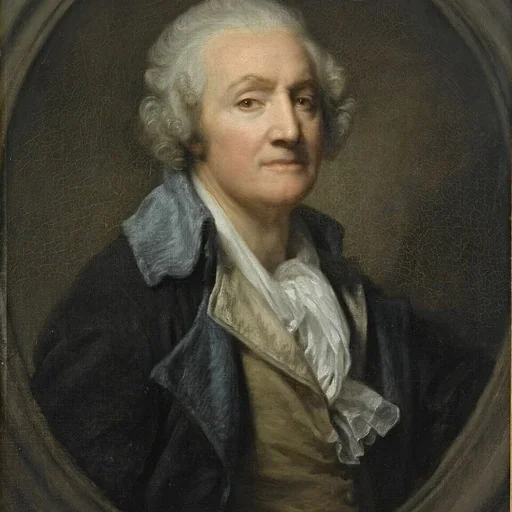
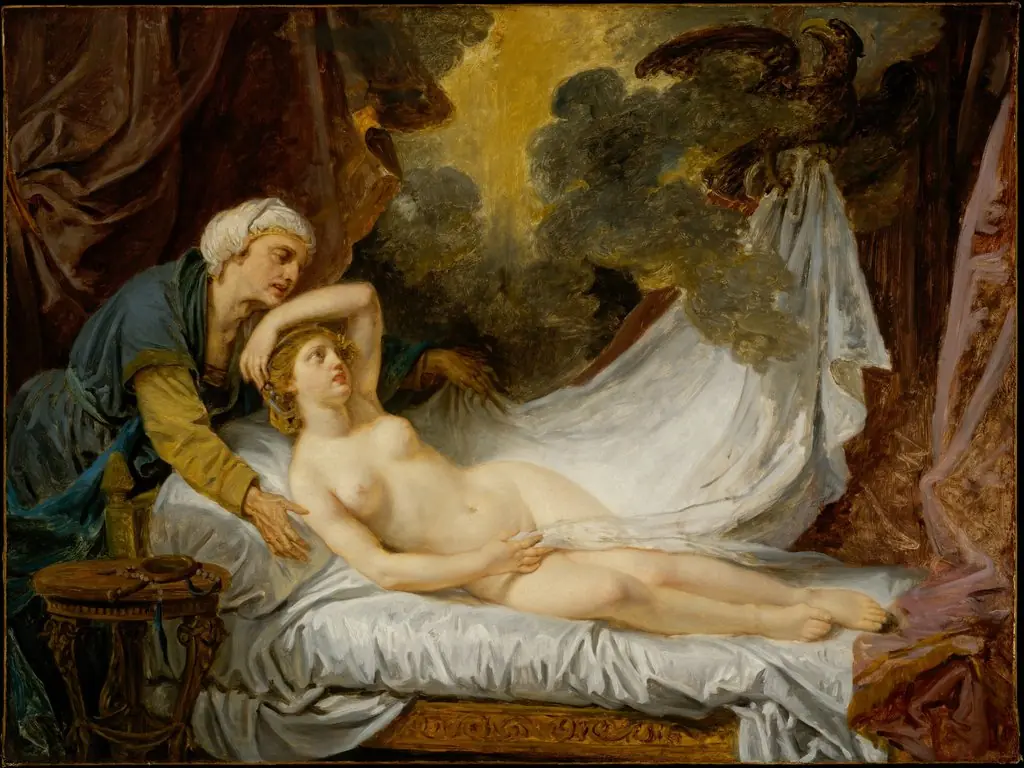
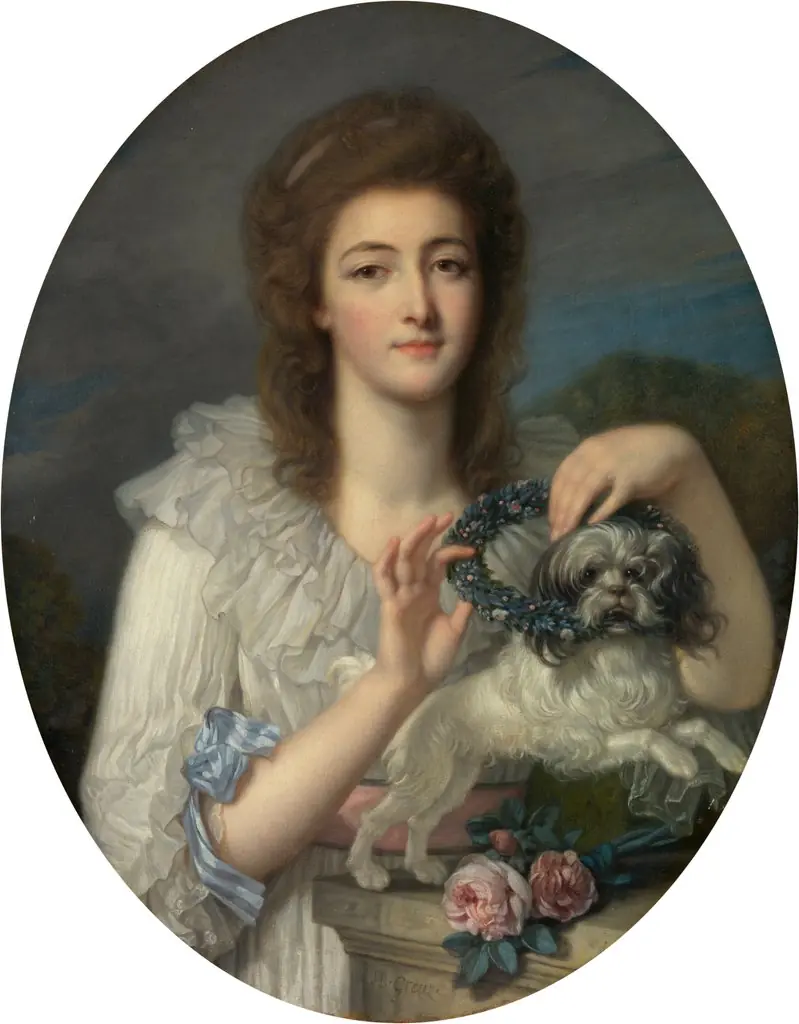
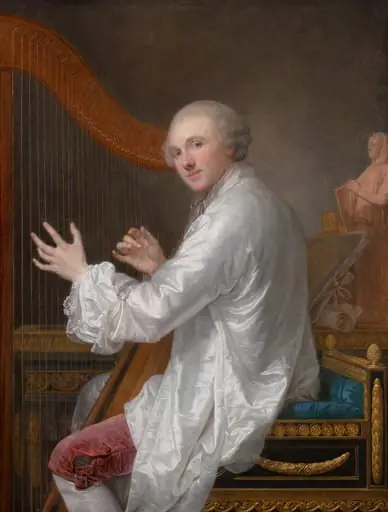
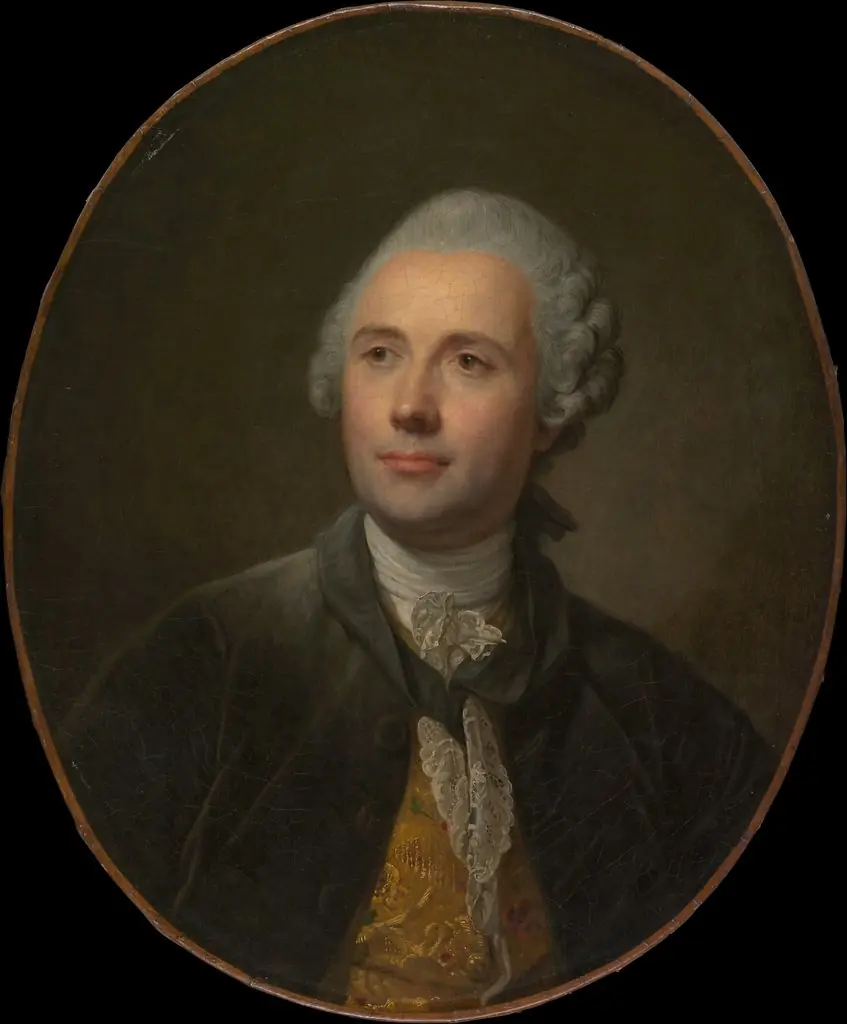
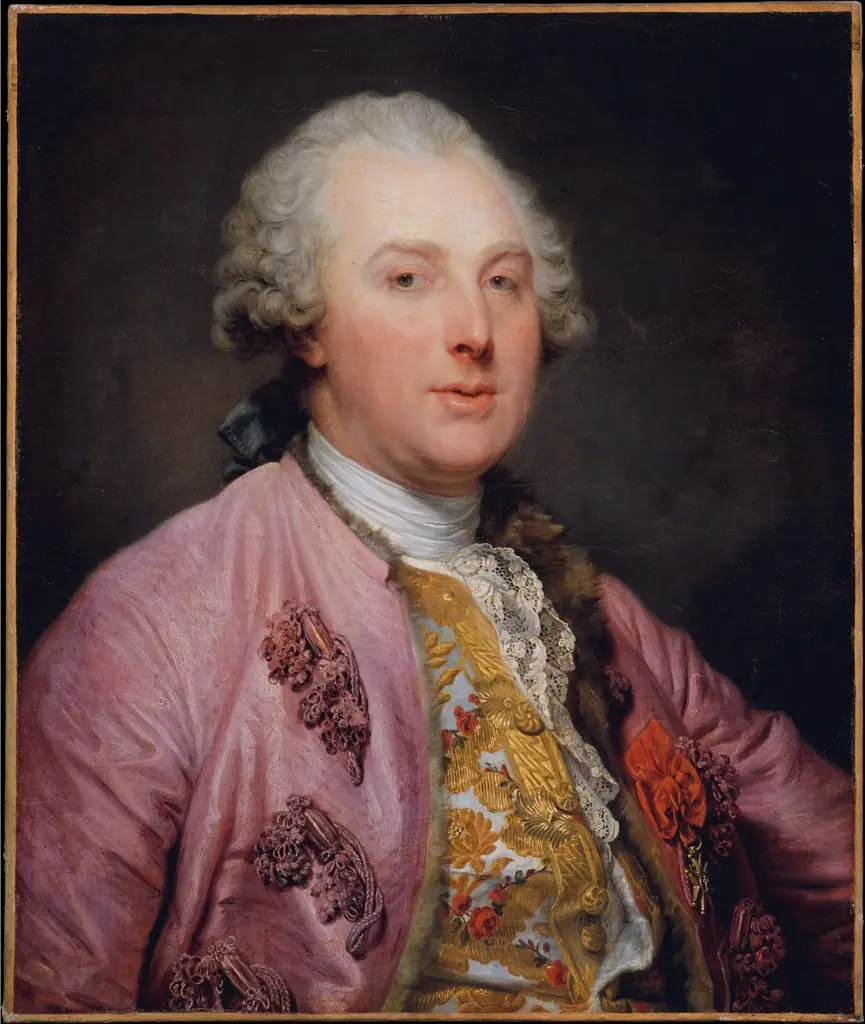
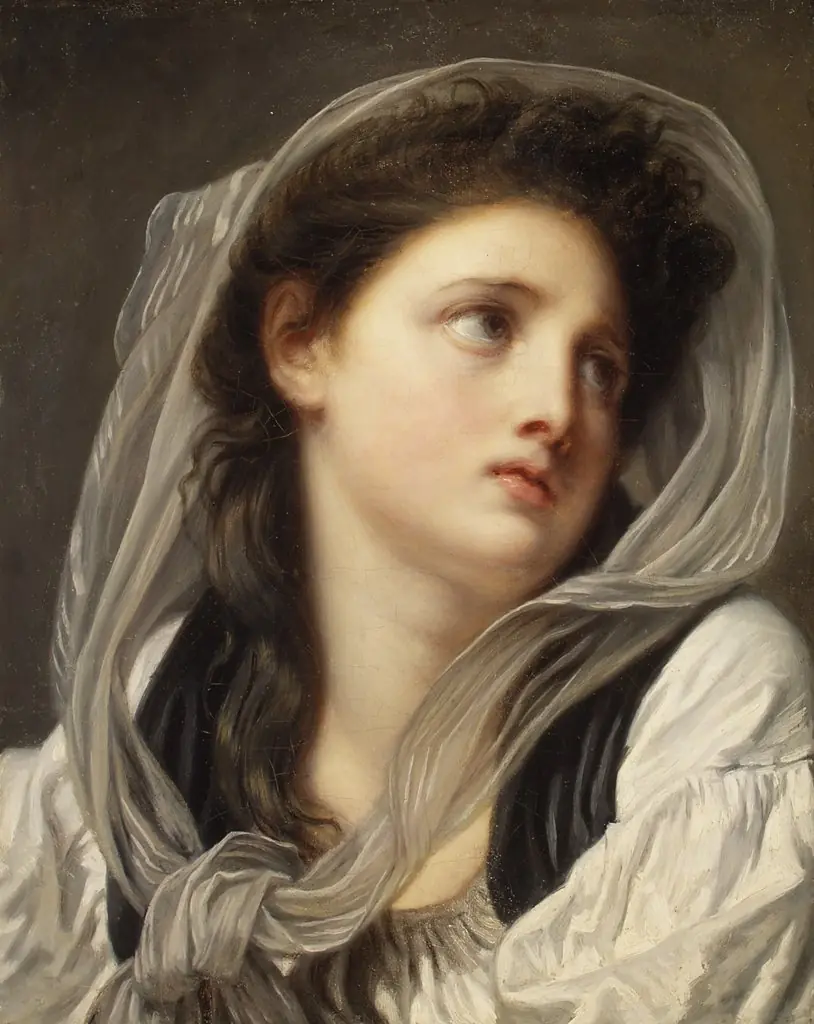
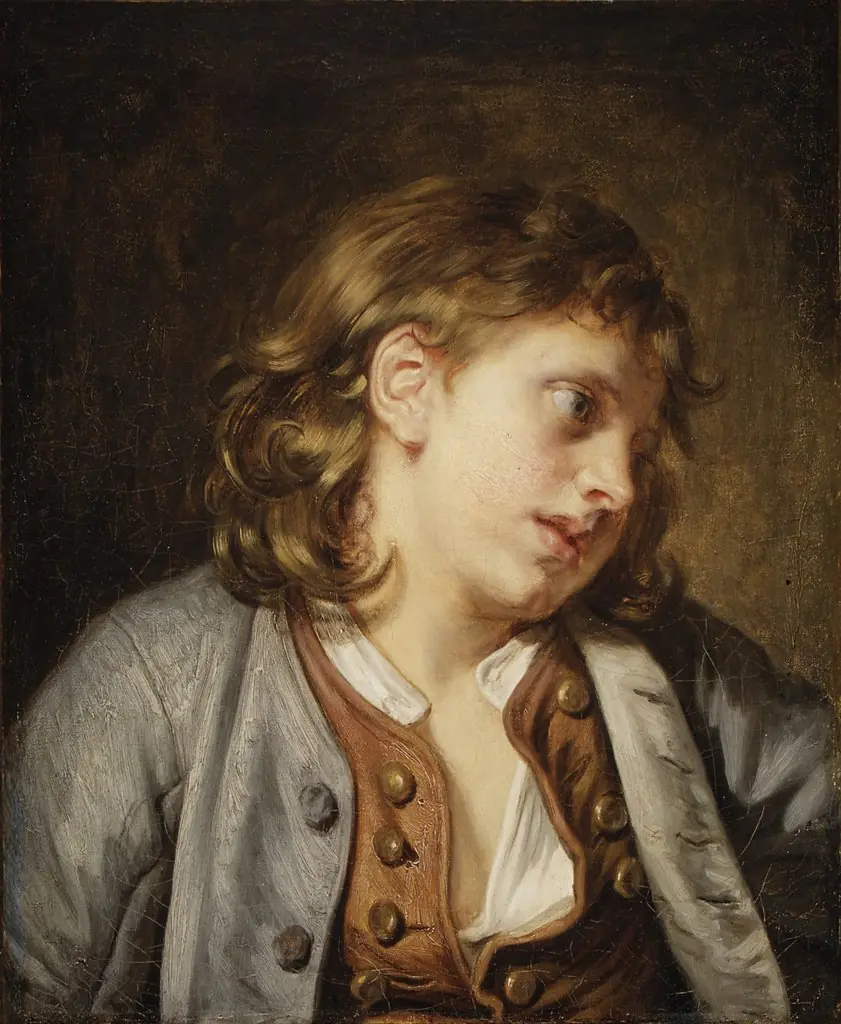
Jean-Baptiste Greuze (French pronunciation: 21 August 1725 – 4 March 1805) was a French painter of portraits, genre scenes, and history painting.

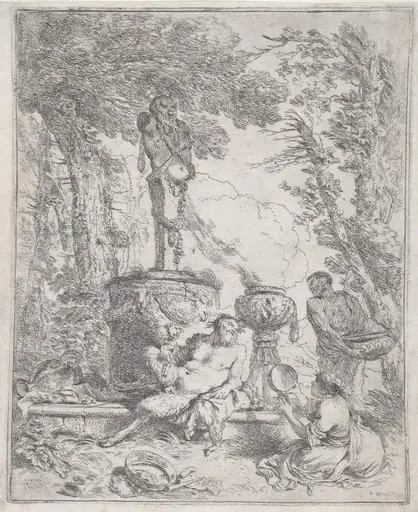
- Pan Reclining before a Herm
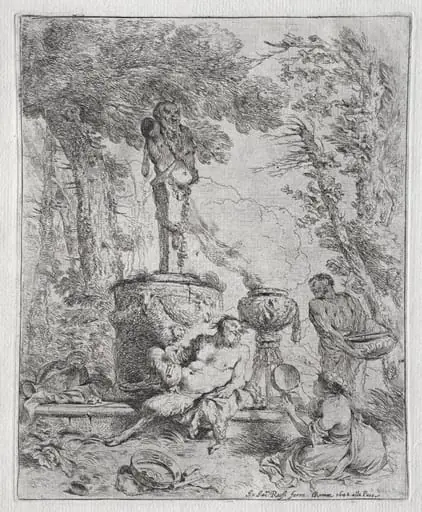 Fete of Pan
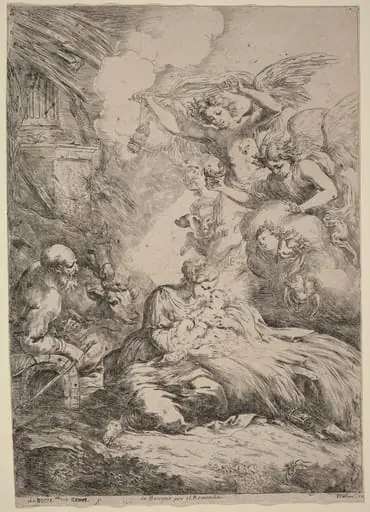 The Holy Family Adored by Angels (The Large Nativity)
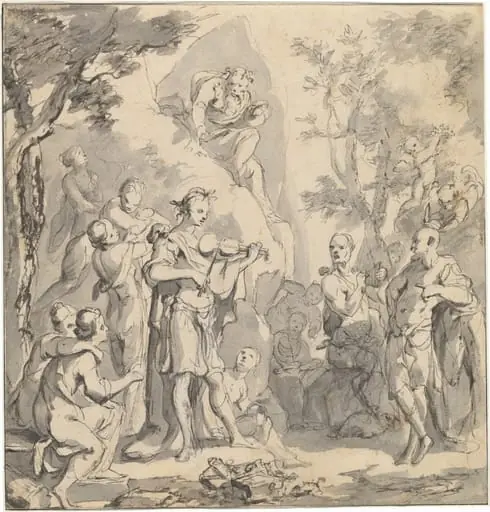 The Contest between Apollo and Pan before King Midas
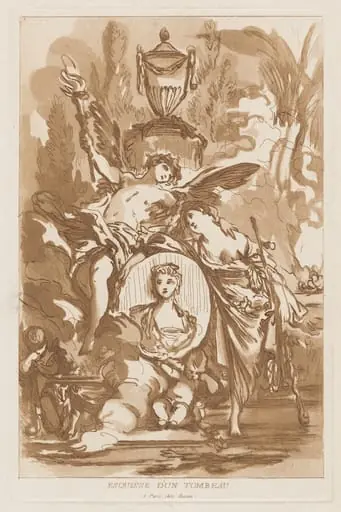 Esquisse d’un tombeau (Sketch for a Tomb)
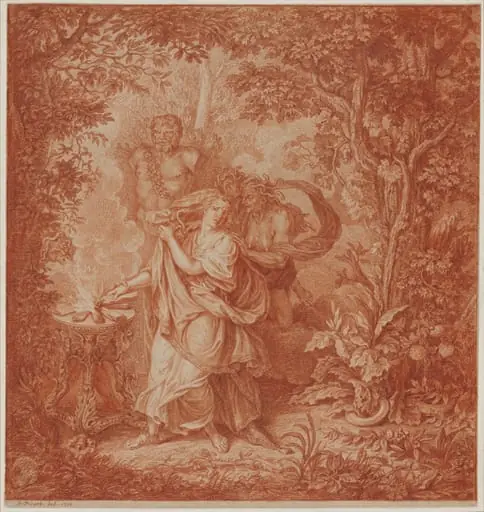 Althaea Putting the Fatal Log on the Fire
 Perseus and Minerva before a Temple
 The Contest between Apollo and Pan before King Midas
 Monument to William Chancellor Cowper
 Ruth and Boaz (recto)
 Aurora and Cephalus
 Figures Near the Ruins of a Corinthian Temple (recto)