Artwork
La Colère de Neptune (The Wrath of Neptune)
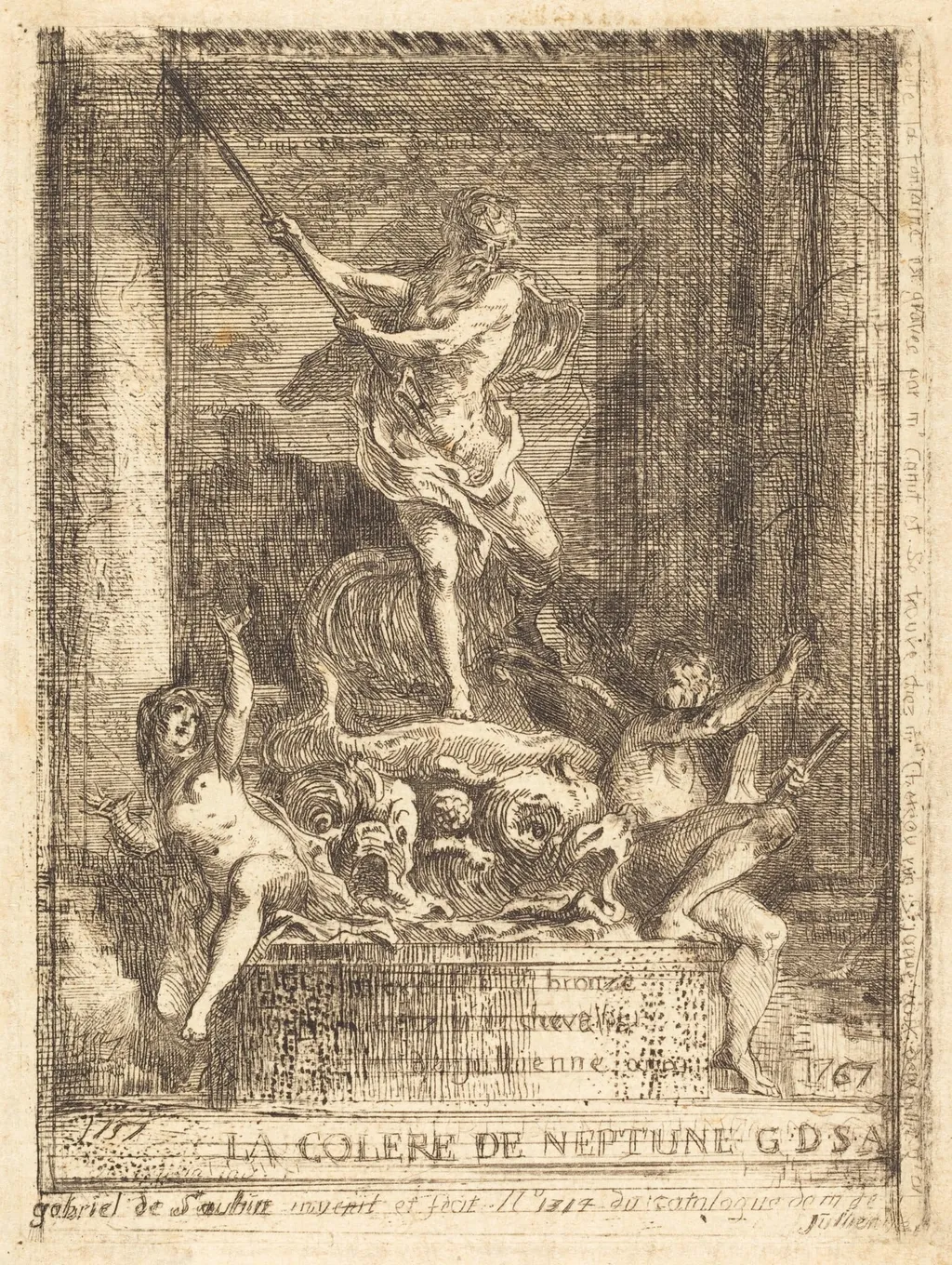
La Colère de Neptune (The Wrath of Neptune) is an ink print by the Romanticist artist Gabriel de Saint-Aubin. It dates from 1767 and is held in the collection of the National Gallery of Art. Gabriel de Saint‑Aubin’s 1767 etching La Colère de Neptune depicts a tempestuous sea scene rendered in black and white.
- Inscription
- Inscribed:recto: in plate, in image, on base of sculpture: [indecipherable] bronze / [indecipherable] chevalier / [indecipherable] Julienne [indecipherable]; in plate, in image, at bottom left: 1757; in plate, in image, at bottom right: 1767; in plate, below image: 1757 LA COLERE DE NEPTUNE GDSA / St. Aubin inv. / gabriel de St aubin invenit et fecit No 1314 du catalogue de m de Jullienne; in plate, along right edge: Toute la fontaine et gravee par Mr Canut et se trouve chez M Chereau rue St jaque aux deur pilliers d'or; verso: none
- Markings
- Marked:recto: none; verso: National Gallery of Art
About this work
Overview
Gabriel de Saint‑Aubin’s 1767 etching La Colère de Neptune depicts a tempestuous sea scene rendered in black and white. A powerful, angry figure stands atop a jagged rock, clutching a trident, while tumultuous waves surge around him. Below, a mixture of human and hybrid figures scramble in the water, conveying panic and disorder.
Subject & Meaning
The composition visualizes Neptune, the Roman deity of the oceans, in a moment of fury. The god’s muscular stance and clenched trident suggest a divine outburst, while the terrified figures, some with fish tails, represent mortals and sea‑creatures caught in the god’s wrathful storm, embodying the ancient belief in the sea’s capricious power.
Technique & Style
Executed as an etching on laid paper, Saint‑Aubin employs crisp, incised lines to delineate the churning water and the rugged rock. The contrast between deep black shadows and fine white highlights intensifies the sense of motion, while the intricate detailing of the smaller figures demonstrates the artist’s skill in rendering complex narratives within a single print.
History & Provenance
Created in 1767, the print belongs to the late‑Baroque period when French printmakers explored mythological subjects with heightened drama. Although specific ownership records are scarce, the work has been documented in several catalogues of Saint‑Aubin’s oeuvre, confirming its attribution and situating it within the artist’s broader engagement with etching as a medium.
Own this work as a print
Artist & collection


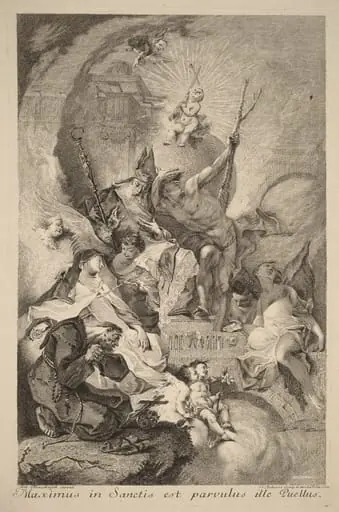 Four Saints
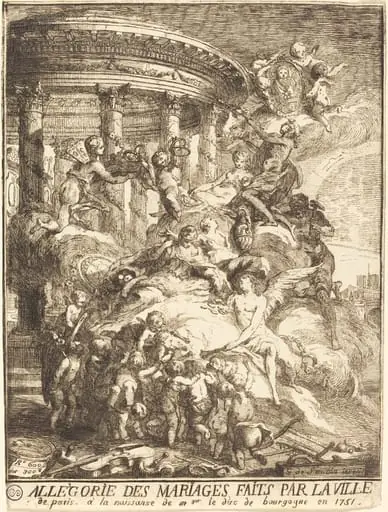 Allégorie des mariages faits par la ville de Paris à la naissance du duc de Bourgogne (Allegory of the Marriages Performed by the City of Paris in Honor of the Birth of the Duc de Bourgogne in 1751)
 The Sacrifice of Abraham
 The Sacrifice of Iphigenia
 Saint Florian
 The Sacrifice of Abraham
 Law of War and Peace
 The Prodigal Son Driven from the Tavern
 The Martyrdom of Saint Thomas
 Crowning with Thorns
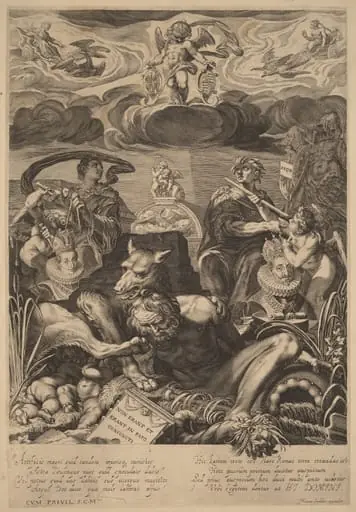 Allegory of the Marriage of Emperor Ferdinand II and Eleanor Gonzaga
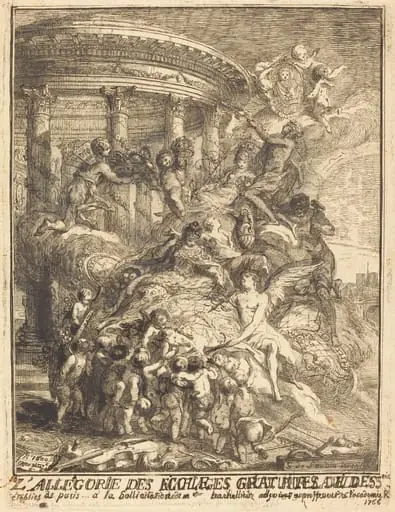
- Allégorie des Ecoles gratuites du dessein (Allegory of the Free Drawing Schools)