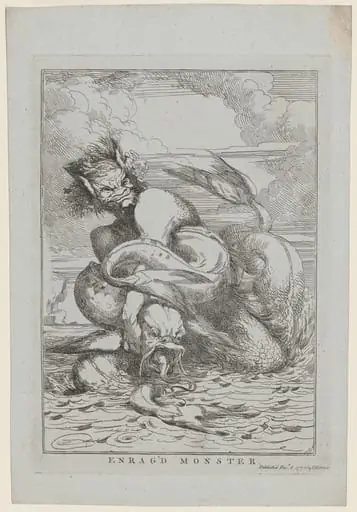
Artwork
Glaucus and Scylla
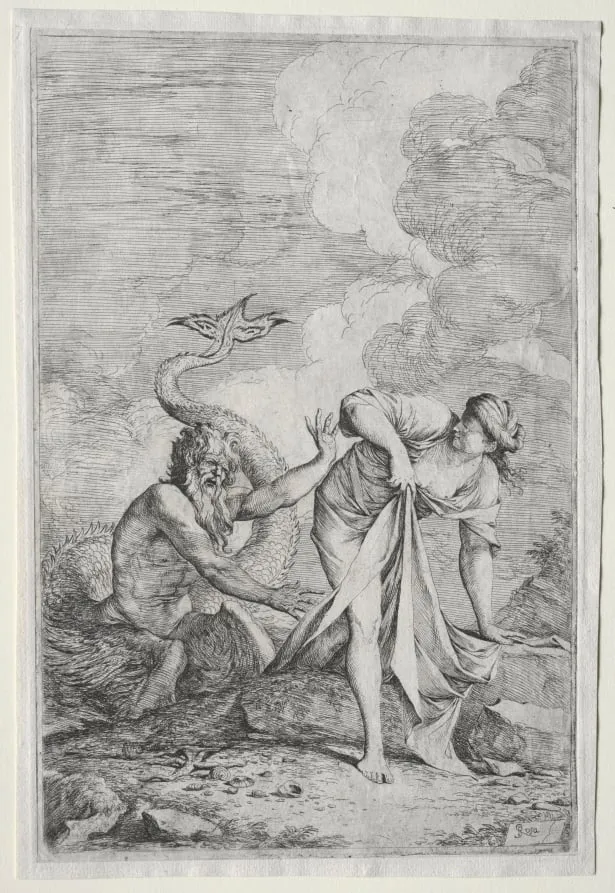
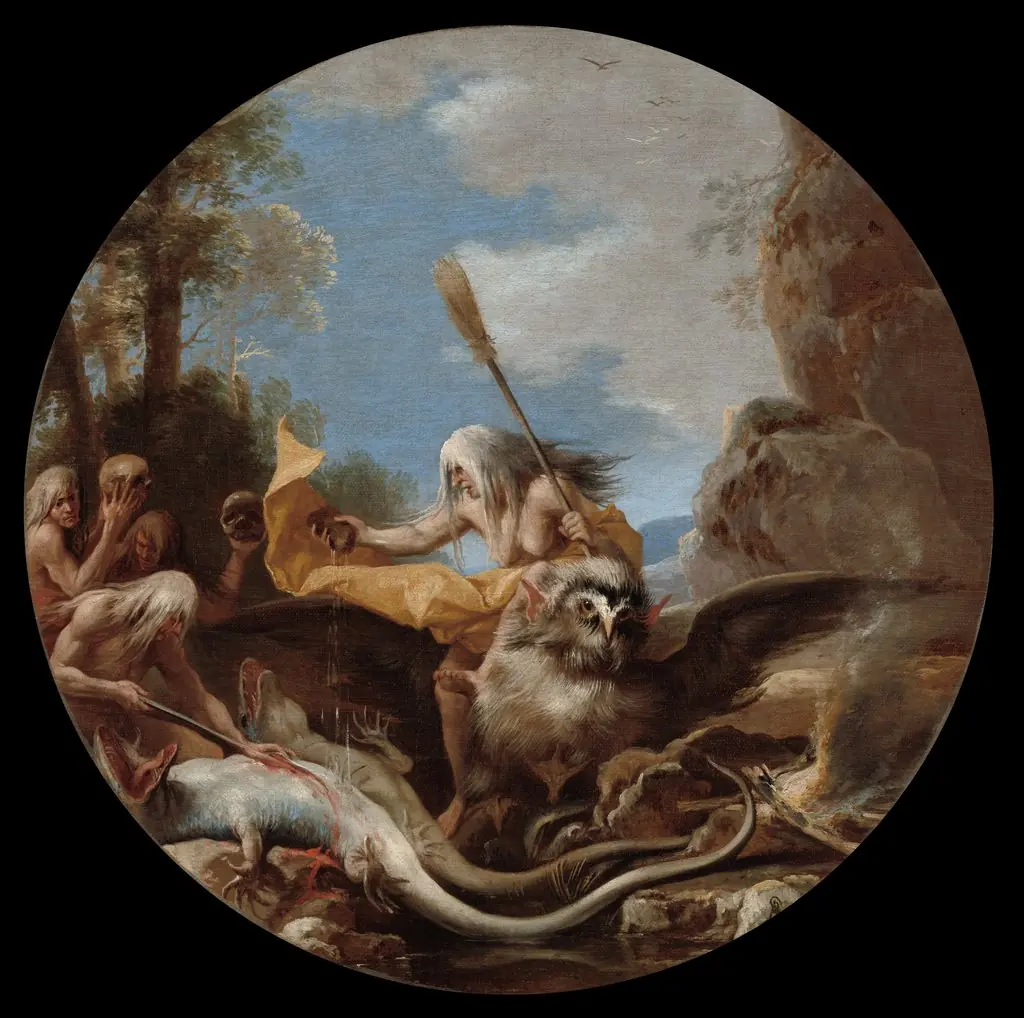
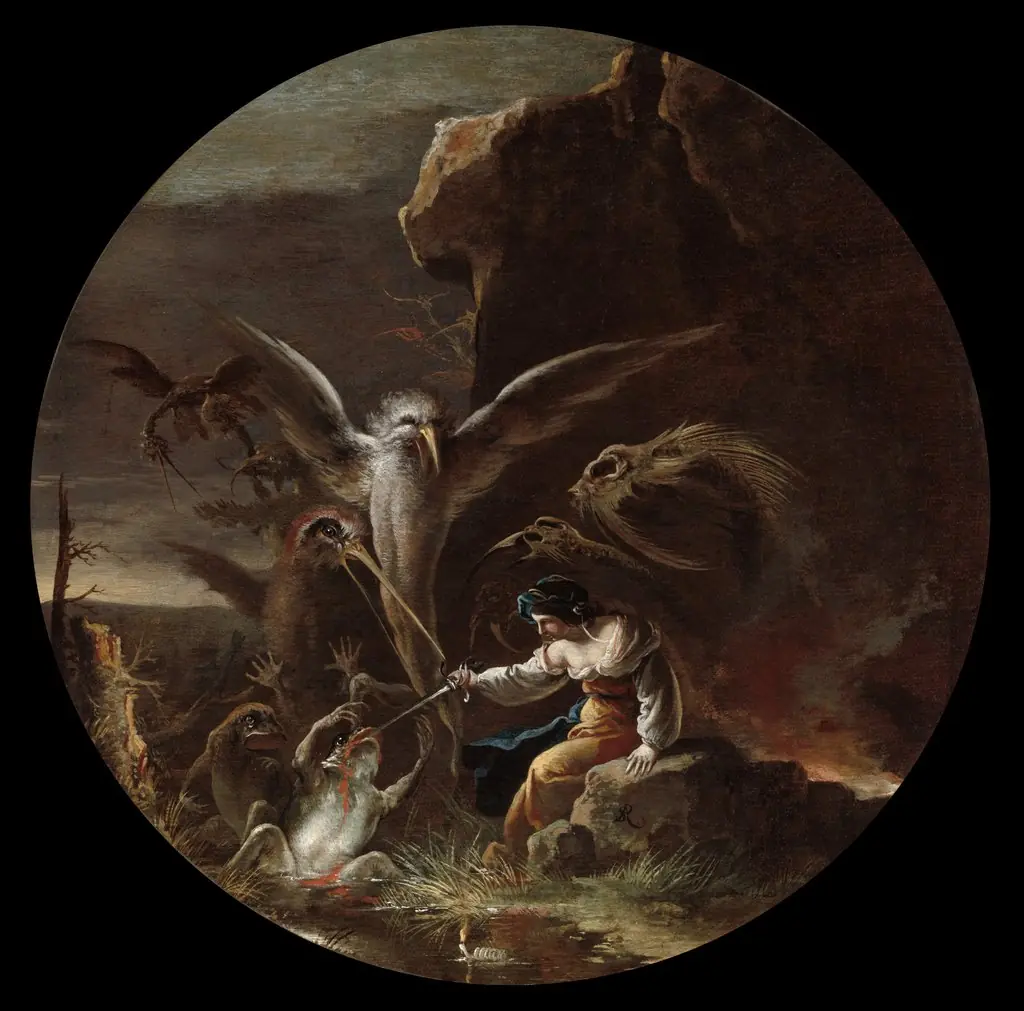
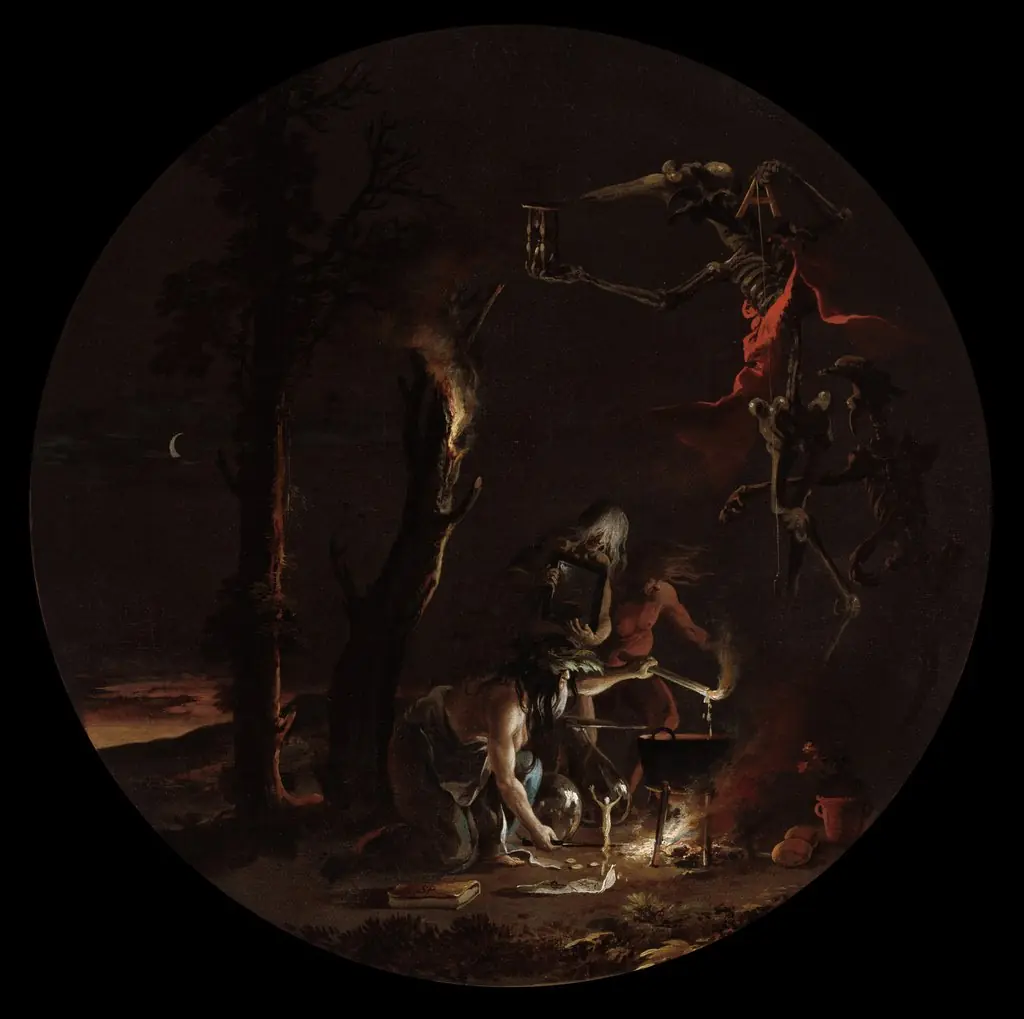
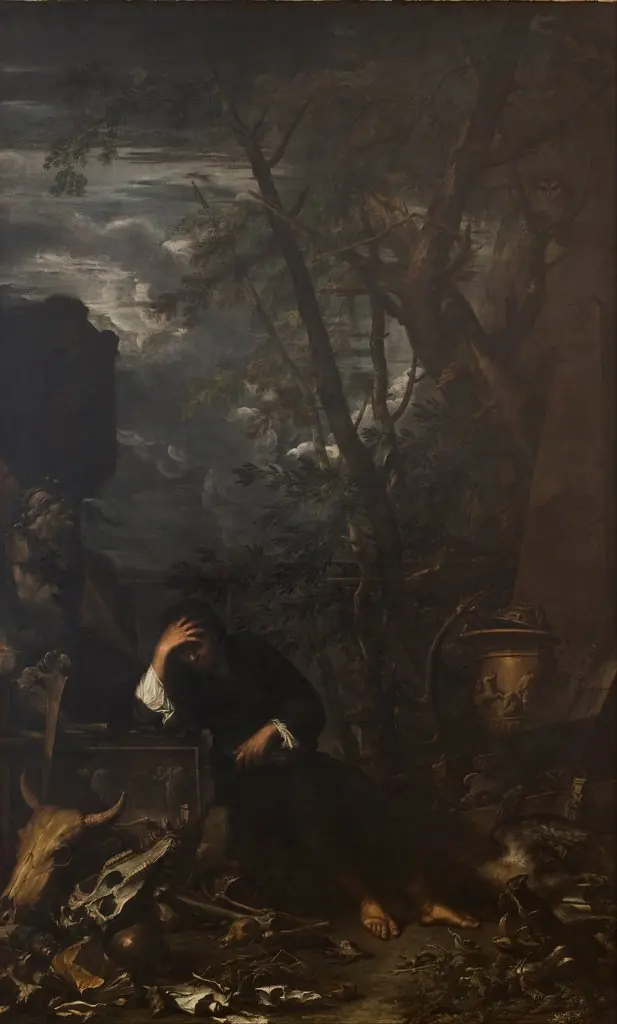
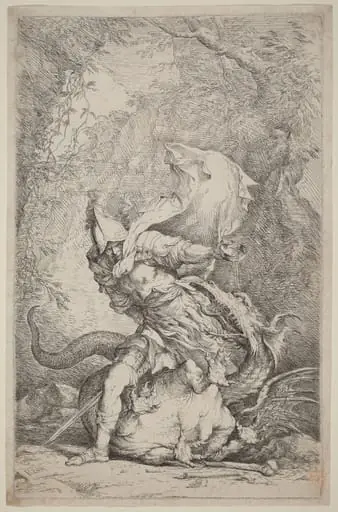
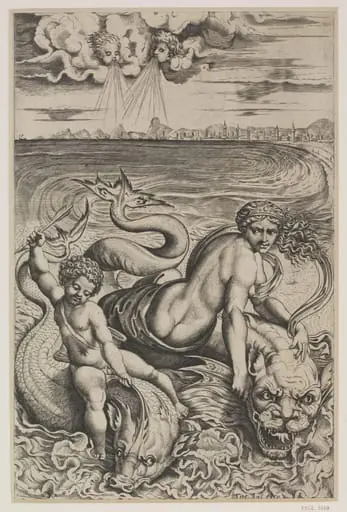
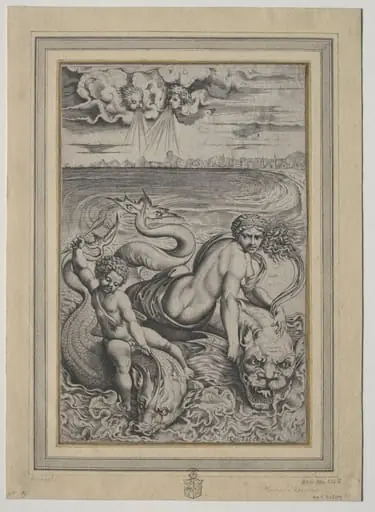
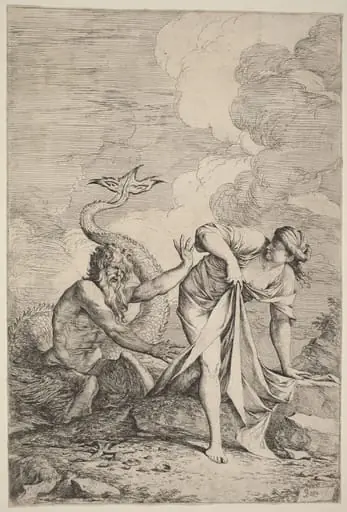
Glaucus and Scylla is a print by the Baroque artist Salvator Rosa. It dates from 1661 and is held in the collection of the Cleveland Museum of Art.
- Accession no.
- 1971.176
- Credit line
- Gift of Mr. and Mrs. Wilbur D. Prescott
About this work
Overview
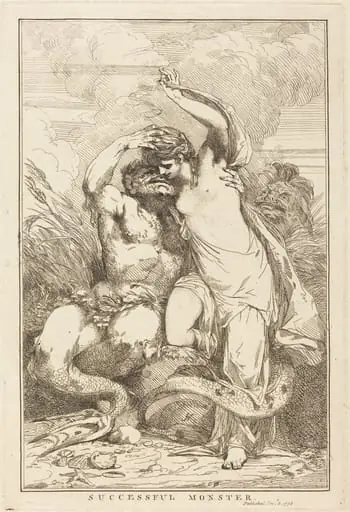
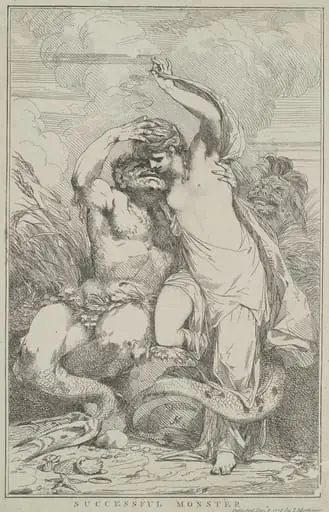
Glaucus and Scylla is a print by Salvatore Rosa, a skilled etcher who produced over 100 works throughout his career. The print depicts a scene from Ovid's Metamorphoses, a classical source.
Subject & Meaning
The print illustrates the moment when Glaucus, a fisherman turned sea god after consuming a magical herb, declares his love to Scylla, a water nymph who flees. The scene is fraught with drama, foreshadowing Scylla's eventual transformation into a treacherous rock.
Technique & Style
Rosa's use of chiaroscuro, a technique that exploits contrasts between light and dark, adds to the drama of the scene. The ominous clouds and Glaucus's dynamic form are rendered through Rosa's skilled etching.
Context
The story of Glaucus and Scylla is associated with themes of magic, witchcraft, and transformation, as told in Ovid's Metamorphoses. The narrative involves the witch Circe and ultimately leads to Scylla's metamorphosis into a rock that poses a danger to sea travelers.
Artist & collection
Artist
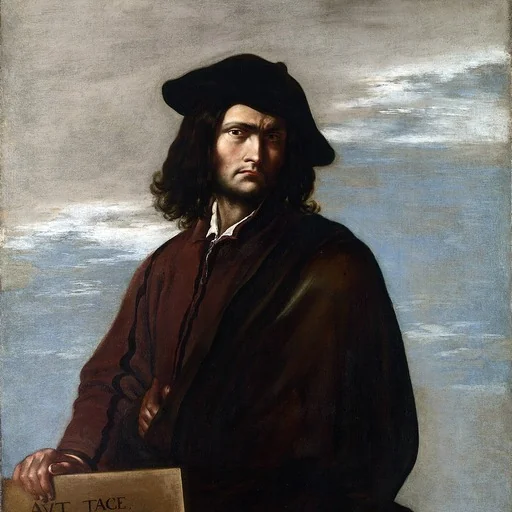
Salvator Rosa (1615 – 15 March 1673) is best known today as an Italian Baroque painter, whose romanticised landscapes and history paintings, often set in dark and untamed nature, exerted considerable influence from the 17th century into…