Artwork
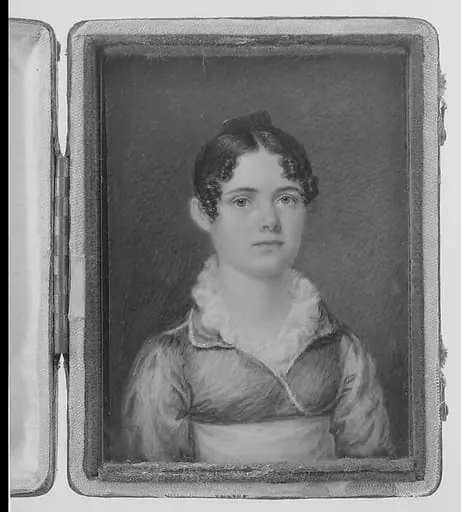
Mrs. George Ingersoll (Martha Goldthwaite)
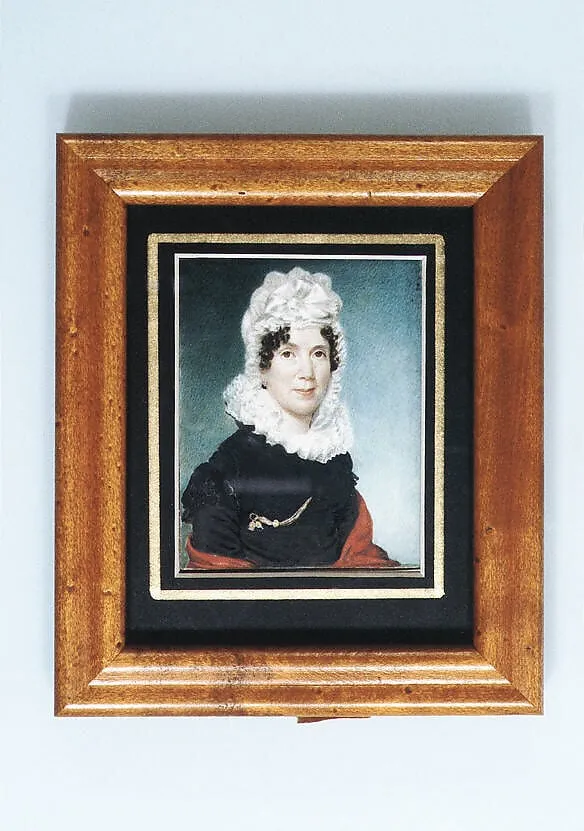
Mrs. George Ingersoll (Martha Goldthwaite) is a watercolor painting by the American Folk Art artist Sarah Goodridge. It dates from 1820 and is held in the collection of the Metropolitan Museum of Art.
- Accession no.
- 1989.117
- Credit line
- Maria DeWitt Jesup Fund, 1989
About this work
Subject & Meaning
Its iconography centres on the sitter's identity and status, reflecting contemporary ideals of femininity and genteel virtue.
The painting, titled Mrs. George Ingersoll (Martha Goldthwaite), is a watercolour on ivory portrait created in 1820 by Sarah Goodridge. It depicts Martha Goldthwaite Ingersoll, a young woman from a New England family, rendered in a style typical of early American portrait miniatures that emphasises refinement and social standing. The work is part of the American Wing collection at the Metropolitan Museum of Art. Its iconography centres on the sitter's identity and status, reflecting contemporary ideals of femininity and genteel virtue.
Technique & Style
The portrait is executed in watercolour on a thin ivory support, measuring approximately 7.9 × 6.1 cm and dated to 1820. It is housed in the American Wing of the Metropolitan Museum of Art as part of the portrait genre. Goodridge's technique employs fine, translucent washes that model the sitter's features with soft tonal gradations, while the delicate ivory support contributes a smooth, slightly luminous surface.
History & Provenance
The portrait is held by the Metropolitan Museum of Art, accessioned as 1975.1.2071. The available records document its place within The American Wing's holdings of early American portrait miniatures but do not list specific exhibition titles or dates.
Overview
Sarah Goodridge created this watercolor portrait, titled Mrs. George Ingersoll (Martha Goldthwaite), around 1820. The miniature depicts Martha Goldthwaite Ingersoll, rendered with delicate brushwork on an ivory support. This intimate artwork exemplifies the personal portraiture prevalent in the early 19th century.
Context
Portrait miniatures served a significant social function in the early 19th century, preceding the widespread availability of photography. These small, portable artworks allowed individuals to carry images of family members or loved ones, often enclosed within lockets or kept in pockets. They provided a personal and constant connection to distant or absent individuals.
Artist & collection
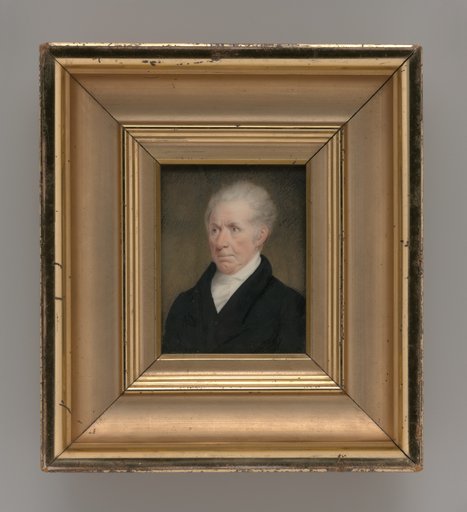
Artist
Sarah Goodridge spent her life in Boston, teaching herself to paint miniatures on ivory, tiny portraits so sharp you could count the threads in a lace collar.

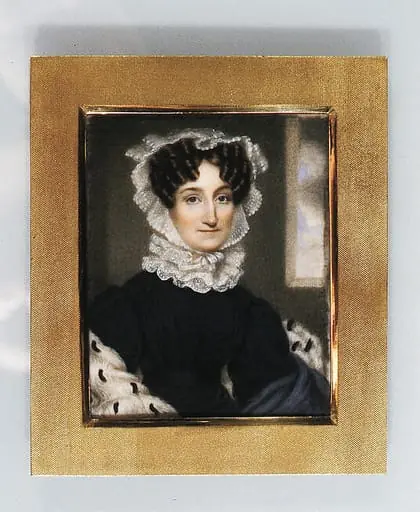 Portrait of a Lady
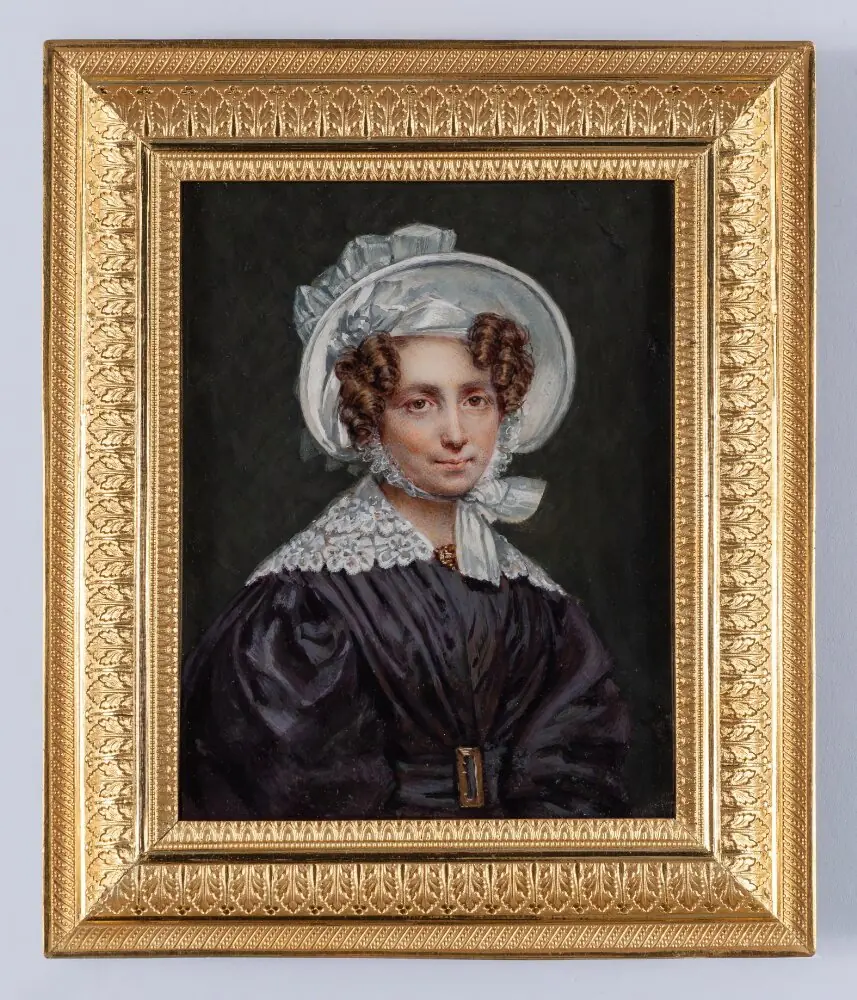 Porträtt av ung kvinna i en violett klänning med vit spetskrage
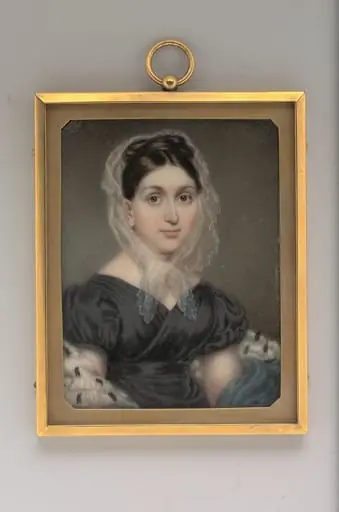 Mrs. Stephen Van Rensselaer III (Cornelia Paterson)
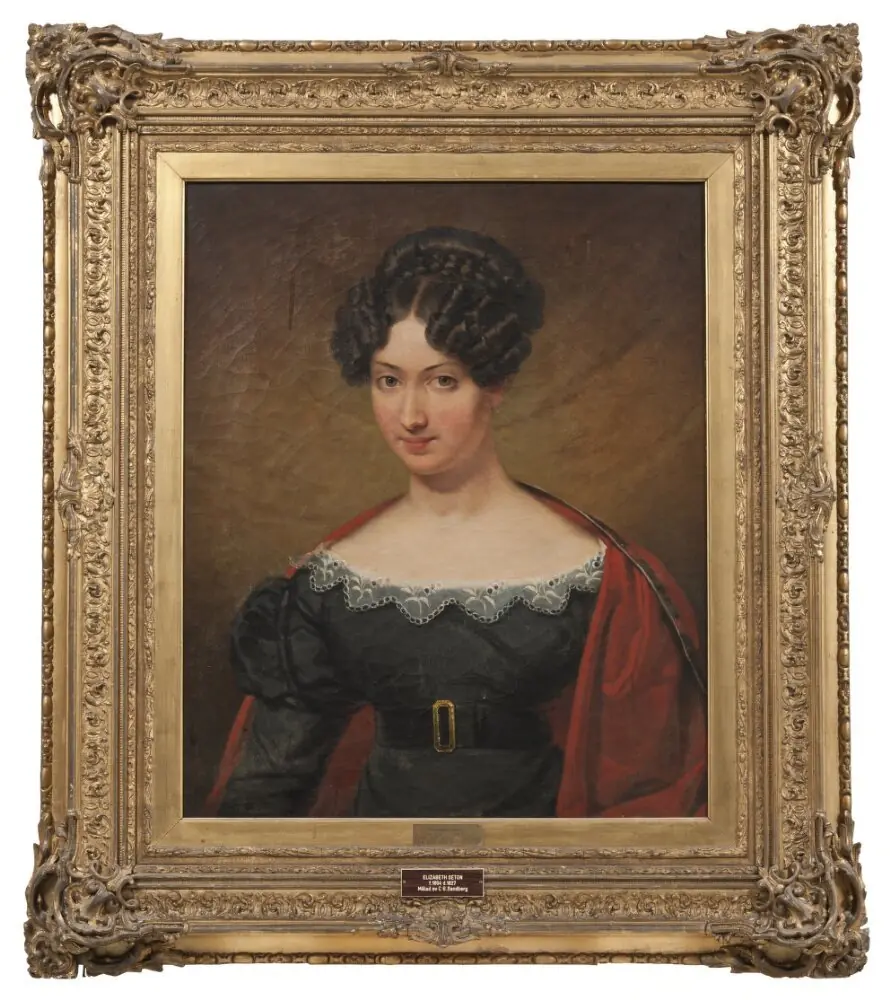 Elizabeth Seton (1804-1827), stiftsjungfru, sondotter till Alexander Baron Seton
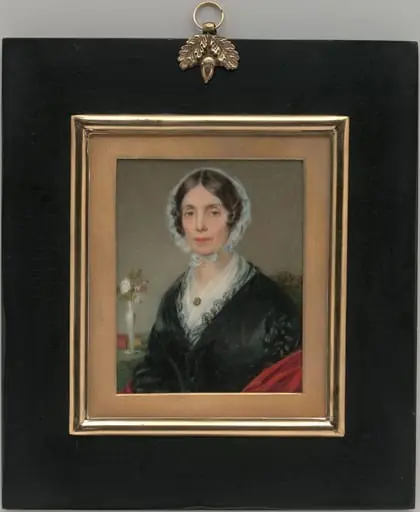 Mrs. Israel Thorndike (Sarah Dana)
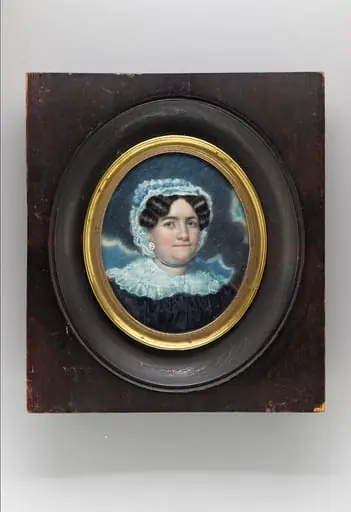 Portrait of a Lady
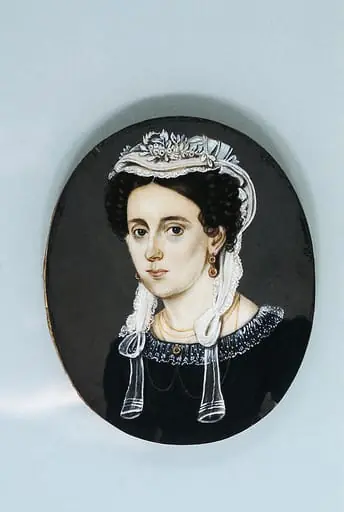 Portrait of a Lady
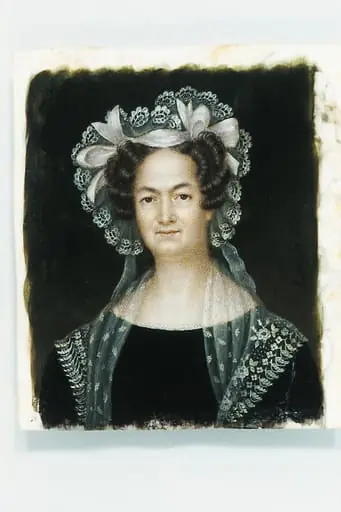 Mrs. Jacob Gerard Koch (Jane Griffith)
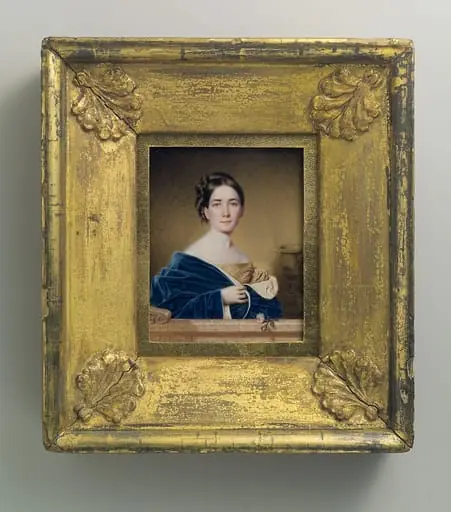 Mrs. John Wood Dodge (Mary Louise Dodge)
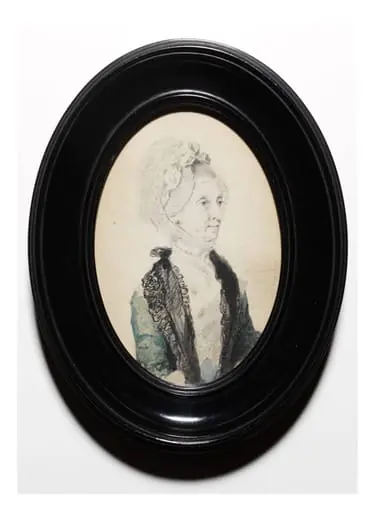 Portrait in watercolour of an unknown elderly woman