Artwork
Gilbert Stuart
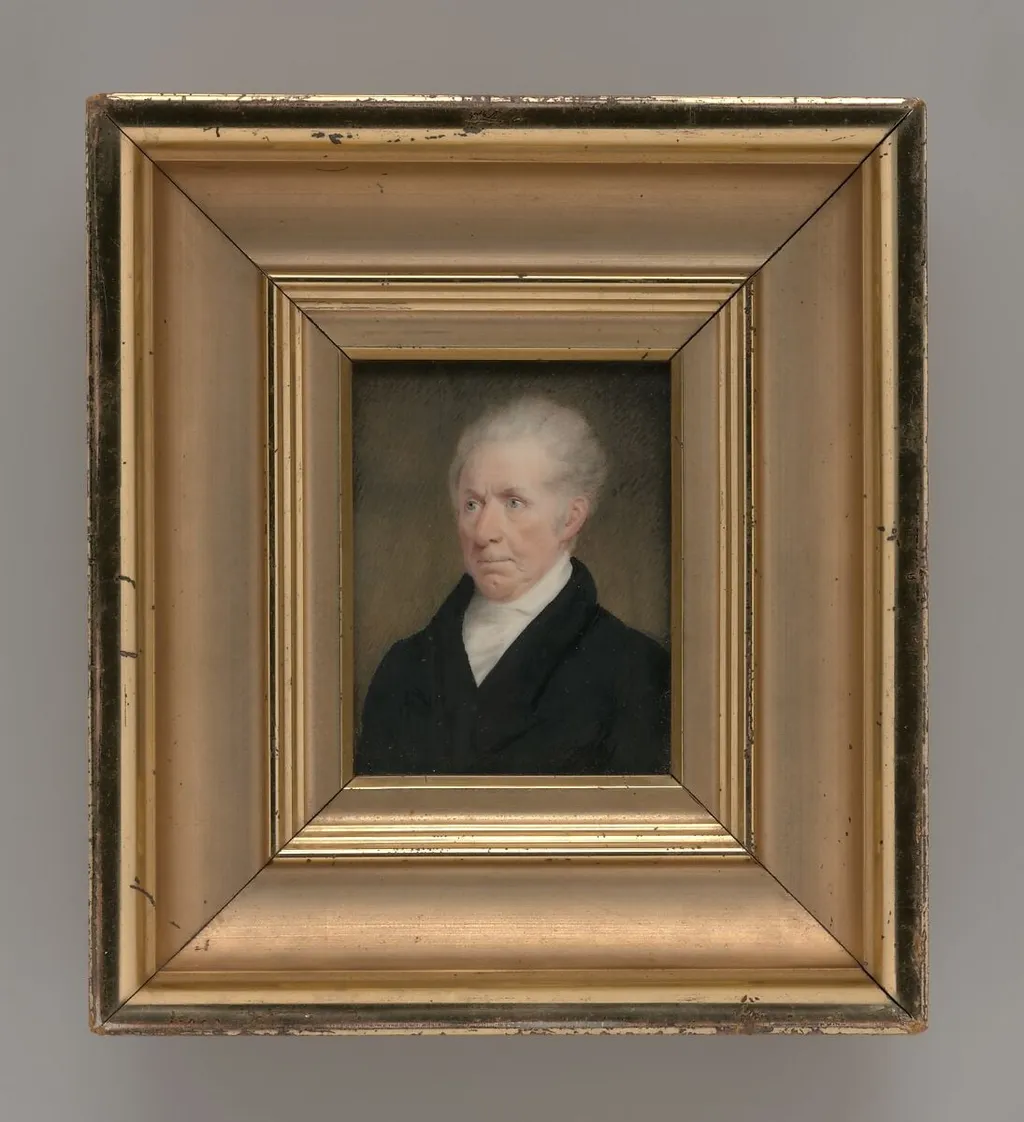
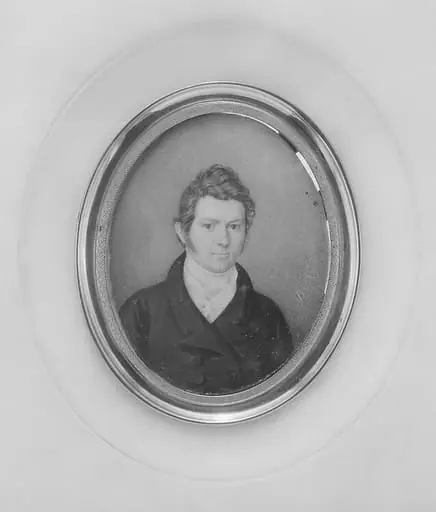
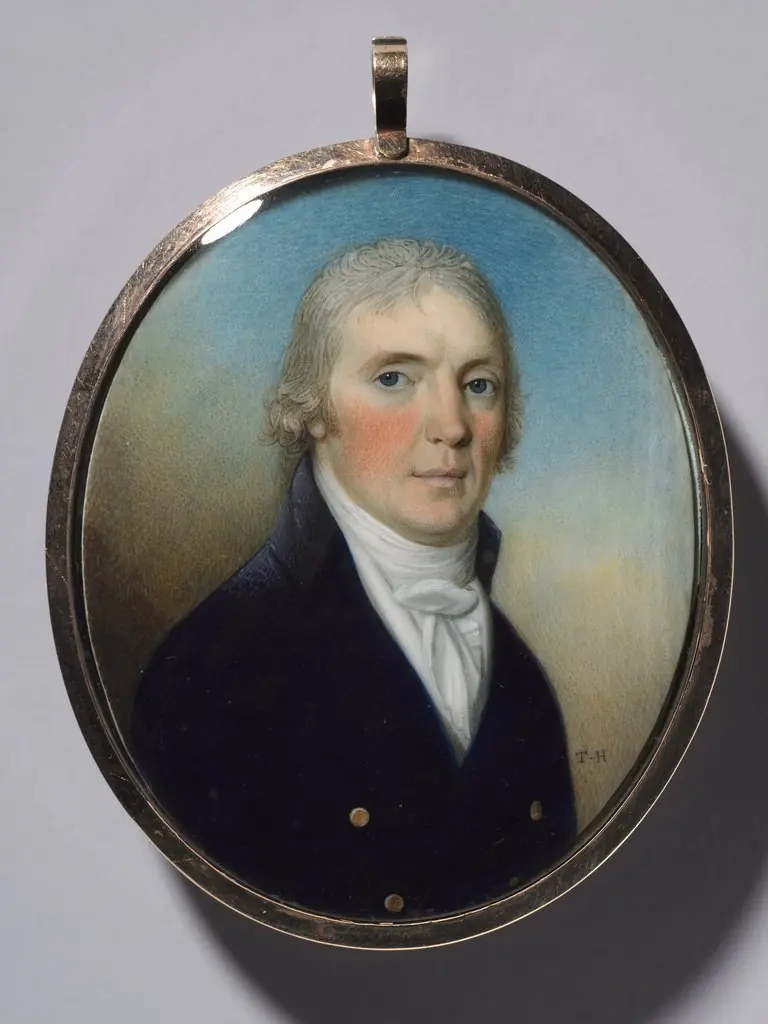
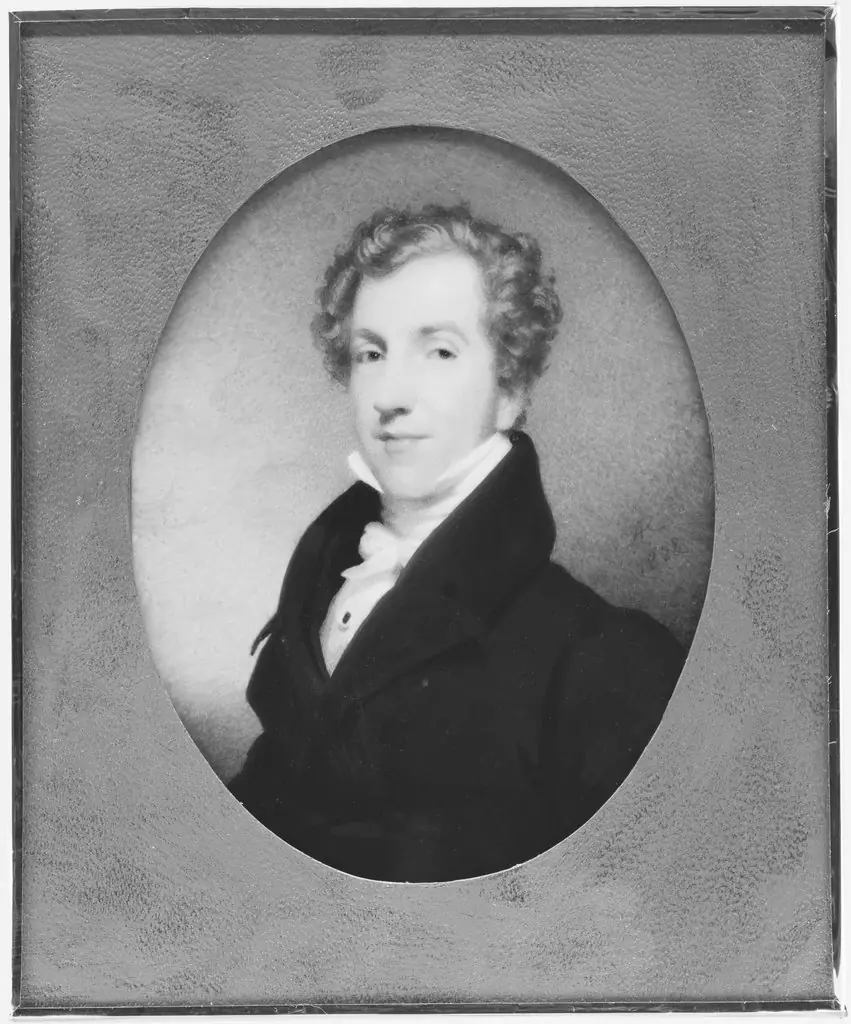
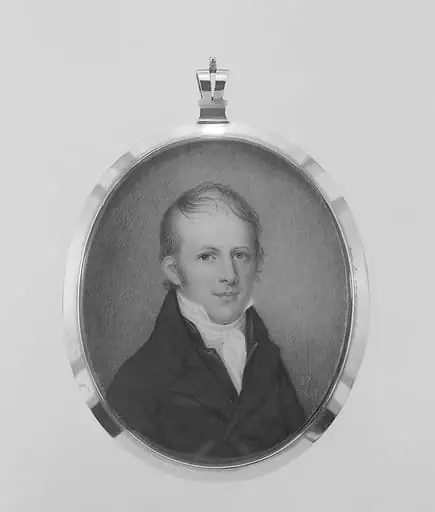
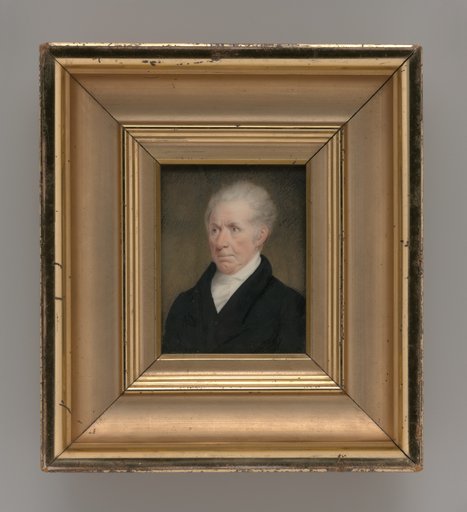
Gilbert Stuart is a watercolor painting by the American Impressionist artist Sarah Goodridge. It dates from 1825 and is held in the collection of the Metropolitan Museum of Art.
About this work
Subject & Meaning
The miniature portrait depicts Gilbert Stuart, the American painter under whom Sarah Goodridge had studied.
The miniature portrait depicts Gilbert Stuart, the American painter under whom Sarah Goodridge had studied. Produced in 1825, the work presents Stuart as a bust-length likeness turned obliquely to the left, a compositional choice that emphasizes a contemplative, three-quarter view of the sitter. Family members described the resulting image as "the most lifelike of anything ever painted of him in this country," underscoring its function as an intimate record of Stuart's likeness rather than a formal state portrait.
The subject matter is therefore both personal and professional: a tribute by a former pupil to her teacher, capturing Stuart as a representative man of the early American art world. The portrait's iconography centers on Stuart's identity as an artist, with the lifelike characterization serving as a testament to his standing and to Goodridge's skill in rendering character.
Technique & Style
The work is a watercolor portrait executed on a thin ivory support, measuring roughly 9.3 cm by 7 cm and dating to 1825. Goodridge, known for her miniature portraiture, employed fine brushwork to render a three‑quarter view of Gilbert Stuart’s head that turns obliquely to the left, a pose noted by his family as “the most lifelike” of any American depiction of him. The painting belongs to the Metropolitan Museum of Art, where it was acquired through the Lazarus collection; replicas of the image also appear in other institutions.
Its formal qualities combine delicate color modulation with a tightly controlled composition that emphasizes the sitter’s facial expression.
History & Provenance
In 1825, Gilbert Stuart commissioned a miniature portrait from Sarah Goodridge, his former student, marking a notable moment in early American portraiture. The resulting work depicts Stuart in a bust-length format facing obliquely left, described by family members as the most lifelike representation of him produced in the United States. Goodridge executed the original miniature, now in the Smithsonian American Art Museum, and subsequently produced several copies.
One such copy entered the Metropolitan Museum of Art’s collection through Moses Lazarus, while others are held by the Museum of Fine Arts and the National Portrait Gallery. The work’s dating is consistently recorded as 1825 across institutional records, aligning with Stuart’s documented commission of the piece.
Context
The 1825 miniature portrait of Gilbert Stuart by Sarah Goodridge occupies a significant place in American art history, illustrating the master-student dynamic between the renowned portraitist and his pupil. Family members historically described the work as the most lifelike representation of Stuart painted in the United States, underscoring its critical reception for its vivid realism. The original commission by Stuart himself in 1825 led to multiple copies, with versions now held by the Metropolitan Museum of Art, the Museum of Fine Arts, and the National Portrait Gallery, demonstrating the work's enduring scholarly and institutional interest.
The Metropolitan Museum's version, once in the collection of Moses Lazarus, highlights the portrait's provenance and its status as a key artifact documenting the legacy of Stuart through the lens of his contemporaries.
Overview
Sarah Goodridge's miniature portrait of Gilbert Stuart, executed in watercolor on ivory, captures the renowned American painter in a remarkably intimate scale. Measuring only three inches in height, this delicate work exemplifies the detailed artistry characteristic of miniature painting. It is one of several versions Goodridge created, reflecting her skill and her connection to her former mentor.
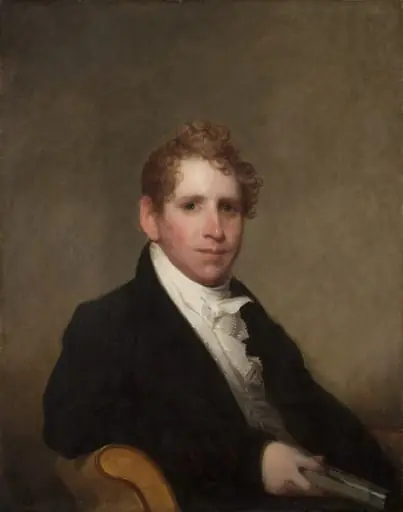
Artist & collection
Artist
Sarah Goodridge spent her life in Boston, teaching herself to paint miniatures on ivory, tiny portraits so sharp you could count the threads in a lace collar.