Artwork
`Dendoor. Nubia'
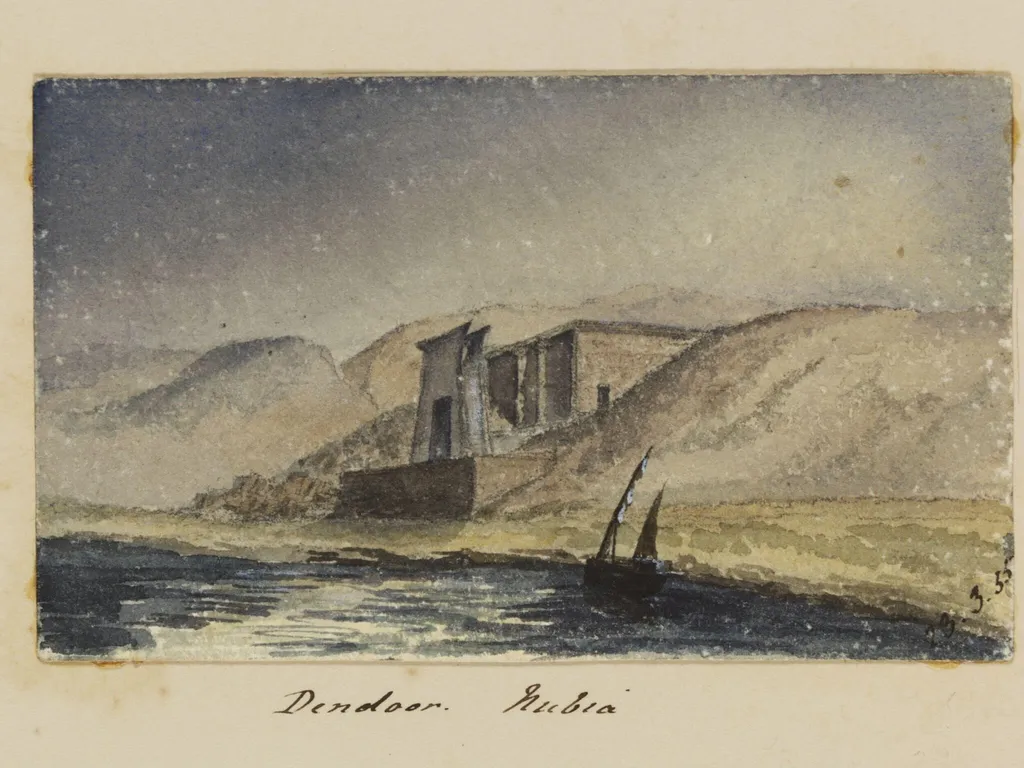
`Dendoor. Nubia' is a watercolor work on paper by the Impressionist artist George de Sausmarez. It dates from 1855 and is held in the collection of the Victoria and Albert Museum.
About this work
Overview
' The work reflects a topographical record rather than a polished composition, capturing a fleeting moment in the Nubian landscape with minimal embellishment.
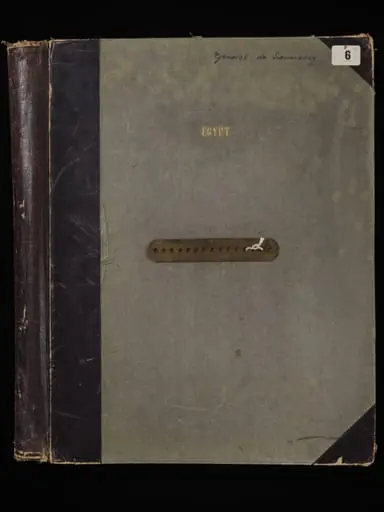
This watercolour is one of forty-five in a bound album documenting landscapes along the Nile, likely produced during or shortly after an 1855 journey. Mounted on thirty-five supports, the album is housed in a crimson morocco binding stamped 'EGYPT.' The work reflects a topographical record rather than a polished composition, capturing a fleeting moment in the Nubian landscape with minimal embellishment.
Subject & Meaning
The scene depicts a desolate stretch of riverbank in Nubia, where a weathered stone structure merges with the rocky hillside, partially collapsed and overgrown. A small sailboat rests near the water’s edge, suggesting quiet human presence amid ruins. The title 'Dendoor.
Nubia' points to a specific location, though its precise identity remains uncertain, leaving the image as a fragment of a broader, unrecorded exploration.
Technique & Style
Executed in muted watercolours, earthy browns, pale grays, and faint greens, the work employs loose, rapid brushwork typical of on-site sketching. Forms are suggested rather than defined, with minimal detail in the sky and terrain. The transparency of the medium and the absence of heavy outlines convey immediacy, reinforcing the impression of a spontaneous observation made under field conditions.
History & Provenance
The watercolour belongs to a cohesive album compiled after a Nile expedition in 1855, likely by a traveler or artist documenting the region. Its binding in crimson morocco and the stamped title indicate deliberate curation. The album’s survival and current location suggest it was preserved as a personal record, possibly later acquired by an institution, though its full provenance remains undocumented.
Context
During the mid-nineteenth century, European travelers frequently recorded Egypt and Nubia through sketchbooks and watercolours, driven by archaeological interest and colonial curiosity. This work aligns with that tradition, offering a quiet counterpoint to grander archaeological renderings, focusing instead on erosion, solitude, and the quiet persistence of landscape over time.
Legacy
Though unsigned and unattributed, the album contributes to a broader archive of 19th-century visual documentation of the Nile. Its unpolished aesthetic preserves the rawness of firsthand observation, offering scholars insight into how distant regions were perceived and recorded by visitors. It remains a modest but valuable artifact of travel and visual inquiry in a period of expanding geographic knowledge.
Own this work as a print
Artist & collection
Artist
George de Sausmarez painted watercolors of Egypt’s Nile in the 1850s, recording river scenes and landmarks with quick, transparent washes.

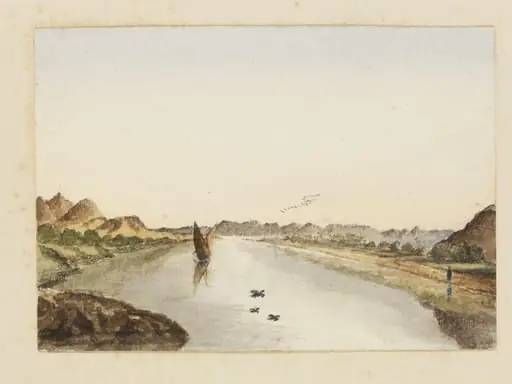 View of the Nile
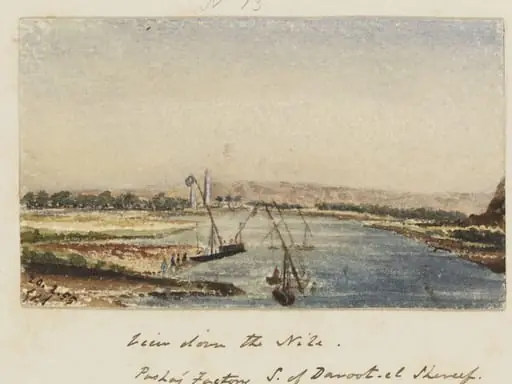 `View down the Nile. Pasha's Factory S.of Daroot-el Shereef. Upper Egypt'
 Album
Album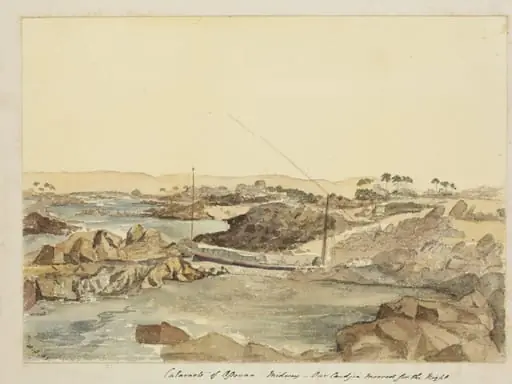 `Cataracts of Assouan. Midway. - Our Candjia Moored for the Night - On the Nile'
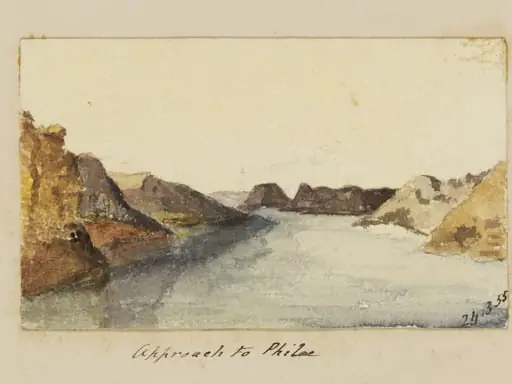 `Approach to Philae'
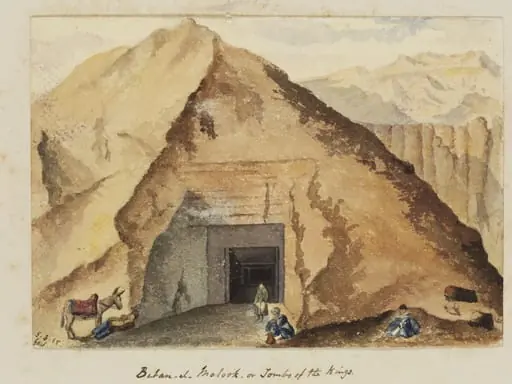 Biban-el-Molook, or Tombs of the Kings. Belzoni's Tomb. Thebes
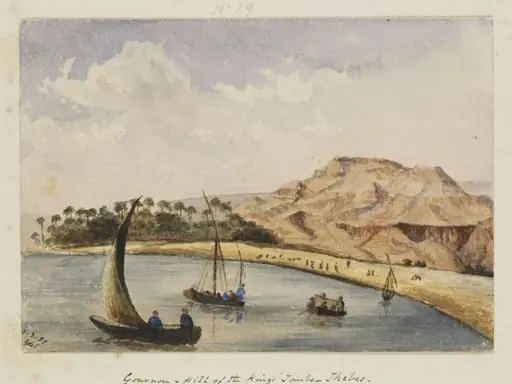 `Gournou & Hill of the Kings' Tombs - Thebes'
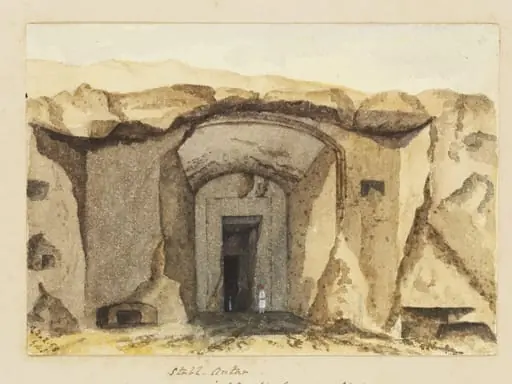 `Stabl-Antar. Ancient Egyptian Cave near Siout. Upper Egypt'
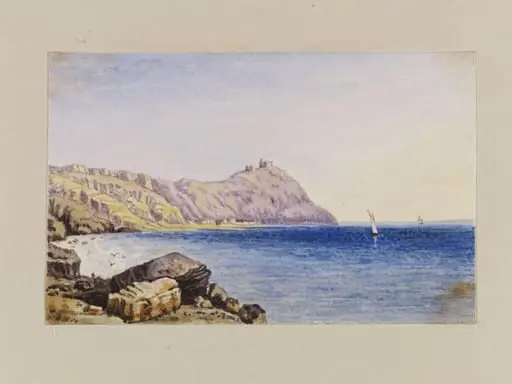 Carmel
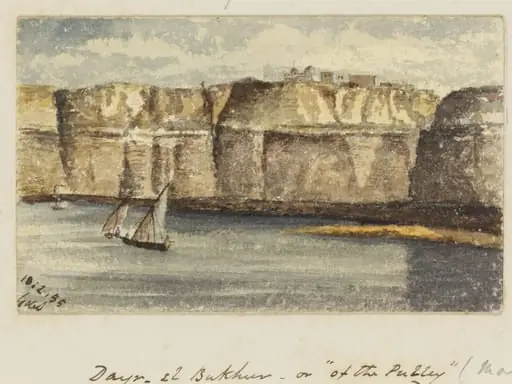 Dayr- El Bukhur - or "of the Pulley" Coptic Convent on Gebel-e-Tayr. Upper Egypt
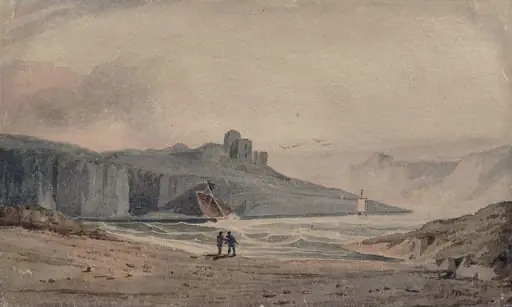 Castle on a Rocky Road above a Bay
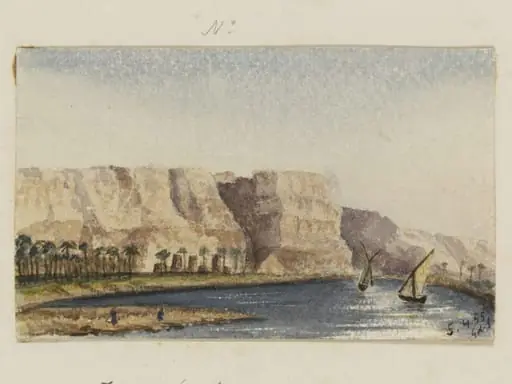 `Kusr-é-Syad. Opposite Choenoboscion. Upper Egypt'
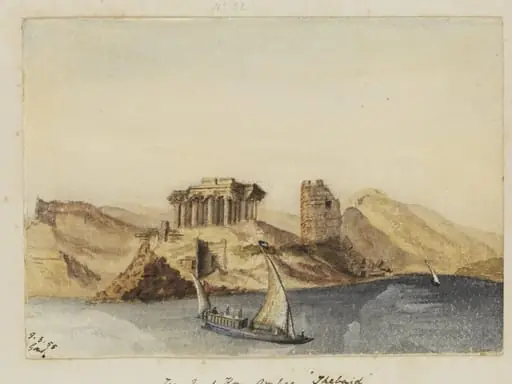 `Temple of Kom-Ombos. "Thebaid" from Stern of Boat "5. knots an hour" "On the Nile"
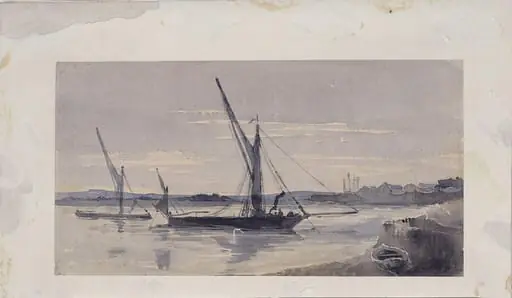 Coast Scene: Sunset
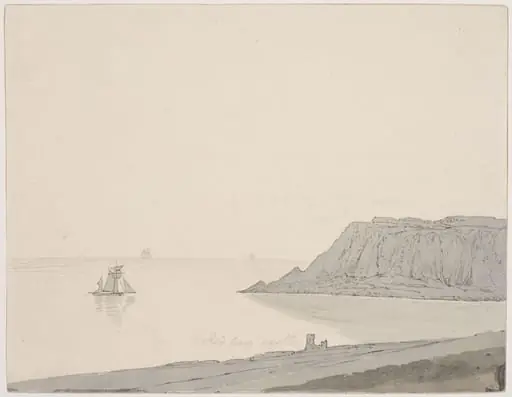 Red Bay Castle. Unfinished.
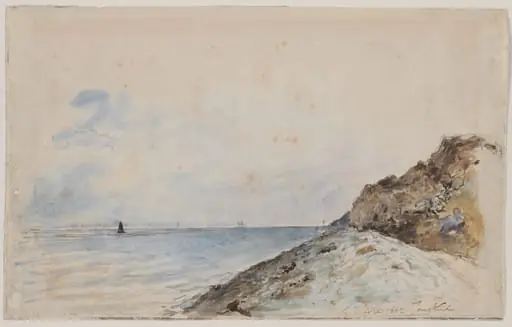 Le Havre
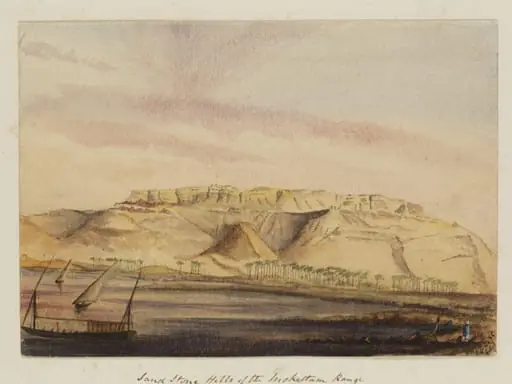 `Sand Stone Hills of the Mokattam Range "Sunset" between Beni-souef & Golosena'
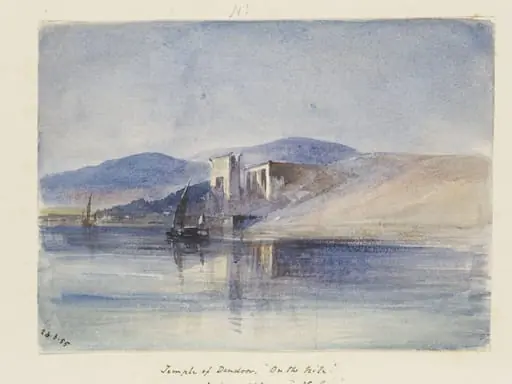
- `Temple of Dendoor. "On the Nile." By Moonlight. "Nubia"
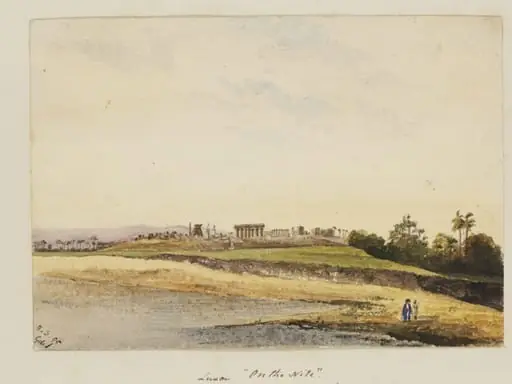 `Luxor "On the Nile" - from the Gournou Bank'