Artwork
Saint Jerome Reading

Saint Jerome Reading is a tempera painting by the Early Renaissance artist Alvise Vivarini. It dates from 1476 and is held in the collection of the National Gallery of Art.
- Inscription
- Inscribed:lower right on a cartello: LVDVVICVS VIVA / RINVS . PINXIT
About this work
An old man sits at a desk, reading, surrounded by plain furnishings. The lines on his face mark his age, and the whole scene holds a single quiet moment of focus. Alvise Vivarini painted it in tempera on panel in 1476.
Subject & Meaning
As a religious work created in 1476 by Alvise Vivarini, the subject aligns with the common iconography of Jerome as a scholar and hermit.
The painting depicts Saint Jerome, a Doctor of the Church, engaged in the act of reading. As a religious work created in 1476 by Alvise Vivarini, the subject aligns with the common iconography of Jerome as a scholar and hermit. The focus on the saint reading underscores his role as a translator of the Bible and a model of theological study.
The genre is explicitly classified as religious art, emphasizing the devotional purpose of the image. The composition centers on Jerome's intellectual engagement, reflecting the humanist interest in learning and scriptural interpretation prevalent in late 15th-century Venetian art.
Technique & Style
Alvise Vivarini's Saint Jerome Reading is executed in tempera on a wooden panel. The artwork measures 31.4 centimeters in height and 25.1 centimeters in width. Dated to 1476, the painting belongs to the religious genre and exemplifies the late 15th-century Venetian workshop tradition of using tempera on panel supports.
The composition isolates the saint in a contemplative act, featuring Jerome with a book in a rocky landscape that includes a lake in the background. The handling of the medium emphasizes detailed, descriptive rendering of both the figure and the surrounding terrain, characteristic of Vivarini's formal stylistic approach during this period.
History & Provenance
The painting Saint Jerome Reading was executed by Alvise Vivarini in 1476 as a tempera work on panel. Its early ownership is recorded in Rome with Mameli, then passed to William Jones of Clytha Park, Wales, who sold it at Christie & Manson in London on 8 May 1852 (no. 65). The picture entered the collection of Thomas Harris in London by 1930, subsequently belonged to Godfrey Locker-Lampson at Barlborough Hall and London by 1937, and was acquired from Count Alessandro Contini Bonacossi in Florence.
In September 1938 it was purchased by the Samuel H. Kress Foundation, New York, and gifted to the National Gallery of Art in 1939, where it is held as part of the Samuel H. Kress Collection.
Overview
Alvise Vivarini, a prominent Venetian artist from the late 15th century, created Saint Jerome Reading around 1476. This early Renaissance painting, executed in tempera on panel, portrays the revered scholar-saint in a moment of quiet contemplation. The work exemplifies the period's interest in depicting religious figures with a focus on their inner life and scholarly pursuits, rather than dramatic action.
Context
Alvise Vivarini belonged to an influential family of artists in Venice, having trained within a well-established workshop tradition that included his father and uncle. His work, including Saint Jerome Reading, represents a significant aspect of Venetian painting in the late 1400s, preceding the widespread impact of Giovanni Bellini. It reflects the prevailing artistic and religious sensibilities of the era.
Own this work as a print
Artist & collection
Artist
Alvise or Luigi Vivarini (1442/1453–1503/1505) was an Italian painter, the leading Venetian artist before Giovanni Bellini.

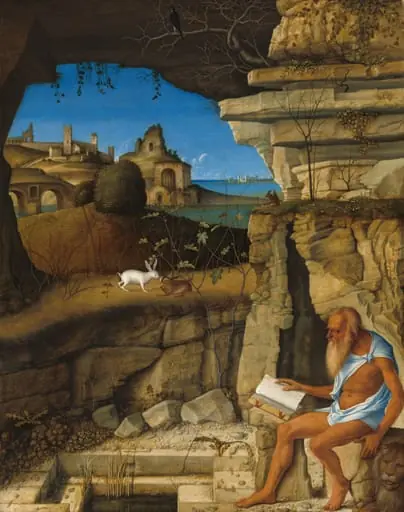
 Saint Jerome
 Saint Jerome
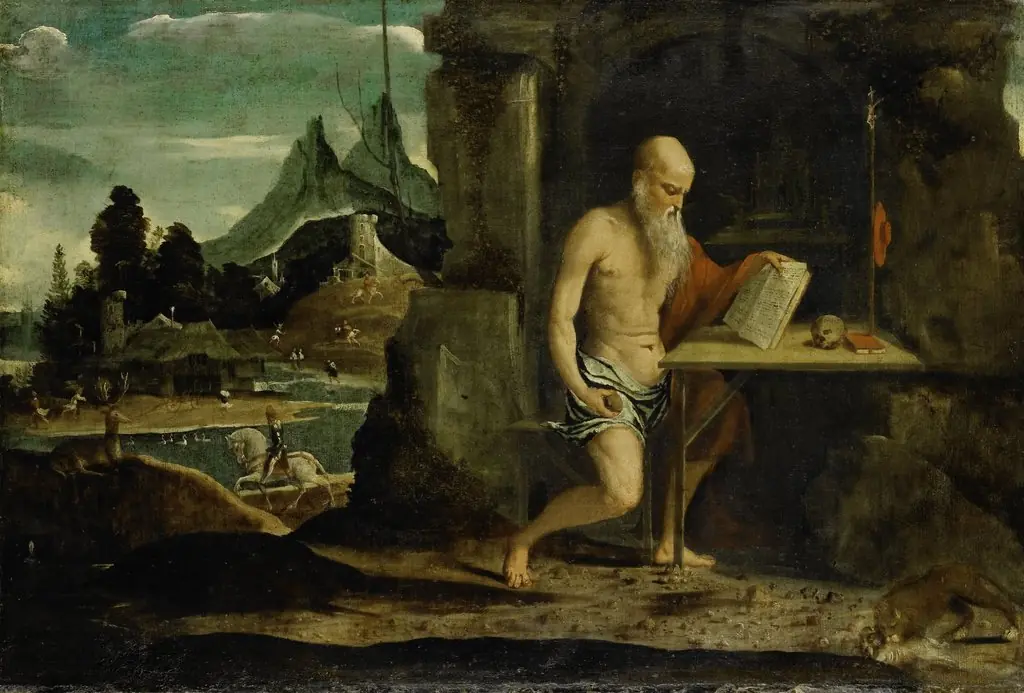 Saint Jerome
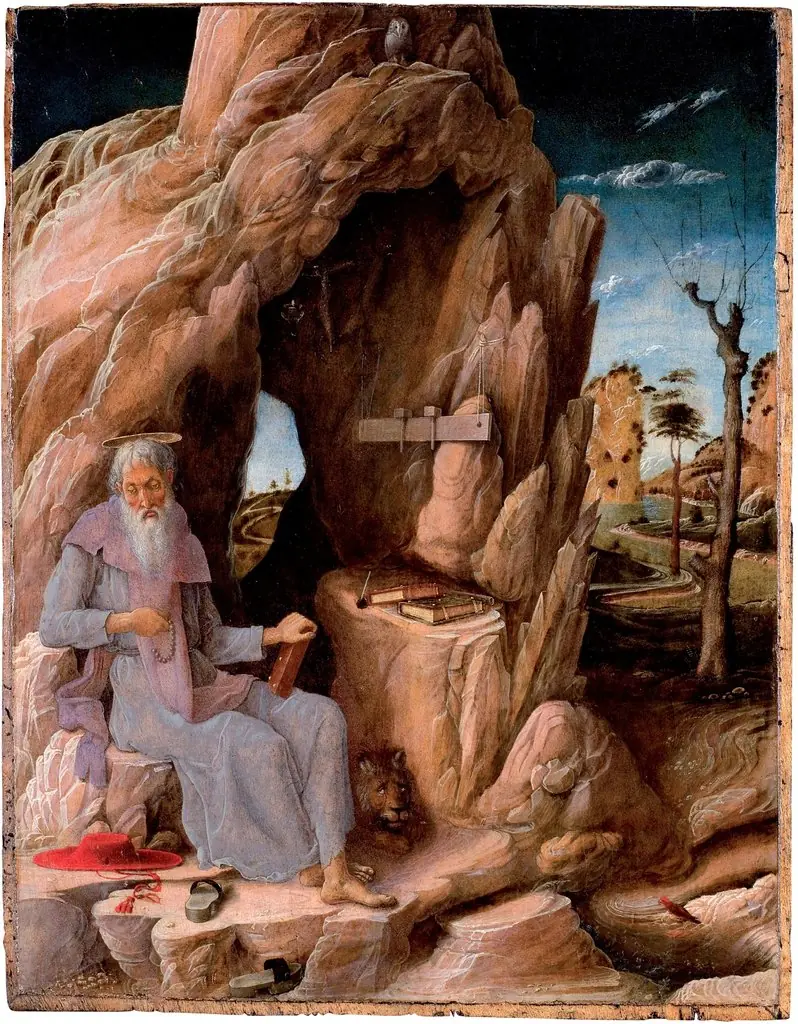 Saint Jerome in the desert
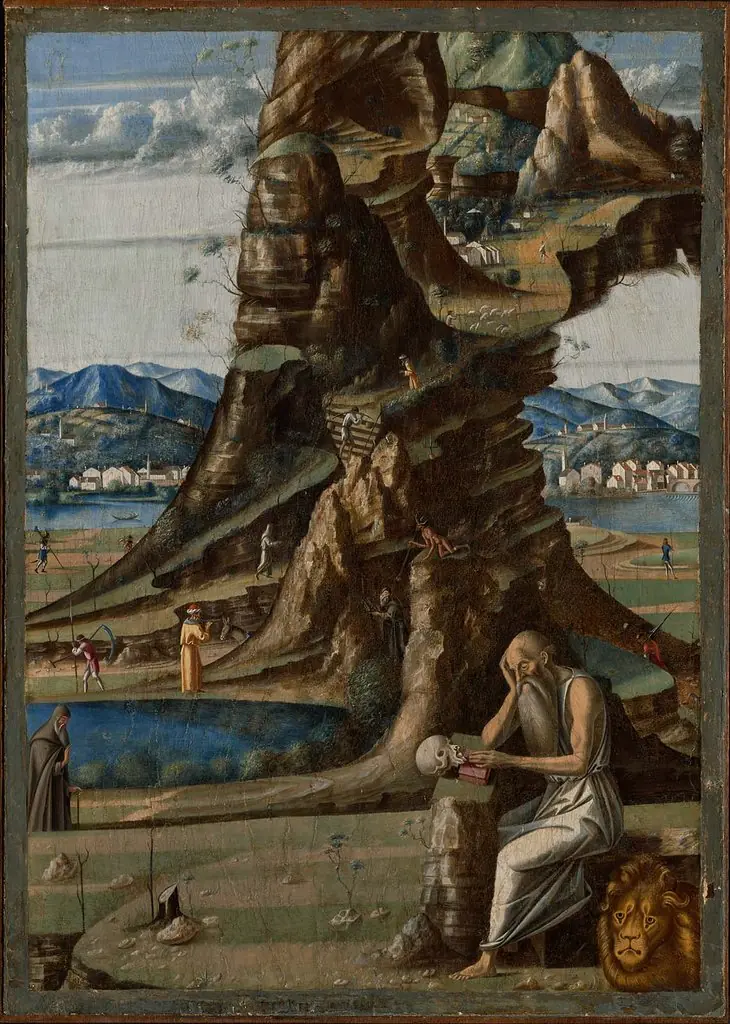 Saint Jerome in the Wilderness
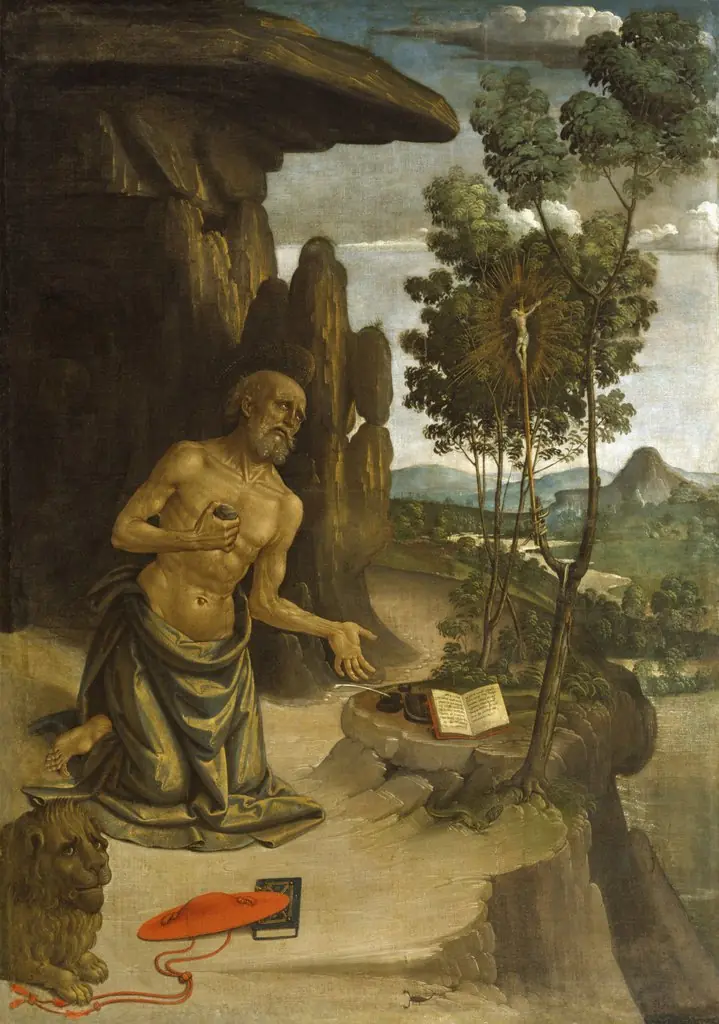 Saint Jerome in the Wilderness
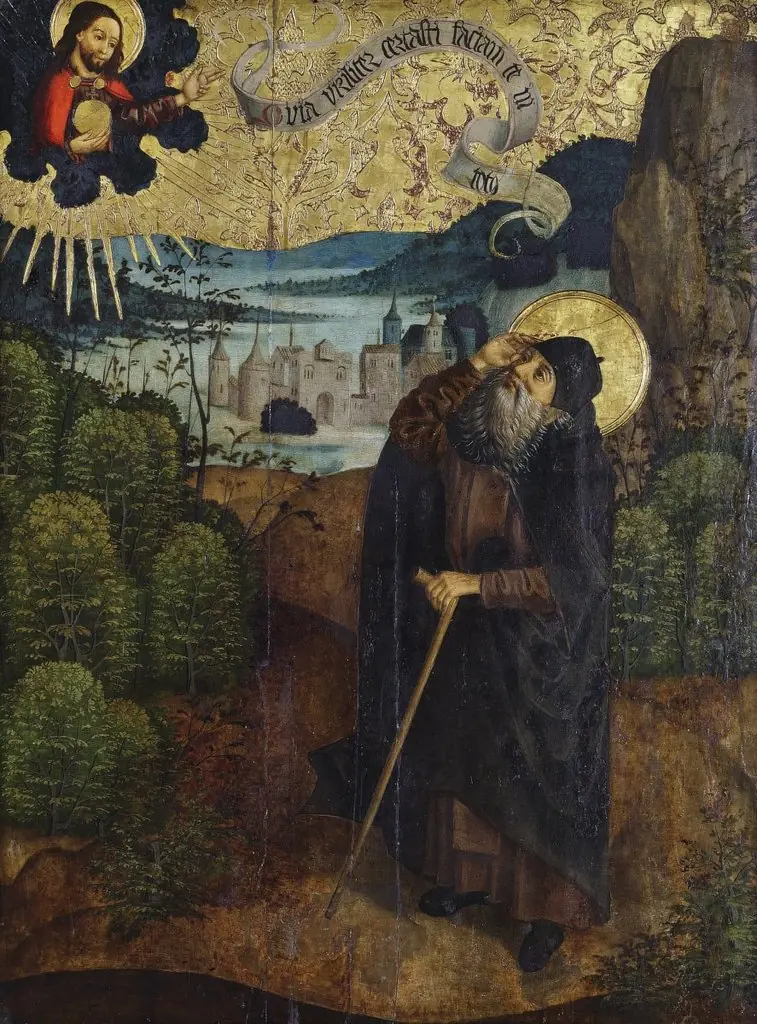 Vision of St. Anthony the Hermit, detail of an altar wing from the Church of Saint Anthony in Szepesbéla (today Spišská Belá, Slovakia)
 Saint Jerome in the Wilderness
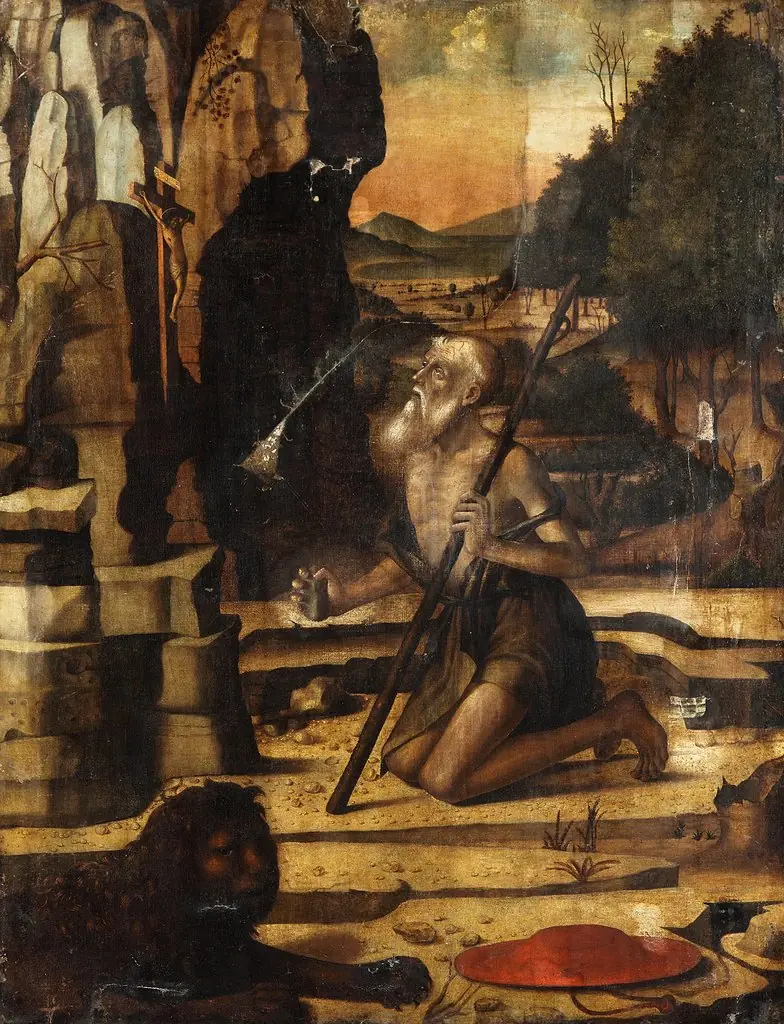 St. Jerome
 St. Jerome in Rocky Landscape
 Elijah Fed by the Raven
- Saint Jerome Reading