Artwork
冨嶽三十六景 五百らかん寺さざゐどう|Sazai Hall at the Temple of the Five Hundred Arhats (Gohyaku Rakanji Sazaidō), from the series Thirty-six Views of Mount Fuji (Fugaku sanjūrokkei)
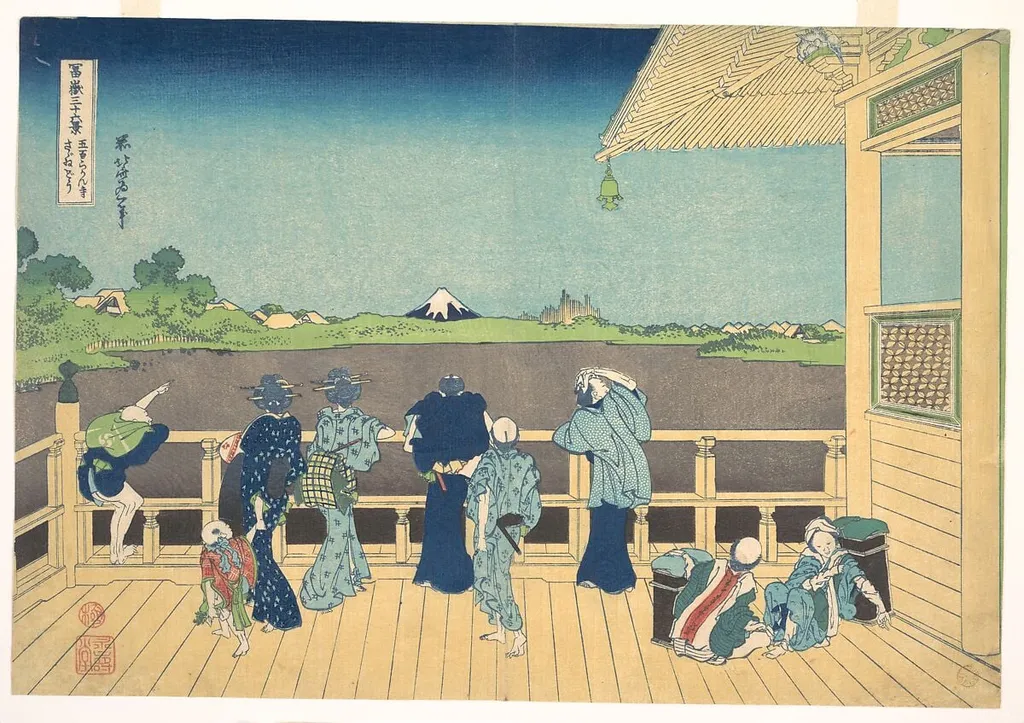
冨嶽三十六景 五百らかん寺さざゐどう|Sazai Hall at the Temple of the Five Hundred Arhats (Gohyaku Rakanji Sazaidō), from the series Thirty-six Views of Mount Fuji (Fugaku sanjūrokkei) is an ink print by the Japonisme artist Katsushika Hokusai. It dates from 1831 and is held in the collection of the Metropolitan Museum of Art.
About this work
Overview
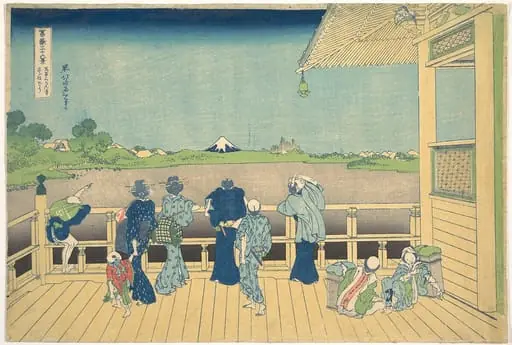
This woodblock print is part of Katsushika Hokusai’s series Thirty-six Views of Mount Fuji, produced around 1831. It depicts a quiet scene at the Sazai Hall of the Gohyaku Rakanji temple, where visitors gather on a wooden veranda. The composition emphasizes the relationship between human activity and the natural landscape, with Mount Fuji visible in the distance as a quiet, dominant presence.
Subject & Meaning
The scene captures pilgrims and tourists observing the mountain from a temple terrace, suggesting a moment of contemplation. Figures in traditional attire, some with umbrellas or fans, convey a sense of everyday ritual. A child seated on the floor and others leaning on the railing introduce subtle human scale, reinforcing the theme of quiet reverence rather than grand spectacle.
Technique & Style
Hokusai employed precise linework and layered color printing to render textures of wood, fabric, and foliage. The deep blue sky contrasts with the muted greens of the hills and the pale tones of the temple structure. Mount Fuji is rendered in simplified, geometric form, a hallmark of Hokusai’s approach, balancing realism with stylized abstraction to evoke atmospheric depth.
History & Provenance
Created during the peak of Hokusai’s career, this print was produced as part of a commercially successful series that helped popularize landscape prints in Edo-period Japan. The Metropolitan Museum of Art holds one of the surviving impressions, acquired through early 20th-century collections that recognized the print’s cultural significance in Japanese art history.
Context
The Gohyaku Rakanji temple, dedicated to the fifty disciples of the Buddha, was a known pilgrimage site near Edo. Hokusai’s inclusion of this location reflects a broader trend in ukiyo-e of depicting both sacred and secular sites within reach of urban dwellers. The series as a whole redefined landscape as a subject worthy of artistic focus beyond mere backdrop.
Legacy
This print, like others in the series, influenced later Western artists and contributed to the global appreciation of Japanese printmaking. Its restrained composition and integration of nature with human presence became a model for modern landscape representation, shifting focus from narrative to mood and spatial harmony.
Artist & collection

Artist
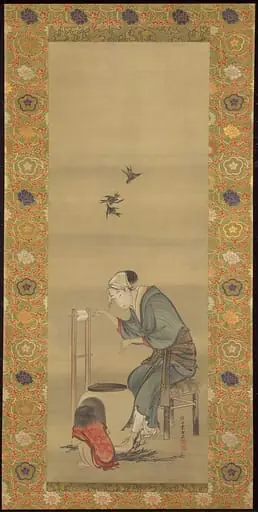
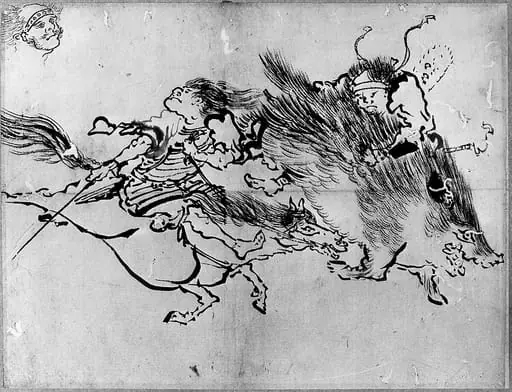
Katsushika Hokusai spent his life in Edo, now Tokyo, where he drew and carved prints for a living.

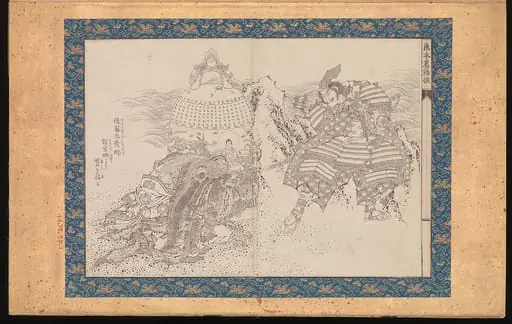
- 冨嶽三十六景 五百らかん寺さざゐどう|Sazai Hall at the Temple of the Five Hundred Arhats (Gohyaku Rakanji Sazaidō), from the series Thirty-six Views of Mount Fuji (Fugaku sanjūrokkei)
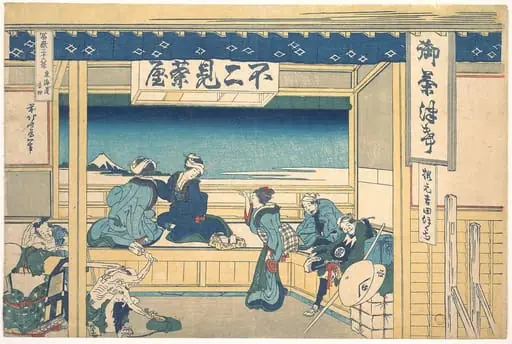 冨嶽三十六景 東海道吉田|Yoshida on the Tōkaidō (Tōkaidō Yoshida), from the series Thirty-six Views of Mount Fuji (Fugaku sanjūrokkei)
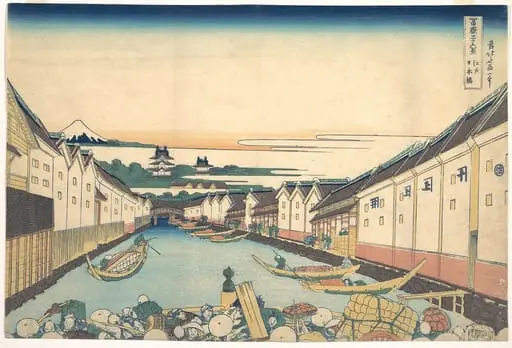 冨嶽三十六景 江戸日本橋|Nihonbashi in Edo (Edo Nihonbashi), from the series Thirty-six Views of Mount Fuji (Fugaku sanjūrokkei)
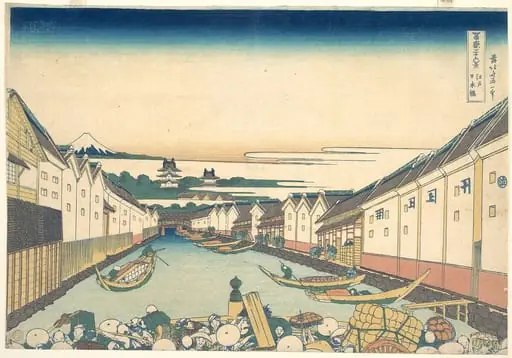 冨嶽三十六景 江戸日本橋|Nihonbashi in Edo (Edo Nihonbashi), from the series Thirty-six Views of Mount Fuji (Fugaku sanjūrokkei)
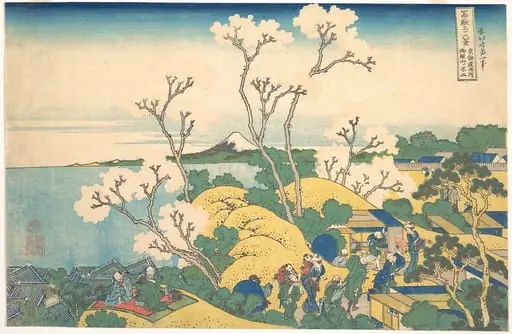 冨嶽三十六景 東海道品川御殿山の不二|Fuji from Gotenyama at Shinagawa on the Tōkaidō (Tōkaidō Shinagawa Gotenyama no Fuji), from the series Thirty-six Views of Mount Fuji (Fugaku sanjūrokkei)
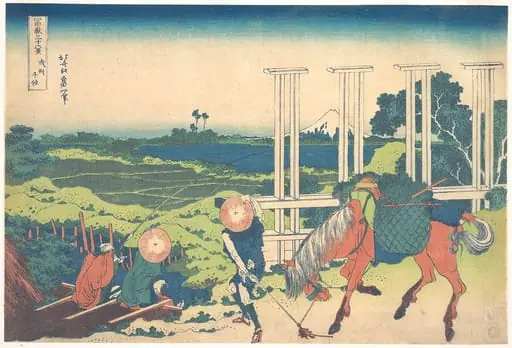 冨嶽三十六景 武州千住|Senju in Musashi Province (Bushū Senju), from the series Thirty-six Views of Mount Fuji (Fugaku sanjūrokkei)
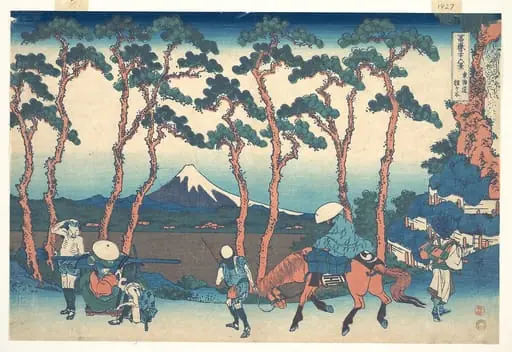 冨嶽三十六景 東海道保土ケ谷|Hodogaya on the Tōkaidō (Tōkaidō Hodogaya), from the series Thirty-six Views of Mount Fuji (Fugaku sanjūrokkei)
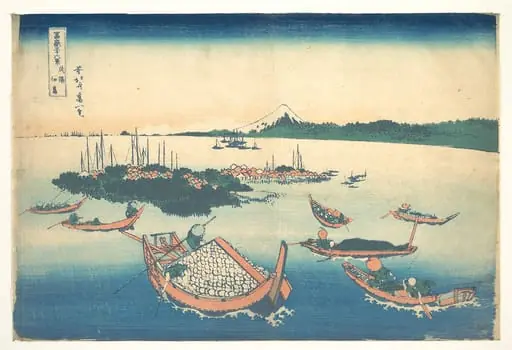 冨嶽三十六景 武陽佃島|Tsukudajima in Musashi Province (Buyō Tsukudajima), from the series Thirty-six Views of Mount Fuji (Fugaku sanjūrokkei)