Artwork
The Coronation of the Virgin
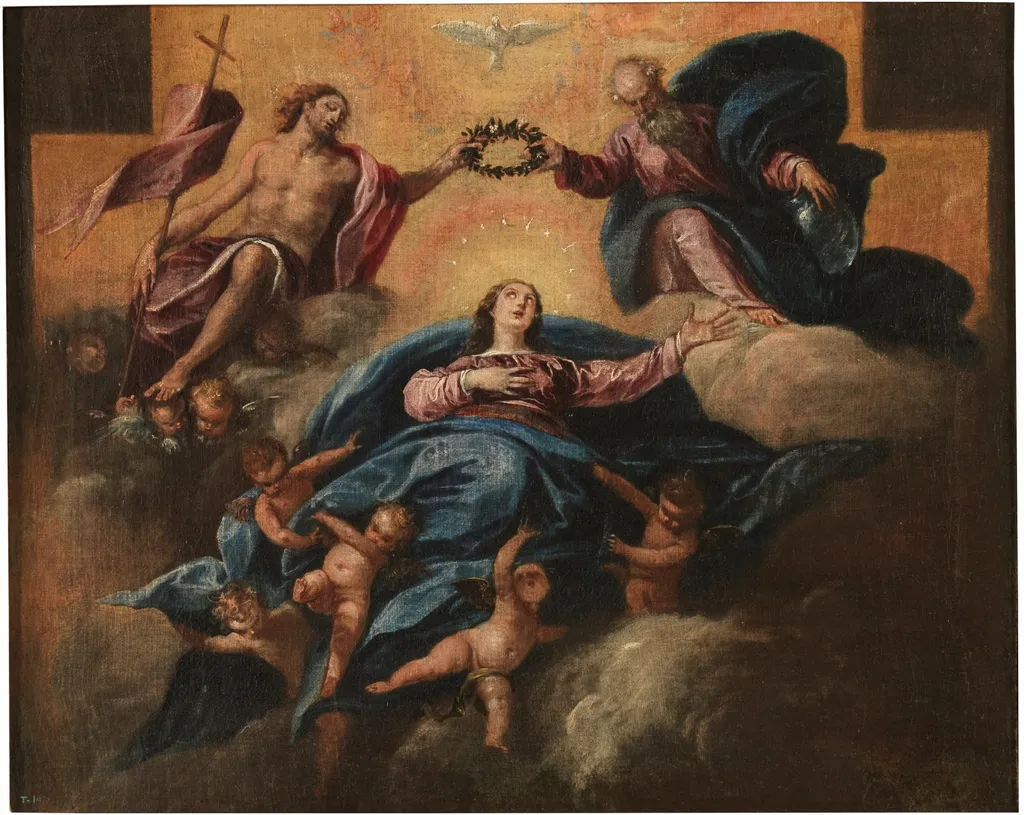
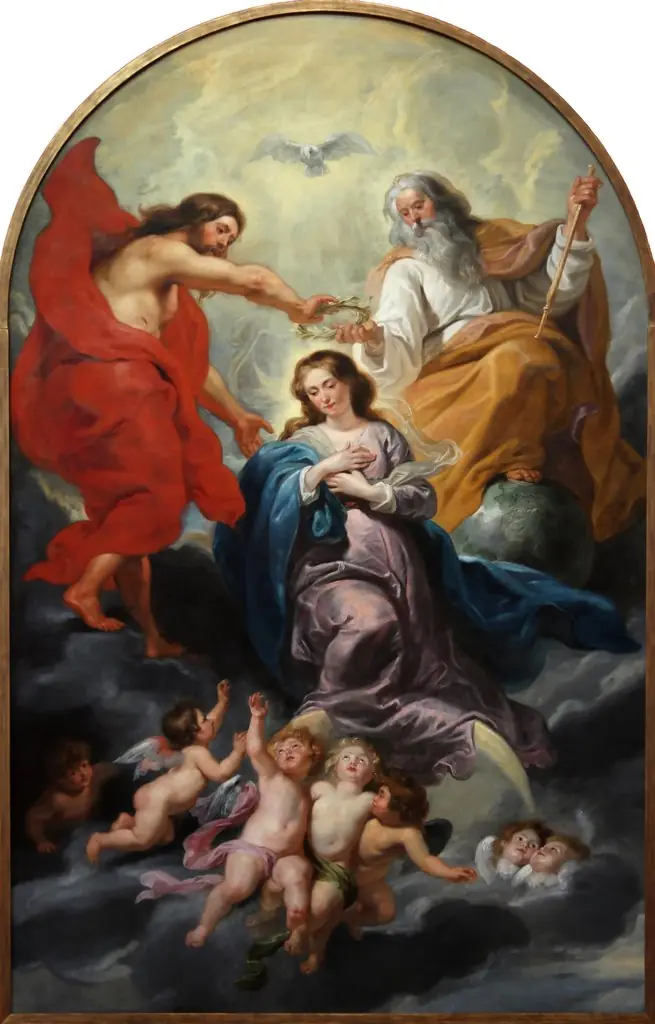
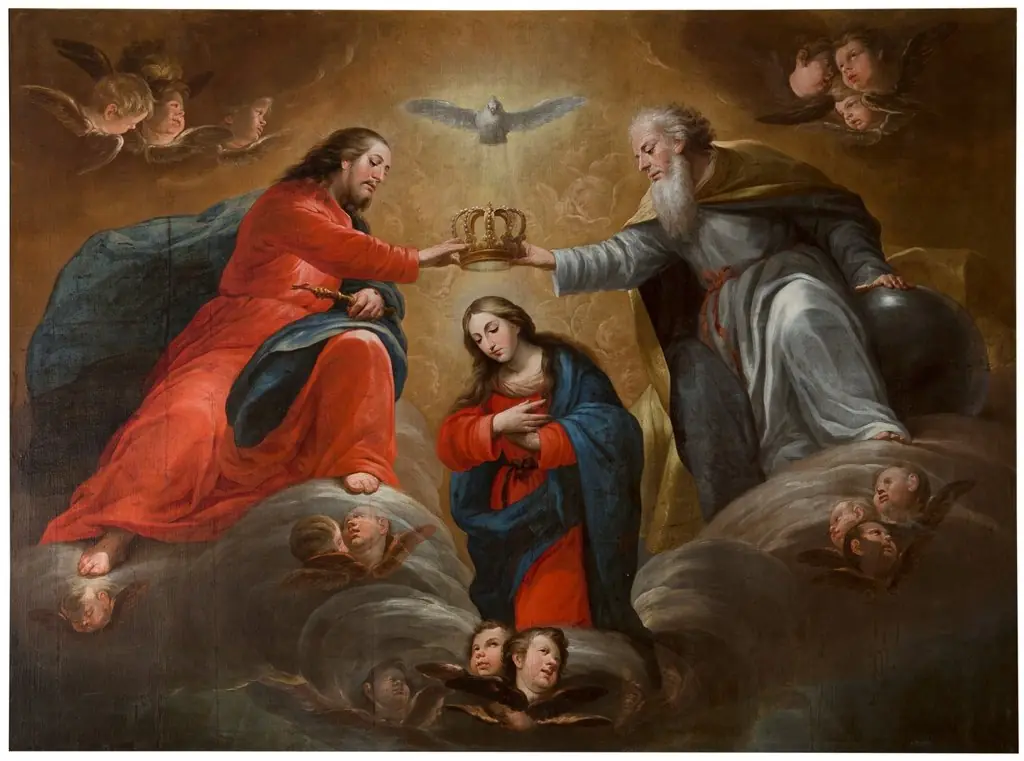
The Coronation of the Virgin is an oil painting by the Early Baroque Italian artist Sebastián Herrera Barnuevo. It dates from 1653 and is held in the collection of the Museo del Prado.
About this work
Subject & Meaning
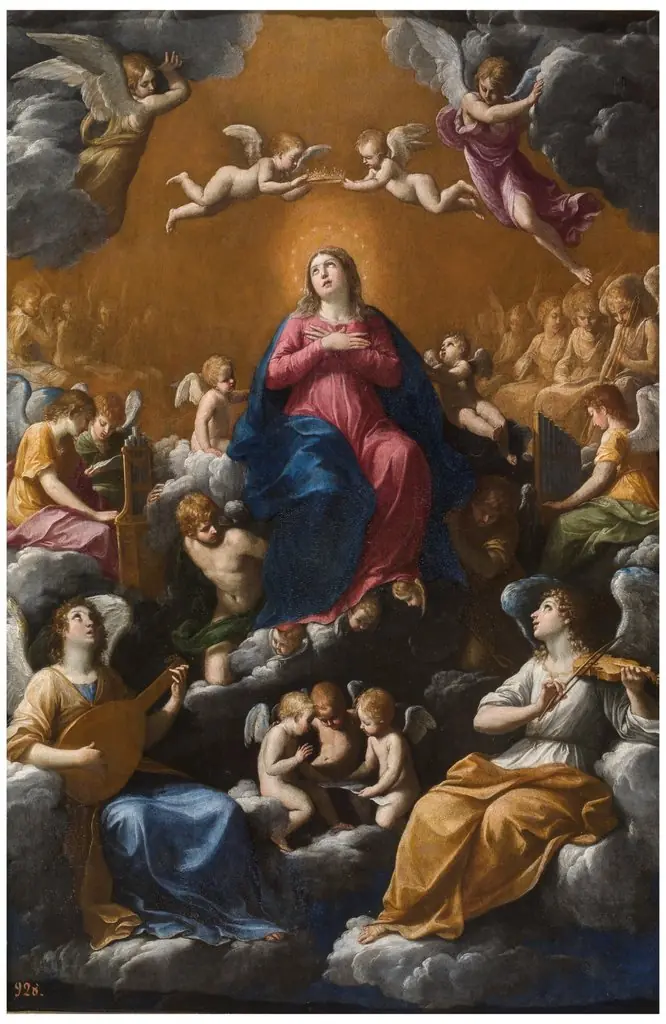
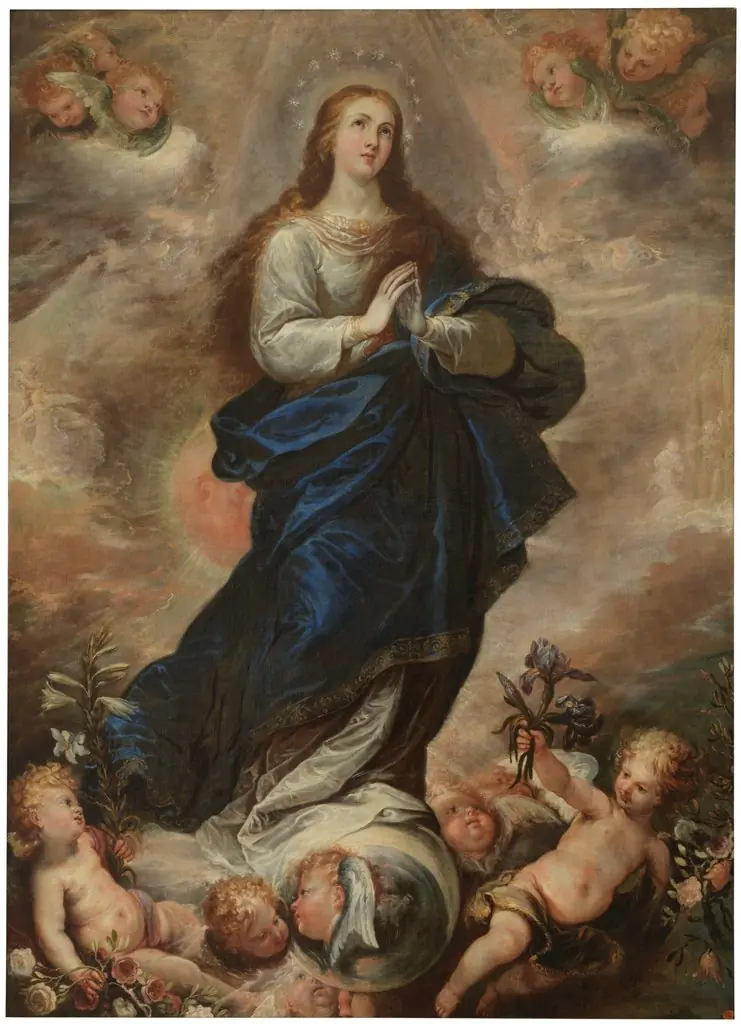
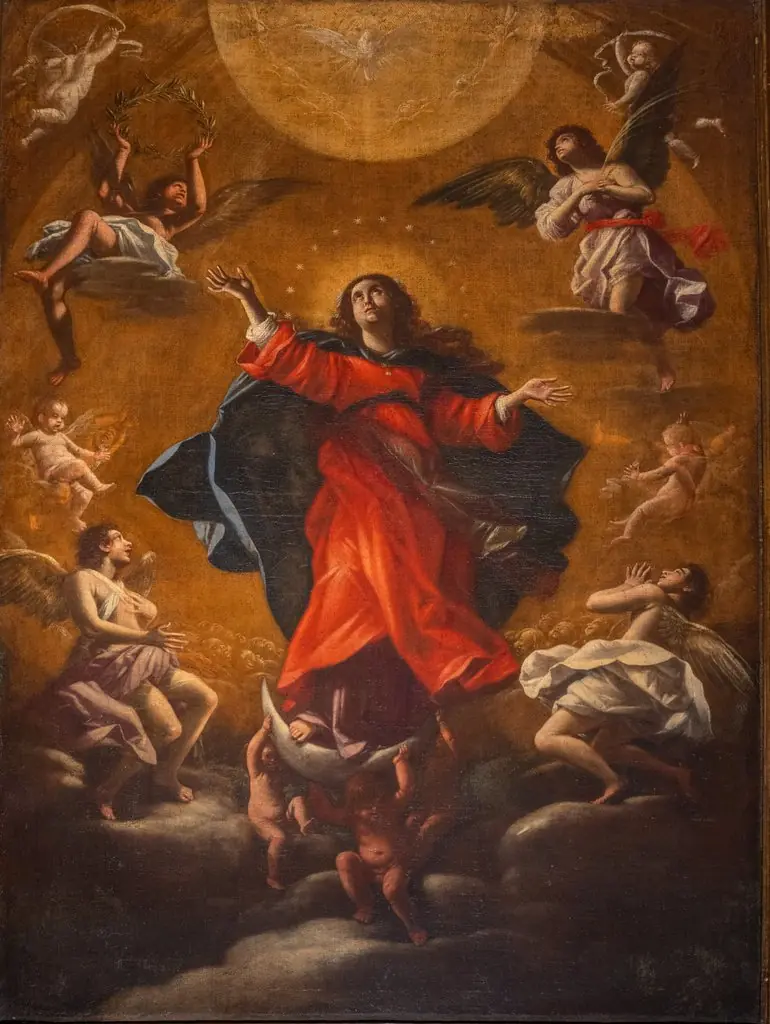
The painting depicts the Coronation of the Virgin, a devotional subject in which the Virgin Mary is crowned Queen of Heaven.
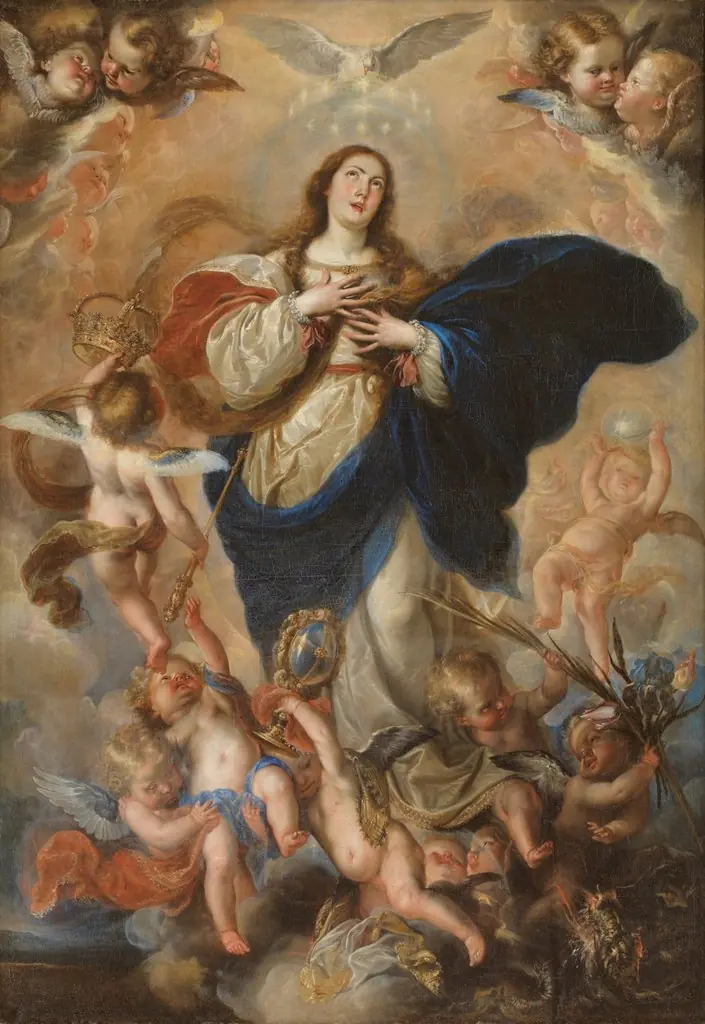
The painting depicts the Coronation of the Virgin, a devotional subject in which the Virgin Mary is crowned Queen of Heaven. According to the Wikidata record, the canvas shows the Coronation of the Virgin together with a crown and an orb, the traditional attributes of Mary as Regina Caeli.
The Spanish Wikipedia entry situates the scene within a dynamic Baroque composition: the Virgin ascends amid angels, her hands raised in a theatrical, declamatory gesture, while the figure of God the Father appears in the upper portion of the canvas. The treatment of the Eternal Father has been linked to models by Tintoretto, and the angelic putti reflect the influence of Alonso Cano, Herrera Barnuevo's teacher. The wind-tossed drapery and the upward movement of the accompanying angels reinforce the heavenly, glorifying character of the event, presenting the Coronation as a moment of celestial triumph.
History & Provenance
The Coronation of the Virgin by Sebastián de Herrera Barnuevo was created around 1653, a date inferred from its stylistic similarities to works produced that year for the Monastery of Las Descalzas Reales in Madrid. The original commission and specific provenance of the canvas remain unknown, as the piece lacks a signature or date. Scholars suggest it functioned either as a high-altar panel for a small altarpiece or as a highly finished preparatory study.
The painting entered the collection of the Museo del Prado in 1916 as part of the legacy of Pablo Bosch y Barrau. Upon its arrival, it was misattributed first to an anonymous Venetian school and later to an anonymous Italian artist from the late seventeenth century. Correct attribution to Herrera Barnuevo was established in the 1980s by Alfonso Pérez Sánchez, who identified chromatic and compositional parallels with the artist's securely dated work, The Holy Family.
The Coronation of the Virgin is held in the collection of the Museo del Prado in Madrid. The painting entered the museum in 1916 as part of the legacy of Pablo Bosch y Barrau. Upon its acquisition, the work was misidentified as an anonymous piece from the Venetian school, and later classified as an anonymous Italian work from the late seventeenth century.
It was not until the 1980s that Alfonso Pérez Sánchez, then director of the Prado, correctly attributed the canvas to Sebastián Herrera Barnuevo based on stylistic parallels with the artist's confirmed works.
The provided sources do not list specific public exhibitions for this artwork, focusing instead on its provenance and attribution history.
Context
Sebastián de Herrera Barnuevo's The Coronation of the Virgin (c. 1653) occupies a specific niche within seventeenth-century Madrid painting, bridging Venetian colorism and local Baroque dynamism. Originally misattributed to anonymous Venetian or Italian schools upon its 1916 entry into the Museo del Prado, the work was definitively reassigned to Herrera Barnuevo in the 1980s by Alfonso Pérez Sánchez. This reattribution relied on stylistic parallels with the artist's secure The Holy Family and the theatrical posture of the Virgin, which aligns with his 1653 commissions for the Descalzas Reales monastery.
Scholarship highlights the painting's synthesis of influences, notably the chromatic richness of sixteenth-century Venetian art, specifically Tintoretto, and the sculptural modeling of his teacher, Alonso Cano. The composition's strong foreshortening suggests it may have served as a high-altarpiece attic or a highly finished study. Furthermore, the work is frequently analyzed in relation to three contemporary autograph drawings of the Assumption, situating it within the artist's broader exploration of Marian themes during the mid-1650s.
Legacy
The later influence and reputation of The Coronation of the Virgin stem from its stylistic connections to Venetian painting and its role in confirming Sebastián Herrera Barnuevo's artistic lineage. The composition's dynamism, use of color, and theatrical positioning of the Virgin's hands reflect influences from Tintoretto and Herrera Barnuevo's teacher Alonso Cano. Its attribution to Herrera Barnuevo, established in the 1980s by Alfonso Pérez Sánchez based on chromatic and figure-modeling parallels with La Sagrada Familia, solidified its place in the artist's documented output.
The work is linked to three autograph drawings by Herrera Barnuevo on the Assumption of the Virgin, housed in private collections and the Museo Lázaro Galdiano and British Museum, which scholars suggest inform later interpretations such as José Antolínez's 1658 Assunción de la Virgen in Toledo. The painting has been part of the Museo del Prado's collection since 1916, acquired through Pablo Bosch and Barrau's legacy, and was reclassified from anonymous Venetian school to Herrera Barnuevo's authorship through advances in art historical analysis.
Overview
Sebastián Herrera Barnuevo, a Madrid‑based painter, completed an oil on canvas entitled The Coronation of the Virgin in 1653. The work is part of the Prado Museum’s collection and reflects the early Baroque aesthetic that was spreading from Italy to Spain during the mid‑seventeenth century.
Technique & Style
Barnuevo employs a chiaroscuro scheme, contrasting luminous figures against a tenebrous sky to create a sense of depth. Soft, diffused light highlights the Virgin and the surrounding cherubs, while the surrounding darkness recedes, giving the scene a three‑dimensional quality characteristic of early Baroque painting.
Own this work as a print
Artist & collection
Artist
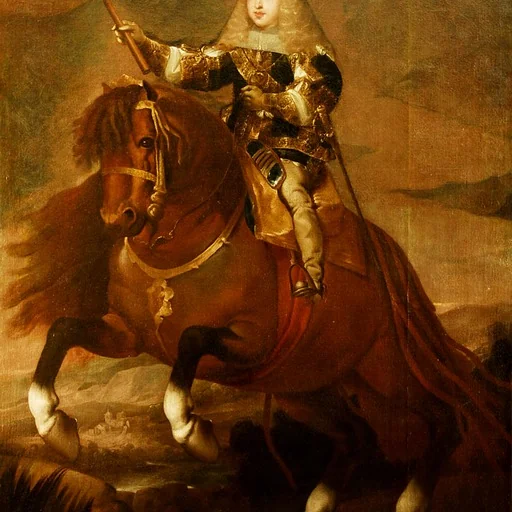
Sebastián Herrera Barnuevo (1611 or 1619–1671) was a painter, architect, sculptor and etcher, who was born and died in Madrid, Spain.