Artwork
The Annunciation
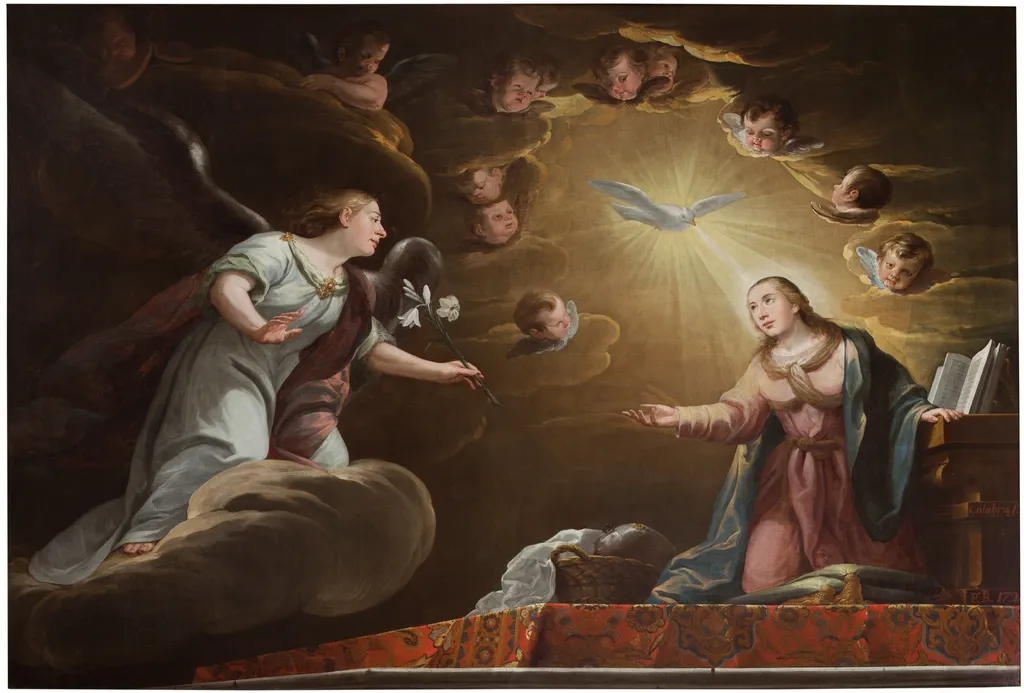
The Annunciation is an oil painting by the Rococo painting artist Pedro de Calabria. It dates from 1720 and is held in the collection of the Museo del Prado.
About this work
Subject & Meaning
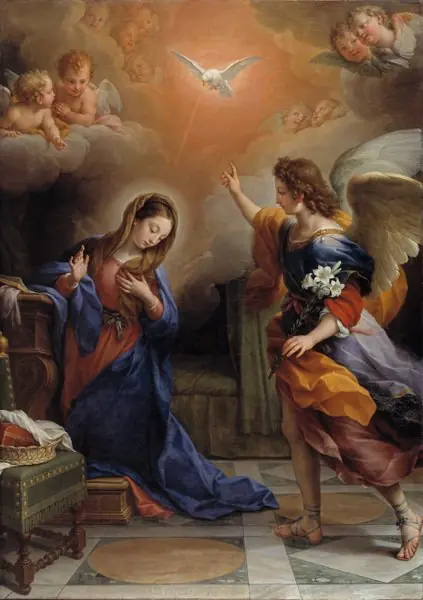
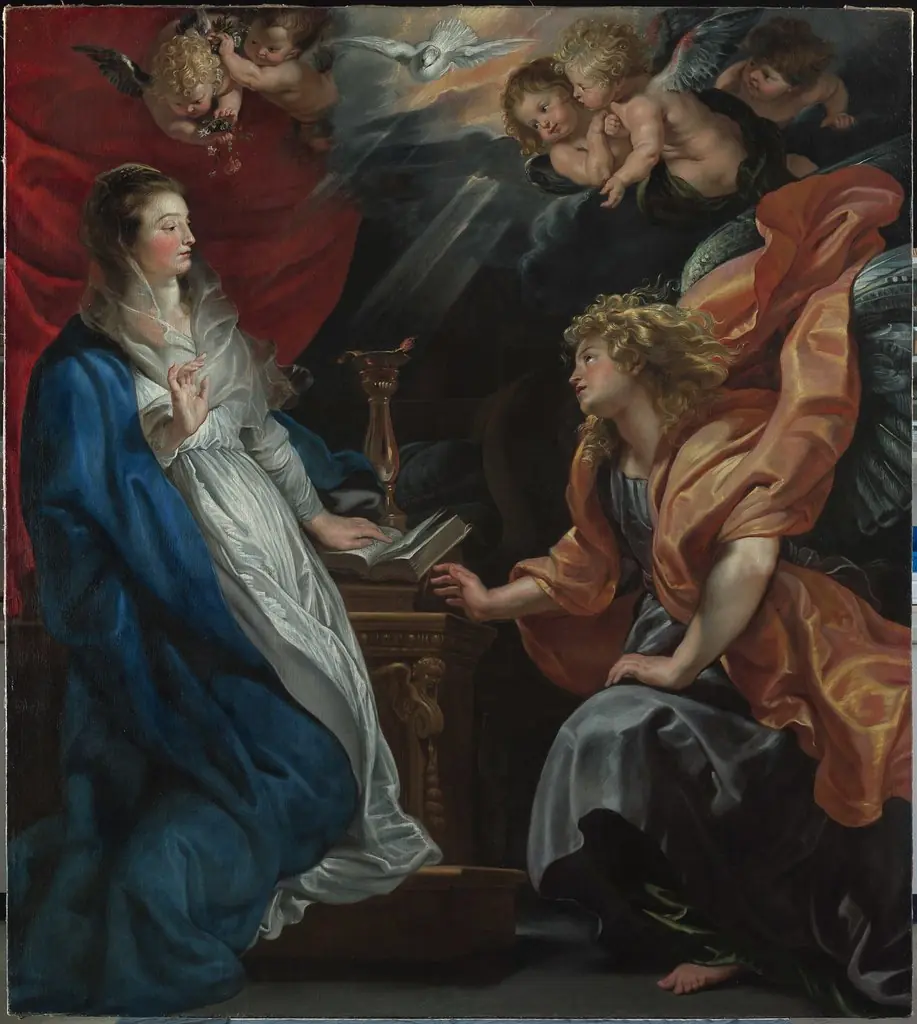
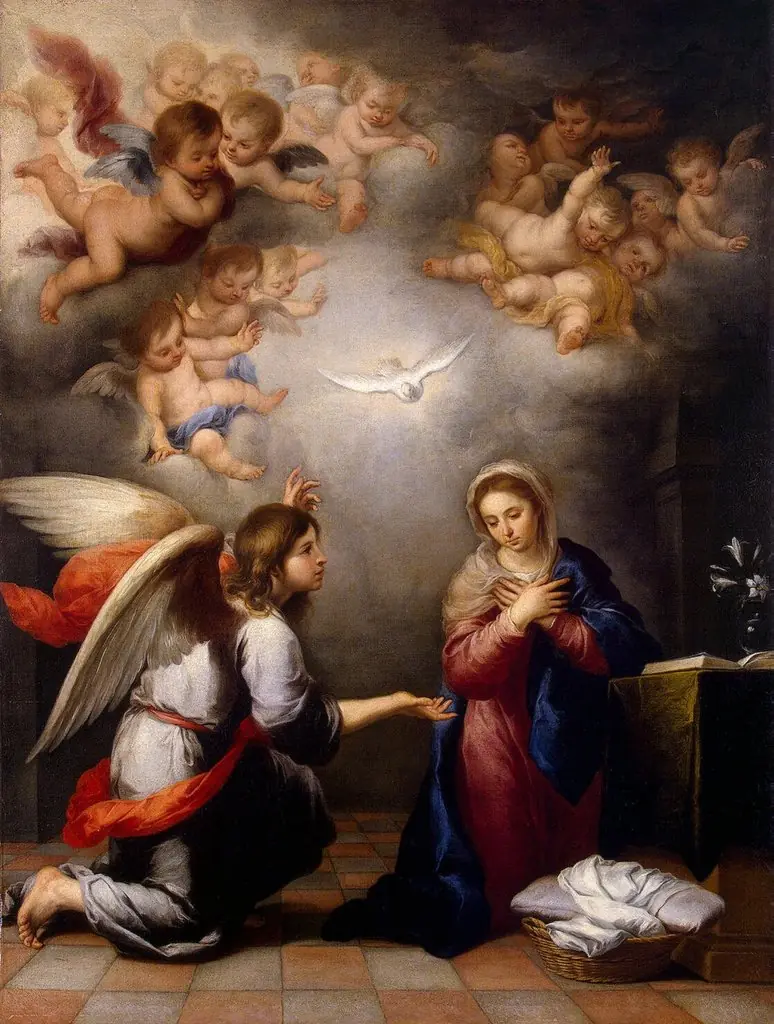
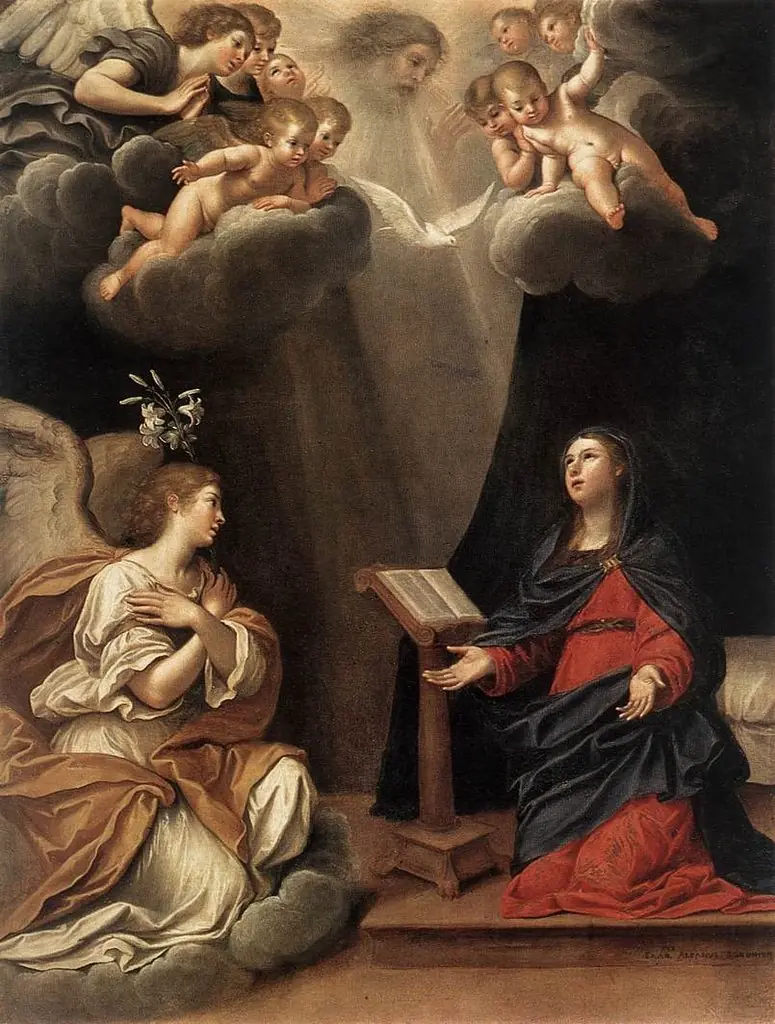
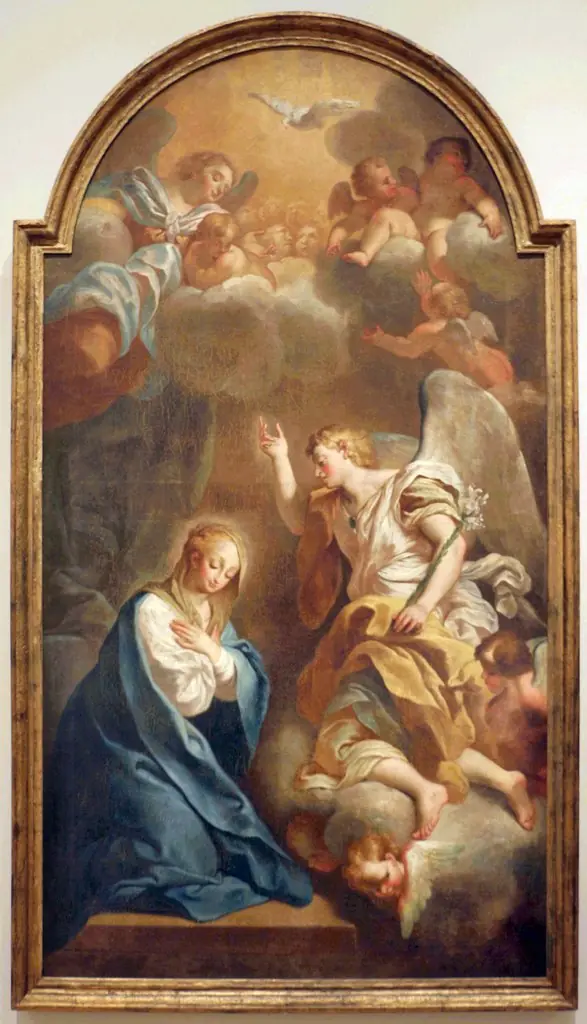
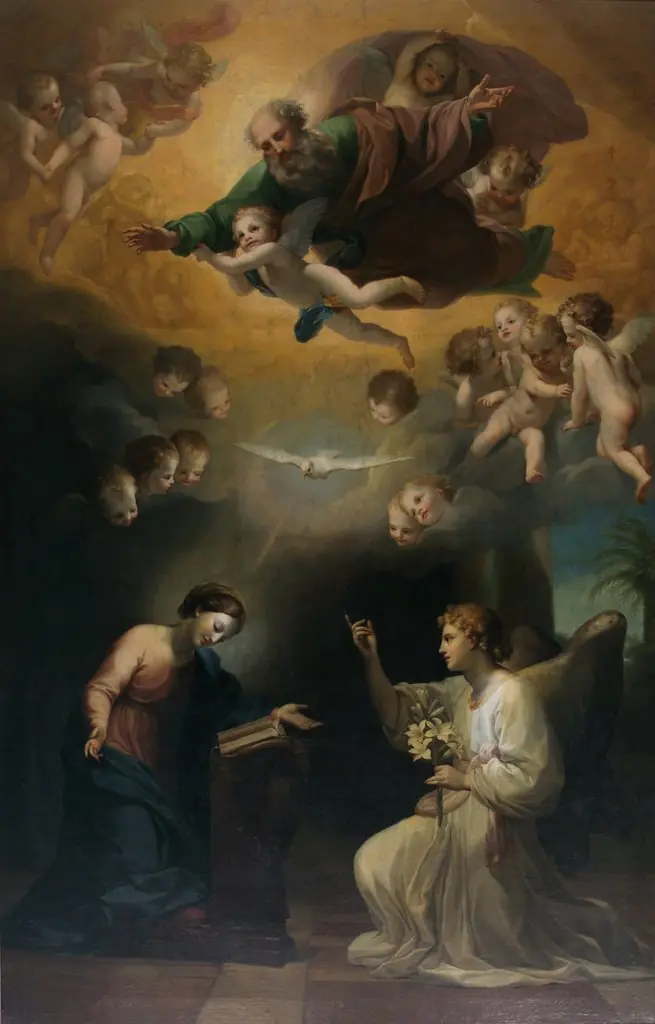
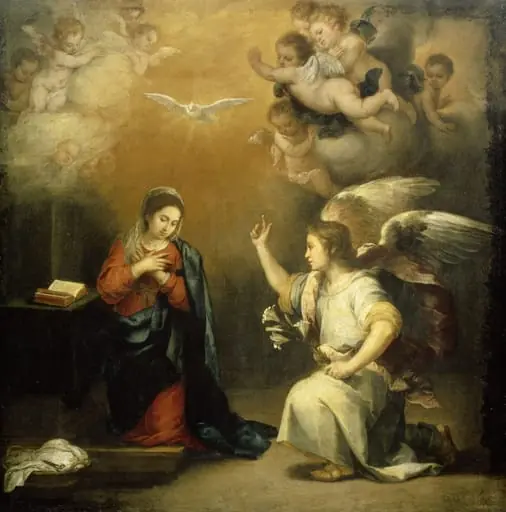
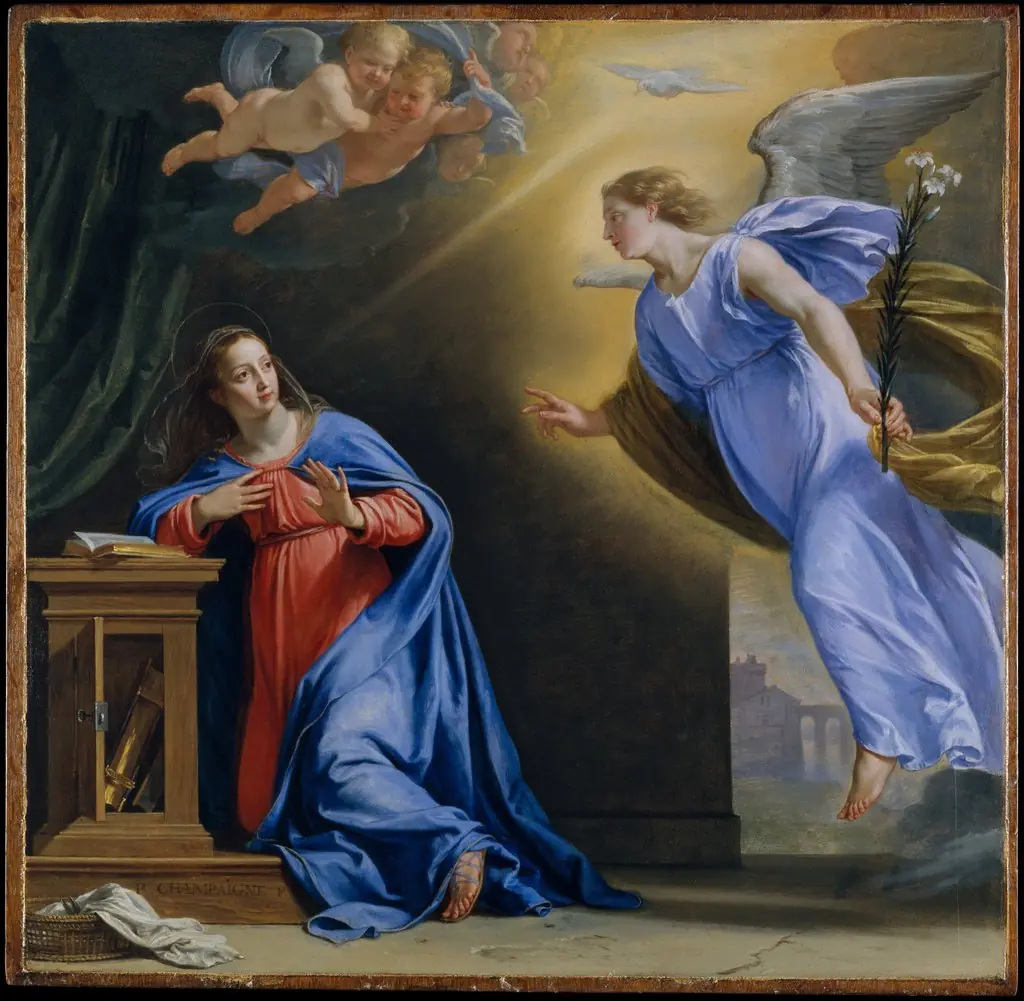
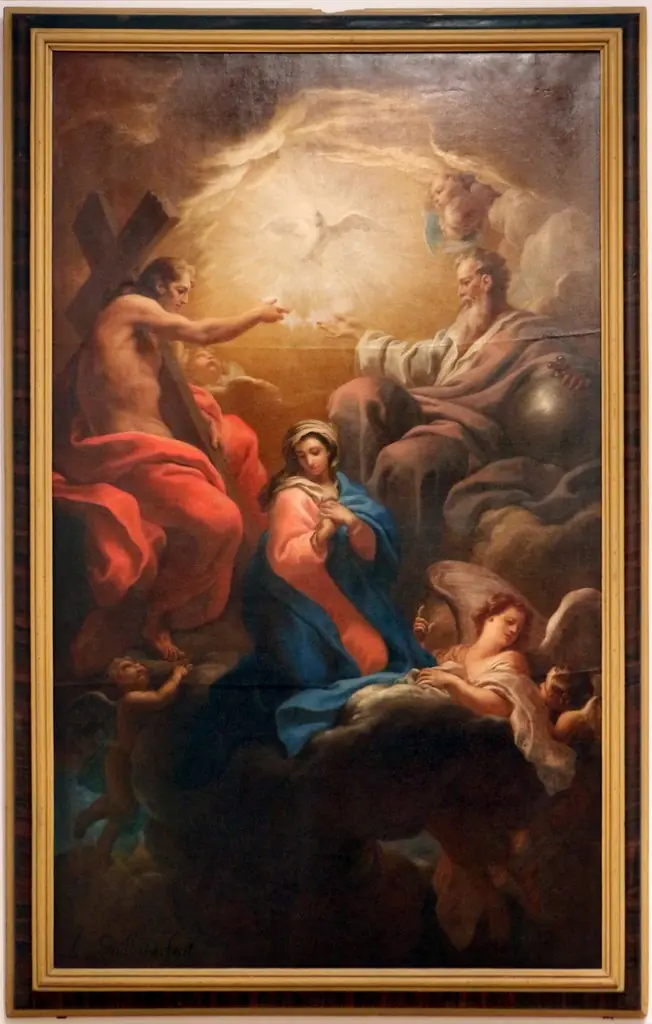
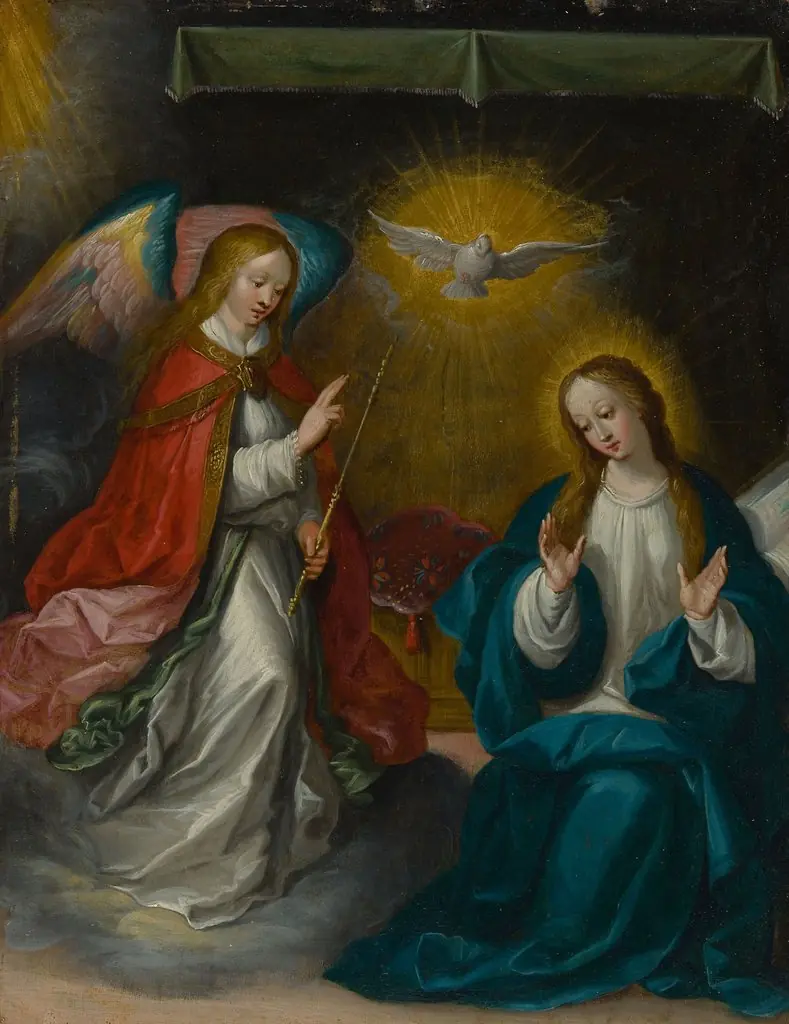
The painting portrays the moment of the Annunciation, when the angel Gabriel appears to the Virgin Mary to announce the Incarnation.
The painting portrays the moment of the Annunciation, when the angel Gabriel appears to the Virgin Mary to announce the Incarnation. The composition emphasizes the spiritual encounter through symbolic elements such as the descending dove representing the Holy Spirit and Mary's modest gesture of receiving the divine message. These visual symbols convey themes of obedience, divine grace, and the fulfillment of prophecy within the religious narrative.
Technique & Style
Pedro de Calabria executed The Annunciation in 1720 using oil paint applied to a canvas support. The work measures 247 cm in height and 329 cm in width, classifying it as a large-scale religious painting. As a religious genre piece, the composition depicts the main subject of the Annunciation alongside a book.
The painting is currently held in the collection of the Museo del Prado, having originated from the Museo de la Trinidad.
History & Provenance
Pedro de Calabria executed the oil-on-canvas painting titled The Annunciation in 1720. The work, which depicts the biblical scene of the Annunciation alongside a book, measures 247 cm in height and 329 cm in width. It was originally held by the Museo de la Trinidad before entering the collection of the Museo del Prado, where it remains located. The creation of this religious artwork is dated specifically to January 1, 1720.
Pedro de Calabria's oil painting The Annunciation, dated 1720, is part of the collection of the Museo del Prado in Madrid. The work was previously held by the Museo de la Trinidad before its transfer to the Prado. Its physical dimensions are recorded as 247 cm in height and 329 cm in width.
The provided sources do not contain specific inventory numbers, accession details, or a record of past exhibitions for this artwork.
Context
Pedro de Calabria's 1720 oil painting The Annunciation, housed in Madrid's Museo del Prado, depicts the biblical moment of the angel Gabriel announcing to Mary, rendered on canvas measuring 247 by 329 centimeters. The work belongs to the religious art genre and reflects early 18th-century Spanish devotional painting practices, situating Calabria within the broader trajectory of Iberian artists engaged with Counter-Reformation themes. Scholarship on the piece remains limited, with most analyses focusing on its material composition and iconography rather than its reception history.
Its placement in institutional collections underscores its significance within ecclesiastical art contexts of the period, though no major critical discourse has emerged to define its historical impact beyond its stylistic attributes.
Legacy
Pedro de Calabria's 1720 oil painting The Annunciation entered the Museo del Prado's collection and later the Museo de la Trinidad, where it remained on display in Madrid. Its religious composition, depicting the Annunciation with a book as a main subject, contributed to scholarly discussions of Baroque devotional art in Spain. The work is frequently cited in studies of 18th-century Spanish religious painting and continues to be referenced in exhibitions on Spanish Baroque art at major European institutions.
Overview
Created in 1720, The Annunciation is an oil painting by Spanish artist Pedro de Calabria. Executed in the Rococo manner that marked the late Baroque, the work now belongs to the collection of the Museo del Prado. It presents the biblical moment when the Angel Gabriel announces to Mary that she will bear the Christ child, rendered with a luminous, airy atmosphere.
Own this work as a print
Artist & collection
Artist
Pedro de Calabria (active 1712–1725) was a Spanish painter of the Baroque period. He was born in Valladolid. He was a pupil of Luca Giordano in Naples, whom he accompanied to assist in his works at Madrid. He painted battle-pieces.