Artwork
La Asunción y Coronación de la Virgen
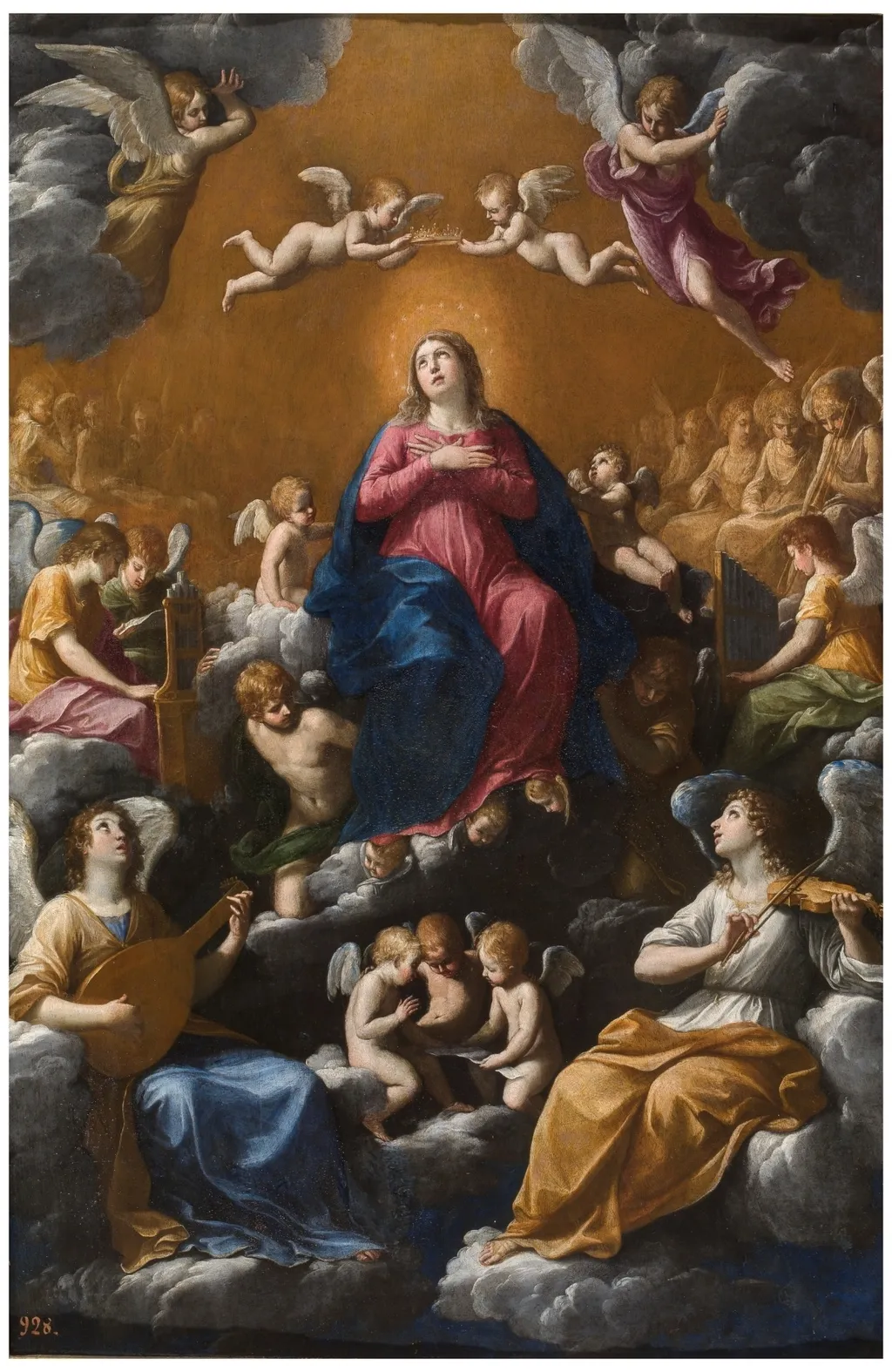
La Asunción y Coronación de la Virgen is an oil painting by the Early Baroque Italian artist Guido Reni. It dates from 1602 and is held in the collection of the Museo del Prado.
About this work
Subject & Meaning
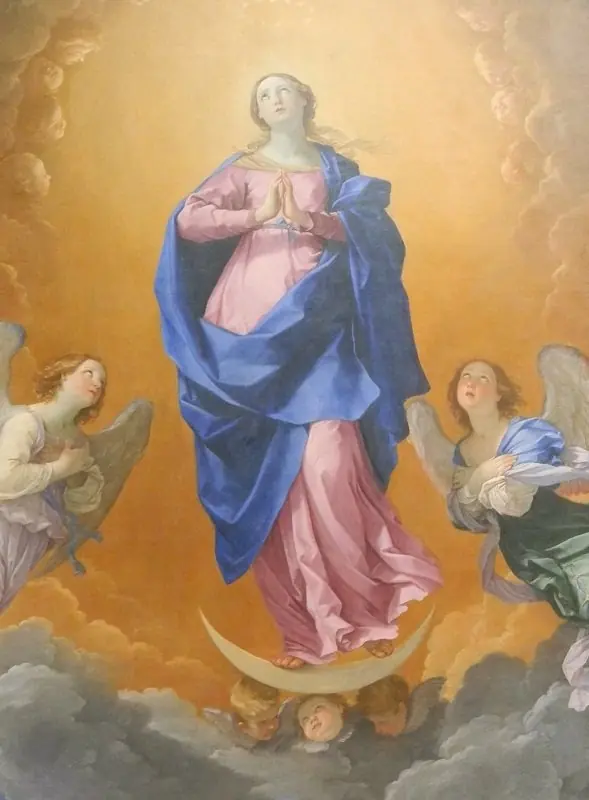
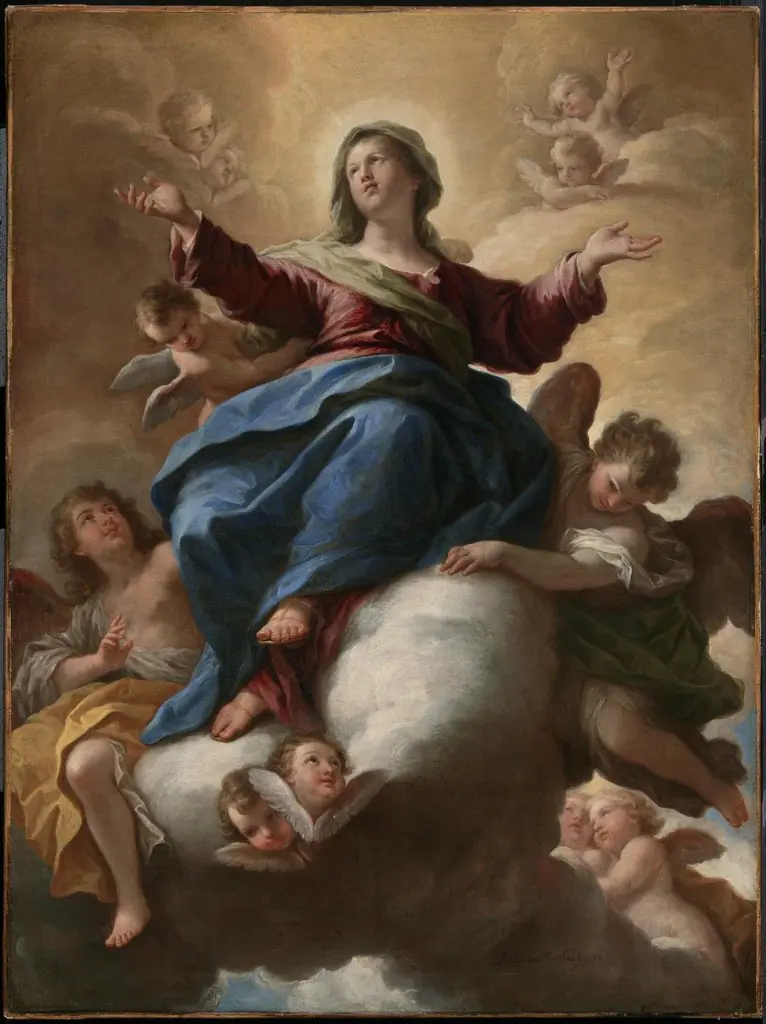
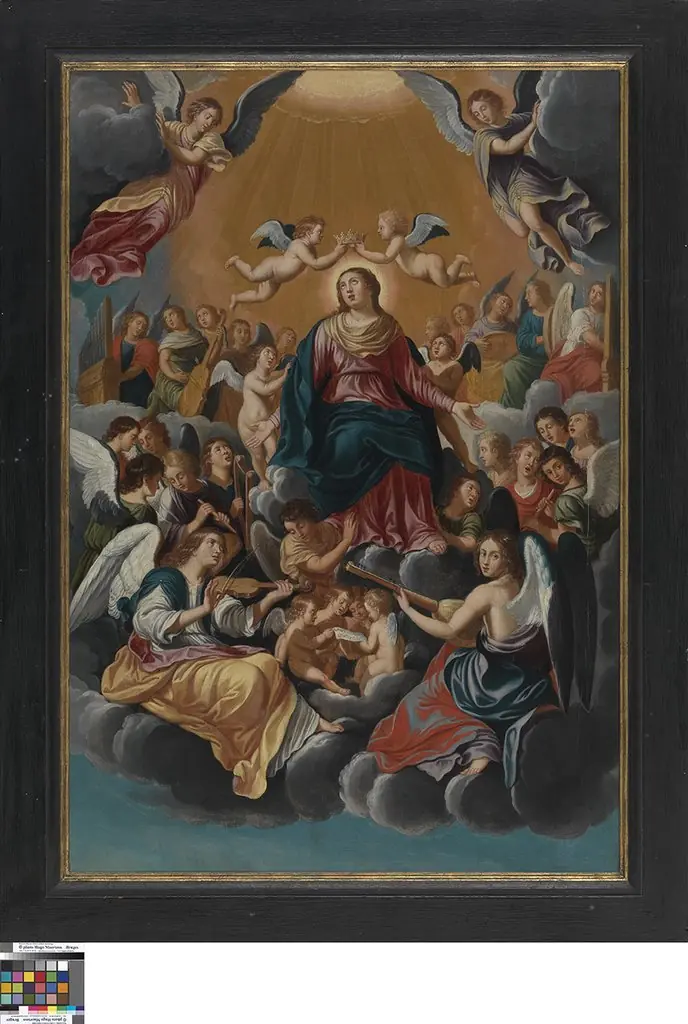
Mary is shown ascending to Heaven, surrounded by a radiant glow and ascending angels, while God the Father appears above to crown her as Queen of Heaven.
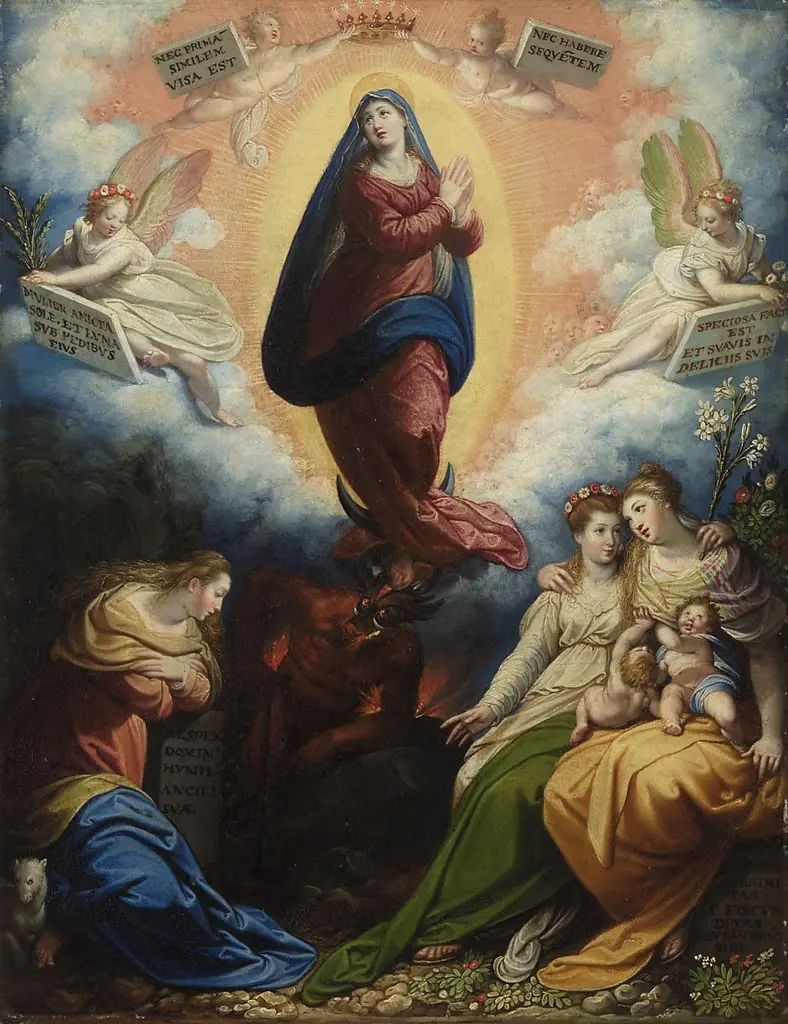
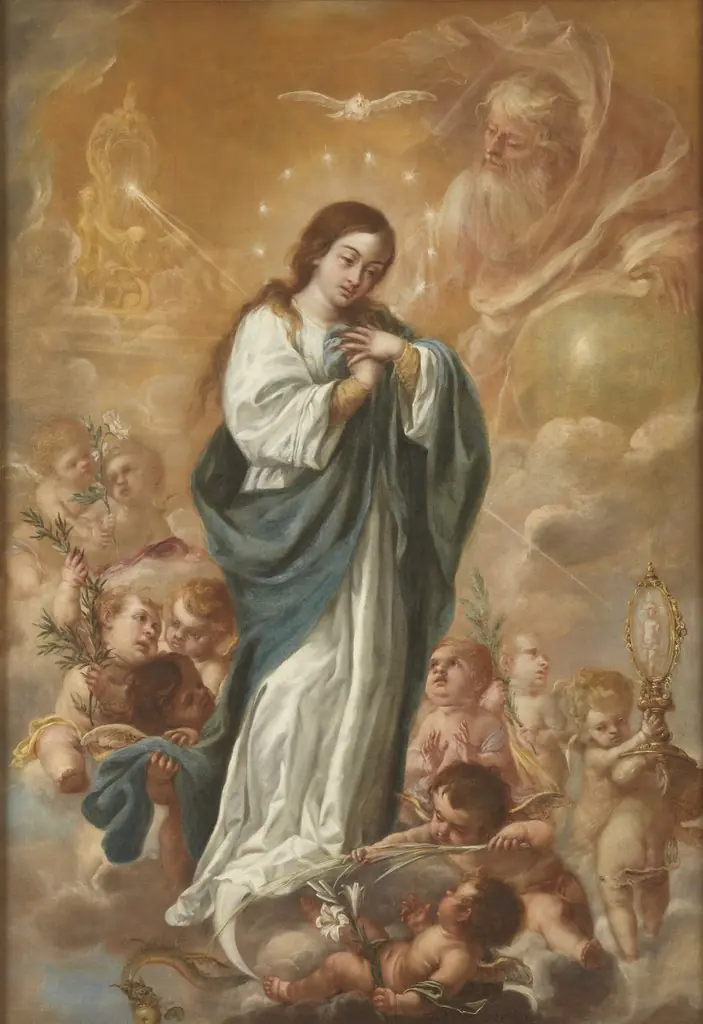
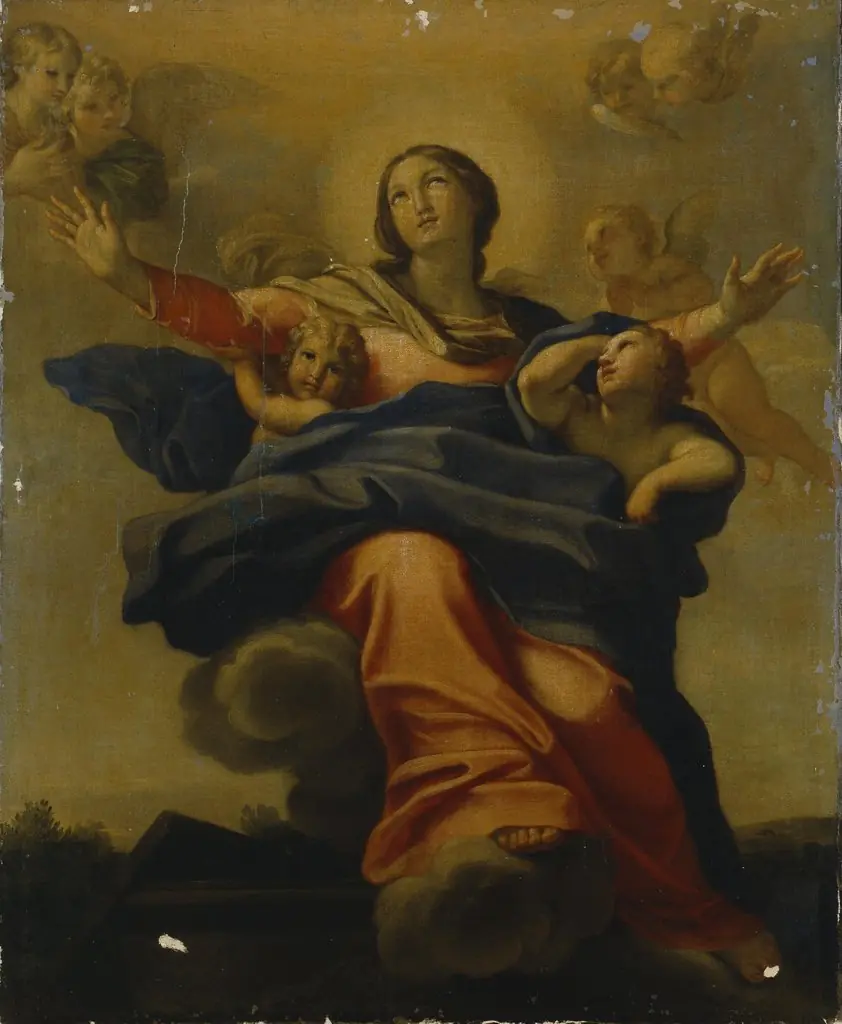
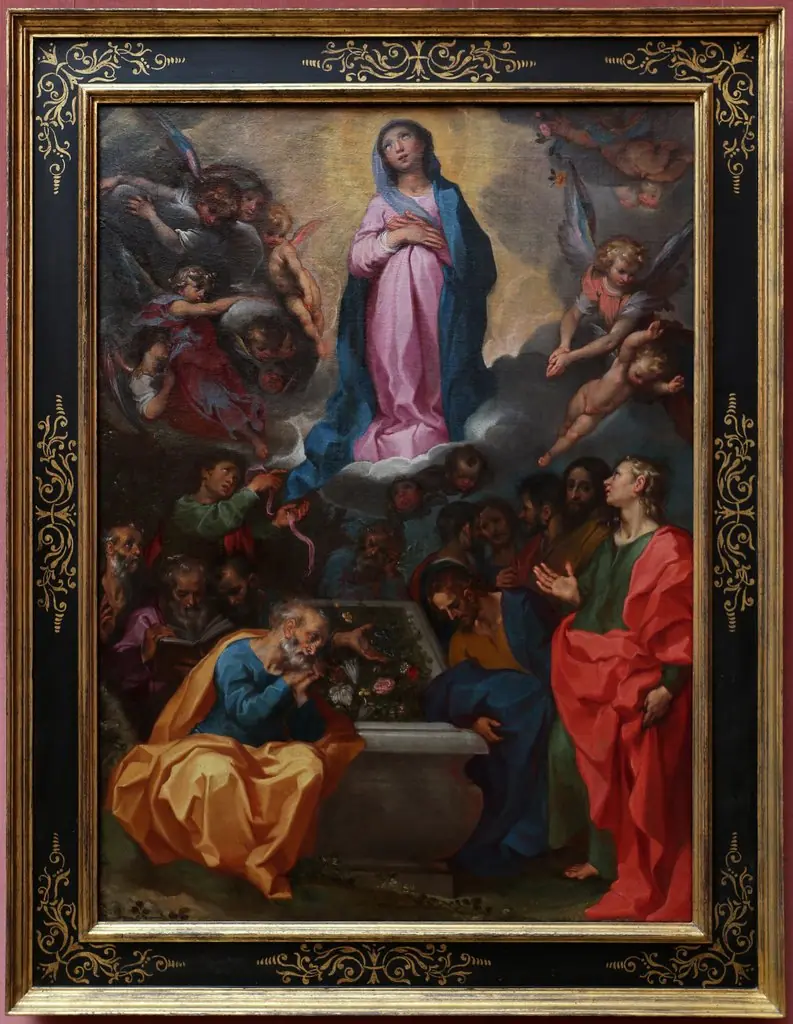
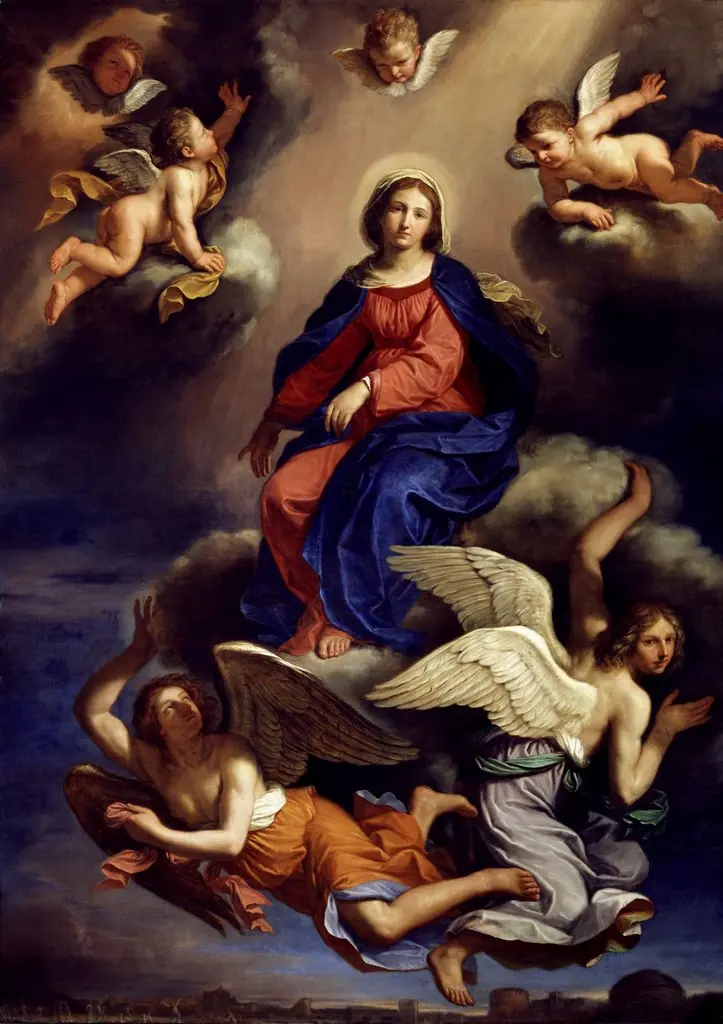
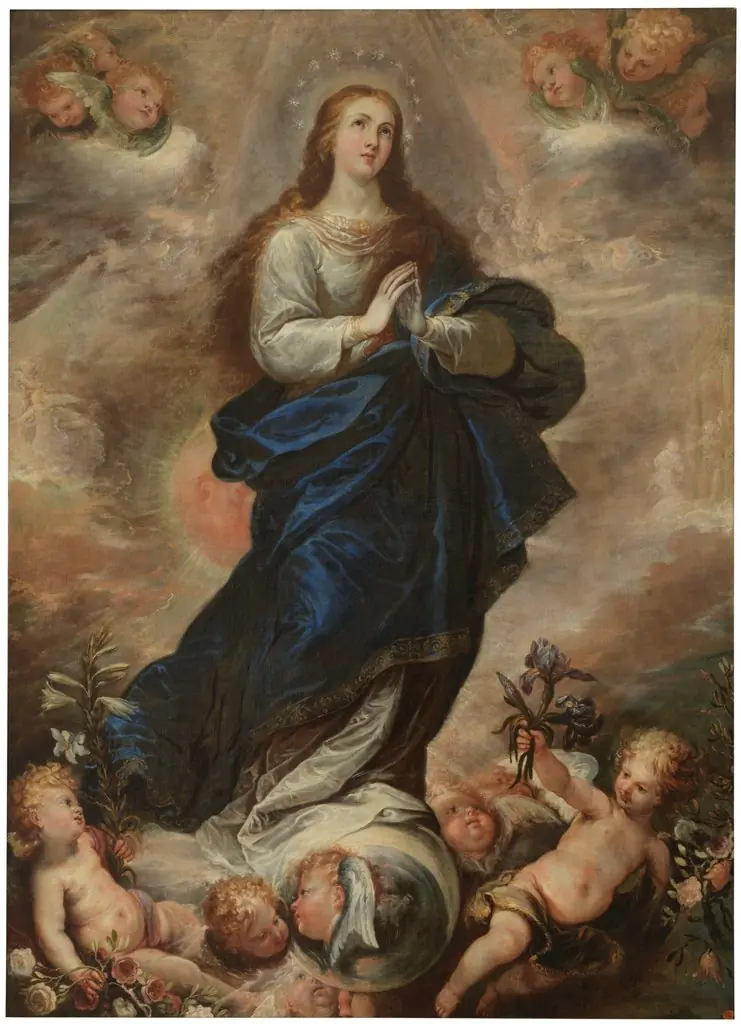
The painting depicts the Assumption and Coronation of the Virgin, a central theme in Catholic iconography. Mary is shown ascending to Heaven, surrounded by a radiant glow and ascending angels, while God the Father appears above to crown her as Queen of Heaven. Cherubs and putti populate the scene, reinforcing the divine realm and emphasizing Mary’s holy status.
The inclusion of musical instruments such as a lute, violin, and sackbut suggests a celestial harmony accompanying the event, symbolizing the harmony of the heavenly court. The composition centers on Mary’s spiritual elevation and glorification, reinforcing Catholic doctrine on her bodily assumption and coronation as a queen in Heaven.
Technique & Style
Guido Reni executed La Asunción y Coronación de la Virgen in 1602 using oil paint applied to a panel support. The work measures 77 cm in height and 51 cm in width, adhering to the vertical format typical of religious altarpieces of the period. Stylistically, the painting belongs to the religious art genre and centers on the main subject of the Assumption of Mary.
Within the composition, Reni included specific musical instruments, depicting a lute, a violin, and a sackbut alongside the primary figures. The piece is currently held in the collection of the Museo del Prado.
Context
The painting La Asunción y Coronación de la Virgen by Guido Reni received scholarly attention for its devotional intensity and compositional clarity within Counter-Reformation religious art. Art historians situate it as a mature example of Bolognese classicism that influenced Spanish ecclesiastical decoration in the early 17th century. The work's iconography, depicting the Assumption of Mary crowned in heaven, has been analyzed in relation to Reni's broader devotional output and his impact on Spanish artists such as Murillo.
It remains part of the permanent collection at the Museo del Prado, where it is studied as a key example of Spanish Baroque religious painting.
Overview
Created in 1602 by Guido Reni, this oil on canvas presents a religious scene commonly identified as the Assumption and Coronation of the Virgin. The work resides in the Museo del Prado and exemplifies early‑Baroque devotional imagery through its celestial composition and dramatic lighting.
History & Provenance
The painting entered the collection of the Museo del Prado, where it remains on display. Its attribution to Reni has been consistently affirmed by scholars, linking it to the artist’s early output during his Roman period.
Own this work as a print
Artist & collection
Artist
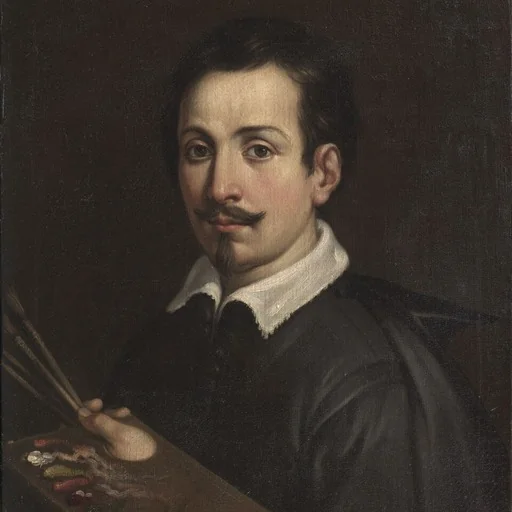
Guido Reni was an Italian Baroque painter, although his works showed a classical manner, similar to Simon Vouet, Nicolas Poussin, and Philippe de Champaigne.