Artwork
Saint Peter
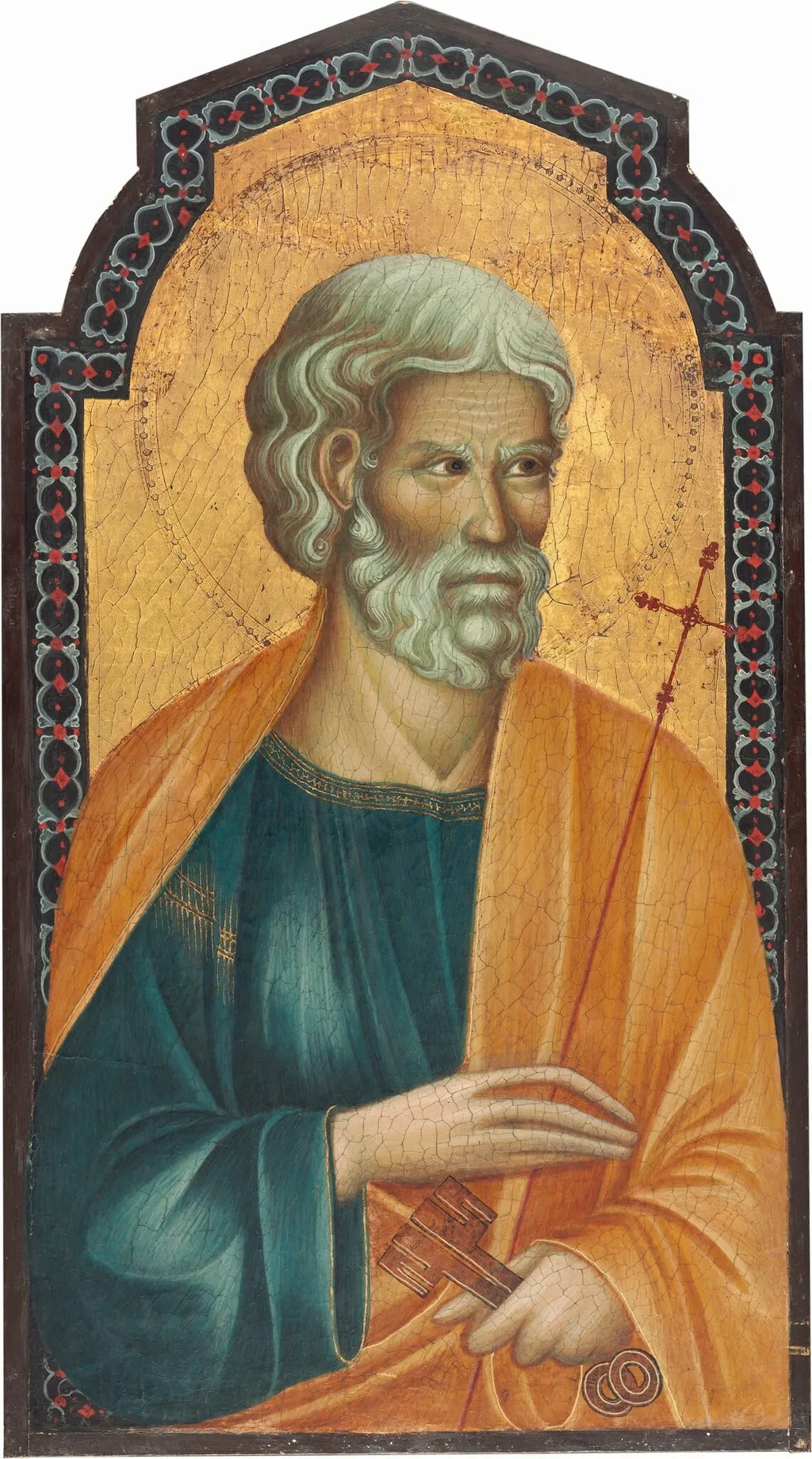
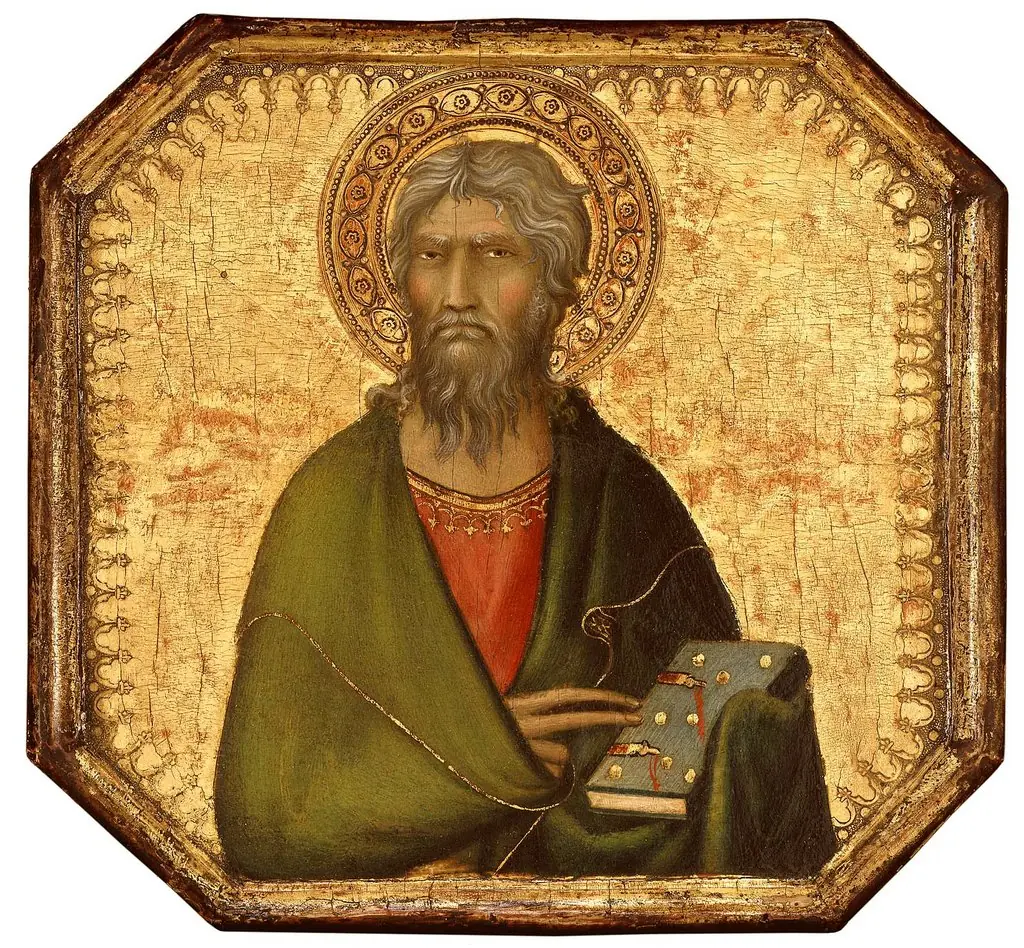
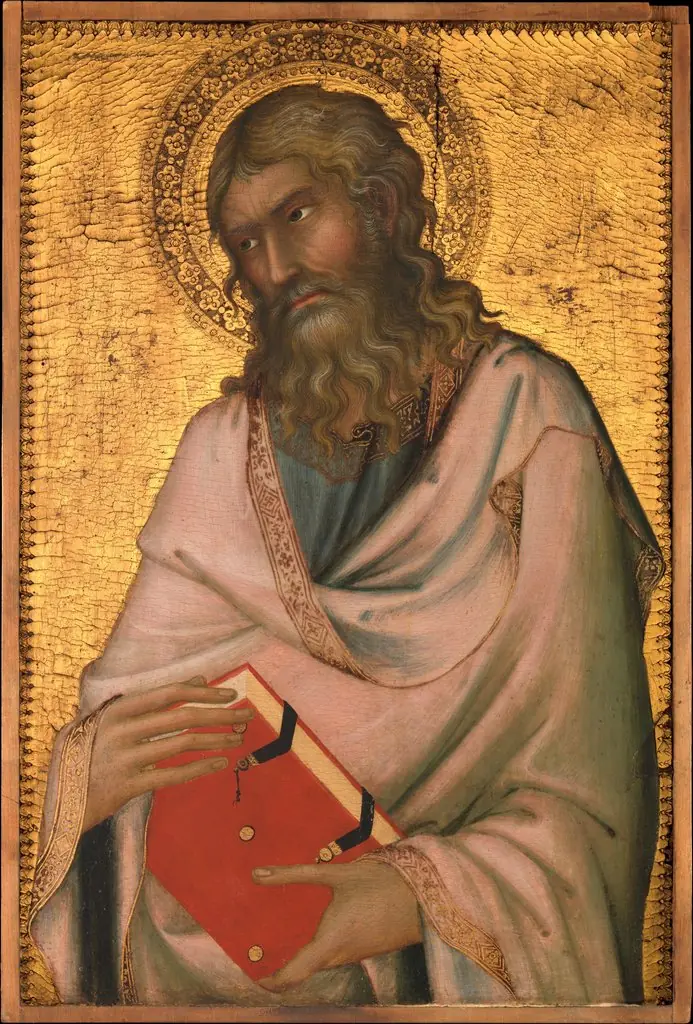
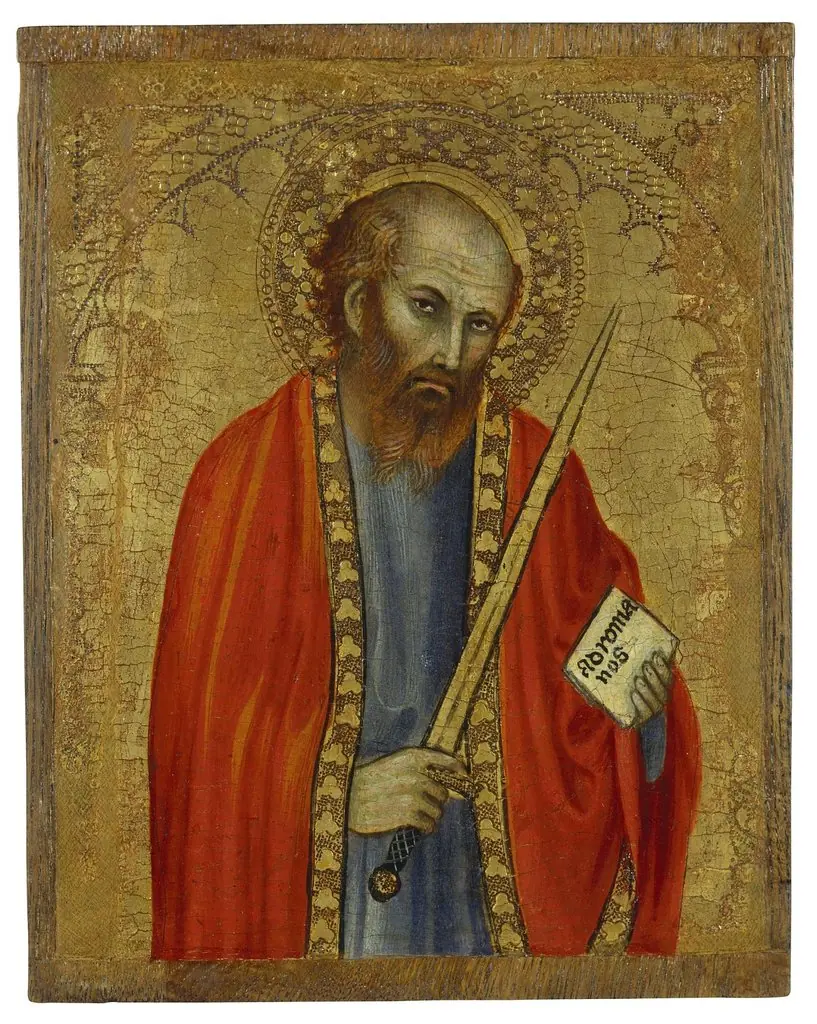
Saint Peter is a tempera painting by the Byzantine icon painting artist Grifo di Tancredi. It dates from 1310 and is held in the collection of the National Gallery of Art.
About this work
Subject & Meaning
Created around 1310 by Grifo di Tancredi, this tempera panel painting explicitly depicts Saint Peter as its sole subject.
Created around 1310 by Grifo di Tancredi, this tempera panel painting explicitly depicts Saint Peter as its sole subject. Classified as a work of religious art, the image functions as a devotional representation of the apostle. While the specific attributes or symbolic details visible in the composition are not enumerated in the available records, the work's primary meaning is derived from its identification as a sacred portrait intended for veneration.
The piece serves as a visual embodiment of the saint within the context of early fourteenth-century Italian religious painting, preserving his likeness for spiritual contemplation.
Technique & Style
Created in 1310 by Grifo di Tancredi, the painting Saint Peter is executed in tempera on a wood panel support. This medium and format are characteristic of Italian religious panel painting from the early fourteenth century. The work is classified as a religious painting depicting the apostle Saint Peter.
While specific details regarding the artist's handling of the brushwork, the current physical condition of the panel, or the precise stylistic nuances of the figure's rendering are not detailed in the available records, the work is firmly identified as a tempera-on-panel creation. The piece is part of the Andrew W. Mellon collection at the National Gallery of Art in Washington, D.C.
History & Provenance
Created by Grifo di Tancredi around 1310, the tempera-on-panel painting of Saint Peter was likely commissioned for a religious context, though specific original patronage details are not recorded. By 1808, the work entered the collection of Alexis-François Artaud de Montor in Paris, who presumably acquired it during his stays in Italy. Following his death, it appeared in the 1851 sale of his estate, where it was cataloged under the name Margaritone d'Arezzo.
The painting subsequently passed to Julien Gréau of Troyes and, by inheritance, to his daughter Marie, comtesse Bertrand de Broussillion. In September 1919, the Duveen Brothers acquired the piece, which later entered the collection of Carl W. Hamilton in New York by 1920. After returning to Duveen, it was sold on December 15, 1936, to The A.W. Mellon Educational and Charitable Trust in Pittsburgh and was gifted to the National Gallery of Art in 1937, where it remains as part of the Andrew W. Mellon Collection.
Overview
Grifo di Tancredi's painting, titled Saint Peter, was created around 1310. This tempera on panel work depicts Saint Peter, a central figure in Christian tradition. The artist employed a conventional style prevalent during the early 14th century, focusing on the saint's spiritual significance rather than elaborate detail. The relatively modest scale and direct composition emphasize the subject's presence.
Artist & collection


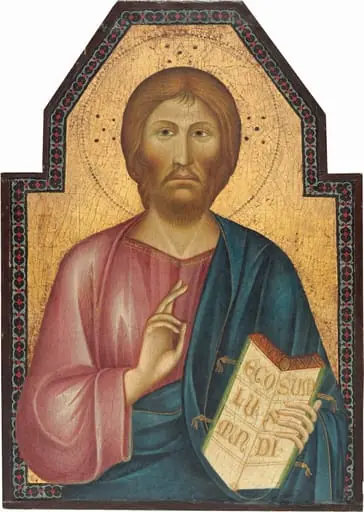
![Saint James Major [right panel], by Grifo di Tancredi](https://artifactworldgallery.com/img/grifo-di-tancredi--saint-james-major-right-panel--dc190378c0cddc8f-w320.webp)
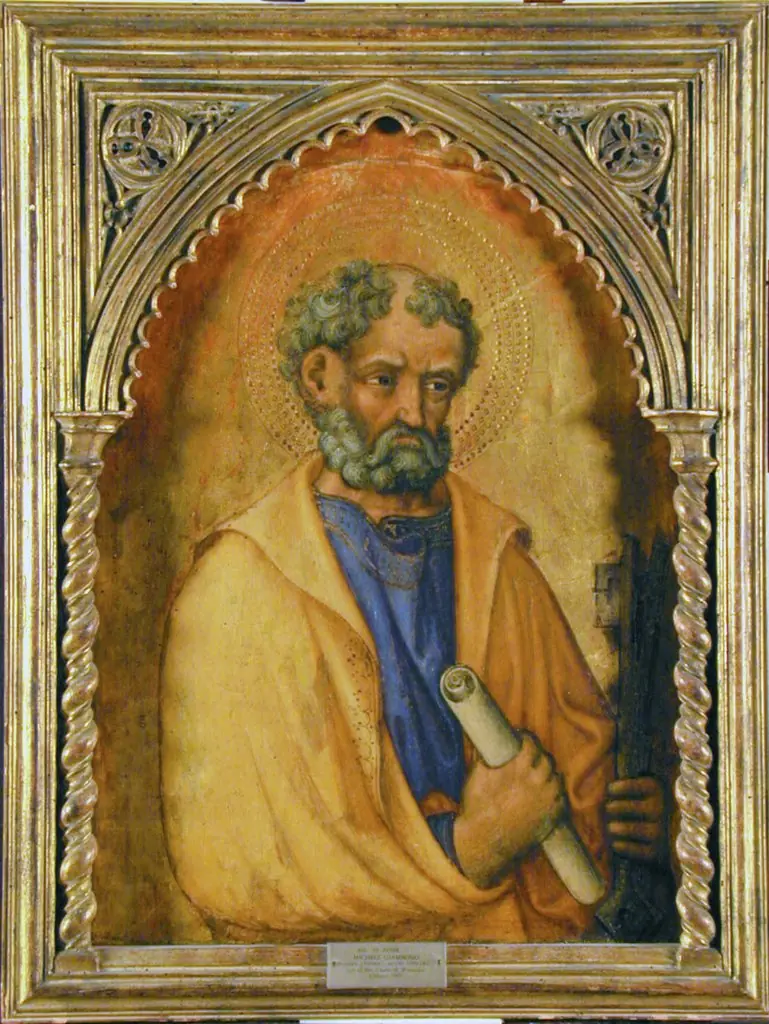
![Saint Peter, with Saint James Major [left panel], by Martino di Bartolomeo](https://artifactworldgallery.com/img/martino-di-bartolomeo--saint-peter-with-saint-james-major-left-panel--20178831b0b297bc-w320.webp)