Artwork
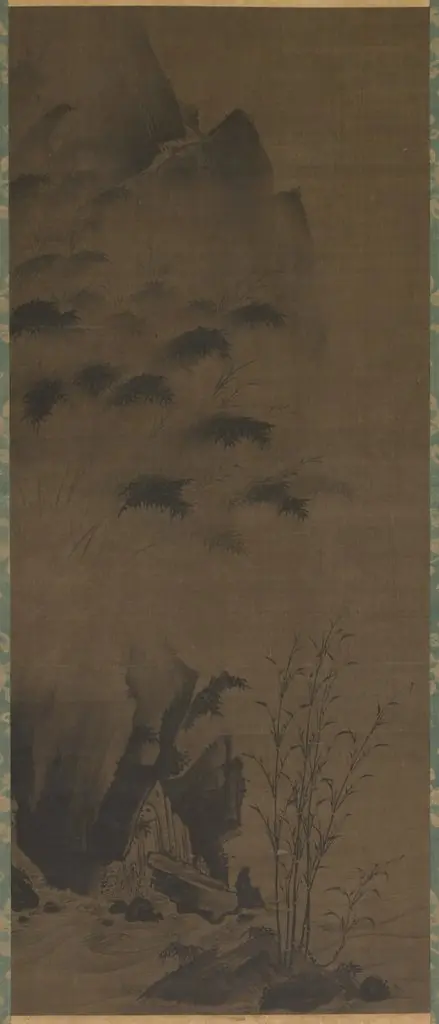
Bamboo and Plum
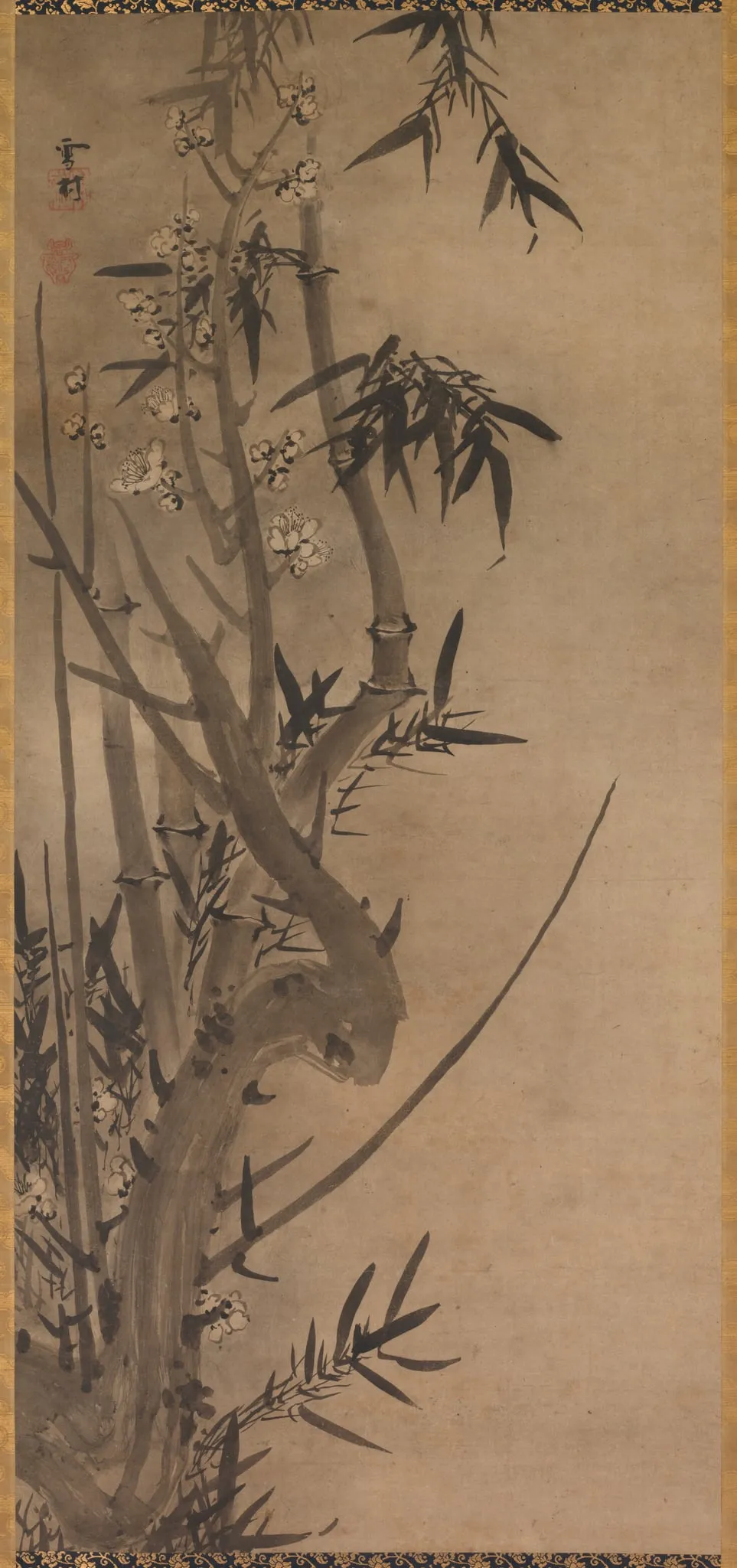
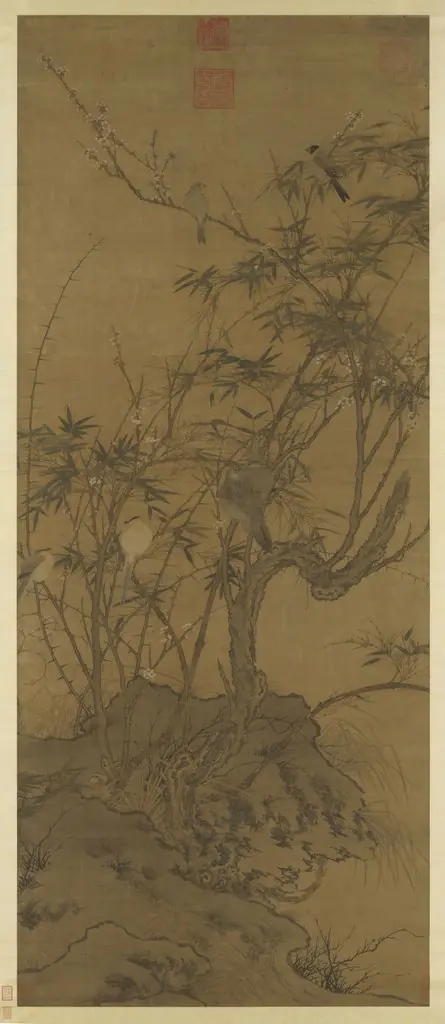
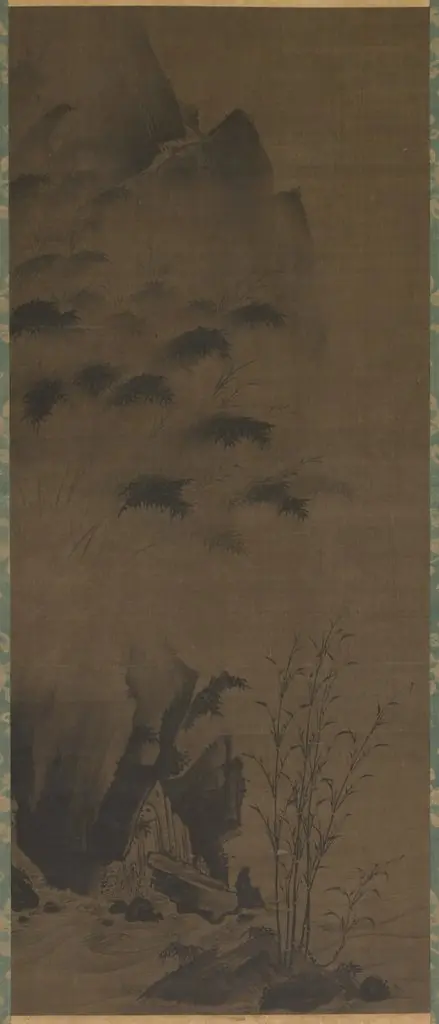
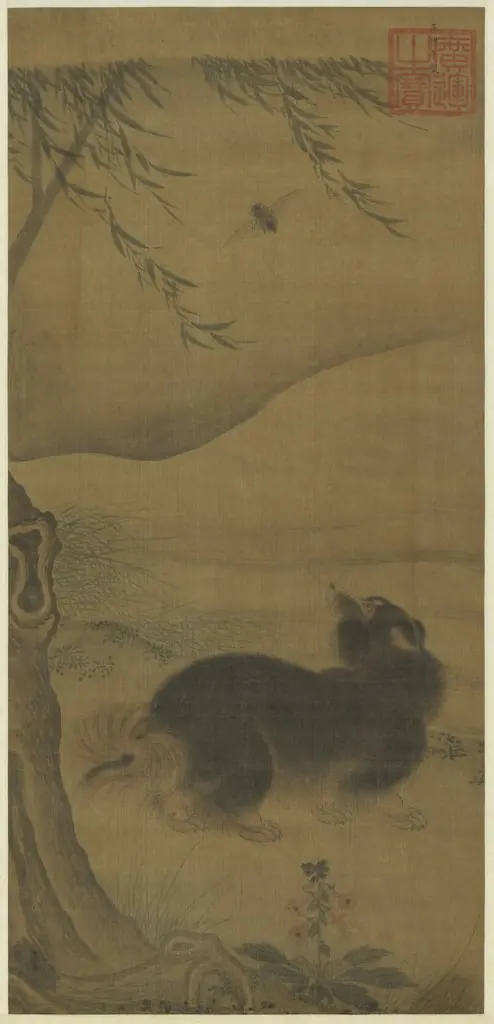
Bamboo and Plum is an unspecified painting by the Joseon dynasty painting artist Sesson Shūkei. It dates from 1504 and is held in the collection of the Cleveland Museum of Art.
- Accession no.
- 2015.503
- Credit line
- Gift from the Collection of George Gund III
About this work
Overview
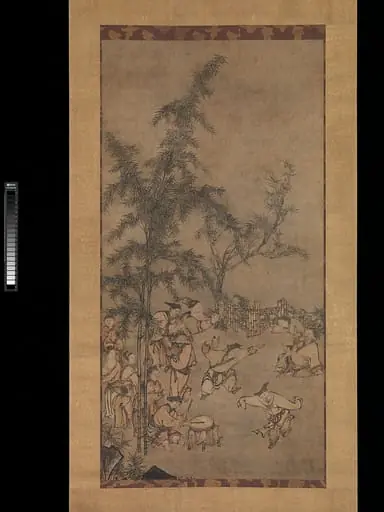
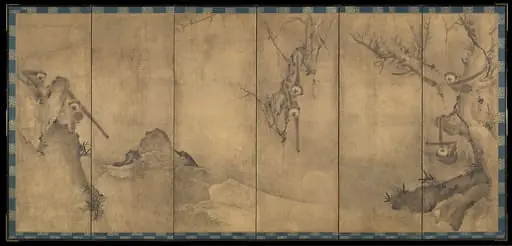
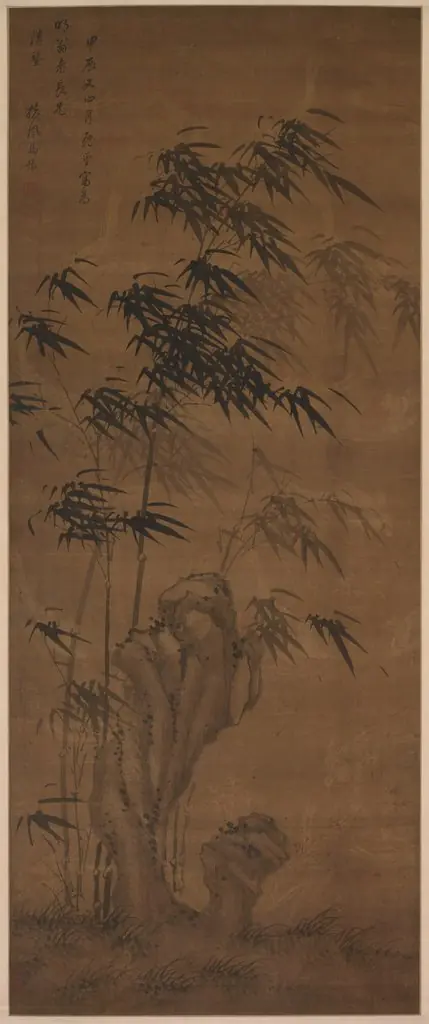
The work is a monochrome ink painting on paper depicting a white plum blossom and a bamboo shoot whose branches intersect at the center of the composition. Executed in bold, uneven brushstrokes, the piece forms one wing of a three‑panel set that originally flanked a central image of the demon‑quelling figure Zhong Kui. The triptych was intended for display during the New Year period.
Subject & Meaning
Together they convey auspicious wishes for the coming year, complementing the central Zhong Kui scroll, which was believed to ward off malevolent spirits.
In the painting, the white plum blossoms symbolize the arrival of hope and renewal, while the bamboo represents resilience and uprightness. Together they convey auspicious wishes for the coming year, complementing the central Zhong Kui scroll, which was believed to ward off malevolent spirits. The pairing of these motifs reflects traditional Chinese and Japanese iconography associated with seasonal and protective themes.
Technique & Style
The artist employed sumi ink applied with a brush directly onto paper, allowing the pigment to flow in vigorous, irregular lines. The contrast between the delicate, stippled plum blossoms and the stark, angular bamboo leaves demonstrates a mastery of negative space and compositional balance. The approach is characteristic of a Zen aesthetic that favors spontaneity over the refined polish of the formal Kano school.
History & Provenance
Created by Sesson Shukei, a Zen monk born in present‑day Ibaraki Prefecture who spent much of his career in the Kantō region, the scroll was part of a New Year triptych likely assembled in the early Edo period. The work now resides in the collection of the Cleveland Museum of Art, where it is displayed as an example of early modern Japanese ink painting.
Artist & collection