Artwork
清 沈銓 高堂雙壽圖 軸|Crabapple, China rose, and Indian flycatcher
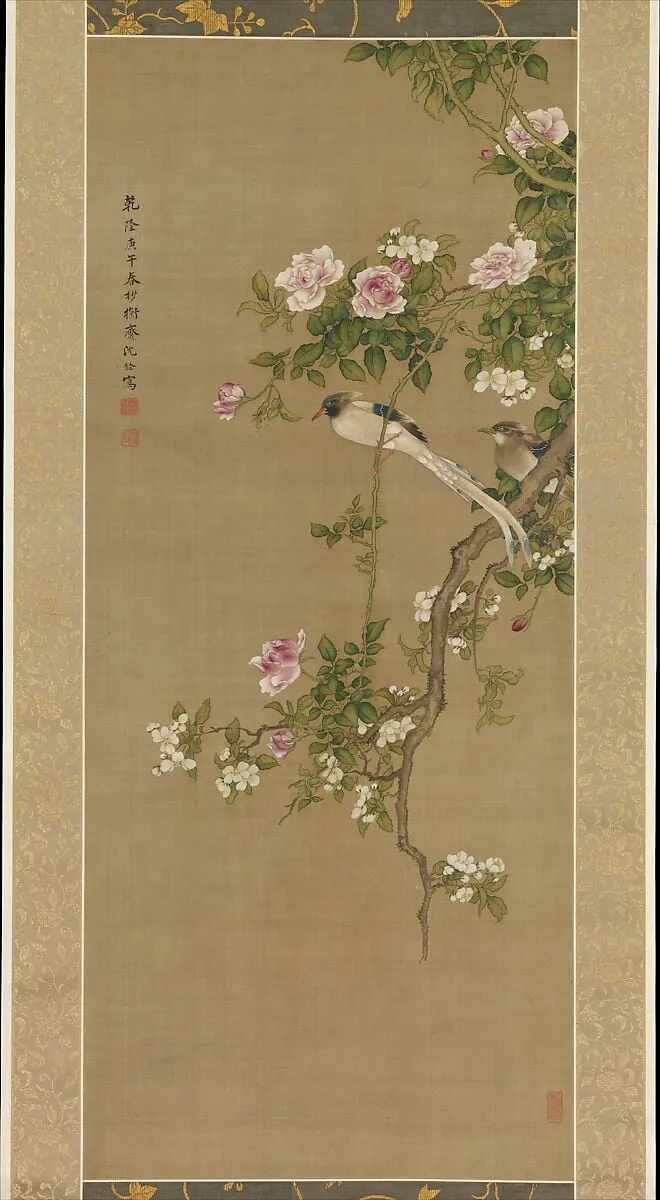
清 沈銓 高堂雙壽圖 軸|Crabapple, China rose, and Indian flycatcher is an ink painting by the Qing dynasty painting artist Shen Quan. It dates from 1750 and is held in the collection of the Metropolitan Museum of Art.
About this work
Technique & Style
The medium of silk supports delicate washes and fine linework, well suited to the still-life genre of bird-and-flower painting that the work belongs to.
Shen Quan's "Crabapple, China rose, and Indian flycatcher" is executed as a hanging scroll in ink and color on silk, a traditional East Asian format that allows the work to be displayed vertically. The medium of silk supports delicate washes and fine linework, well suited to the still-life genre of bird-and-flower painting that the work belongs to. Stylistically, the piece reflects Shen Quan's specialization in this category, depicting a bird amid flowering crabapple and China rose with naturalistic precision.
The work is held in the collection of the Metropolitan Museum of Art and dates to 1750.
History & Provenance
The hanging scroll titled "Crabapple, China rose, and Indian flycatcher" was painted by Shen Quan in China around 1750 using ink and color on silk. The work portrays a bird and a flower and was created as a still‑life composition. It entered the collection of the Metropolitan Museum of Art, where it remains on display.
It is catalogued as a painting in the still life genre. Its documented inception date is 1750, matching the artist’s recorded date for the piece.
Overview
"Crabapple, China rose, and Indian flycatcher" is a hanging scroll painted by Shen Quan in 1750. Executed with ink and color on silk, this artwork presents a detailed scene from the natural world. It showcases two Indian flycatchers nestled among flowering branches, embodying the artist's mastery of the bird-and-flower genre.
Subject & Meaning
The composition features two Indian flycatchers perched on a branch adorned with delicate pink crabapple and vibrant red China-rose blossoms. These specific birds are notable for their migratory patterns between China and Japan. Their inclusion here subtly references the cultural ties and artistic exchange between the two countries, adding a layer of meaning beyond a simple naturalistic depiction.
Context
Shen Quan created this painting while residing in Japan, having been invited to share his expertise in Chinese bird-and-flower painting. His presence there was instrumental in disseminating this artistic style, influencing local painters and fostering a significant period of cross-cultural artistic exchange. The artwork thus reflects a moment of direct cultural transmission and collaboration.
Artist & collection

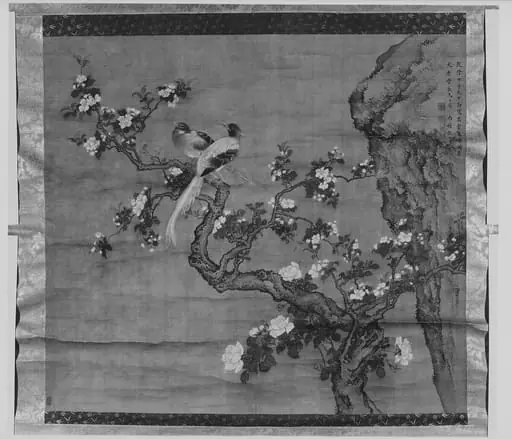
- 与謝蕪村筆 柳緑桃紅図|Birds in Willows and Blossoming Peach Tree
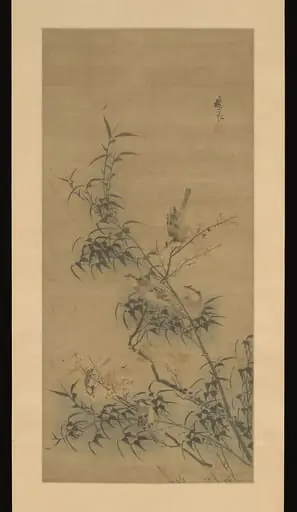 明 佚名 仿林良 喜上梅梢圖 軸|Birds Amidst Blossoming Plum and Bamboo
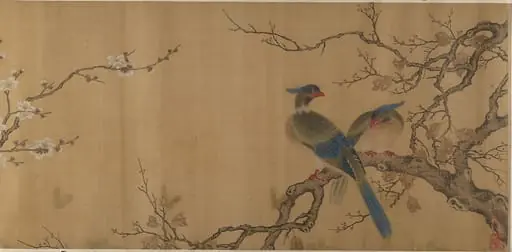 清 佚名 舊傳易元吉 八禽圖 卷|Birds on Branches
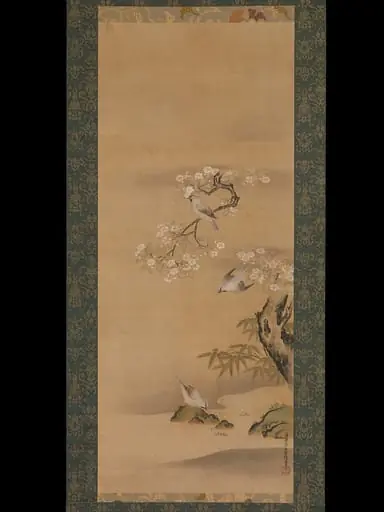 清原雪信筆 緋連雀桜竹図|Waxwings, Cherry Blossoms, and Bamboo
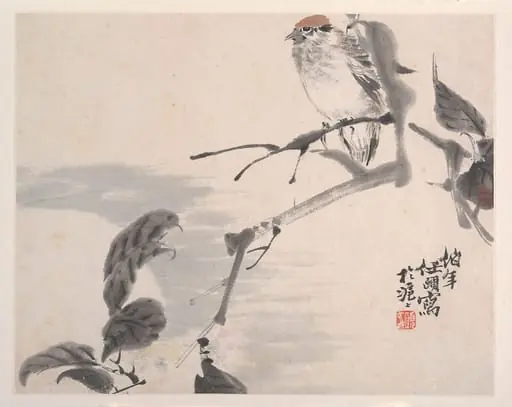 清 任頤 動物花鳥 冊頁八開|Animals, Flowers and Birds
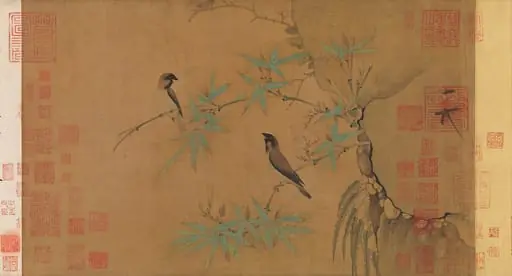 北宋 徽宗 竹禽圖 卷|Finches and bamboo
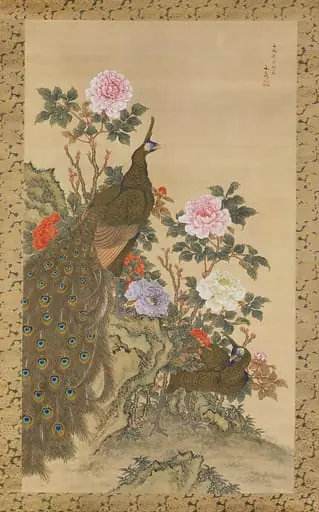 牡丹に孔雀図|Peacocks and Peonies
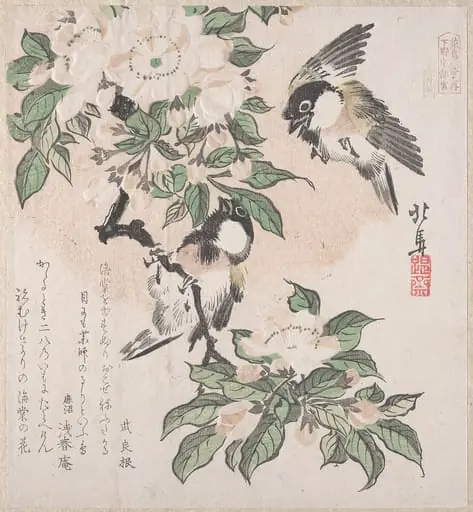 摺物帖 『春雨集』 『花鳥六番之内 下野宇都宮』 海棠に山雀|Spring Rain Collection (Harusame shū), vol. 3: Marsh-tits and Crab Apple Flowers