Artwork
牡丹に孔雀図|Peacocks and Peonies
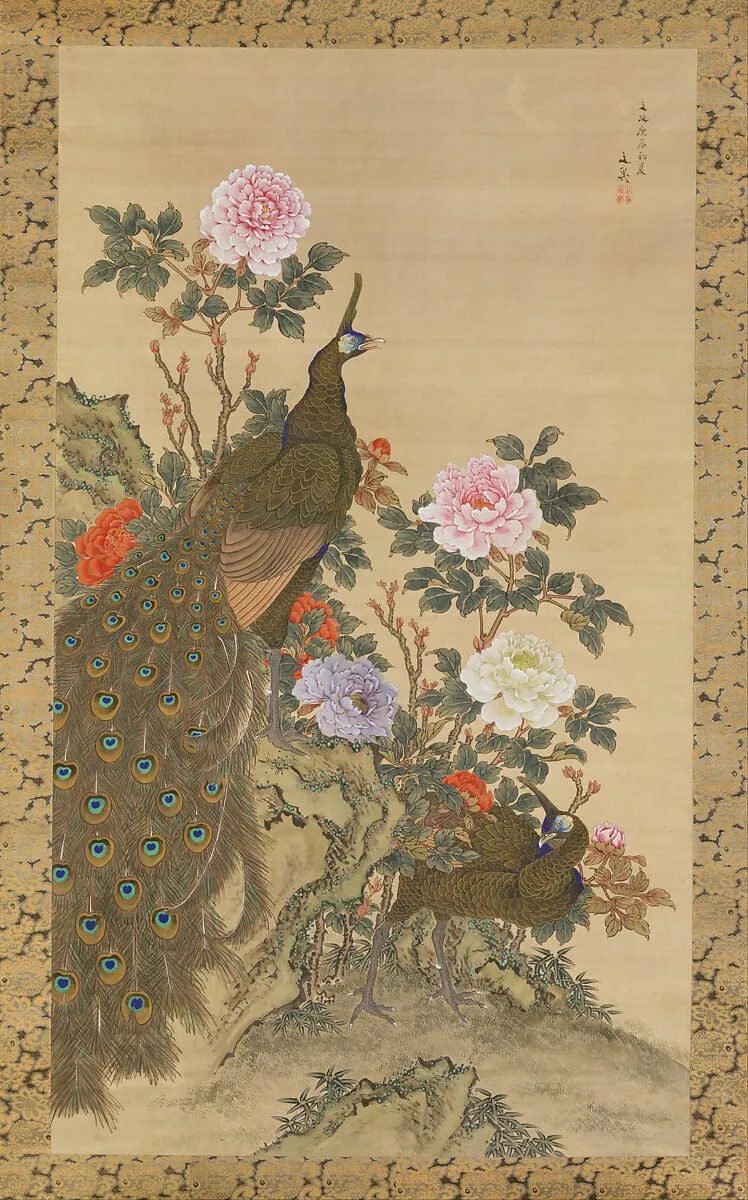
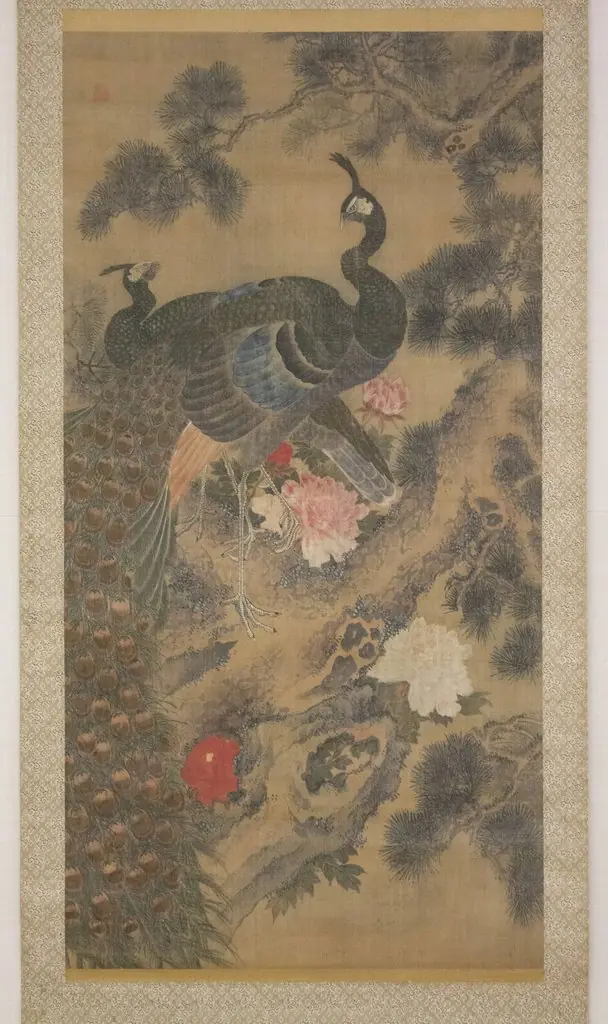
牡丹に孔雀図|Peacocks and Peonies is an ink painting by the Nihonga artist Tani Bunchō. It dates from 1820 and is held in the collection of the Metropolitan Museum of Art.
About this work
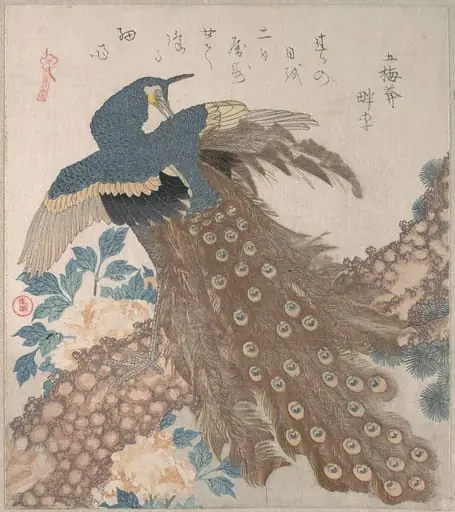
A peacock fans its shimmering tail beside a cluster of soft pink peonies, each feather marked with a tiny eye. Tani Bunchō painted the scroll in 1820, blending Chinese brushwork with Japanese nature subjects. The tail is built from patient, layered strokes that give every feather a sense of depth.
Subject & Meaning
The artwork depicts a pair of peafowl amidst blooming peonies, a composition that juxtaposes the majestic bird with the celebrated flower.
The artwork depicts a pair of peafowl amidst blooming peonies, a composition that juxtaposes the majestic bird with the celebrated flower. In Japanese and broader East Asian artistic traditions, the peony is a potent symbol of wealth, honor, and prosperity, often referred to as the 'king of flowers.' The peacock similarly represents nobility, dignity, and immortality.
By combining these two subjects, the painting creates a visual metaphor for high status and auspicious fortune. The work, created in 1820, utilizes these established iconographic elements to convey themes of luxury and elevated social standing, presenting the subjects not merely as naturalistic observations but as carriers of specific cultural meanings regarding prestige and abundance.
Technique & Style
Created in 1820 by Tani Bunchō, Peacocks and Peonies is executed as a hanging scroll utilizing ink and color applied directly onto a silk support. The work falls within the landscape genre, though its primary formal focus lies in the depiction of peafowl and peonies. The artist employed traditional Japanese painting techniques characteristic of the Edo period, integrating mineral pigments with ink washes to render the subjects.
While specific details regarding the handling of the brush or the current physical condition of the silk are not detailed in the available records, the medium itself, ink and color on silk, indicates a delicate surface requiring careful preservation. The composition balances the organic forms of the flowers with the plumage of the birds, reflecting the stylistic conventions of Bunchō's oeuvre during this specific year of production.
History & Provenance
Peacocks and Peonies, titled 牡丹に孔雀図, is a hanging scroll painted by Tani Bunchō in 1820 using ink and color on silk. The work belongs to the landscape genre and portrays peafowl alongside peonies (paeonia). It entered the collection of the Metropolitan Museum of Art, where it remains on display.
The painting was created in Japan during the early nineteenth century, reflecting Bunchō’s synthesis of Chinese decorative motifs and Japanese Rinpa influences. No earlier ownership records are documented, suggesting the museum acquired the piece directly from the artist’s estate or a contemporary dealer.
Overview
Peacocks and Peonies is a hanging scroll executed in 1820 by Tani Bunchō, a leading figure of the Nanga school in late Edo-period Japan. The work depicts a pair of peacocks amidst a cluster of pink peonies, rendered in ink and color on silk. One bird stands prominently with its tail fully fanned, displaying the characteristic eye-like patterns of its plumage, while the other is positioned nearby.
The flowers are painted with soft, layered petals that droop naturally, creating a sense of organic weight and balance against the verticality of the birds. Bunchō employs a synthesis of Chinese literati brushwork and Japanese decorative sensibility, a hallmark of his mature style. The composition avoids deep spatial recession, focusing instead on the rhythmic interplay between the ornate feathers and the lush blossoms.
This piece exemplifies Bunchō's ability to adapt traditional Chinese bird-and-flower motifs to a distinctively Japanese aesthetic context. Created during the artist's later career, the scroll reflects his established reputation for technical precision and his role in bridging the Nanga tradition with the rising popularity of naturalistic subjects in early 19th-century Kyoto.
Context
Tani Bunchō, the creator of this scroll, was known for his eclectic artistic practice during the Edo period. He notably synthesized elements of traditional Chinese brushwork with the established conventions of Japanese nature painting. This fusion allowed him to produce works like Peacocks and Peonies, which present familiar Japanese subjects through a sophisticated blend of stylistic influences.
Artist & collection