Artwork
Untitled
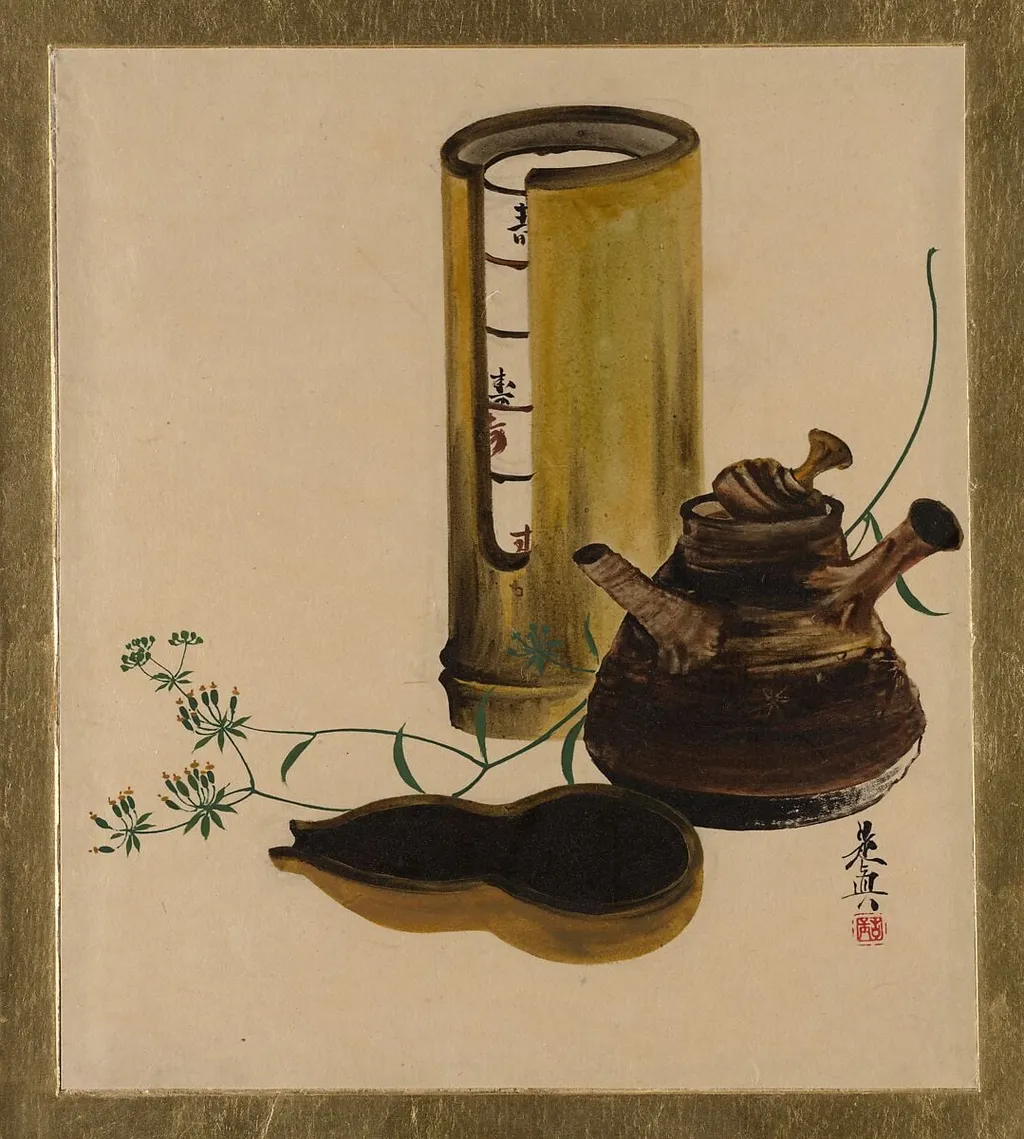
Untitled is an unspecified painting by the Impressionist artist Shibata Zeshin. It dates from 1882 and is held in the collection of the Metropolitan Museum of Art.
About this work
Subject & Meaning
The choice of lacquer on paper elevates an everyday subject into a meditation on craft, surface, and the aesthetic values embedded in the tea tradition.
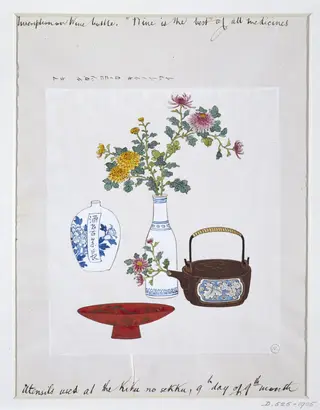
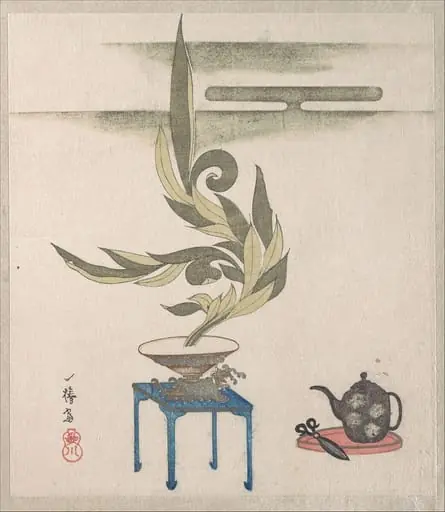
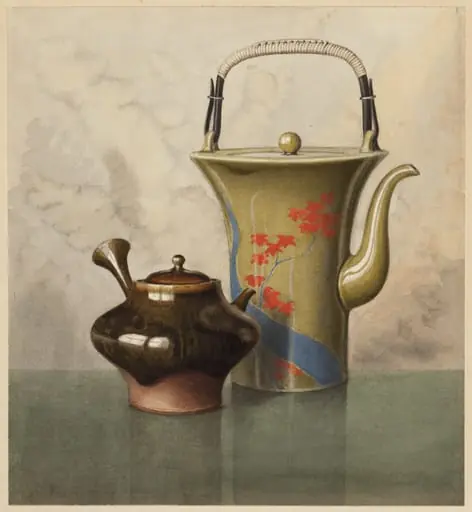
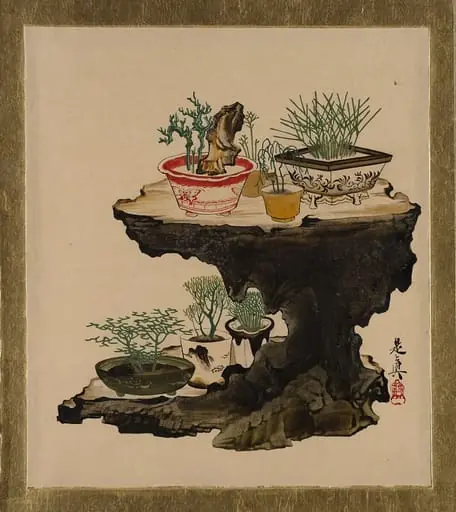
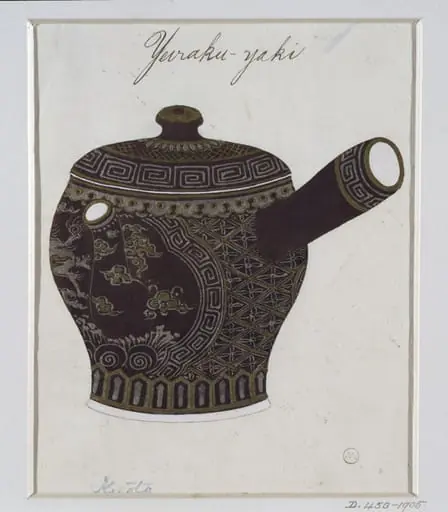
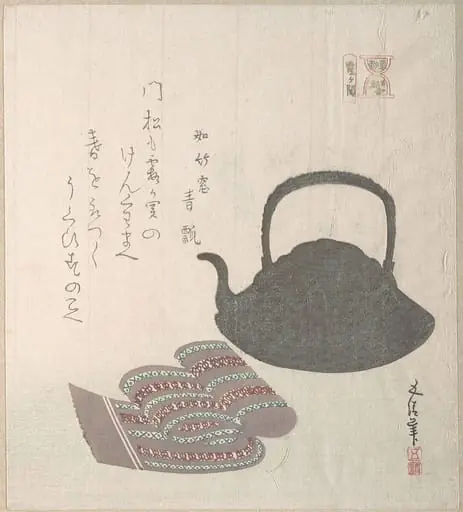
Shibata Zeshin's 1882 lacquer-on-paper work is classified as a still life and depicts tea. The subject is rendered in lacquer, a medium traditionally associated in Japanese art with refined, utilitarian objects, and the focus on tea points to an iconography rooted in the rituals of tea preparation and consumption that held deep cultural significance in late nineteenth-century Japan.
As a still life, the painting isolates tea as its central motif, inviting contemplation of the material and symbolic qualities associated with the beverage and its implements. The choice of lacquer on paper elevates an everyday subject into a meditation on craft, surface, and the aesthetic values embedded in the tea tradition.
Technique & Style
Shibata Zeshin’s Untitled (1882) employs lacquer as its primary medium, applied directly onto paper. This unconventional pairing, lacquer, typically used for decorative arts, on a fragile paper support, demonstrates Zeshin’s technical innovation. The work measures 19.1 × 16.5 cm and depicts a still life centered on tea-related objects, rendered with meticulous precision characteristic of his late style.
The handling of lacquer is controlled yet expressive, with fine, deliberate strokes that build texture and depth. The glossy, resinous surface contrasts with the matte paper, creating a tactile interplay of light and shadow. Stylistically, the composition reflects Zeshin’s synthesis of traditional Japanese aesthetics with a restrained, almost modernist clarity, emphasizing form and materiality over ornate detail.
History & Provenance
Untitled is a lacquer painting by Shibata Zeshin, created in 1882 and depicting tea. It is part of the collection at the Metropolitan Museum of Art, where it is cataloged under the accession number 2009.176. The work was first exhibited in the museum's 2010 exhibition "Japanese Paintings of the 19th Century," and has remained in the museum's permanent collection since its acquisition in 2009.
Context
Shibata Zeshin's Untitled (1882) occupies a pivotal position in the critical reception of Meiji-era lacquer art, where scholars emphasize its synthesis of traditional techniques with emerging aesthetic sensibilities. The work's depiction of tea, rooted in Japanese cultural practice, reflects broader scholarly discussions about the artist's engagement with domestic ritual and his role in revitalizing lacquer as a contemporary medium during a period of rapid Westernization. Its inclusion in the Metropolitan Museum of Art's collection underscores its significance within Western institutional frameworks for evaluating non-Western art, while its classification as a still life of tea highlights its contribution to the genre's evolution beyond mere representation to evoke philosophical and aesthetic contemplation.
Overview
Created in 1882, this untitled work by Shibata Zeshin presents a modest tea setting rendered entirely in lacquer on paper. A dark bowl, a bamboo whisk, and a folded cloth rest on a low wooden tray, while faint, curling lines suggest rising steam. The composition is restrained yet precise, inviting close observation of everyday ritual objects.
Artist & collection