Artwork
Untitled
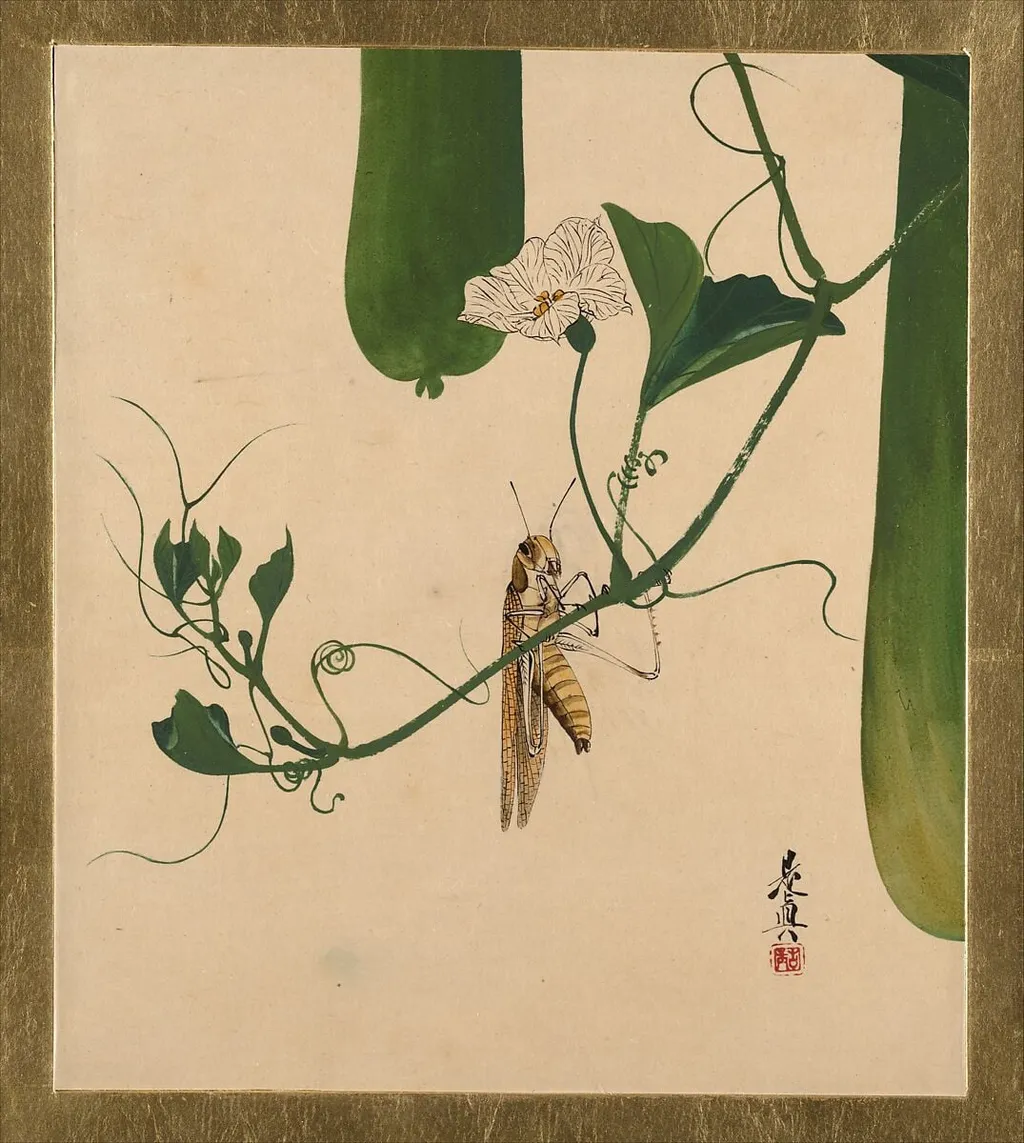
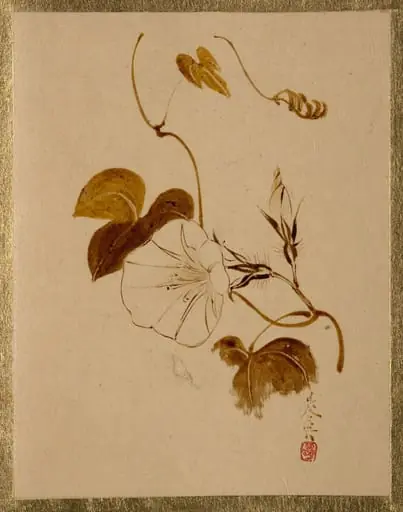
Untitled is an unspecified painting by the Impressionist artist Shibata Zeshin. It dates from 1882 and is held in the collection of the Metropolitan Museum of Art.
- Accession no.
- 36.100.105
About this work
Subject & Meaning
The work serves as a representation of the flora and fauna found in Japan, captured through the artist's distinctive lacquer technique on paper.
Created in 1882 by Shibata Zeshin, this lacquer-on-paper work presents a still-life composition featuring a gourd intertwined with vines and flowers, accompanied by an insect. The iconography centers on these natural elements, which are frequently employed in Japanese art to symbolize themes of harvest, abundance, and the transient cycles of nature. While the specific symbolic intent of this particular arrangement is not explicitly detailed in the available records, the depiction of the gourd and vine suggests a focus on organic growth and fertility.
The inclusion of an insect further emphasizes the observation of the natural world, a common subject in Zeshin's oeuvre. The work serves as a representation of the flora and fauna found in Japan, captured through the artist's distinctive lacquer technique on paper.
Technique & Style
Created in 1882, this work by Shibata Zeshin is executed using lacquer applied to a paper support, a distinctive medium choice that diverges from traditional lacquerware on wood. Classified as a painting within the still-life genre, the piece measures 19.1 cm in height and 16.5 cm in width. The artist's handling of the lacquer medium allows for the depiction of natural motifs, specifically flowers, gourds, vines, and insects, rendered with the precision characteristic of Zeshin's style.
Originating from Japan, the artwork is currently held in the collection of the Metropolitan Museum of Art. The integration of lacquer on paper demonstrates a unique technical approach where the material properties of the lacquer interact with the fibrous texture of the paper to create the final visual effect.
History & Provenance
Created in 1882 by the Japanese artist Shibata Zeshin, this lacquer-on-paper work was produced in Japan. The piece, which depicts a still life arrangement of flowers, gourds, insects, and vines, currently resides in the collection of the Metropolitan Museum of Art. While the specific circumstances of its commission and the detailed chain of ownership prior to its museum acquisition are not enumerated in the available records, the work's inception is firmly dated to the beginning of 1882.
It is classified within the museum's paintings department, marking it as a significant example of Zeshin's late-period output in lacquer media.
The lacquer painting titled Untitled by Shibata Zeshin, created in 1882, is currently held in the collection of the Metropolitan Museum of Art. While the specific accession number is not provided in the available documentation, the work is cataloged within the museum's holdings as a painting of Japanese origin. The piece depicts a still life arrangement featuring flowers, gourds, insects, and vines.
No specific exhibition history or loan records for this work are detailed in the provided sources, though its presence in the Metropolitan Museum of Art confirms its status as a public collection item. The artwork measures 19.1 cm in height and 16.5 cm in width.
Context
Shibata Zeshin’s Untitled (1882) is documented as a lacquer-on-paper painting in the still-life genre, measuring 19.1 × 16.5 cm and depicting a flower, gourd, insect, and vine; the work is part of the Metropolitan Museum of Art’s collection, reflecting its status as a representative example of Meiji-era lacquer innovation. Its inclusion in a major institutional collection has prompted scholarly attention to Zeshin’s role in modernizing traditional Japanese painting, positioning the piece within broader discussions of artistic exchange during the late nineteenth century.
Overview
Created in 1882 by Shibata Zeshin, this untitled work depicts a still life arrangement featuring two gourds suspended from a twisted vine, a dragonfly hovering above, and pink flowers positioned to the side. The artist executed the composition on paper coated with black lacquer, a technique that transforms the support into a glossy, durable surface typically reserved for functional objects like boxes or furniture. This medium allows the painted colors to appear luminous, creating an effect of internal illumination against the deep, reflective background.
Zeshin, a master of lacquerware who also worked in painting, frequently employed this hybrid method to blur the boundaries between fine art and decorative craft. The piece exemplifies his late-career mastery, where he adapted the rigorous standards of lacquer application to the fluidity of paper painting. The composition balances naturalistic observation with a stylized elegance characteristic of the late Edo and early Meiji periods, showcasing Zeshin's unique ability to elevate everyday subjects through innovative material usage.
Artist & collection


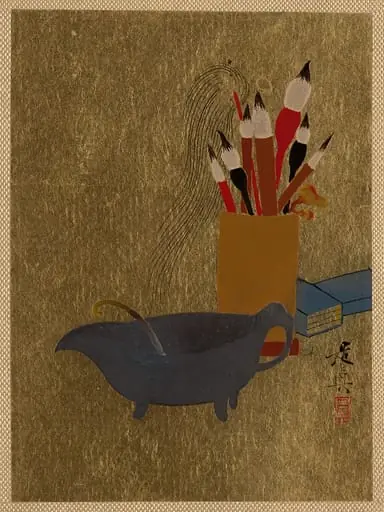
- Fleurs (Flowers)
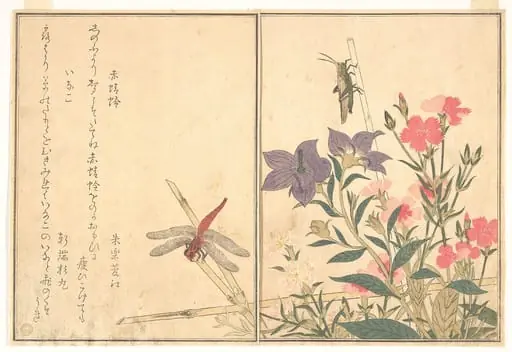 『画本虫撰』「赤蜻蛉」「いなこ」|Red Dragonfly (Akatonbo); Locust (Inago), from the Picture Book of Crawling Creatures (Ehon mushi erami)
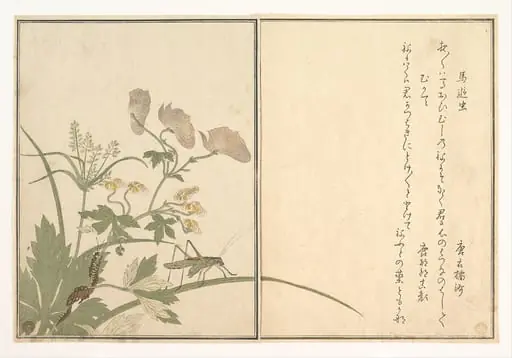 『画本虫撰』 「馬追虫」「むかて」|Katydid (Umaoi-mushi); Centipede, (Mukade), from the Picture Book of Crawling Creatures (Ehon mushi erami)
 粟に燕図|Millet and Sparrows
 Untitled
 画本虫撰 バッタと蟷螂|Cone-headed Grasshopper or Locust, (batta); Praying Mantis (Tōrō or Kamakiri), from the Picture Book of Crawling Creatures (Ehon mushi erami)
 Untitled
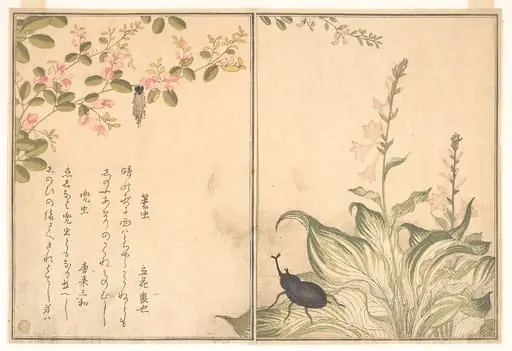 『画本虫撰』「蓑虫」「兜虫」|Bagworm (Minomushi); Horned Scarab Beetle (Kabutomushi), from the Picture Book of Crawling Creatures (Ehon mushi erami)
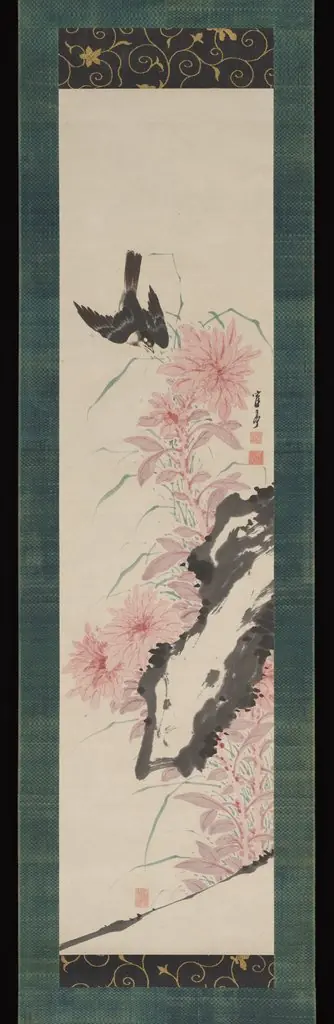 Amaranthus and Mynah Bird
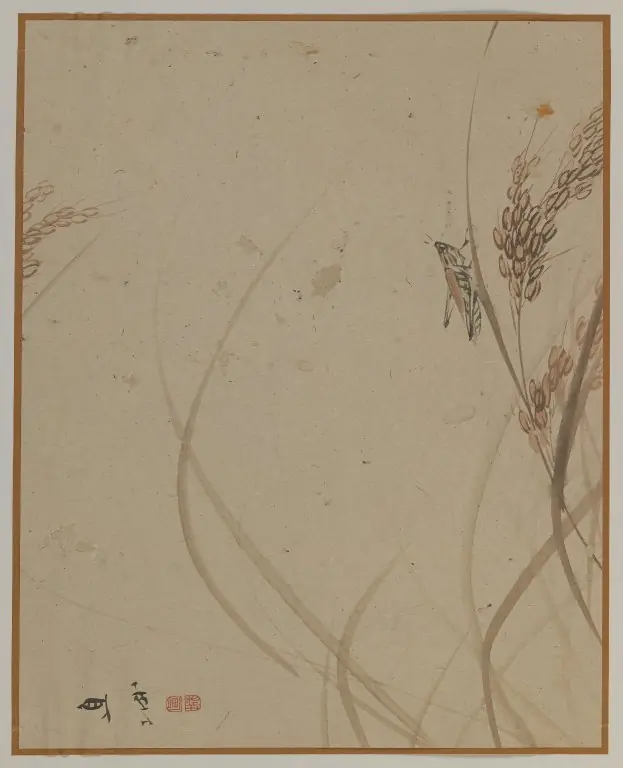 Grasshopper on Stalk of Rice
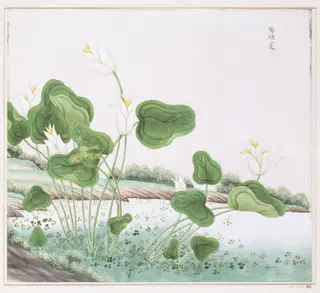 Cock-Head Waterlily