Artwork
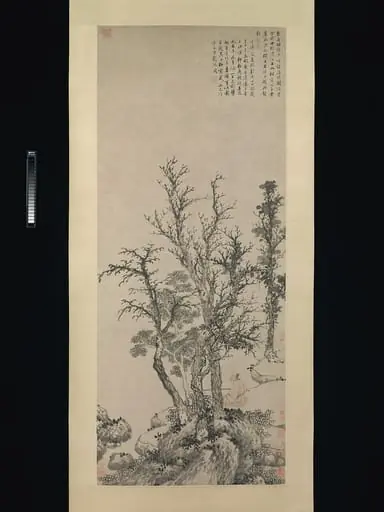
清 石濤 (朱若極) 秋林人醉圖 軸 紙本|Drunk in Autumn Woods
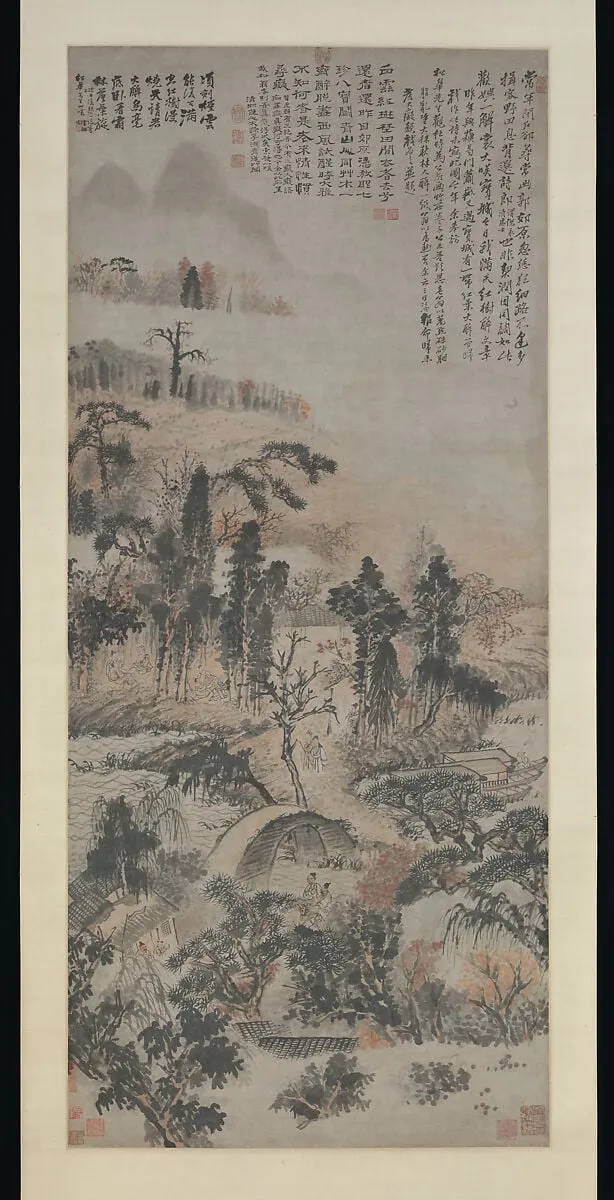
清 石濤 (朱若極) 秋林人醉圖 軸 紙本|Drunk in Autumn Woods is an ink painting by the Baroque artist Shitao. It dates from 1702 and is held in the collection of the Metropolitan Museum of Art.
About this work
Subject & Meaning
The title Drunk in Autumn Woods implies an intentional state of inebriation that serves as a metaphor for spiritual immersion within the landscape.
The hanging scroll portrays a lone figure wandering through an autumn forest, a motif that conveys the artist’s Daoist‑inspired contemplation of nature and the fleeting nature of worldly concerns. The title Drunk in Autumn Woods implies an intentional state of inebriation that serves as a metaphor for spiritual immersion within the landscape. Created in 1702 in China, the work is classified as a landscape painting and was produced using ink and color on paper, reflecting the traditional genre of Chinese landscape art.
Technique & Style
Drunk in Autumn Woods is executed as a hanging scroll in ink and color on paper, a traditional format for literati landscape painting. The work is classified within the landscape genre and dated to 1702, consistent with Shitao's mature period of brushwork experimentation.
The painting belongs to the Metropolitan Museum of Art's collection, where it is held as a hanging scroll. Beyond the documented medium of ink and color on paper, the available sources do not provide further specifics regarding brushwork technique, palette, condition, or stylistic handling.
History & Provenance
Drunk in Autumn Woods, a hanging scroll by Shitao (Zhu Ruoji) dated 1702, is held by the Metropolitan Museum of Art. According to the Wikidata record for the work, the painting belongs to the museum's collection and is located at the Metropolitan Museum of Art, having been made in China. No specific accession number or exhibition history is documented in the available sources.
Overview
Drunk in Autumn Woods (秋林人醉圖) is a landscape painting by the Qing dynasty artist Shitao (Zhu Ruoji), created around 1702. Executed as a hanging scroll, it utilizes ink and color on paper to depict a serene natural scene. The artwork presents a harmonious blend of mountainous terrain, dense woodlands, and human presence, characteristic of traditional Chinese landscape painting.
Artist & collection


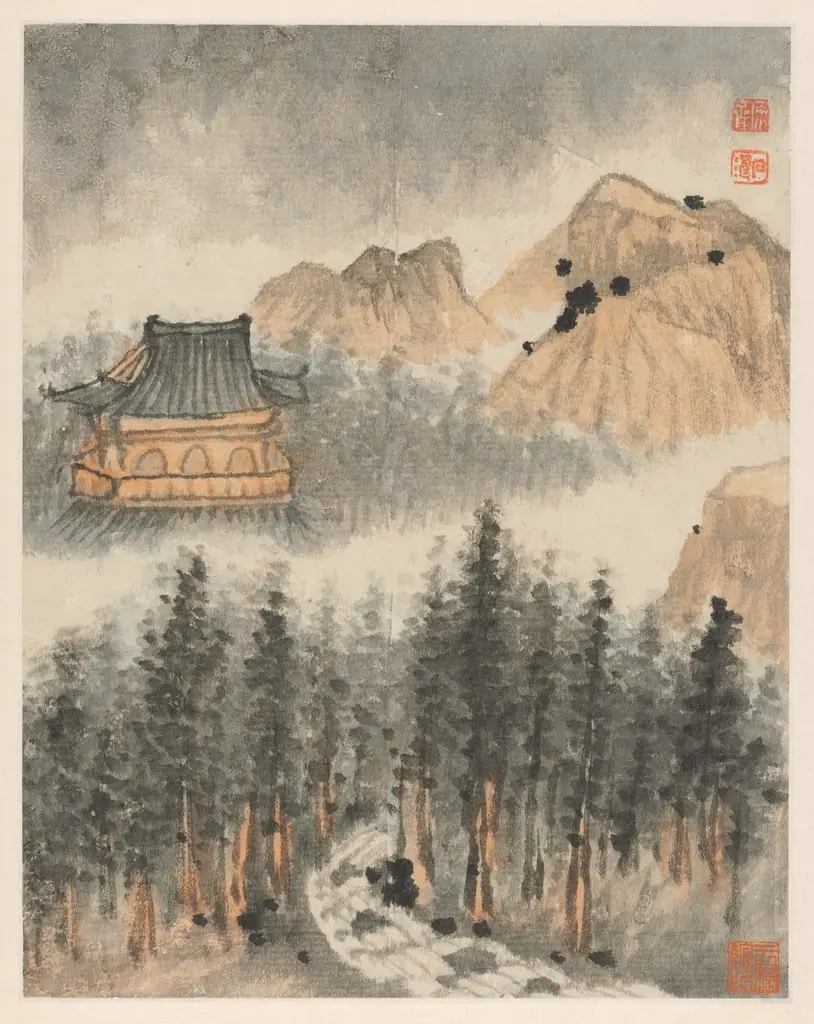
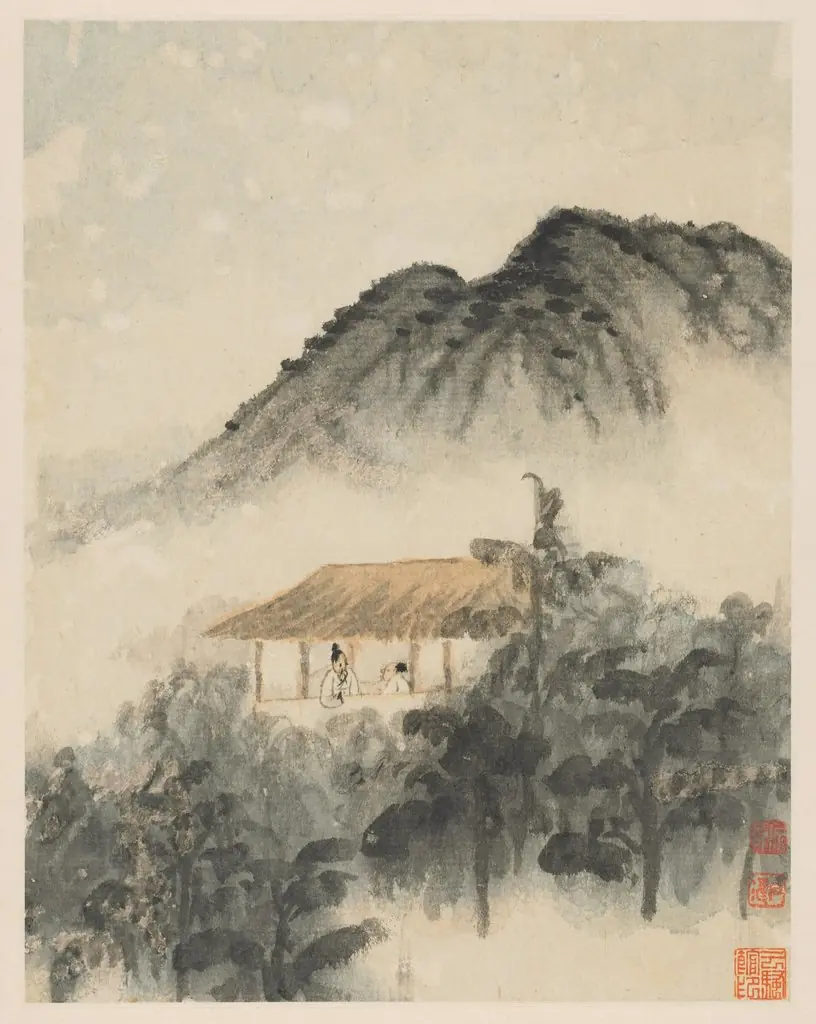
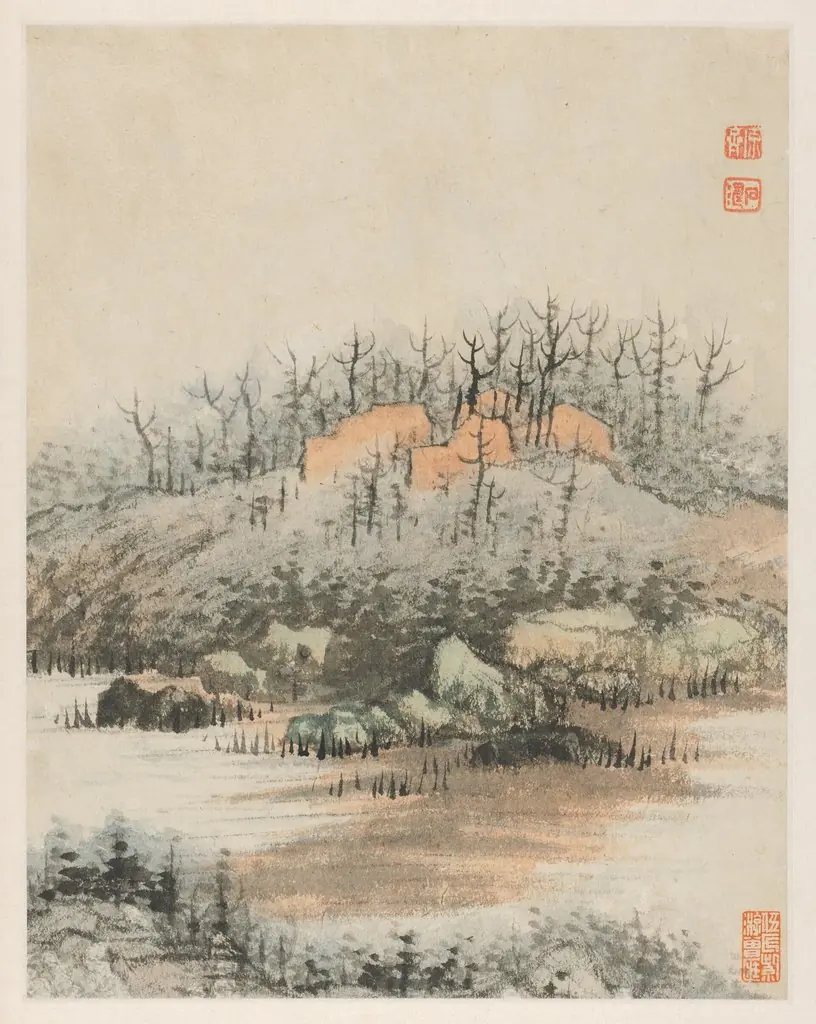
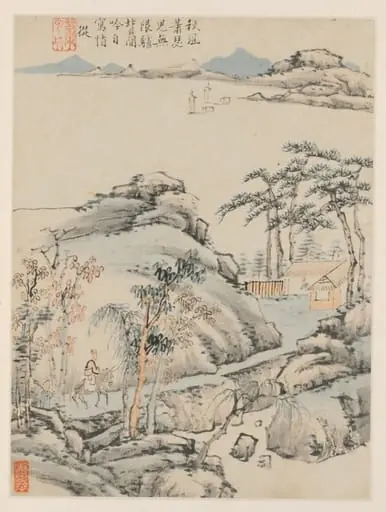 Album of Seasonal Landscapes, Leaf F (previous leaf 5)
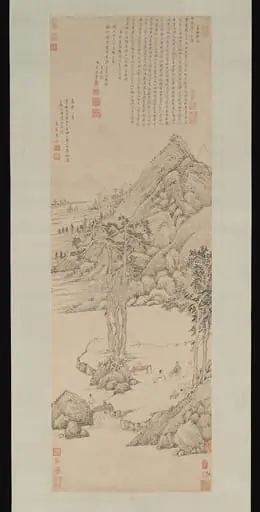 明 文嘉 為項元汴作山水圖 軸|Landscape dedicated to Xiang Yuanbian
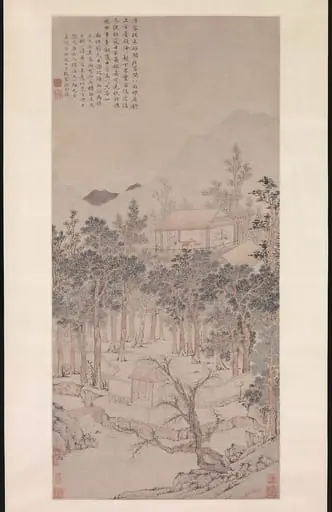 明 文徵明 樓居圖軸|Living Aloft: Master Liu's Retreat
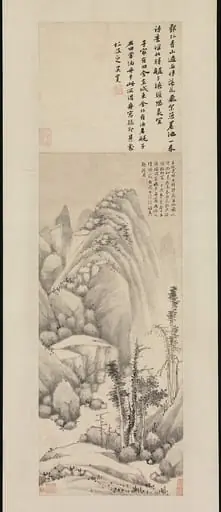 明 沈周 夜雨泊舟圖 軸|Anchorage on a Rainy Night
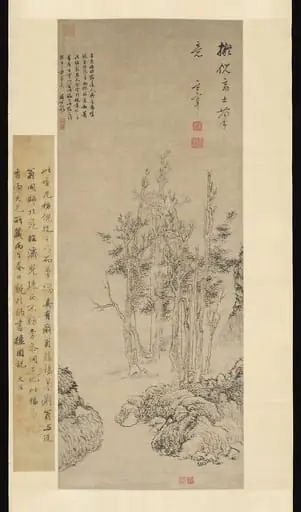 明 董其昌 倣倪瓚山水圖 軸|Landscape with Trees in the Manner of Ni Zan (1301–1374)
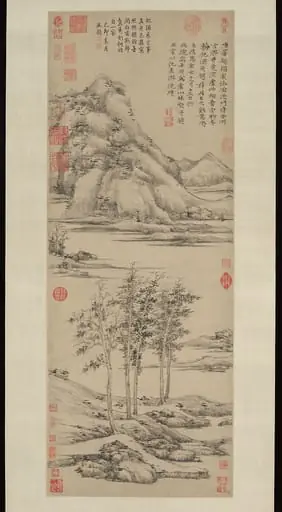 元 倪瓚 虞山林壑圖 軸|Woods and Valleys of Mount Yu
 明 沈周 秋林閒釣圖 軸|Silent fisherman in an autumn wood