Artwork
明 文嘉 為項元汴作山水圖 軸|Landscape dedicated to Xiang Yuanbian
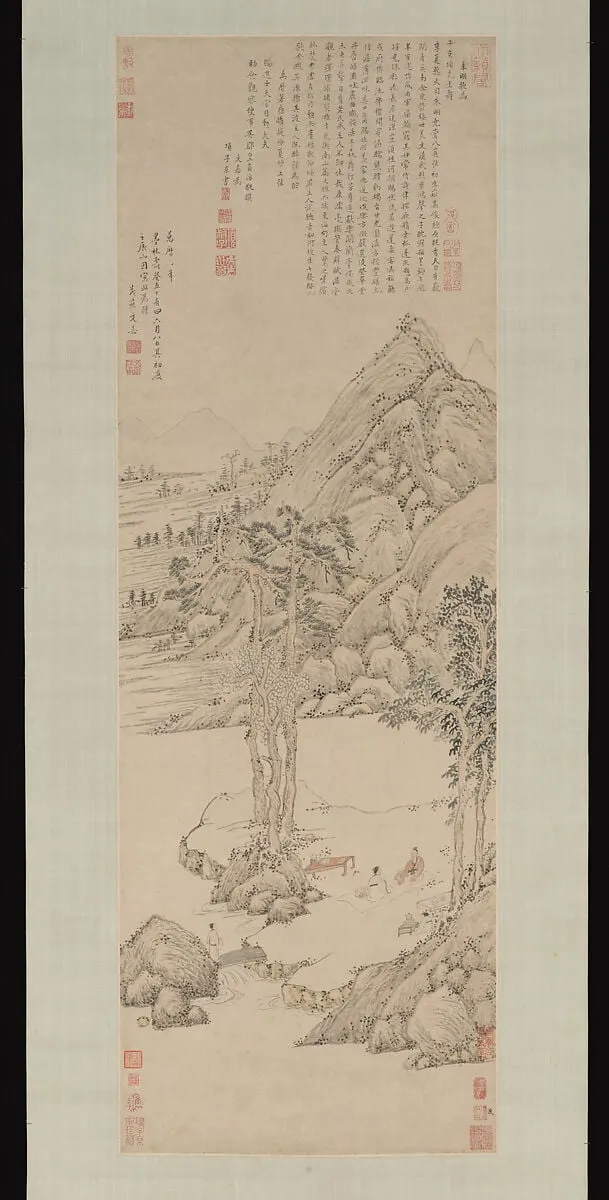
明 文嘉 為項元汴作山水圖 軸|Landscape dedicated to Xiang Yuanbian is an ink painting by the Ming dynasty painting artist Wen Jia. It dates from 1578 and is held in the collection of the Metropolitan Museum of Art.
About this work
Layered mountains fade into mist while a lone figure walks a path. Thin ink lines build the soft peaks, pale washes suggest distance and air, and a single pine cuts dark through the haze. Dated 1578 and dedicated to the collector Xiang Yuanbian, Wen Jia painted it in a style made for quiet looking rather than drama.
Subject & Meaning
The hanging scroll presents a traditional Chinese landscape (shan shui) executed in ink and color on paper by Wen Jia in 1578.
The hanging scroll presents a traditional Chinese landscape (shan shui) executed in ink and color on paper by Wen Jia in 1578. The composition depicts mountain scenery, a core subject of literati painting that carried layered symbolic meaning. Mountains in such works conventionally represent permanence, moral steadfastness, and the Daoist ideal of harmony between humanity and nature, while the broader landscape genre evokes the contemplative retreat of the scholar.
The dedication to Xiang Yuanbian, a renowned collector and patron, situates the painting within the social world of Ming literati culture, where landscape imagery functioned as a cultivated gift expressing friendship, shared aesthetic values, and the artist's refined sensibility.
History & Provenance
The scroll was painted in 1578 by Wen Jia as a commissioned work for the connoisseur Xiang Yuanbian, whose name appears in the title. It later entered the collection of the Metropolitan Museum of Art, where it is currently held. No further details of private ownership prior to its museum accession are provided in the available records.
The hanging scroll titled “Landscape dedicated to Xiang Yuanbian” (1578) by Wen Jia is recorded in the Metropolitan Museum of Art’s collection, as indicated in its Wikidata entry and the museum’s catalogue. The specific accession or inventory number used by the museum is not provided in the available sources. No exhibition history for this work is documented in the cited references.
The piece remains in the museum’s permanent collection and is occasionally displayed in the Asian art galleries as part of rotating exhibitions of Chinese landscape painting.
Overview
Created in 1578, this hanging scroll by Wen Jia (1499–1582) is a landscape dedicated to the prominent Ming dynasty collector Xiang Yuanbian. Executed in ink and color on paper, the work exemplifies the literati tradition of the Wu School, characterized by its scholarly restraint and reference to past masters. The composition features layered mountains that recede into a misty atmosphere, constructed through delicate, thin ink lines that define soft peaks.
Pale washes are employed to suggest spatial depth and atmospheric perspective, creating a sense of airiness between the forms. A solitary figure traverses a winding path, emphasizing the scale of the natural world and the theme of reclusion. A distinct pine tree with a dark trunk anchors the foreground, providing a sharp contrast against the hazy background.
Dated to the late period of Wen Jia's career, this piece reflects his mature style, which synthesizes the structural rigor of the Yuan dynasty masters with the refined elegance typical of mid-to-late Ming literati painting. The dedication to Xiang Yuanbian situates the work within a network of elite cultural exchange, where such paintings served as tokens of friendship and shared aesthetic values among the scholar-official class.
Technique & Style
Wen Jia employed delicate ink lines to define the gentle contours of the mountains, complemented by pale washes that evoke a sense of atmospheric distance and ethereal air. The artist utilized a technique known as "crown shading," where ink is applied darker at the base of forms and lighter towards the top, effectively suggesting height and volume. This refined approach contributes to the painting's understated and meditative aesthetic.
Artist & collection


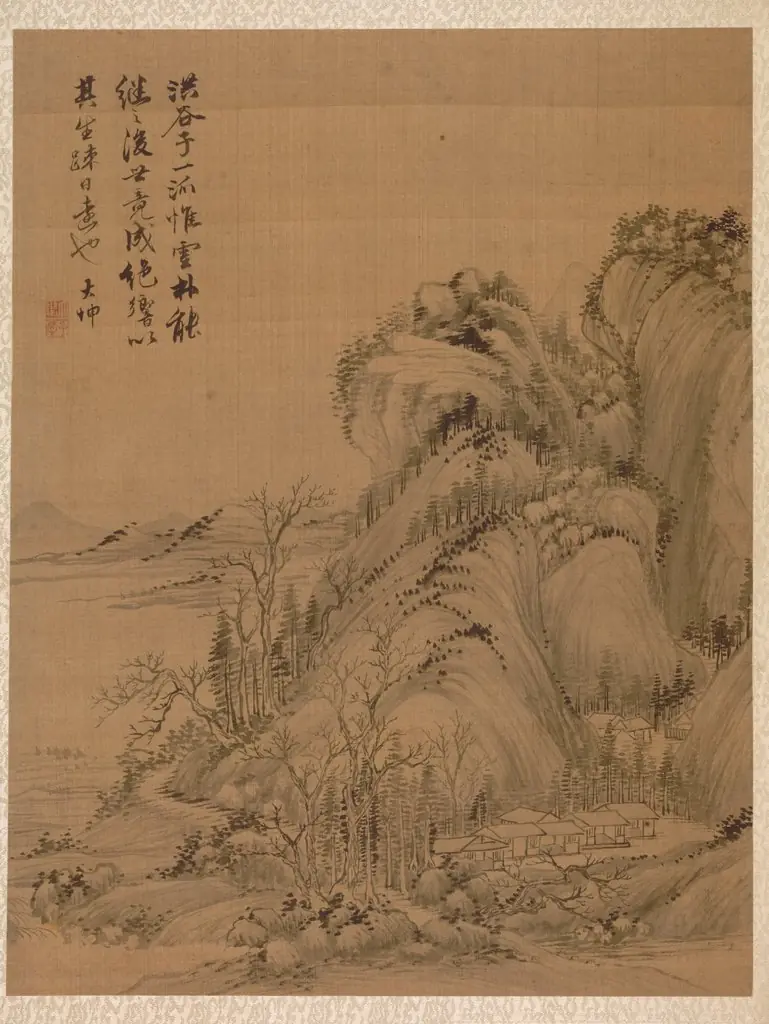 Landscape in the Style of Ching Hao
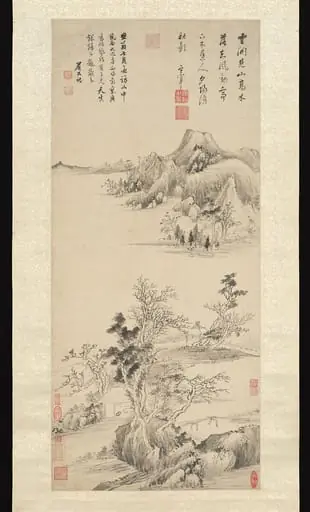 明 董其昌 秋山圖 軸|Autumn Mountains
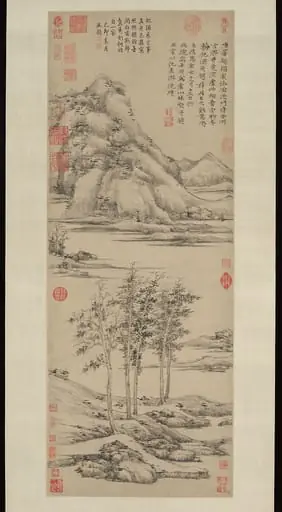 元 倪瓚 虞山林壑圖 軸|Woods and Valleys of Mount Yu
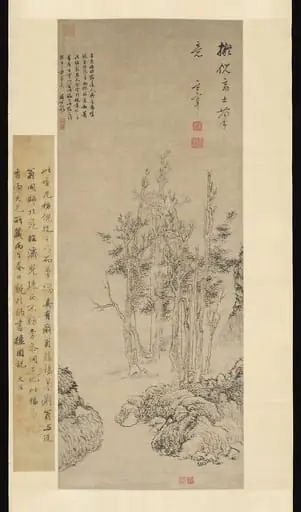 明 董其昌 倣倪瓚山水圖 軸|Landscape with Trees in the Manner of Ni Zan (1301–1374)
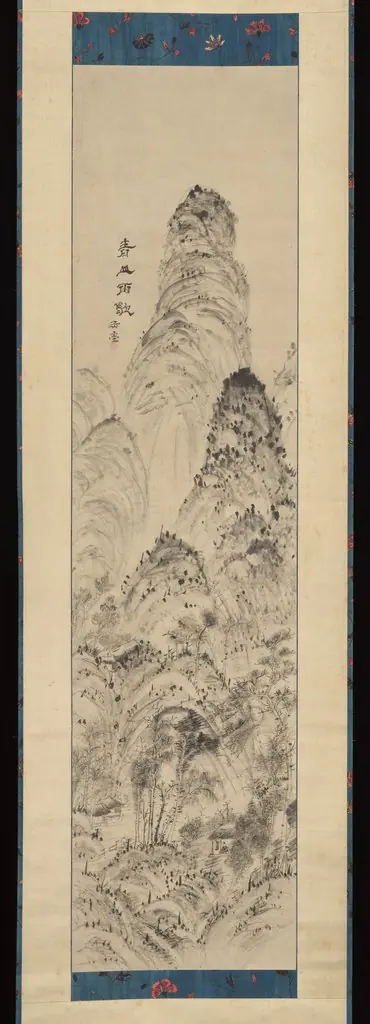 Green Mountains as the Rain Ceases
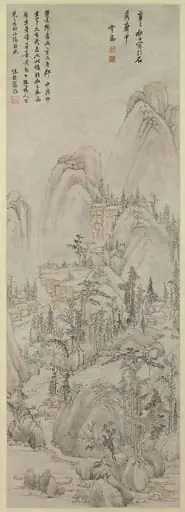 明 莫是龍 倣黃公望山水圖 軸|Landscape in the style of Huang Gongwang
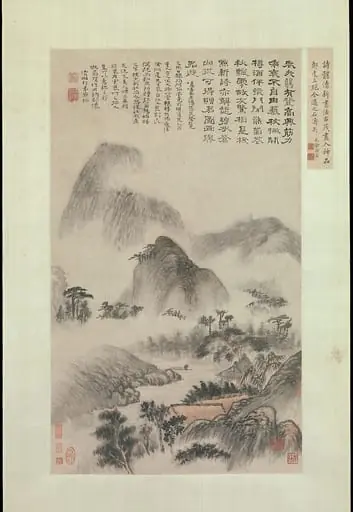 清 石濤(朱若極) 重陽山水圖 軸|Landscape Painted on the Double Ninth Festival
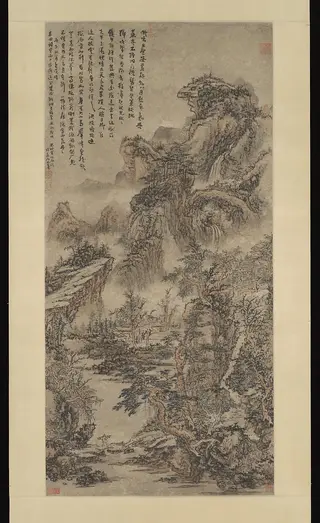 清 倣髡殘 蒸嵐昏巒圖 軸|Wooded Mountains at Dusk
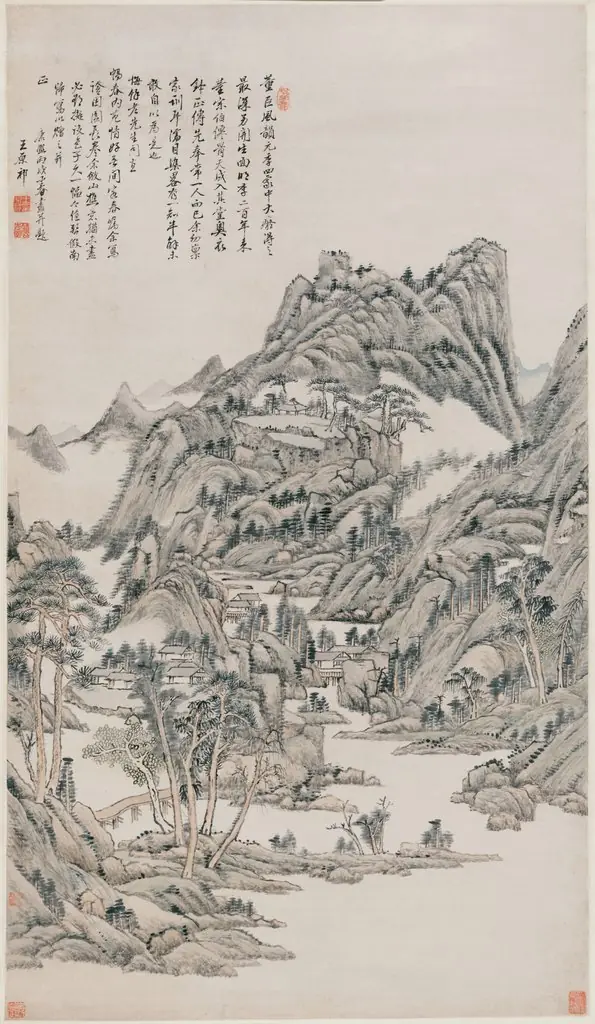 Landscape
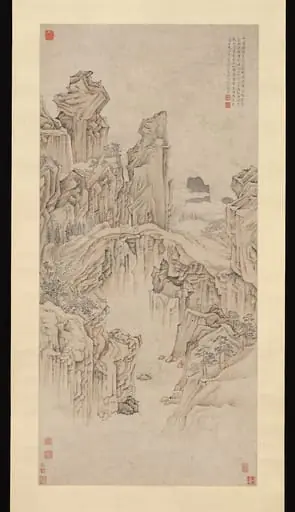 Untitled