Artwork
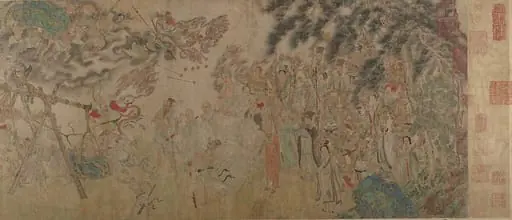
清 石濤 (朱若極) 十六羅漢圖 卷|The Sixteen Luohans
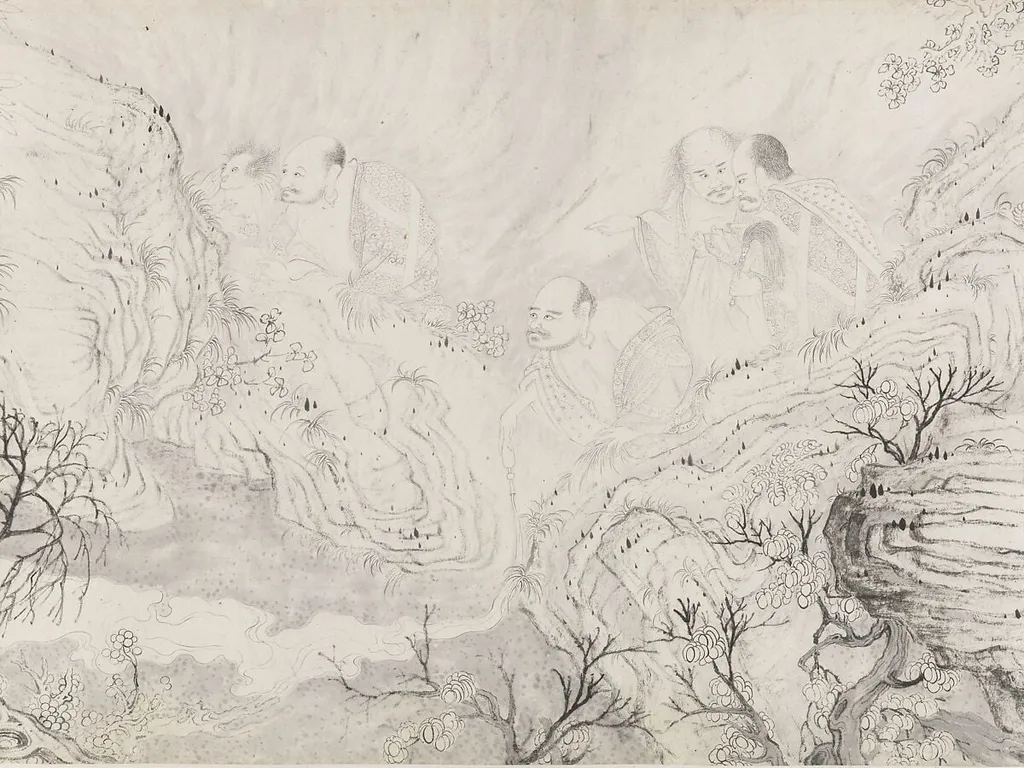
清 石濤 (朱若極) 十六羅漢圖 卷|The Sixteen Luohans is an ink painting by the Baroque artist Shitao. It dates from 1667 and is held in the collection of the Metropolitan Museum of Art.
About this work
Sixteen holy men make their way through misty mountains and twisted pines on a long paper scroll. Shitao paints each one differently, one laughing, one in meditation, one on a staff, so they read as real people, not saints. The ink washes look wet, as if clouds just rolled in. He painted it in 1667 while living in a temple after the Ming dynasty fell. Look up landscape painting for more.
Technique & Style
This medium and support combination reflects the artist's engagement with traditional Chinese scroll formats while employing ink to define the forms.
Created in 1667, The Sixteen Luohans is executed as a handscroll on paper using ink. The work is classified within the landscape painting genre, a formal choice that integrates the depicted figures of men and trees into a broader natural setting rather than isolating them as standalone portraits. This medium and support combination reflects the artist's engagement with traditional Chinese scroll formats while employing ink to define the forms.
The visual composition relies on the interplay between the human subjects and the surrounding landscape elements, establishing a cohesive narrative space typical of the period's landscape tradition. The piece remains part of the collection at the Metropolitan Museum of Art.
History & Provenance
The Sixteen Luohans is part of the collection of the Metropolitan Museum of Art in New York. The handscroll, dated 1667, is listed in the museum's catalogue under the title The Sixteen Luohans by Shitao (Zhu Ruoji). The work is recorded as a handscroll painted in ink on paper, classified as a landscape painting.
No accession number or detailed exhibition record is supplied in the available documentation, and the sources do not mention any prior exhibitions of the piece.
Overview
Shitao's handscroll, The Sixteen Luohans, rendered in ink on paper, depicts a procession of venerable figures traversing a landscape. The elongated format characteristic of a handscroll allows for a continuous narrative as viewers unroll it. This painting presents sixteen holy men, known as Luohans, amidst a setting of ethereal mountains and gnarled pine trees, evoking a sense of spiritual journey and natural contemplation.
Subject & Meaning
The artist imbues each of the sixteen Luohans with distinct personalities, moving beyond conventional saintly representations. Rather than uniform spiritual figures, they appear as individuals engaged in varied activities: one figure is shown in contemplative meditation, another leans upon a staff, while a third expresses mirth. This approach lends a human dimension to these revered Buddhist disciples, inviting a more relatable engagement with their spiritual presence.
Context
This handscroll was created by Shitao in 1667, a period following the collapse of the Ming dynasty. During this turbulent era, the artist had sought refuge and spiritual solace within a Buddhist temple. The painting thus emerges from a time of significant political upheaval and personal reflection, potentially influencing its serene yet deeply individualized portrayal of spiritual figures amidst a natural, contemplative setting.
Artist & collection


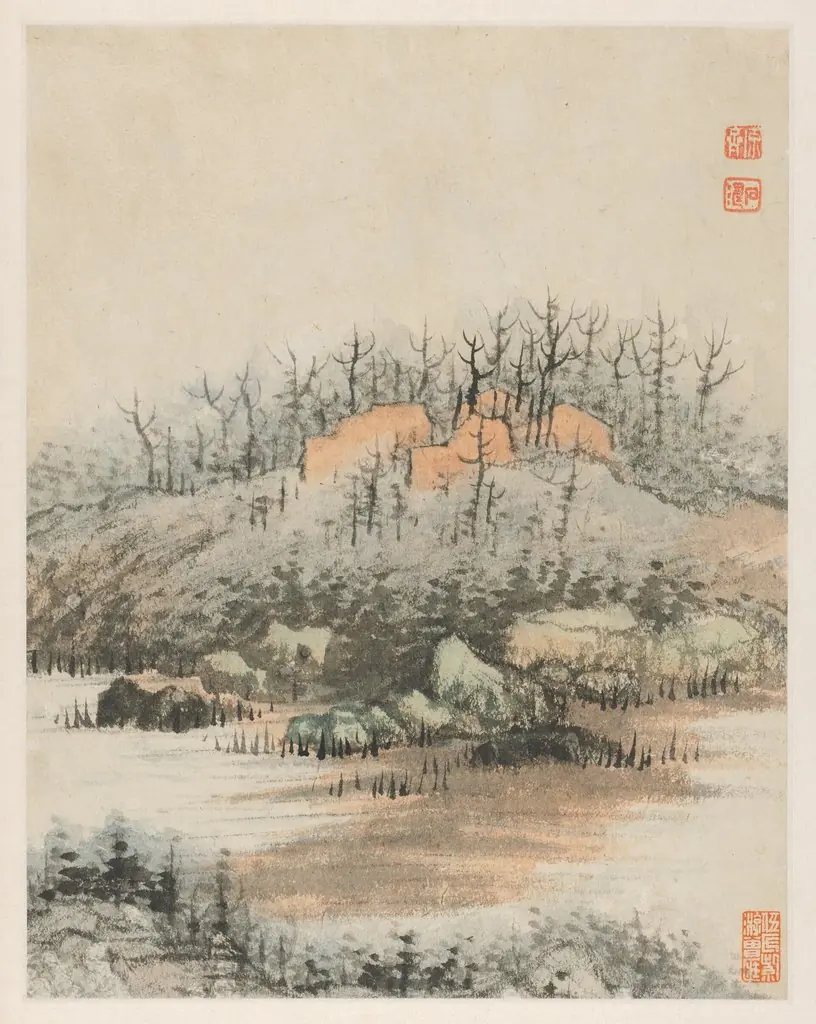
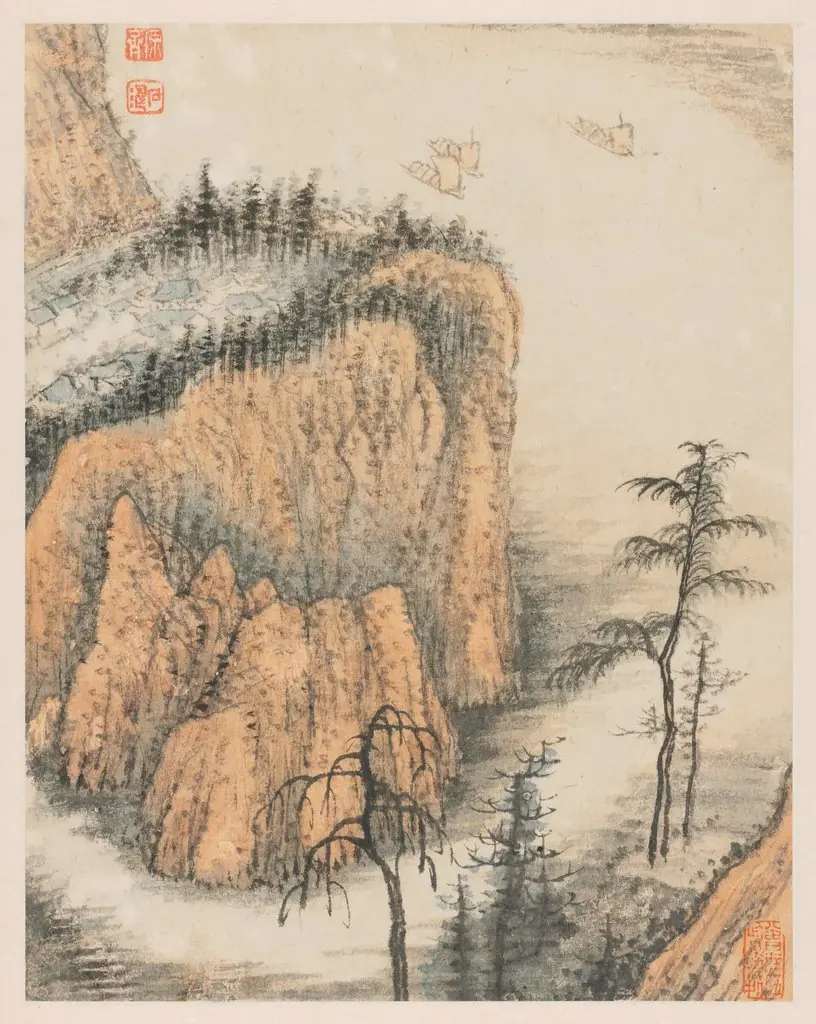
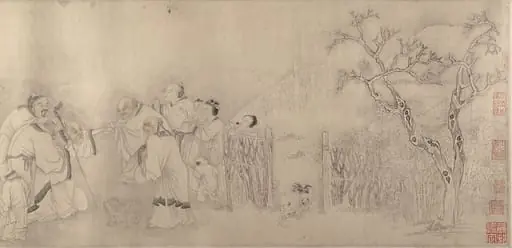 明/清 佚名 人物故事圖 卷|Family Visit
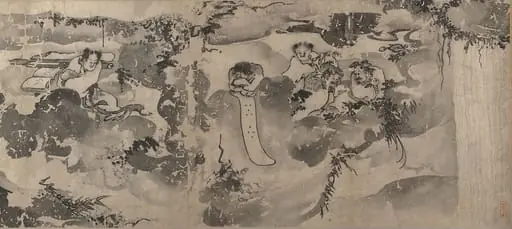 壺天聚樂圖|Merry Gatherings in the Magic Jar
 明/清 佚名 揭缽圖 卷|Raising the Alms-Bowl
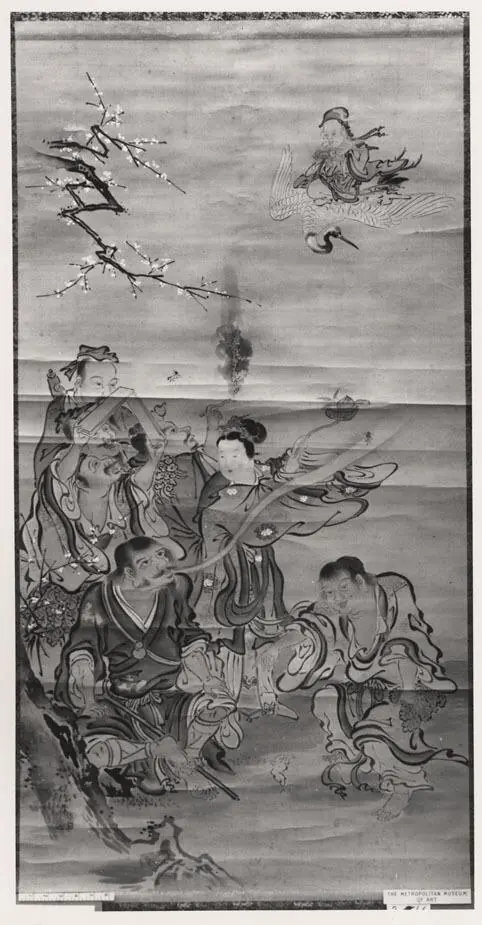 Eight Daoist Immortals
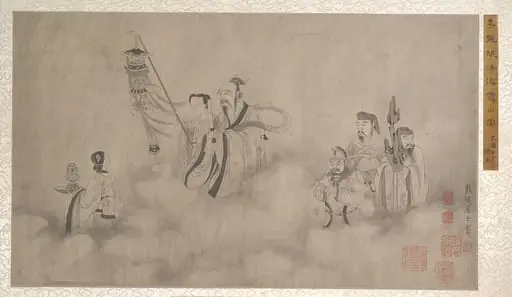 明/清 佚名 舊傳李公麟 法海靈山圖 冊|Procession of Arhats
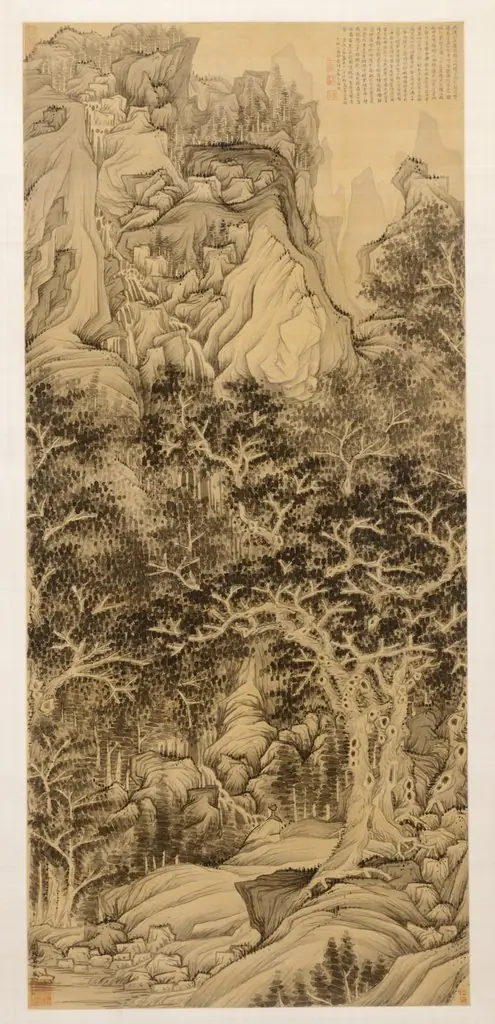 The Mountain of Five Cataracts
 南宋 夏珪 山市晴嵐圖 冊頁|Mountain Market, Clearing Mist
 元 趙蒼雲 劉晨阮肇入天台山圖 卷|Liu Chen and Ruan Zhao Entering the Tiantai Mountains
 Group resting under tree