Artwork
Landscape study
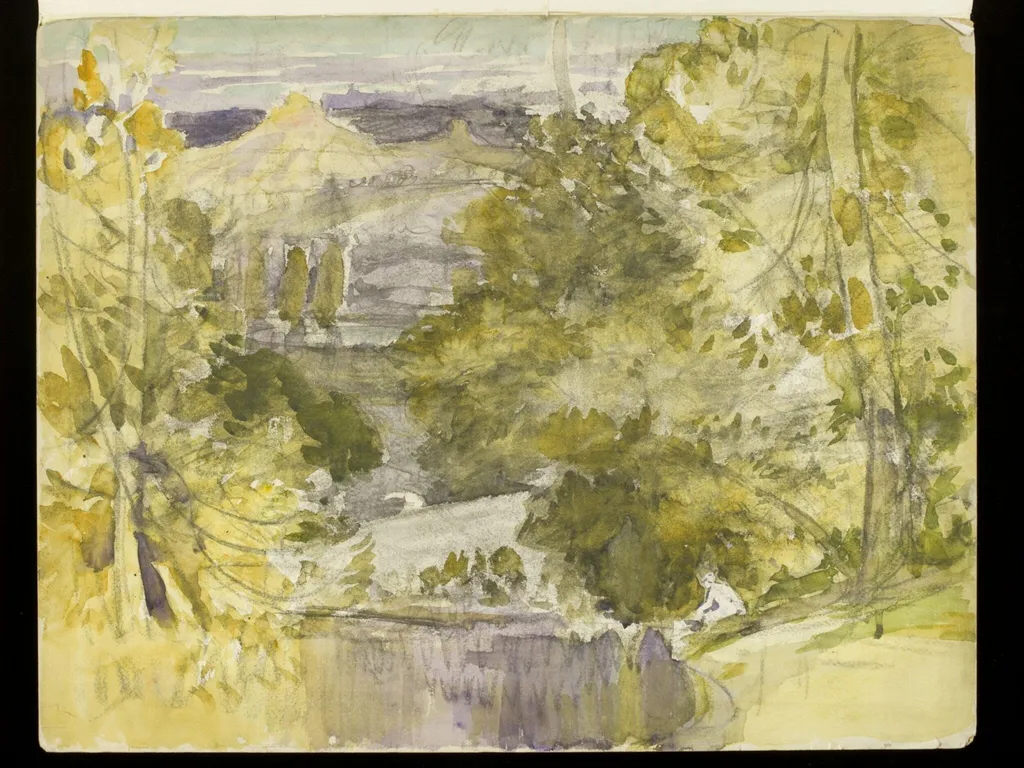
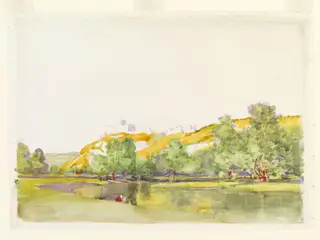
Landscape study is a watercolor work on paper by the Impressionist artist Sir Alfred East. It dates from 1870 and is held in the collection of the Victoria and Albert Museum.
About this work
Overview
Executed with fluid washes and minimal detail, it reflects his focus on natural observation rather than idealized composition.
This watercolor landscape, dated 1870, is one of Sir Alfred East’s early studies capturing the English countryside. Executed with fluid washes and minimal detail, it reflects his focus on natural observation rather than idealized composition. The work resides in the Victoria and Albert Museum’s collection of 19th-century British watercolors, representing a period when landscape study was central to artistic training.
Subject & Meaning
The scene presents a quiet rural expanse: dense foliage in the foreground gives way to a distant rise, likely a hill or low mountain. A narrow watercourse cuts diagonally through the composition, guiding the viewer’s gaze and introducing subtle motion. No human figures or structures appear, emphasizing the solitude and quiet rhythm of the natural world as the sole subject.
Technique & Style
East employed loose, responsive brushwork and layered transparent washes to suggest texture and form without definition. Muted greens, ochres, and browns create a restrained tonal harmony, while variations in pigment density model light across the terrain. The handling of watercolor allows for accidental blooms and soft edges, reinforcing the immediacy of the sketch-like approach.
History & Provenance
Painted during East’s formative years, this work predates his later, more polished exhibitions. It entered the Victoria and Albert Museum’s collection through established acquisition channels for British watercolors, likely as part of a broader effort to document the evolution of landscape practice in the Victorian era. Its status as a study underscores its role in artistic development rather than public display.
Context
In the 1870s, British artists increasingly turned to direct observation of nature, influenced by the Pre-Raphaelites and French plein air practices. Watercolor was favored for its portability and immediacy, making it ideal for fieldwork. East’s approach aligns with this trend, valuing atmospheric effect over narrative or grandeur, reflecting a broader shift toward empirical representation.
Legacy
Though not widely exhibited, this study exemplifies East’s commitment to capturing transient light and mood. It contributed to his reputation as a disciplined observer of landscape, later influencing his large-scale oil paintings. As a surviving example of early Victorian watercolor practice, it remains a reference for understanding the technical and aesthetic priorities of his generation.
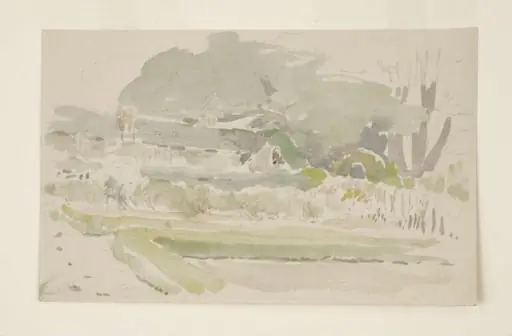
Own this work as a print
Artist & collection

Artist
Alfred East kept a pocket-sized sketchbook wherever he went, scribbling quick watercolours so he could capture the light before it shifted.

- Sketch of the garden and potting shed at Gwaynynog
 Peisaj la margine de râu
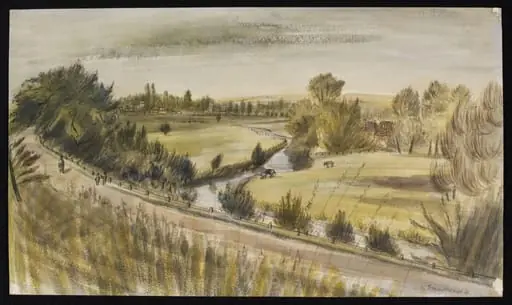 View near Enford
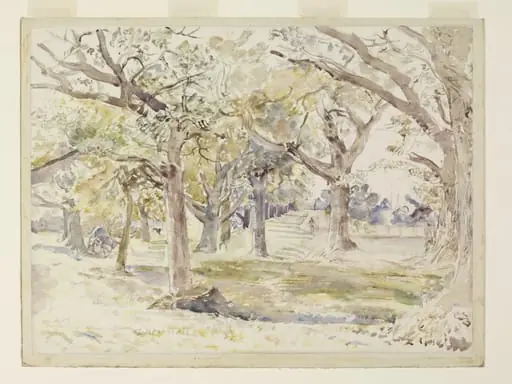 The Avenue, Bucklebury
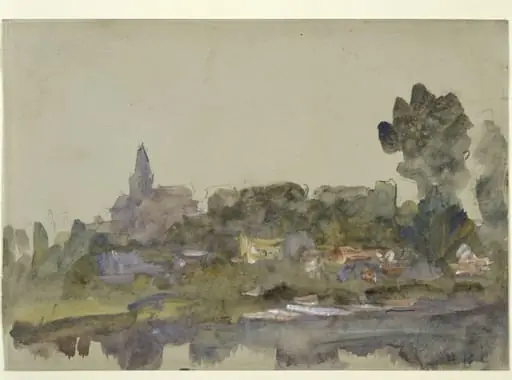 Picquigny
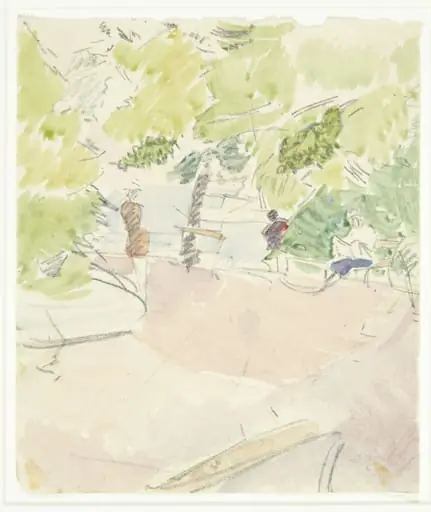 Farvestudie til Langeliniebilledet
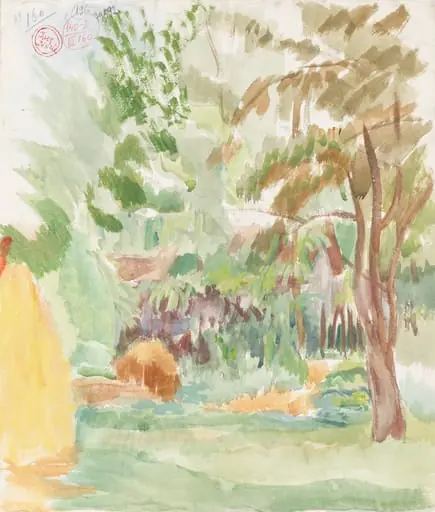 Două țărănci pe prispă
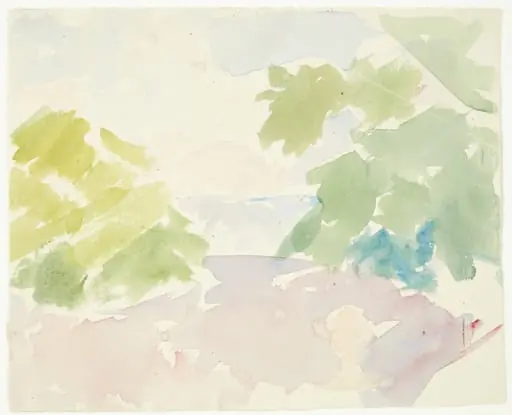 Farvestudie til Langelinie-billedet
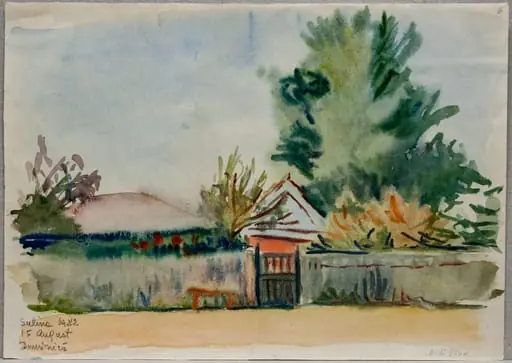 S 22 - Peisaj la Sulina (Casă, gard, copac)
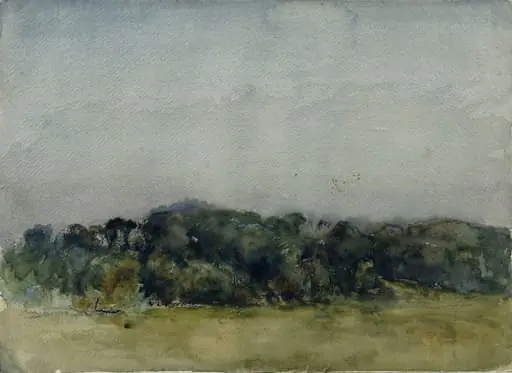 Landscape with bank of trees
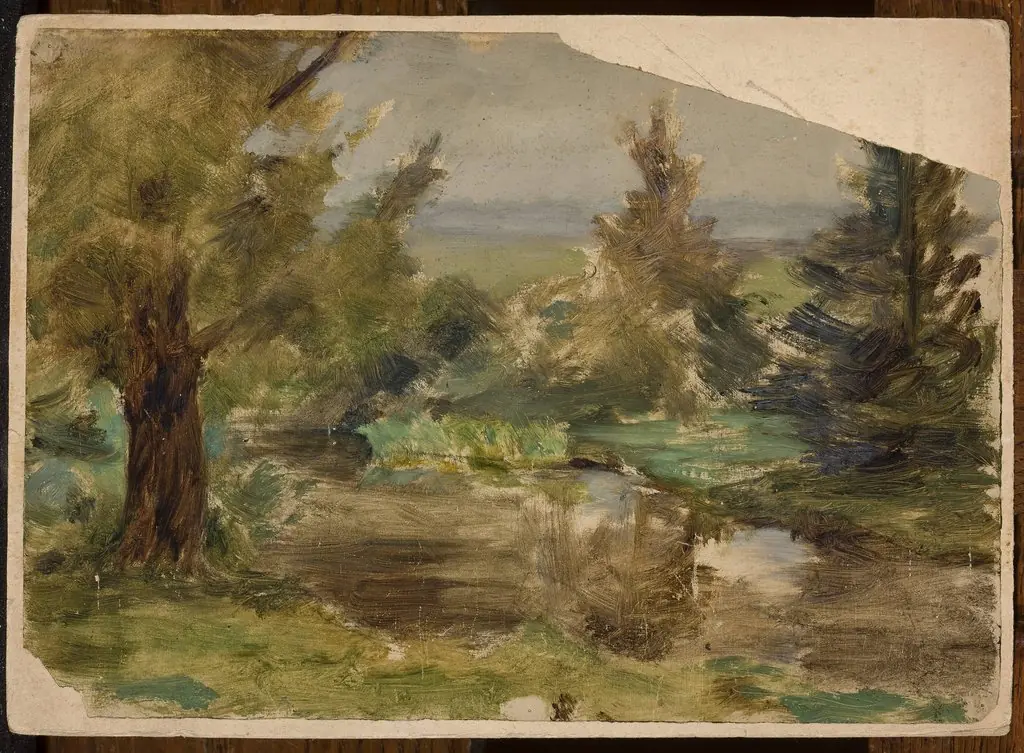 Study from Podolia