Artwork
The Banks of the Oise
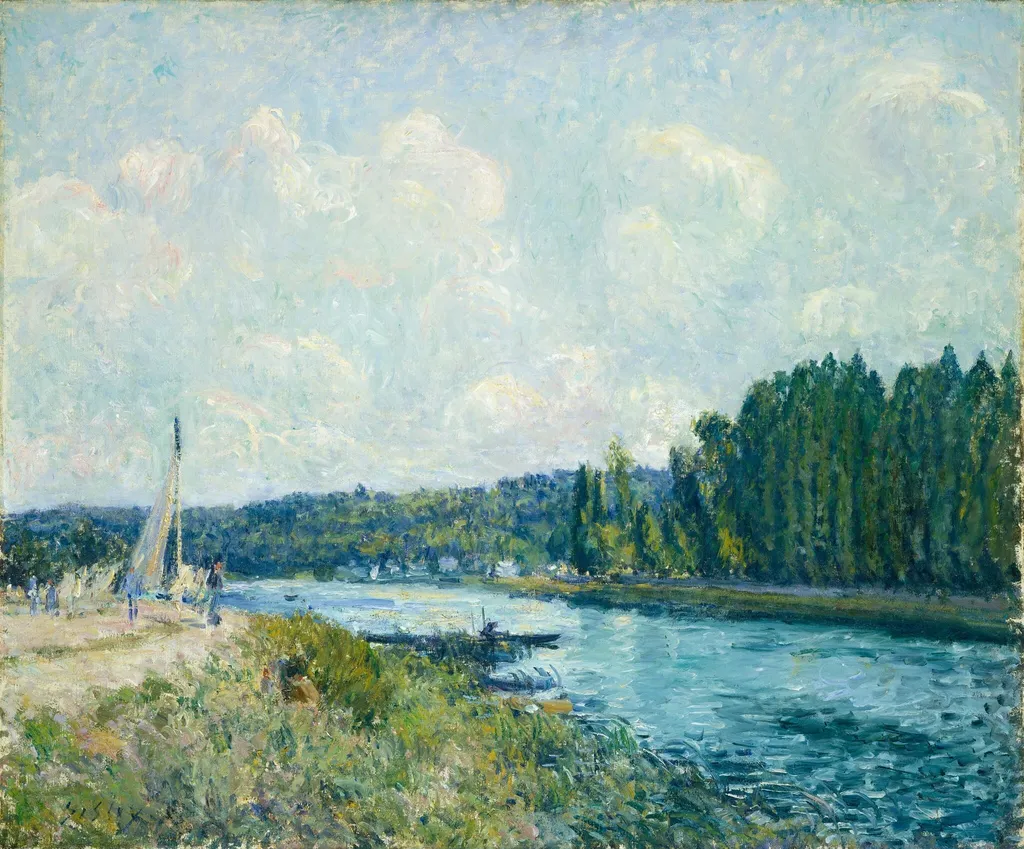
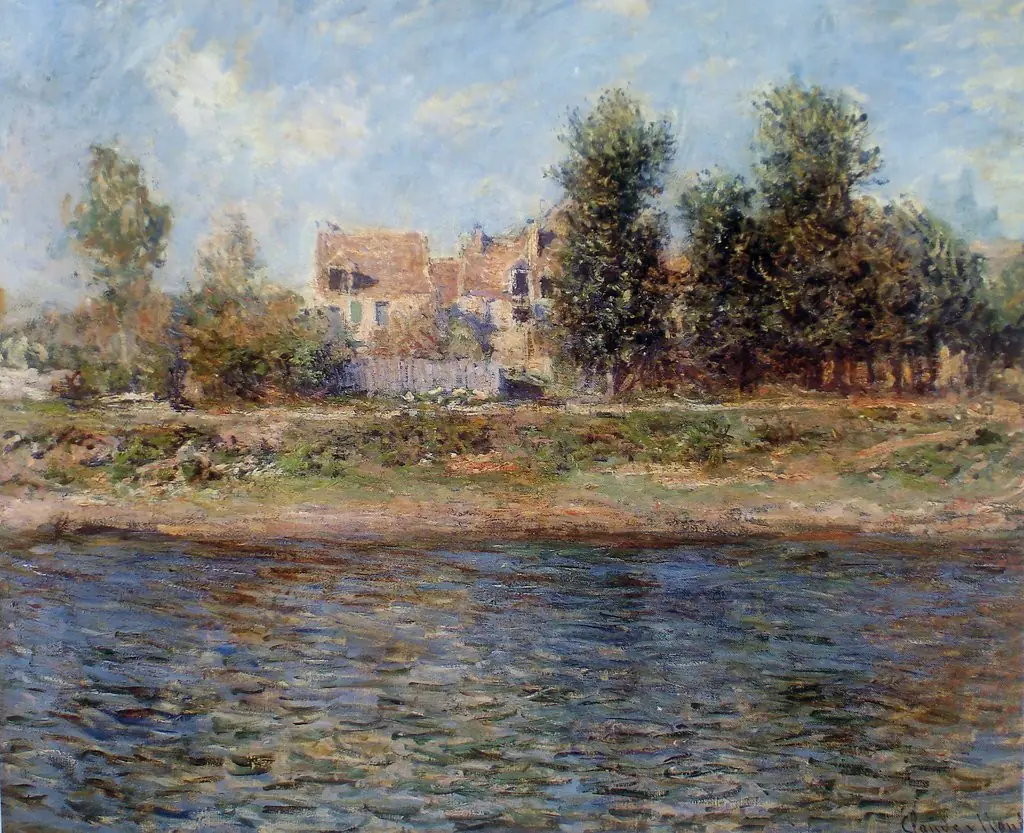
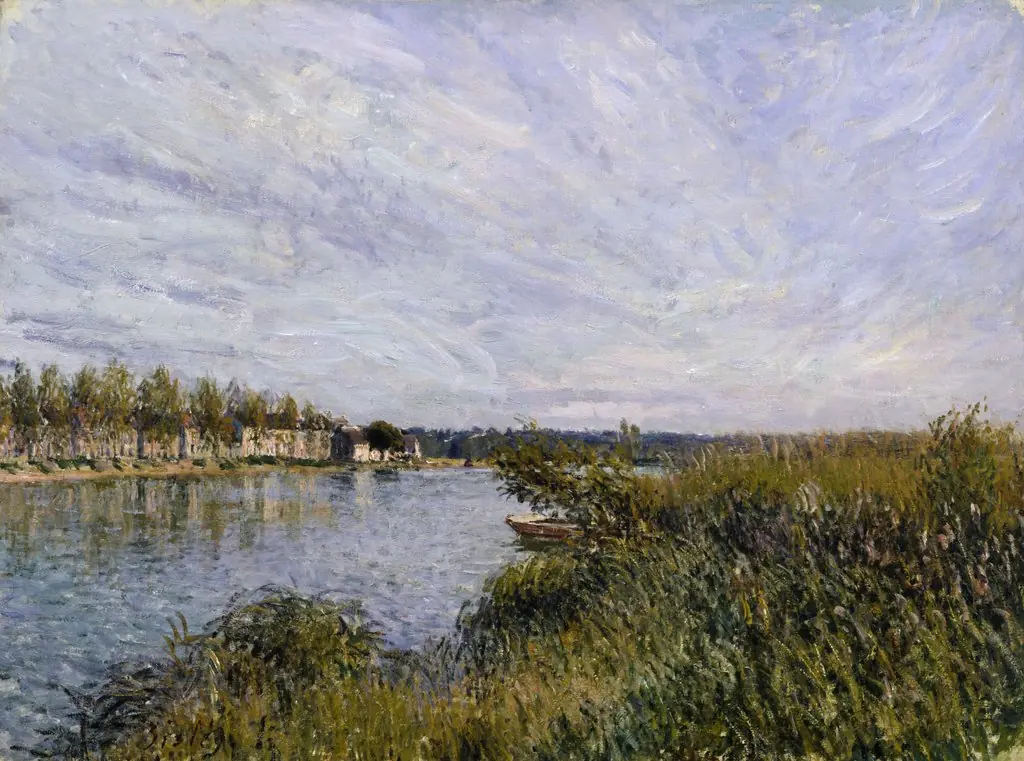
The Banks of the Oise is an oil painting by the Impressionist artist Alfred Sisley. It dates from 1878 and is held in the collection of the National Gallery of Art.
- Inscription
- Inscribed:lower left: Sisley.
About this work
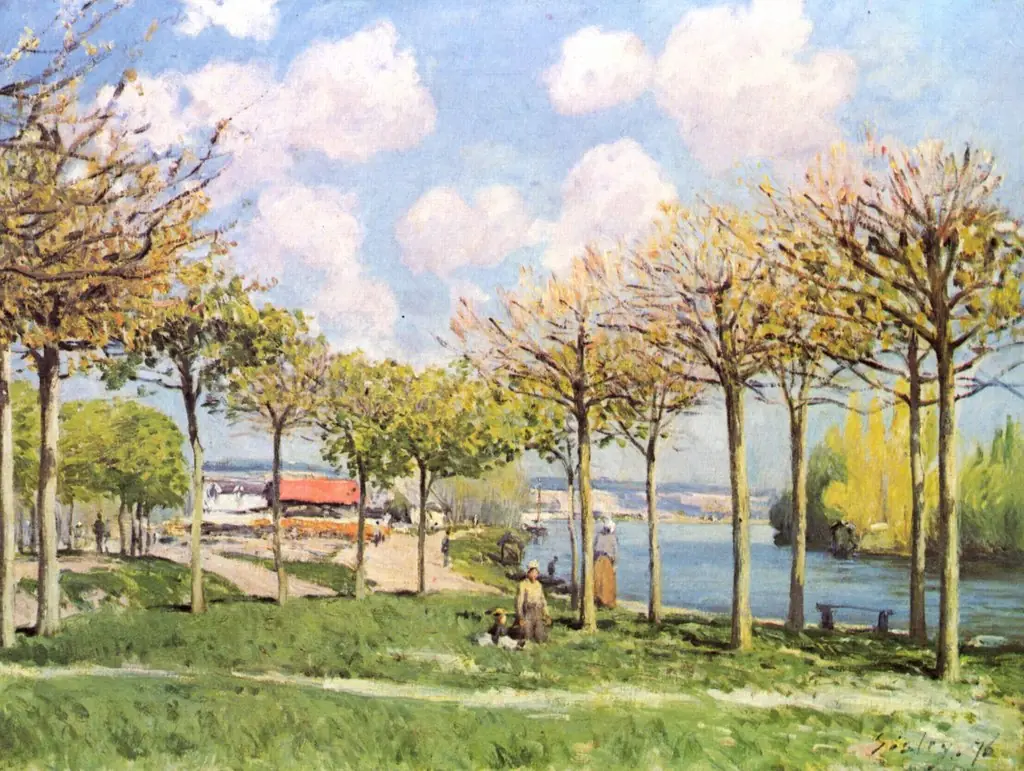
A tree-lined riverbank meets water that reflects the sky's soft pinks and blues, a small boat half-hidden in the green along the shore. Alfred Sisley painted it in 1878, the year of his first solo show, using thick brushstrokes to catch the light moving on the water.
Subject & Meaning
The scene avoids narrative or allegorical elements, instead emphasizing the transient effects of light and atmosphere on the natural environment.
The Banks of the Oise depicts the riverbanks of the Oise, a Franco-Belgian waterway near which Sisley resided until 1880. The composition centers on the riparian landscape, with dense foliage along the river’s edge and a narrow path bordered by trees, rendered in loose, luminous brushwork characteristic of Impressionism. The scene avoids narrative or allegorical elements, instead emphasizing the transient effects of light and atmosphere on the natural environment.
By focusing on an everyday riverside motif, the painting aligns with the Impressionist movement’s interest in capturing contemporary, unidealized landscapes, reflecting Sisley’s engagement with the plein-air tradition.
Technique & Style
Created between 1877 and 1878, The Banks of the Oise is an oil painting executed on a canvas support. The work measures 54.3 by 64.7 centimeters and is classified within the landscape genre of the Impressionist movement. While specific details regarding brushstroke handling or current physical condition are not detailed in the available records, the piece employs oil paint to depict a riverside scene featuring trees along the Oise.
The composition reflects Sisley's focus on the natural environment of the Franco-Belgian region where he resided during the period. The physical object is currently held in the collection of the National Gallery of Art in Washington, D.C., where it is displayed as part of the French Impressionist landscapes section.
History & Provenance
Alfred Sisley painted The Banks of the Oise in 1877, an oil on canvas landscape now held by the National Gallery of Art in Washington, D.C. The work first entered the Parisian market through Bernheim‑Jeune, then passed to the Brussels dealer Dilenn and finally to Galerie Jacques Dubourg before being sold on 9 June 1926 to collector Chester Dale; Dale bequeathed the painting to the National Gallery of Art in 1963. The acquisition was made as part of Dale’s bequest of his entire collection, and the canvas has been exhibited in the museum’s French Impressionist landscapes section (section 88).
The Banks of the Oise is held in the collection of the National Gallery of Art in Washington, D.C., where it is displayed in section 88 among French Impressionist landscapes. The museum acquired the work in 1963 through the bequest of Chester Dale, who had purchased the painting on June 9, 1926, from the Galerie Jacques Dubourg in Paris. Prior to Dale's ownership, the canvas passed through the Bernheim-Jeune gallery in Paris and the Dilenn gallery in Brussels.
While specific accession numbers are not provided in the available records, the provenance is documented through the Chester Dale papers and curatorial files at the National Gallery of Art.
Legacy
The painting entered the National Gallery of Art in 1963 through the Chester Dale bequest, a transfer documented in the artist’s provenance and confirmed by the museum’s collection records. Since acquisition it has been exhibited in section 88, the gallery’s dedicated French Impressionist landscapes wing, underscoring its recognized place within the movement. The work’s inclusion in this curated space reflects both Sisley’s standing among his contemporaries and the painting’s enduring relevance to studies of Impressionist landscape.
Its presence is frequently cited in scholarly and popular references, appearing in multiple language Wikipedias and exhibition catalogs that discuss the development of the genre.
Overview
Alfred Sisley's The Banks of the Oise, an oil on canvas created between 1877 and 1878, captures a tranquil riverside scene. The painting depicts a tree-lined riverbank where a small boat rests, partially obscured by lush greenery. The water's surface mirrors the subtle hues of the sky, reflecting soft pinks and blues. This work exemplifies Sisley's consistent engagement with natural landscapes and their changing atmospheric conditions.
Context
This painting dates to 1878, a significant year for Sisley as it marked his inaugural solo exhibition. Throughout his career, Sisley frequently returned to riverine subjects, demonstrating a particular affinity for depicting waterways and their surrounding environments. His sustained focus on such landscapes allowed him to explore the nuances of light, weather, and seasonal change within familiar settings.
Own this work as a print
Artist & collection
Artist
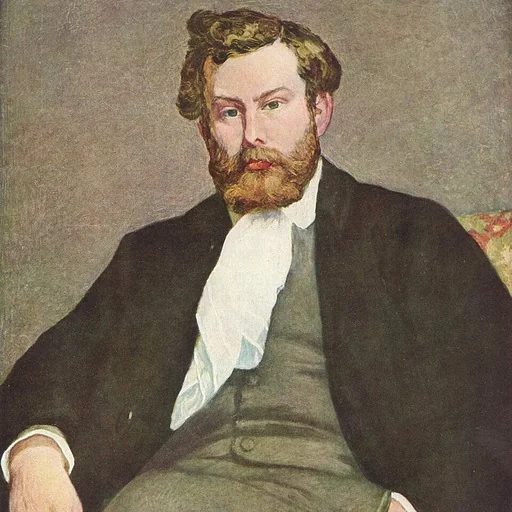
Alfred Sisley (; French:; 30 October 1839–29 January 1899) was a French-Born British Impressionist landscape painter who was born to British parents, but spent most of his life in France.