Artwork
Religious ceremony at Allahabad
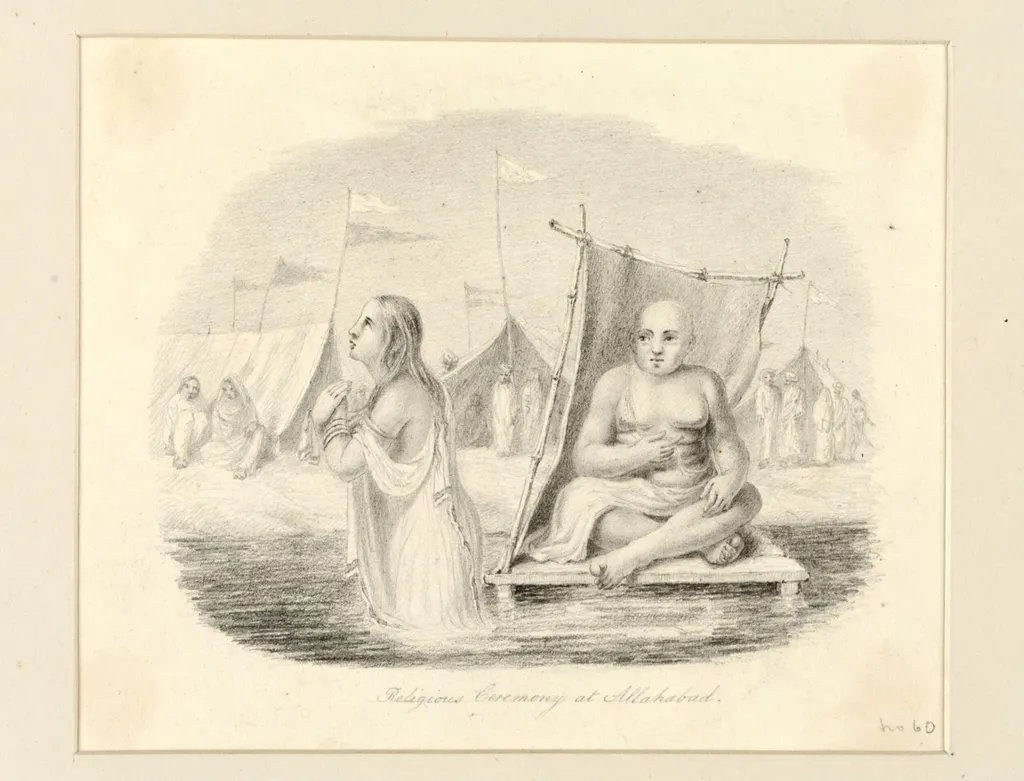
Religious ceremony at Allahabad is a drawing by the Romanticist artist Robert Captain Smith. It dates from 1830 and is held in the collection of the Victoria and Albert Museum.
About this work
Overview
This pencil drawing depicts a serene religious ceremony at Allahabad, created by Captain Robert Smith between 1828 and 1833 during his travels in Hindustan. It is one of 65 illustrations from his unpublished travel journal, documenting his journeys along the Ganges and visits to key Indian cities.
Subject & Meaning
The scene focuses on two figures: one standing waist-deep in water with hands clasped, and another bare-chested on a raft, holding a long pole. The simplicity of the drawing suggests a contemplative, personal portrayal of a religious moment, set against faintly drawn tents and ships on the shore.
Technique & Style
Executed with light pencil strokes, the drawing conveys texture and subtle movement, reflecting Smith's observational approach. The understated composition emphasizes the serene atmosphere of the ceremony.
History & Provenance
Completed in Ireland by 1845 after Smith's retirement from the 44th Regiment, the drawing was later acquired by the museum in 1915 from W. M. Biden of Hampton-on-Thames, as part of Smith's travel journal illustrations.
Context
Part of a broader collection chronicling Smith's Hindustan travels, this work provides a 19th-century European officer's perspective on Indian religious practices and landscapes, alongside his visits to major cities like Delhi, Agra, and Lucknow.
Own this work as a print
Artist & collection

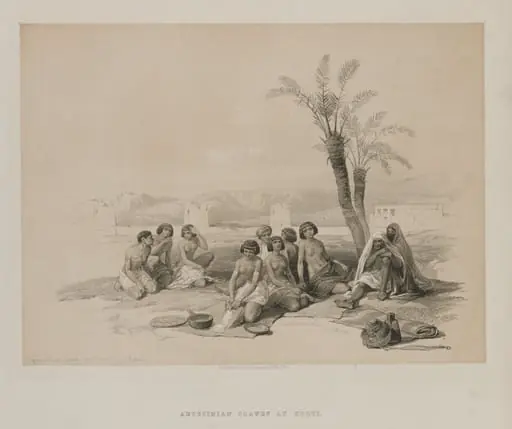 Egypt and Nubia, Volume I: Abyssinian Slaves Resting at Korti-Nubia
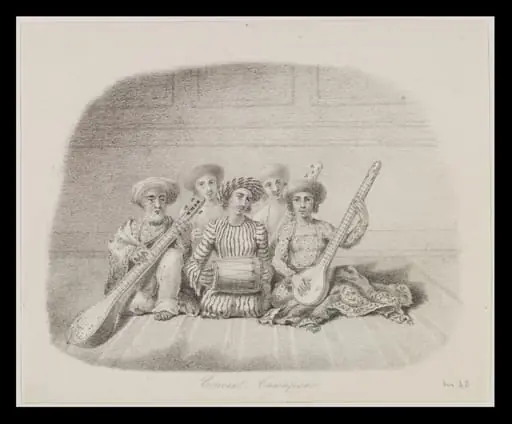
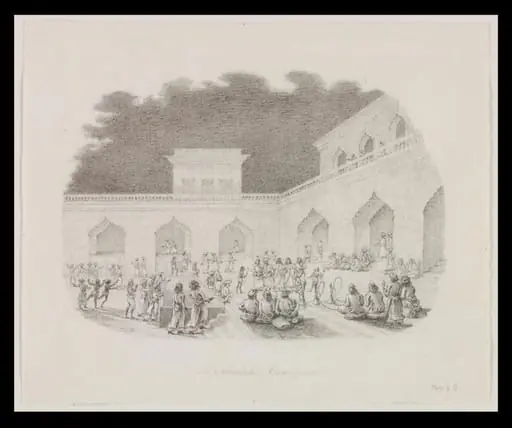 A Nautch, Cawnpoor
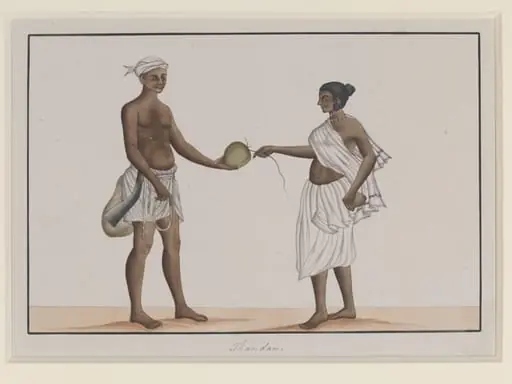 Coconut-gatherers
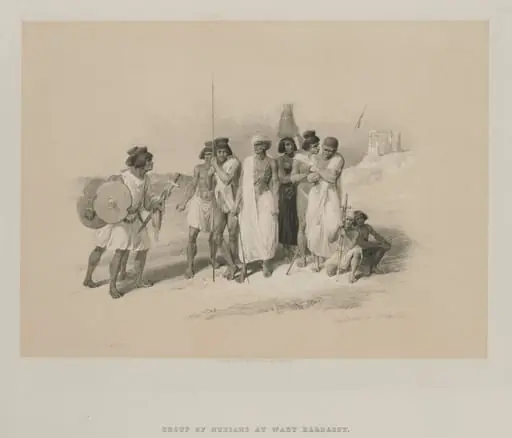 Egypt and Nubia, Volume II: Group of Nubians-Wady Kardasey
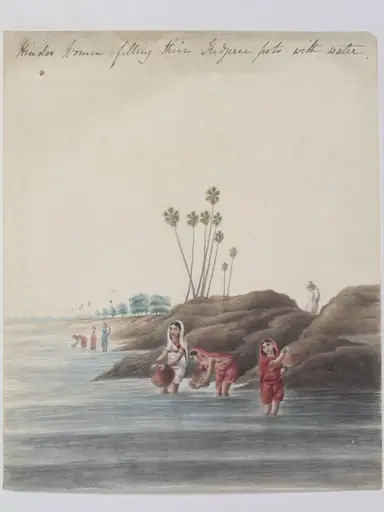 Hindu women filling their Kedjeree pots with water
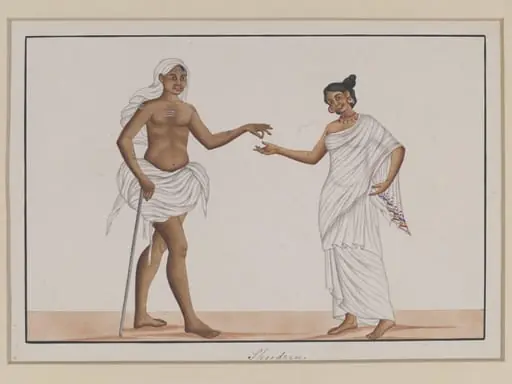 A low caste couple
 7 seated men making bidis (cigarettes)
 Egypt and Nubia, Volume III: In the Slave Market at Cairo