Artwork
Mill House at Tilty, Essex
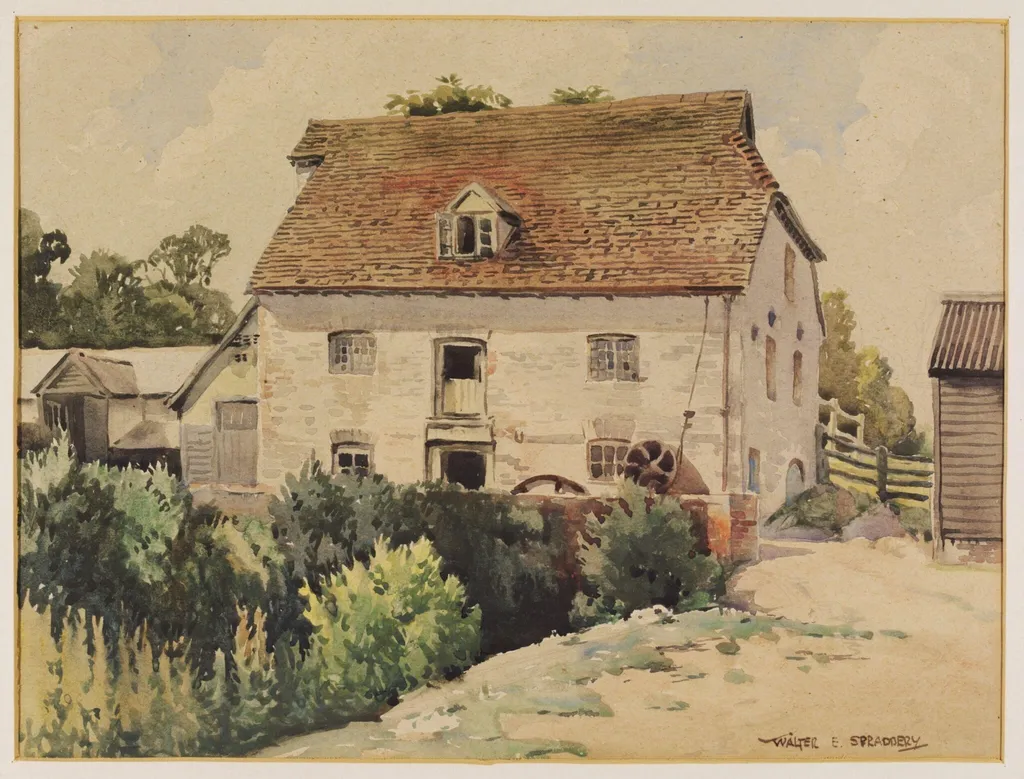
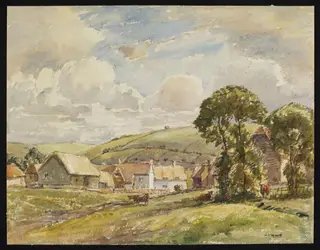
Mill House at Tilty, Essex is a watercolor work on paper by the Regionalist artist Walter E. Spradbery. It dates from 1937 and is held in the collection of the Victoria and Albert Museum. Walter Spradbery’s 1937 watercolour depicts a modest domestic structure in the village of Tilty, Essex.
About this work
It’s part of the Recording Britain project, which documented everyday British life before World War II.
This watercolor shows a quiet corner of Tilty, a small Essex village. Walter Spradbery, best known for his London Transport posters, painted it in 1937. It’s part of the Recording Britain project, which documented everyday British life before World War II.
Spradbery was one of the first artists to join the scheme. This work captures a humble spot near Tilty’s old monastery.
Look up the Recording Britain project next.
Overview
Walter Spradbery’s 1937 watercolour depicts a modest domestic structure in the village of Tilty, Essex. Created as part of the Recording Britain initiative, the work belongs to an early group of watercolours commissioned to preserve scenes of ordinary English life. Spradbery, primarily known for graphic design, turned his attention to topographical observation during this project, capturing quiet rural architecture with deliberate restraint.
Subject & Meaning
The painting focuses on a humble outbuilding near the ruins of Tilty’s medieval Cistercian monastery. Rather than the abbey itself, Spradbery chose a utilitarian structure, emphasizing the quiet persistence of everyday rural existence. This selection reflects the Recording Britain project’s aim to document unassuming vernacular architecture before it vanished amid modernization and war.
Technique & Style
Spradbery employed transparent watercolour with controlled washes and delicate linework to render the building’s weathered surfaces and surrounding vegetation. The composition is subdued, avoiding dramatic lighting or embellishment. His background in graphic design informs the clarity of form and balanced composition, resulting in a quiet, observational tone rather than emotional intensity.
History & Provenance
Painted in 1937, this watercolour was among the first produced for the Recording Britain project, initiated by the Pilgrim Trust to document threatened landscapes. Spradbery was an early participant, recruited for his precise draftsmanship. The work entered the Victoria and Albert Museum’s collection as part of the project’s archive, preserved as a record of pre-war Britain.
Context
The Recording Britain project emerged amid rising anxieties about cultural loss as industrialization and impending war threatened traditional rural scenes. Artists were commissioned to record vernacular architecture, landscapes, and local life with fidelity. Spradbery’s focus on a minor structure near a historic monastery aligns with the project’s ethos: valuing the overlooked over the monumental.
Legacy
This watercolour endures as a quiet testament to the Recording Britain project’s mission. It exemplifies how artists shifted from grand narratives to intimate documentation, preserving the texture of ordinary life. Today, it contributes to historical understanding of Essex’s rural fabric and the role of art in wartime cultural preservation.
Artist & collection
Artist
Walter E. Spradbery made quiet English countryside scenes in watercolor. In Mill House at Tilty, Essex (1937), low brick walls and a crooked roof sit under a cloudy sky. His brush lets you feel the damp grass and the…

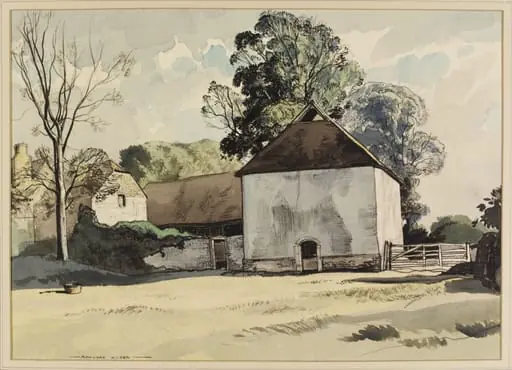 Saxon Dovecote, Lullington, near Alfriston, Cuckmere Valley
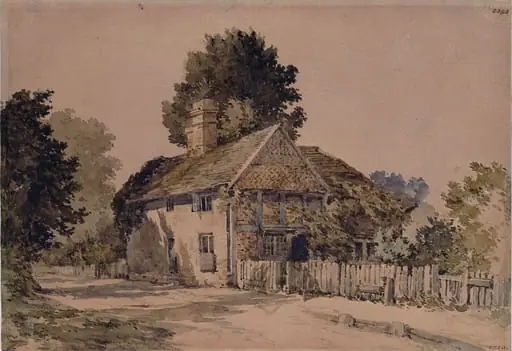 Cottage near Shere, Surrey
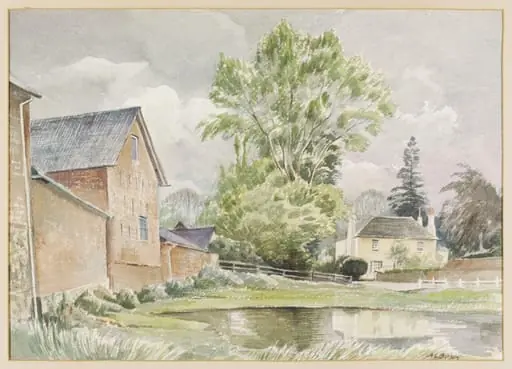 Bentworth, Near Alton
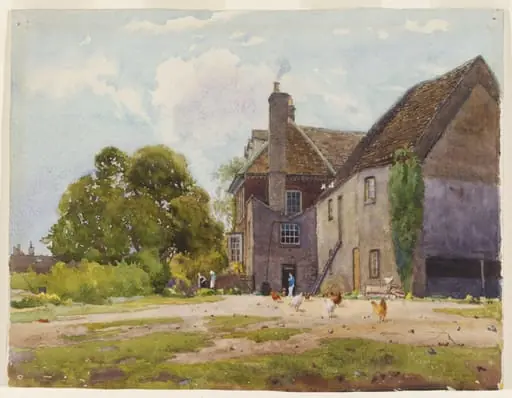 Mr. Mayne's House, St. Ives
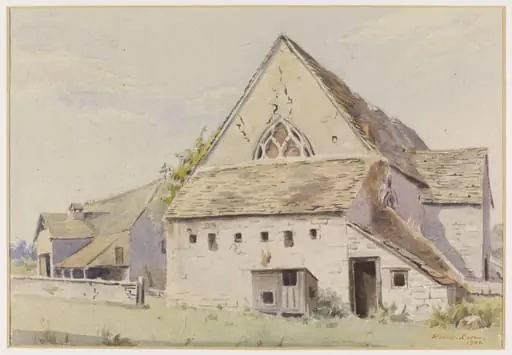 The Old Church (now a barn), Leonard Stanley
 Woodford in the Avon Valley
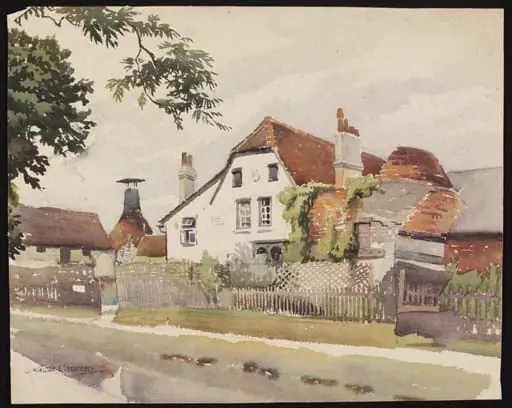 Kilns and Maltings on the Canal Bank, Bishop's Stortford
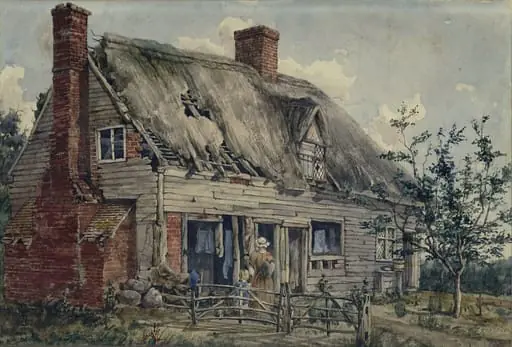 Cottage at Felixstowe
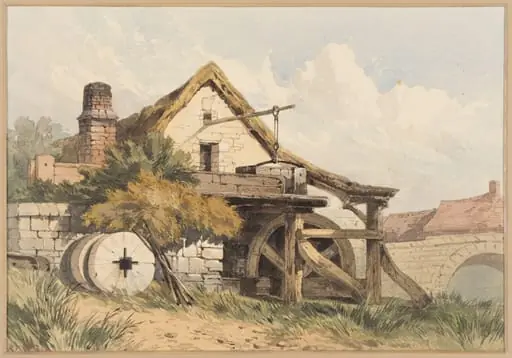 Untitled
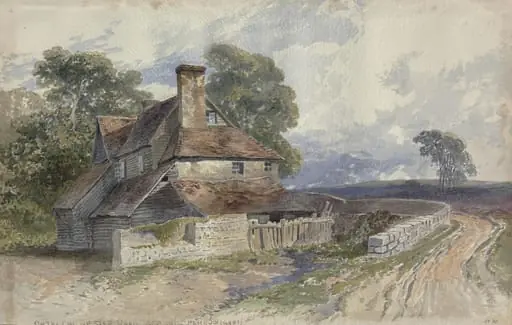 View on the Chichester Road
 Wishford, Wylye Valley
- A Mill at Braintree