Artwork
Kilns and Maltings on the Canal Bank, Bishop's Stortford
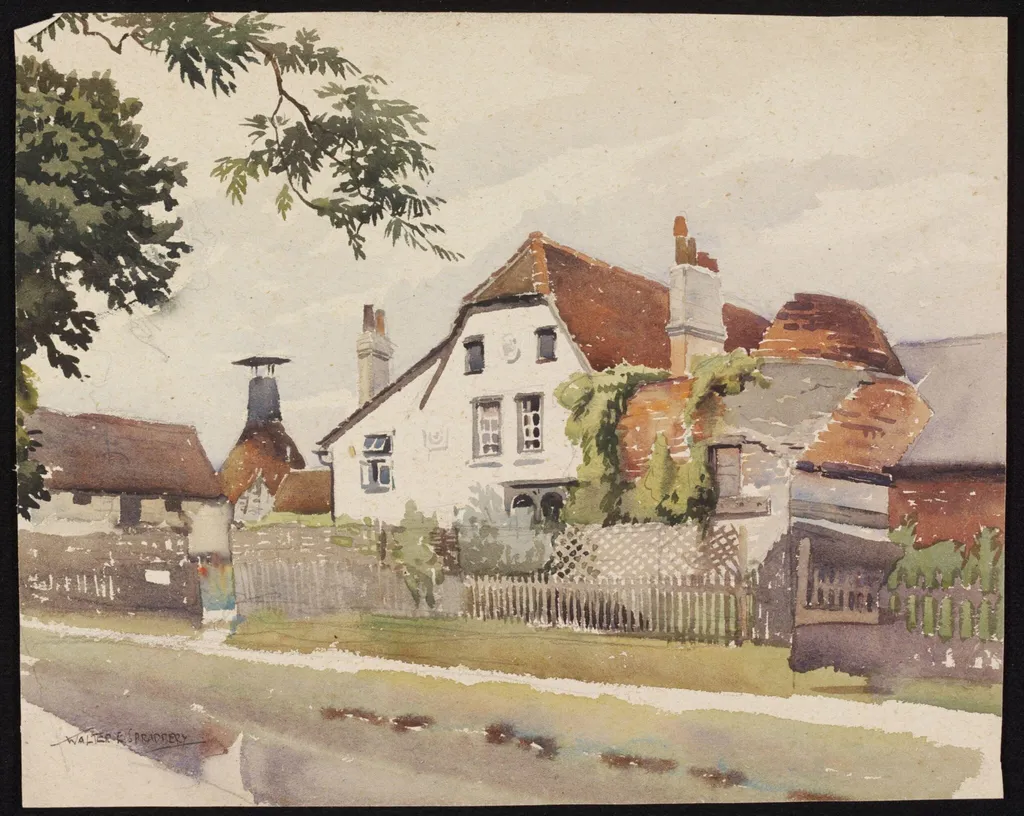
Kilns and Maltings on the Canal Bank, Bishop's Stortford is a watercolor work on paper by the Regionalist artist Spradbery. It dates from 1940 and is held in the collection of the Victoria and Albert Museum.
About this work
Overview
The piece belongs to a broader cultural effort to preserve visual records of everyday British environments before they vanished.
Painted in 1940, this watercolour by Spradbery captures a quiet stretch of canal-side industry in Bishop's Stortford. Created under the Recording Britain initiative, the work is one of hundreds commissioned to document landscapes at risk from wartime disruption or modernization. The piece belongs to a broader cultural effort to preserve visual records of everyday British environments before they vanished.
Subject & Meaning
The scene portrays a cluster of functional brick buildings, maltings and kilns, alongside a canal, their industrial purpose evident yet softened by time. A white-walled residence with a red-tiled roof stands prominently, its vines and surrounding greenery suggesting a blend of utility and domestic life. The composition conveys quiet endurance, reflecting the persistence of rural industry amid national upheaval.
Technique & Style
Spradbery employed loose, transparent watercolour washes to evoke a hazy, atmospheric quality. Delicate brushwork suggests form without heavy definition, allowing the pale sky and muted tones to unify the scene. The fence, grass, and trees are rendered with minimal detail, reinforcing a sense of stillness. The technique prioritizes mood over precision, aligning with the project’s aim to capture the essence of place.
History & Provenance
Commissioned by the Pilgrim Trust and directed by Sir Kenneth Clark, the Recording Britain project enlisted artists during the Second World War to document vulnerable landscapes. This watercolour was part of that effort, created to preserve visual evidence of sites deemed at risk from conflict or development. It entered the Victoria and Albert Museum’s collection as part of the project’s archival legacy.
Context
In 1940, Britain faced widespread change: rural industries declined, urban expansion accelerated, and wartime priorities reshaped the landscape. Recording Britain responded to fears that traditional scenes, like canal-side maltings, would disappear without trace. Spradbery’s work reflects this anxiety, offering a quiet testament to places that embodied continuity amid uncertainty.
Legacy
The painting remains part of a significant national archive of wartime topographical art. Its inclusion in the Victoria and Albert Museum’s holdings ensures continued access to a visual record of Britain’s lesser-known industrial vernacular. Alongside hundreds of similar works, it serves as a historical document, preserving the look and feel of a landscape now largely transformed.
Artist & collection
Artist
This British artist had a knack for quiet corners, the kind of places you’d miss if you blinked.

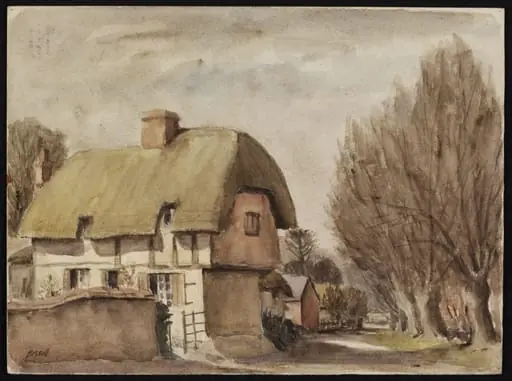
- Old Cottage, Ibthorpe
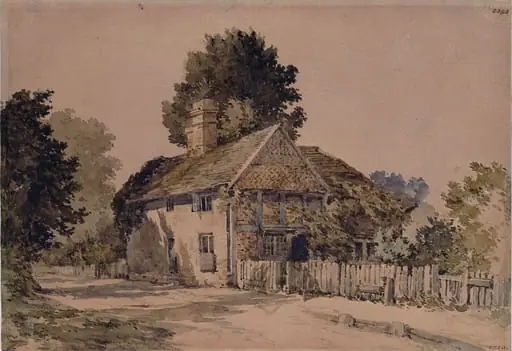 Cottage near Shere, Surrey
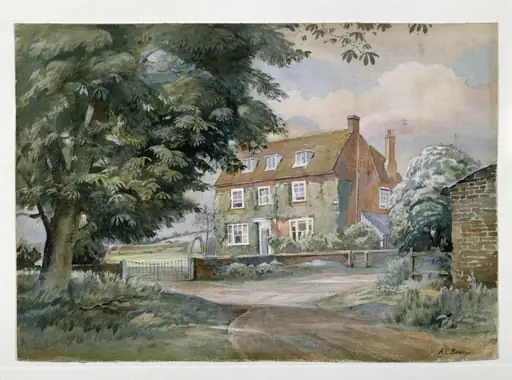 Amery Farm, Alton
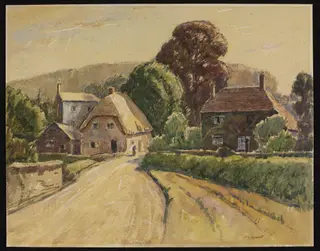 Woodford in the Avon Valley
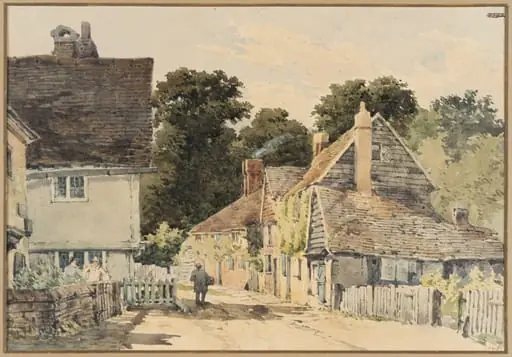 Cottages and Road
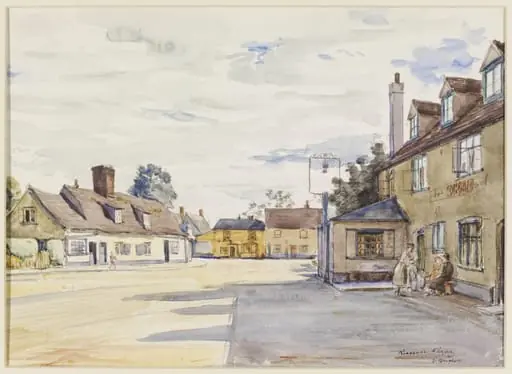 East Bergholt
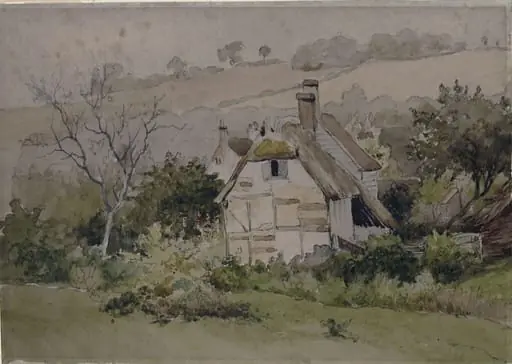 Landscape with cottages and trees
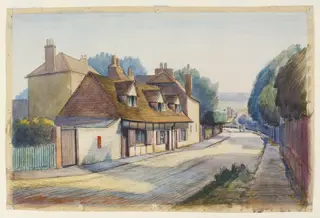 The Post Office, Hurley
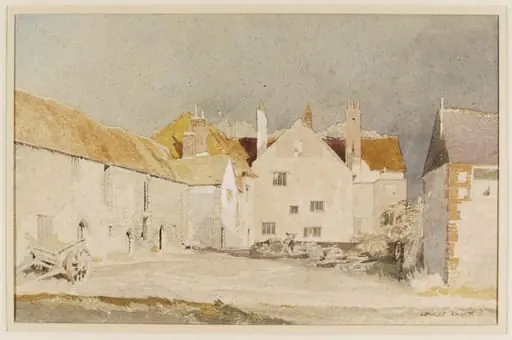 Hangleton Manor, near Brighton
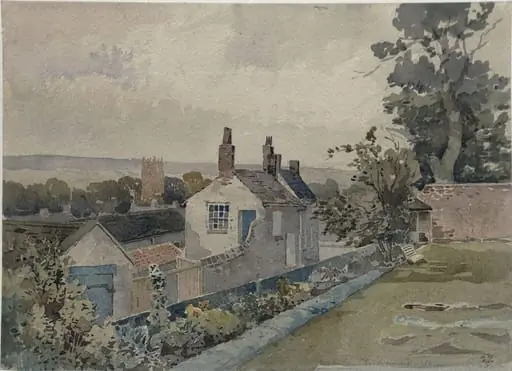 At Richmond, Yorkshire
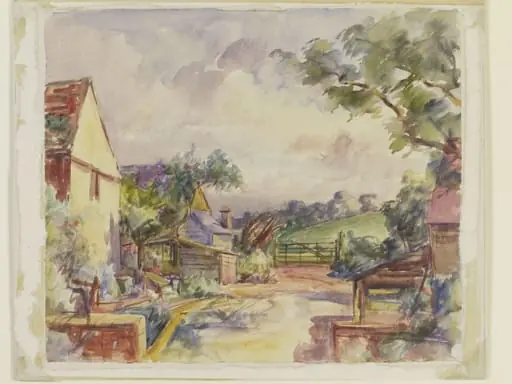 Glebe Farm, Fingest
![The Vicar's House, [ Dated 1673] Stratford Sub-Castle, by Merritt](https://artifactworldgallery.com/img/merritt--the-vicar-s-house-dated-1673-stratford-sub-castle--1b344cff2511bc50-w320.webp) The Vicar's House, [ Dated 1673] Stratford Sub-Castle
The Vicar's House, [ Dated 1673] Stratford Sub-Castle