Artwork
Eliza Wells
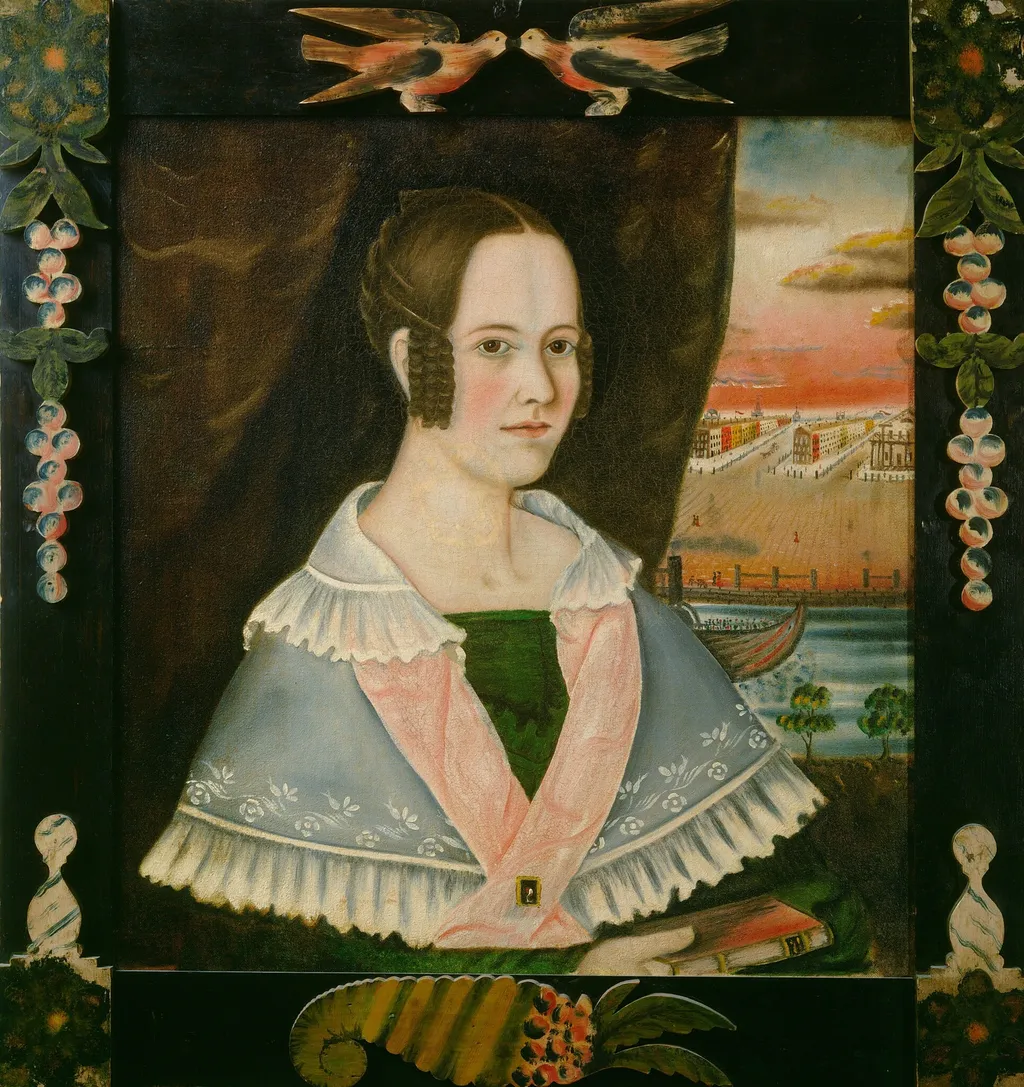
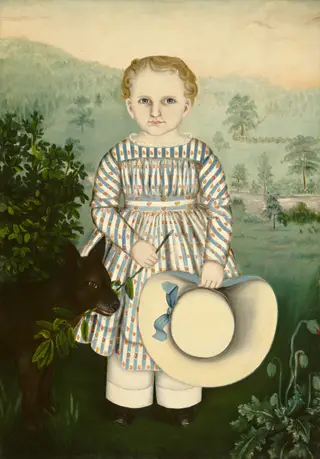
Eliza Wells is an oil painting by the American Folk Art artist Abram Ross Stanley. It dates from 1840 and is held in the collection of the National Gallery of Art.
- Inscription
- Inscribed:on reverse, surrounded by an elaborate painted cartouche (no longer visible, photograph in object file [1955.11.11] in NGA curatorial records): (18) Miss Eliza, Wells AE 21 (40) / A.R. Stanley, Onedia; on back of frame, in pencil: painted by / Hill? [sic] Oneida N Y …
About this work
Subject & Meaning
As a portrait, the work belongs to the genre that captures an individual's likeness for documentation and status display.
The painting presents Eliza Wells as the depicted sitter, rendered in oil on canvas in 1840.
As a portrait, the work belongs to the genre that captures an individual's likeness for documentation and status display.
The sources record the piece as a portrait from Albany, New York, later acquired by the National Gallery of Art, indicating its recognized artistic and historical relevance. No specific iconographic symbols or attributes are mentioned in the available documentation, and the meaning of the work is tied to its function as a formal representation of the sitter within 19th‑century American portraiture.
Technique & Style
Created in 1840, this portrait is executed in oil paint on a canvas support. The work measures 64.1 cm in height and 59.6 cm in width. As a painted portrait, the piece utilizes traditional materials characteristic of mid-19th-century American portraiture.
The application of oil on canvas allows for the specific textural and chromatic qualities associated with the genre during this period.
History & Provenance
Eliza Wells is an oil-on-canvas portrait painted by Abram Ross Stanley in 1840. According to the National Gallery of Art records, the work was originally associated with Albany, New York. In 1950, the painting was purchased by Edgar William and Bernice Chrysler Garbisch, who later gave it to the National Gallery of Art in 1955.
The portrait has since remained in the NGA collection in Washington, D.C., where it is documented with dimensions of 64.1 by 59.6 centimeters.
The provenance chain thus moves from its Albany, New York origin, through the 1950 Garbisch purchase, to the 1955 gift that brought it into the National Gallery of Art's holdings.
The painting is held in the collection of the National Gallery of Art in Washington, D.C. Its provenance traces back to Albany, New York, before it was acquired in 1950 by Edgar William and Bernice Chrysler Garbisch. The couple subsequently donated the work to the museum in 1955.
No specific exhibition history or inventory accession numbers are provided in the available records.
Context
Eliza Wells is an 1840 oil on canvas portrait attributed to American artist Abram Ross Stanley. The work measures 64.1 × 59.6 cm and depicts a subject whose identity remains unidentified. It entered the National Gallery of Art, Washington, D.C., via the 1955 gift of Edgar William and Bernice Chrysler Garbisch, who had acquired it in 1950.
The painting is catalogued in the Gallery’s collection as a representative example of mid‑nineteenth‑century American portraiture, reflecting the demand for formal likenesses among Northeastern elites. Its inclusion in a major national museum has made it a point of reference in scholarship on early American portraiture and the development of genre conventions in the period.
Overview
Abram Ross Stanley's oil painting, Eliza Wells, created in 1840, presents a formal portrait of a woman. The sitter is depicted in elaborate attire, her steady gaze engaging the viewer. Behind her, a painted cityscape unfolds, featuring a river and boats.
The artwork is further framed by a decorative border adorned with vibrant birds, flowers, and swirling motifs, contributing to its overall presentation.
Own this work as a print
Artist & collection


- Portrait of a young woman
 Susanna Truax
 Mary Hodge Johnson
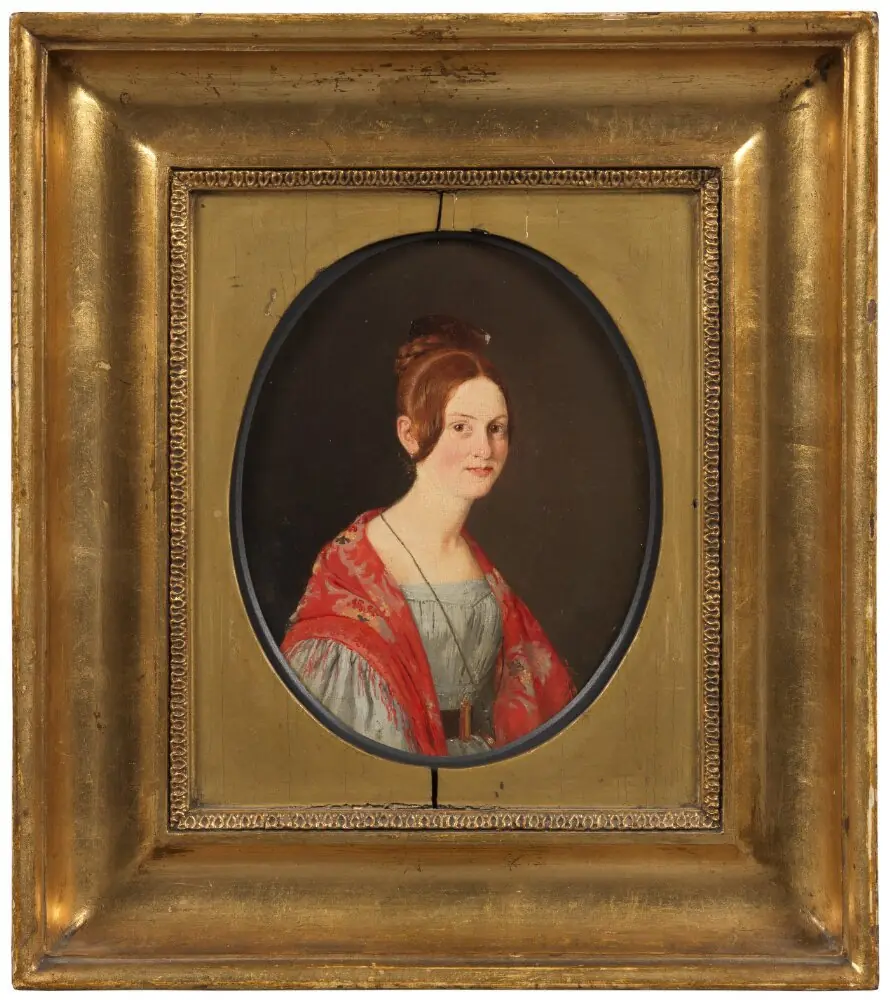 Portrait of Ane Elisabeth (Elise) Gurlitt, né Saxild (1817-39)
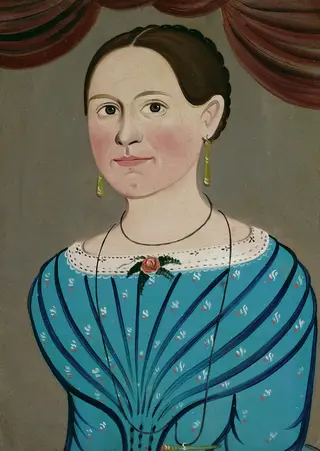 Woman in a Blue Dress
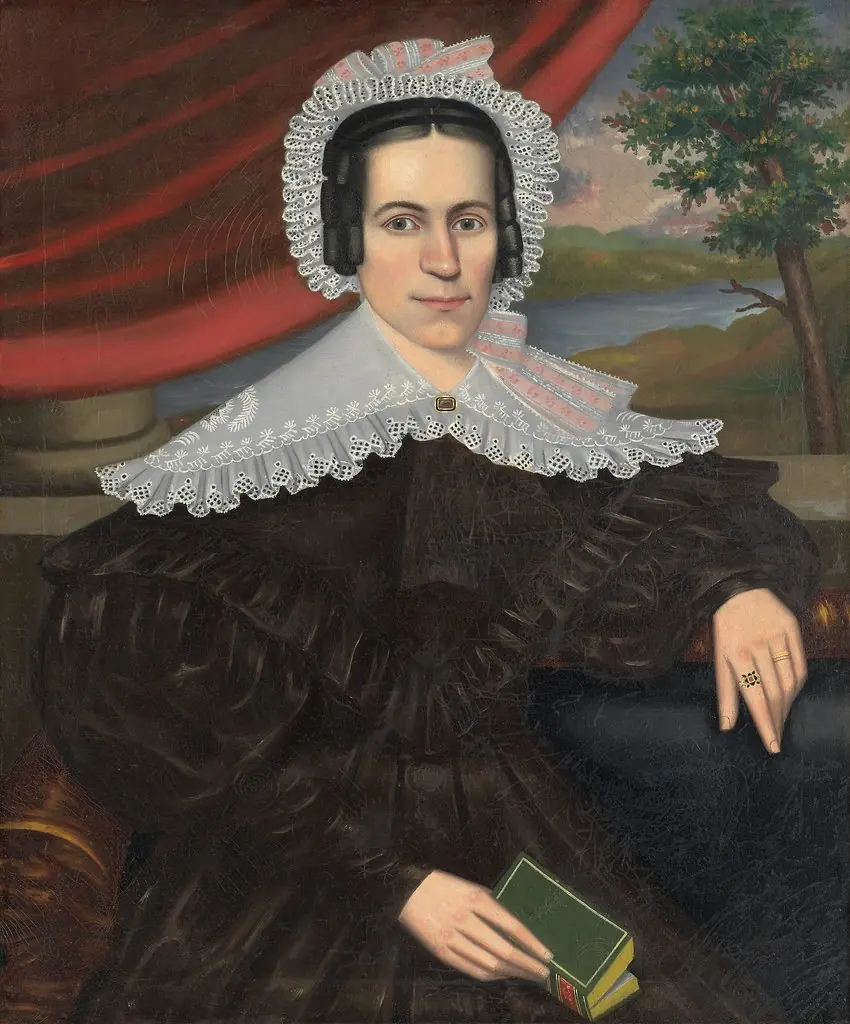 Woman with a Green Book (Louisa Gallond Cook)
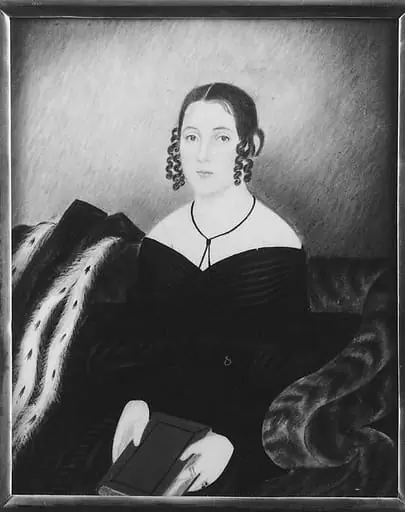 Portrait of a Lady
 Elise Ljungman, m. Paint Manufacturer and the Director of an Orphanage Signeul in Uddevalla
 Portrait of a Lady
 Portrait of Eufemia Wiśniewska née Borman
 Catherine A. May
 Henry L. Wells