Artwork
Susanna Truax
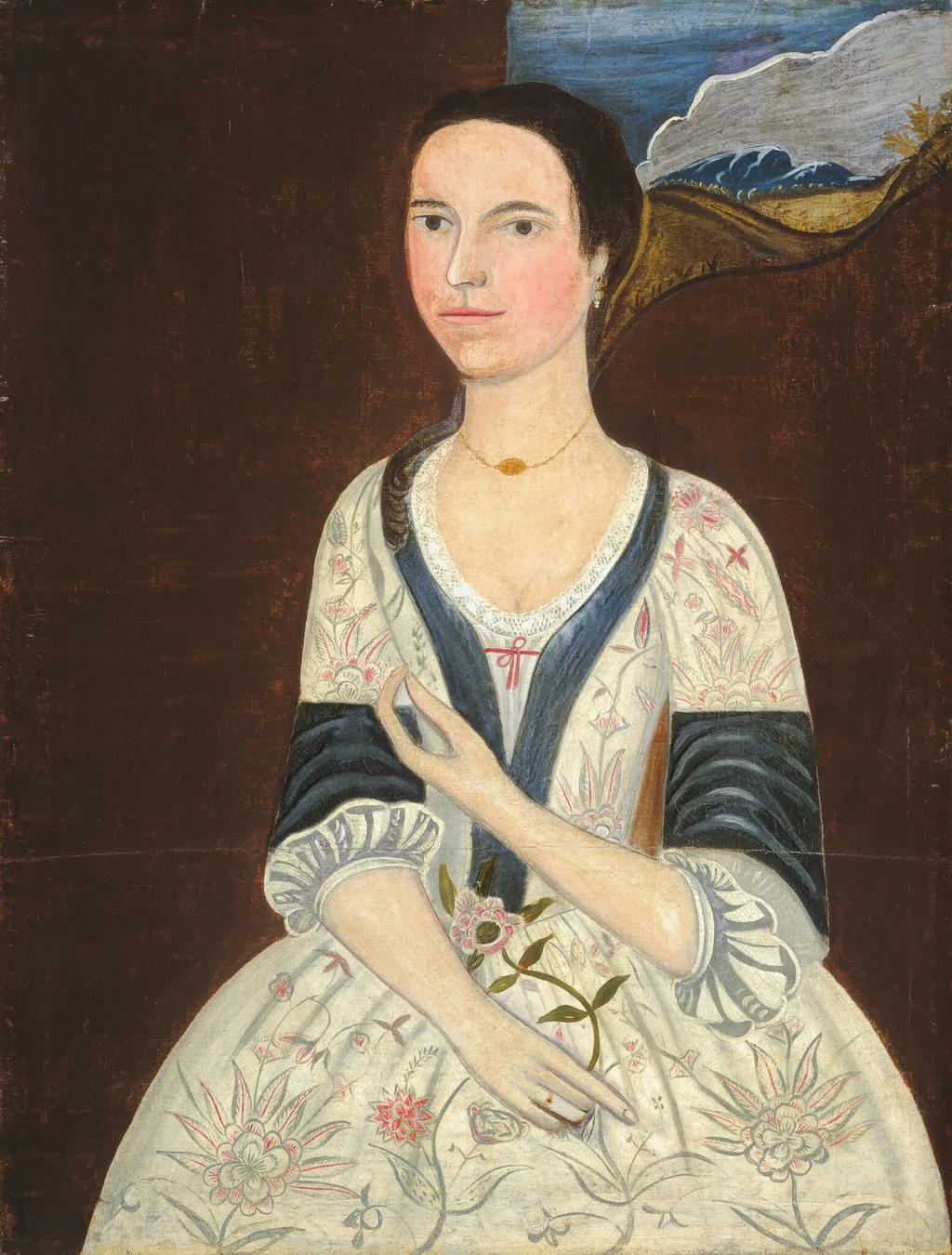
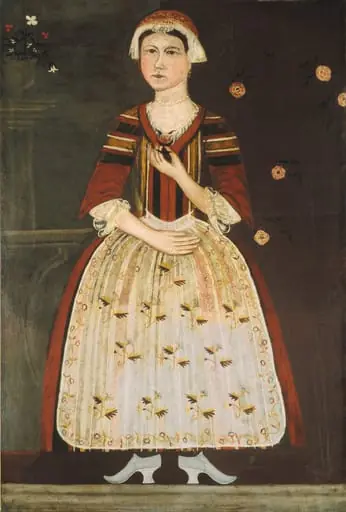
Susanna Truax is an oil painting. It dates from 1740 and is held in the collection of the National Gallery of Art.
About this work
Technique & Style
Created in 1740, this portrait is executed in oil paint on a canvas support. The work measures 92 cm in height and 73 cm in width. Stylistically, it functions as a formal likeness consistent with American eighteenth-century portraiture traditions. The painting descended within the sitter's family until the mid-twentieth century before entering a major institutional collection.
History & Provenance
Duveen sold the work in 1948 to Edgar William and Bernice Chrysler Garbisch, who later gave it to the National Gallery of Art in Washington, D.
Susanna Truax is an oil-on-canvas portrait dated 1740. According to the provenance record, the painting descended in the sitter's family until 1942, when it was held by the New York dealer Albert Duveen from 1942 to 1948. Duveen sold the work in 1948 to Edgar William and Bernice Chrysler Garbisch, who later gave it to the National Gallery of Art in Washington, D.C., in 1978. The painting is recorded as originating from New York and is now held in the NGA's collection.
The portrait descended within the sitter's family until 1942, when it entered the collection of Albert Duveen in New York. Duveen retained the work until 1948, at which point he sold it to Edgar William and Bernice Chrysler Garbisch. The couple subsequently donated the painting to the National Gallery of Art in Washington, D.C., in 1978, where it remains part of the permanent collection.
Legacy
Painted in 1740, Susanna Truax remained in the sitter's New York family until 1942, when it was sold to Albert Duveen and later acquired by Edgar William and Bernice Chrysler Garbisch, who donated the work to the National Gallery of Art in 1978. As an 18th‑century American portrait, the canvas is part of the museum's collection of early American paintings and is frequently referenced in studies of colonial portraiture. Its display and cataloguing have contributed to renewed scholarly interest in the development of portraiture in the United States and in the representation of women subjects during the colonial period.
Overview
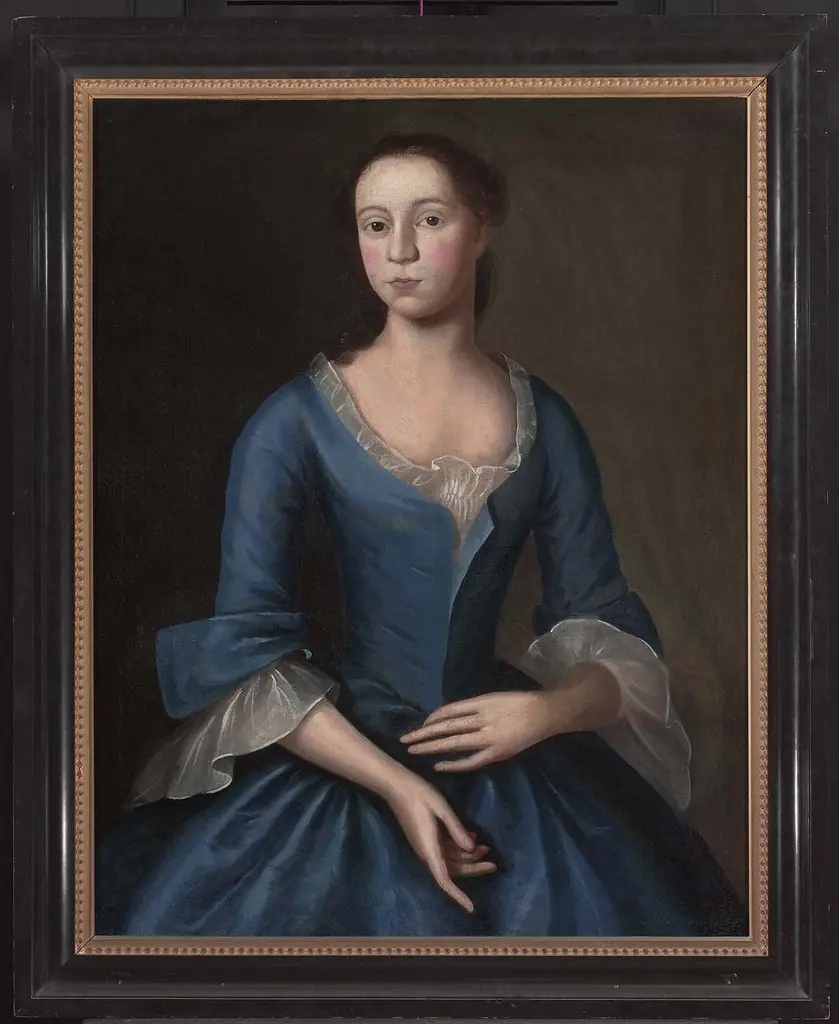
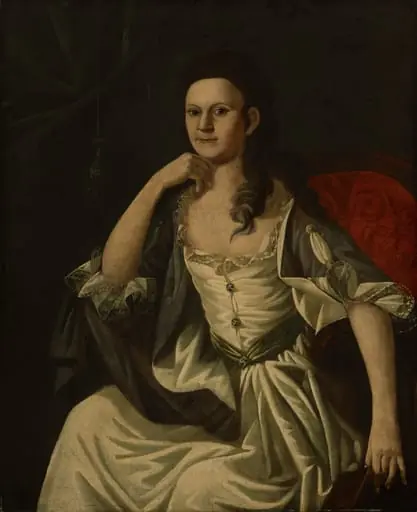
This oil on canvas painting, titled Susanna Truax, presents a formal portrait of a woman. The artwork captures its subject seated, her hands gently crossed, conveying a sense of composure. As a painting, it exemplifies a traditional approach to portraiture, focusing on the individual's likeness and attire.
Subject & Meaning
The painting depicts Susanna Truax in a seated pose, her hands clasped in front of her. She wears an elegant white dress adorned with blue trim and subtle floral motifs, featuring a distinctive V-shaped neckline and ruffled three-quarter sleeves. A gold necklace complements her attire.
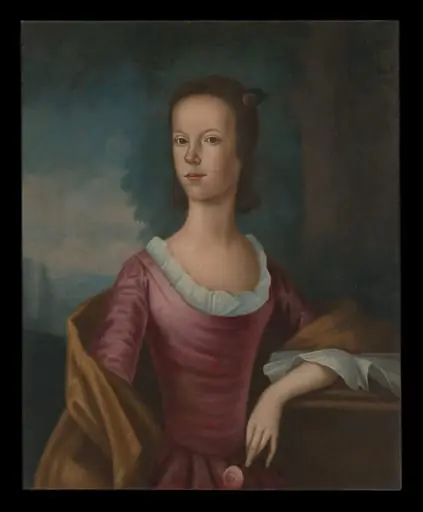
In the upper right corner, a glimpse of a landscape suggests an outdoor setting or a window view, adding depth to the composition.
Context
While specific historical details about Susanna Truax are not provided, the work's formal portraiture and attention to detail align with certain characteristics found within the broader Baroque movement. This period, known for its dramatic intensity and rich ornamentation, often featured portraits that emphasized the sitter's status and elegance through elaborate clothing and controlled compositions.
Artist & collection