Artwork
Ascagnes and Lucelle (The Music Lesson)
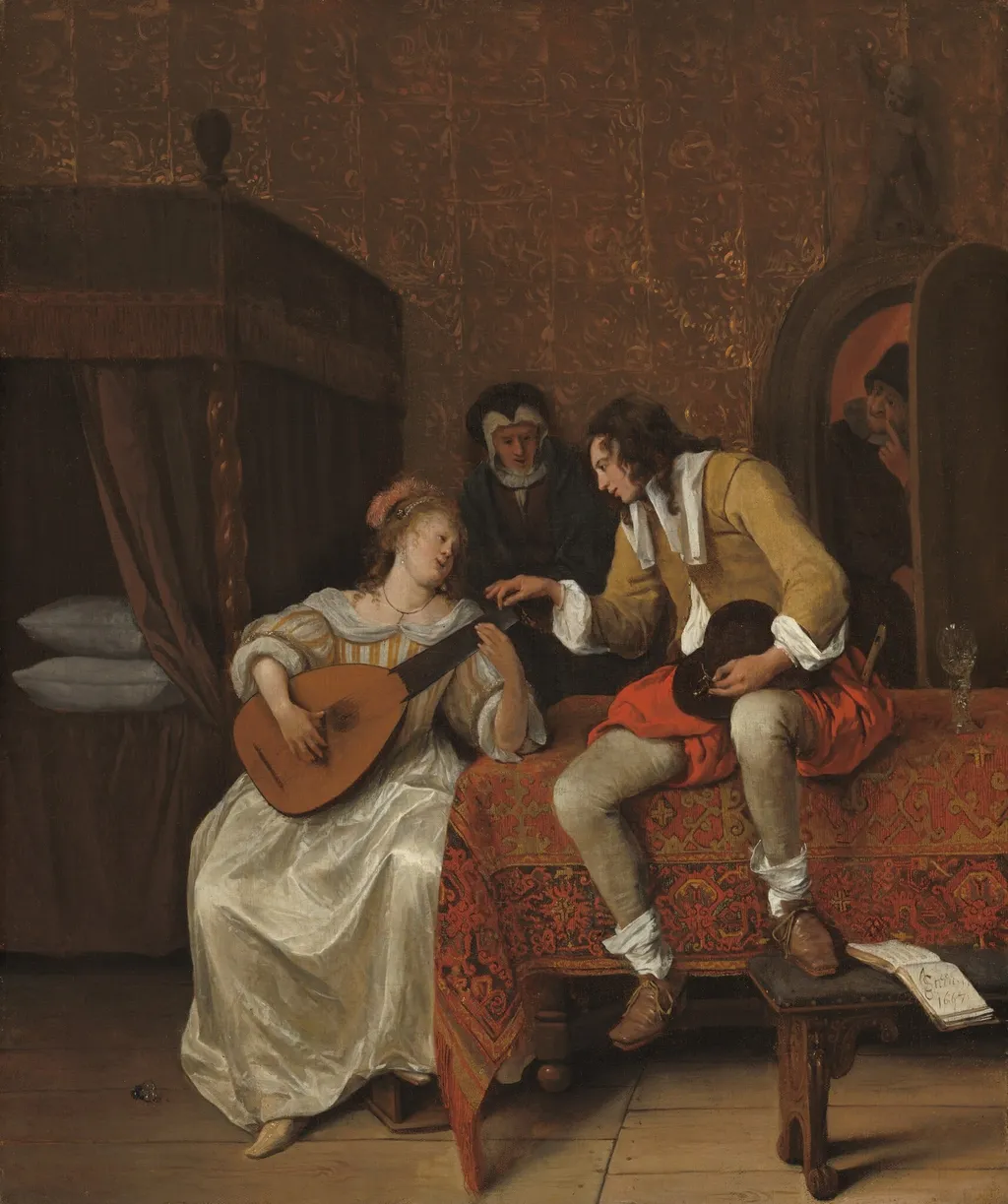
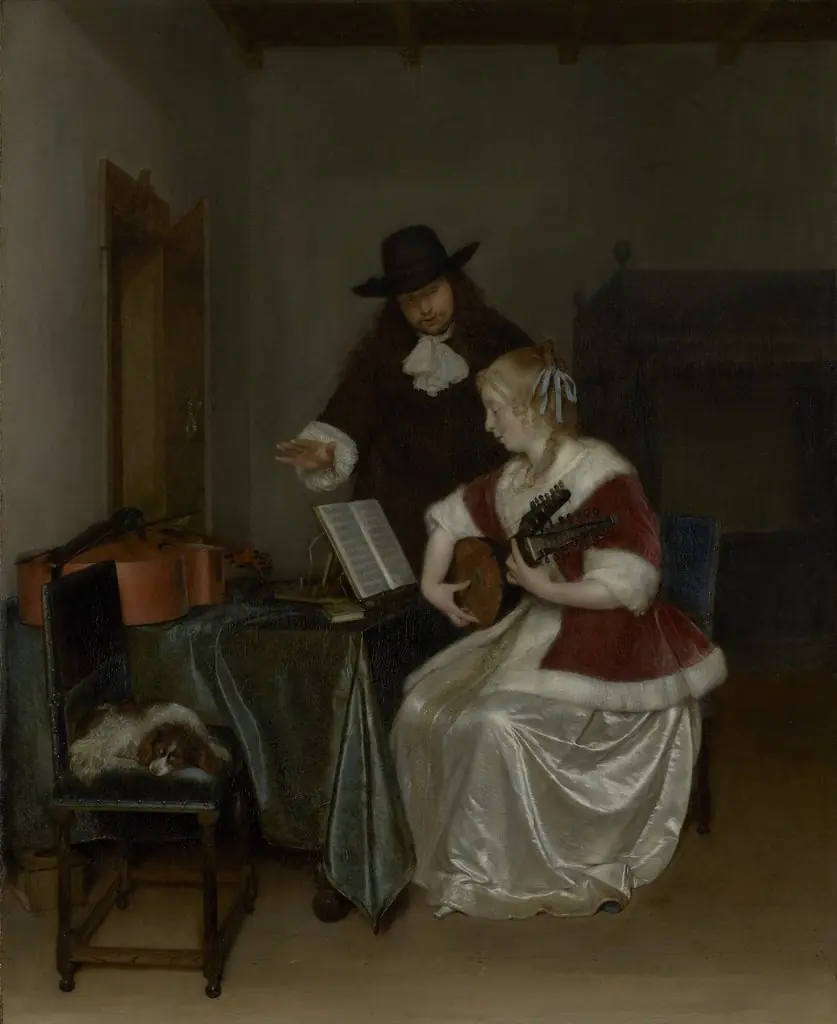
Ascagnes and Lucelle (The Music Lesson) is an oil painting by the Baroque artist Jan Steen. It dates from 1667 and is held in the collection of the National Gallery of Art.
- Inscription
- Inscribed:lower right, on music book, J and S entwined: JSteen / 1667
About this work
Subject & Meaning
The presence of a lute underscores the theme of musical instruction and may symbolize harmony or courtship within a domestic setting.
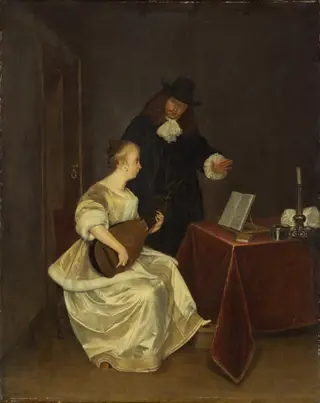
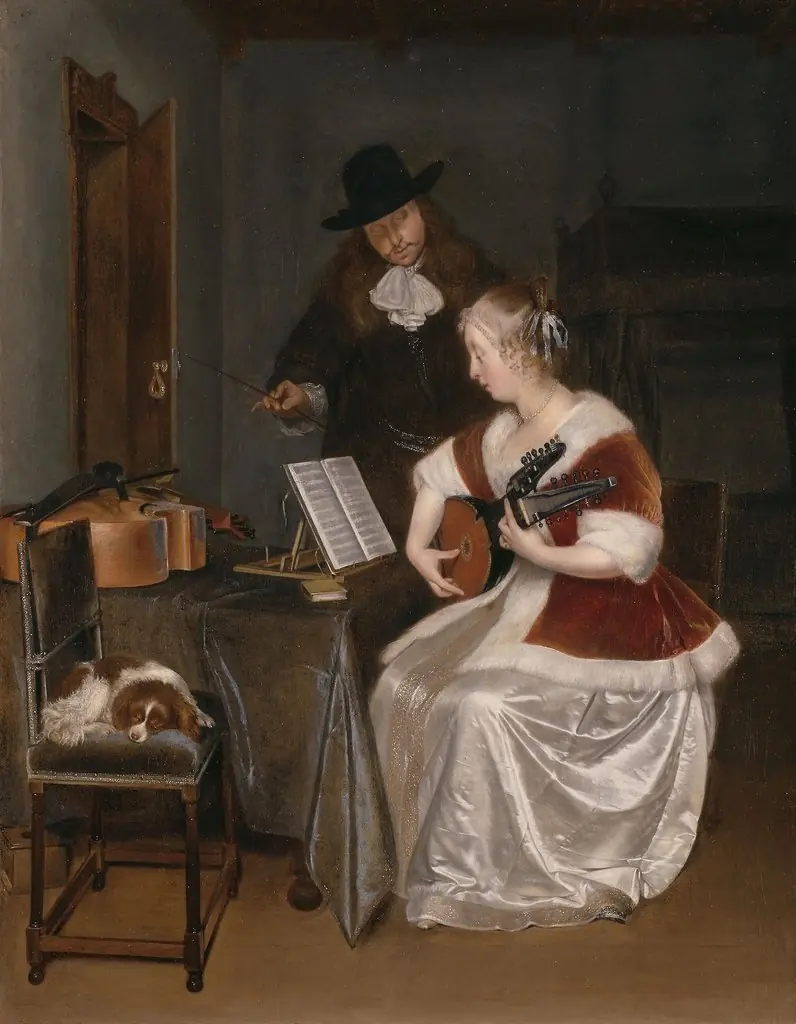
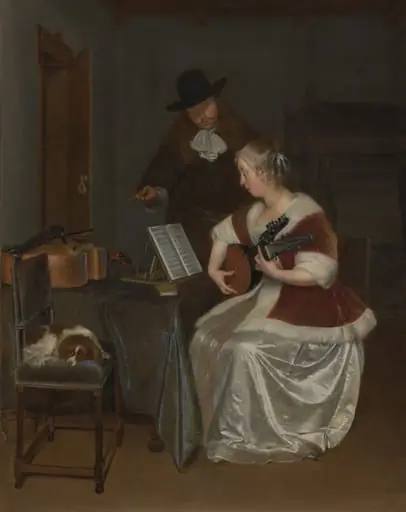
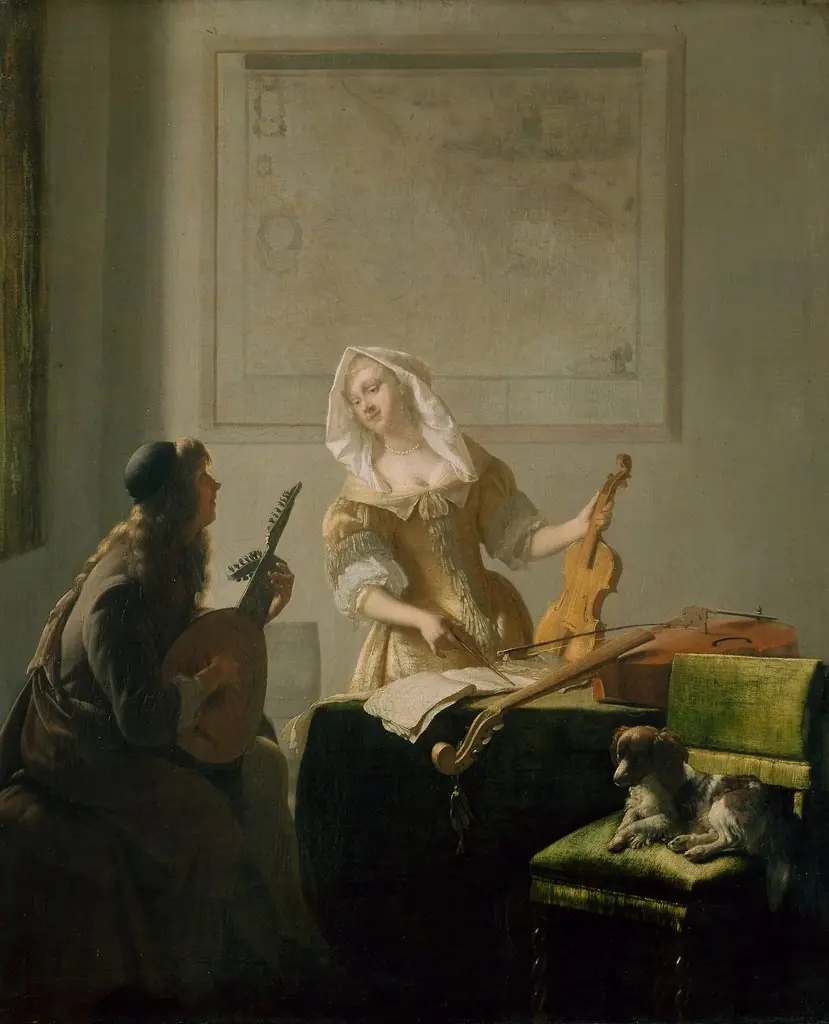
The painting shows a man and woman engaged in a music lesson, a scene drawn from the Dutch play "Lucelle" and the prose work of Bredero, as noted in the cataloguing data. The presence of a lute underscores the theme of musical instruction and may symbolize harmony or courtship within a domestic setting. By referencing specific literary sources, the work conveys a moral‑didactic message about refined leisure and the social rituals of the Dutch middle class in the seventeenth century.
The iconography thus blends everyday genre scene with literary allusion, suggesting that music serves both as entertainment and as a vehicle for virtuous discourse.
Technique & Style
Ascagnes and Lucelle (The Music Lesson) is executed in oil on canvas, a standard support for Jan Steen's genre scenes of this period. The painting measures 63 by 53.7 centimeters, a modest vertical format suited to an intimate domestic interior. Steen's handling reflects the comic narrative tradition associated with his work, organizing the figures and the lute at the center of the composition to convey the literary source drawn from Bredero's Lucelle.
The genre classification and the depiction of a man, a woman, and a lute align with the painter's characteristic approach to staging moralizing amusement scenes. The work is held in the National Gallery of Art collection, having entered the Corcoran Gallery of Art in 1926 and transferred to the National Gallery of Art in 2014. No specific condition report or detailed technical analysis of the paint layers, ground, or later restorations is documented in the available sources.
History & Provenance
Painted in 1667, Jan Steen’s Ascagnes and Lucelle (The Music Lesson) is dated by internal records to that year. The scene illustrates episodes from Gerbrand Bredero’s 1616 play Lucelle, aligning the work’s creation with the mid-seventeenth-century vogue for literary subjects. The earliest documented owner is Willem Fabricius of Haarlem, whose 1749 sale in Haarlem listed it as lot 26.
By the mid-nineteenth century the canvas belonged to Richard M. Foster at Clewer Manor, passing to his son Edmund and being sold at Foster’s estate in 1876. Samuel Addington acquired it in London in 1886, then it passed to Davis before entering the collection of Sir Julian Goldsmid in 1896. Charles Sedelmeyer in Paris handled the next transfer, after which Baron Michael Ephrussi purchased the work in 1900.
William A. Clark acquired it in New York and bequeathed it to the Corcoran Gallery of Art in 1926; it entered the National Gallery of Art, Washington, in 2014.
Jan Steen's Ascagnes and Lucelle (The Music Lesson) is currently held by the National Gallery of Art in Washington, D.C., where it was acquired in 2014. Prior to this transfer, the painting was bequeathed in 1926 to the Corcoran Gallery of Art, also in Washington, following the death of its owner, William A. Clark. The work's documented exhibition and sales history includes appearances at Christie, Manson & Woods in London in 1876, 1886, and 1896, where it was variously cataloged as The Guitar Lesson.
Earlier provenance links the painting to the Foster family at Clewer Manor near Windsor and Baron Michael Ephrussi in Paris, who purchased it in 1900. The National Gallery of Art lists the work in its collection with dimensions of 63 by 53.7 centimeters.
Context
Jan Steen's 1667 oil on canvas, Ascagnes and Lucelle (The Music Lesson), exemplifies his mastery of the Dutch genre scene by intertwining everyday domestic activity with literary allusion. The painting references Bredero’s and Lucelle’s pastoral verses, using a lute and a man‑woman pair to signal a moralizing music lesson. Contemporary 19th‑century sale catalogues recorded the work under the title "The Guitar Lesson," reflecting shifting attributions that later scholarship clarified.
Art historian Mariët Westermann highlighted the piece as a key example of Steen’s blend of comic realism and literary nuance, situating it within his broader output of festive yet didactic compositions. Since its acquisition by the National Gallery of Art, the painting has been studied as a testament to Steen’s influence on later genre painters and as a window into 17th‑century Dutch cultural symbolism.
Legacy
The 1667 painting Ascagnes and Lucelle (The Music Lesson) by Jan Steen became a touchstone for studies of Dutch genre scenes that reference literature. After passing through the Foster family, it was sold at Christie’s in 1876 as The Guitar Lesson and later entered the holdings of Charles Sedelmeyer before William A. Clark acquired it in 1900; the work was bequeathed to the Corcoran Gallery of Art in 1926 and transferred to the National Gallery of Art in 2014. Its inclusion in the National Gallery’s collection underscores a lasting reputation as a representative example of Steen’s comic narrative and its interplay with contemporary literary motifs.
Overview
Ascagnes and Lucelle (The Music Lesson) is an oil on canvas painting that captures a private moment between two individuals engaged in musical instruction. This work offers a window into the social customs and leisure activities prevalent during the 17th century, depicting an intimate interaction centered around shared cultural pursuits within a domestic setting.
Own this work as a print
Artist & collection

Artist
Jan Steen painted one lively scene: a village fair where everyone’s let loose. In The Dancing Couple you see a room packed with noisy drinkers, kids peeking between legs, and a fiddler sawing away in the corner, all lit…