Artwork
Saint Euphrosyne
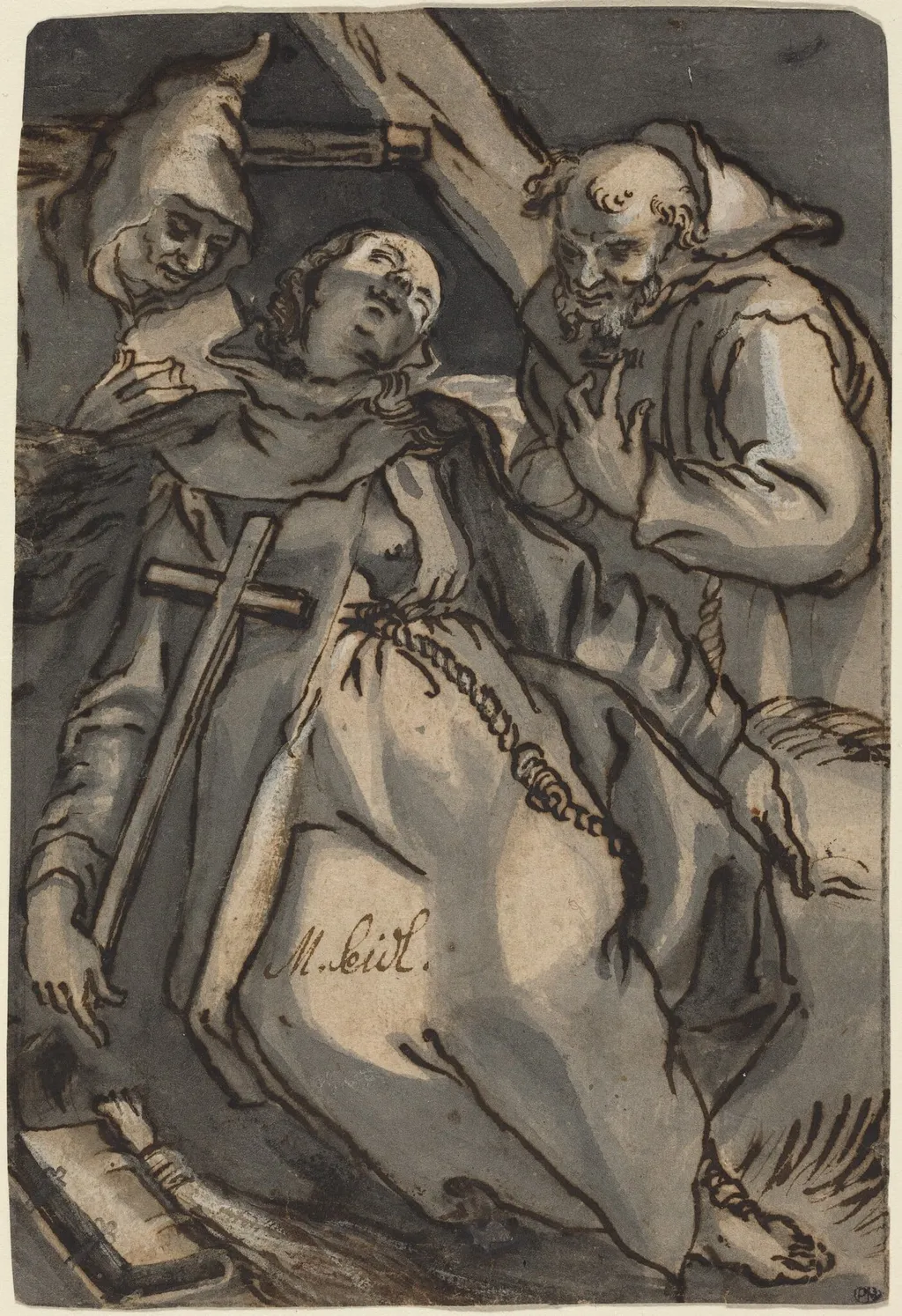
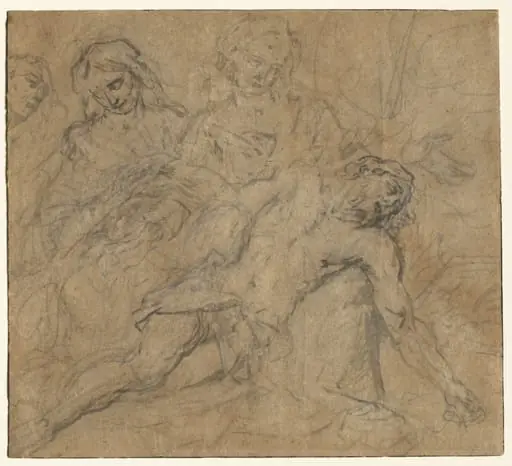
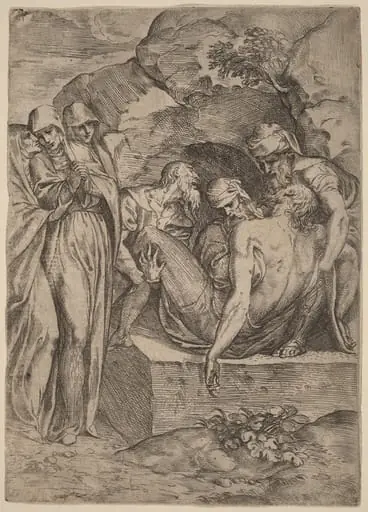
Saint Euphrosyne is an ink drawing by the Baroque artist Melchior Steidl. It dates from 1695 and is held in the collection of the National Gallery of Art.
- Inscription
- Inscribed:lower center in pen and brown ink: M. Seidl
About this work
Overview
A delicate drawing in pen and brown ink, augmented with gray wash and graphite, depicts Saint Euphrosyne. White highlights accentuate key details, suggesting a devotional purpose. Executed on laid paper, the work reflects the refined draftsmanship typical of late 17th-century Austrian religious art, though its exact commission and original context remain undocumented.
Subject & Meaning
The figure represents Saint Euphrosyne, a 5th-century ascetic who disguised herself as a monk to pursue a life of solitude and prayer. The drawing emphasizes her humility and spiritual resolve, rendered through modest attire and a contemplative posture. Her identity is conveyed not through grandeur but through quiet devotion, aligning with monastic ideals of self-effacement.
Technique & Style
The artist employed fine pen lines to define form, layered with subtle gray washes to model volume and shadow. Graphite underdrawing guides the composition, while touches of white pigment lift facial features and fabric folds. The restrained palette and linear precision reflect a tradition of monastic illustration, prioritizing clarity and spiritual focus over ornamental flourish.
History & Provenance
The drawing is attributed to Melchior Steidl, an Austrian artist active around 1695, though no definitive record of its original patron or location survives. It likely originated in a religious institution or private devotional collection. Its survival suggests it was valued as a study or object of personal piety, rather than a public altarpiece.
Context
In late 17th-century Central Europe, drawings like this served as preparatory studies or devotional aids within monastic communities. The emphasis on solitary female saints reflected Counter-Reformation interests in personal piety and ascetic models. Steidl’s work aligns with regional traditions that favored intimate, hand-held images over monumental altarpieces.
Legacy
The drawing endures as an example of modest yet precise religious draftsmanship from a period when printed devotional imagery was becoming widespread. Its survival offers insight into the continued role of hand-drawn images in private worship, preserving a quiet counterpoint to the grandeur of Baroque public art.
Own this work as a print
Artist & collection