Artwork
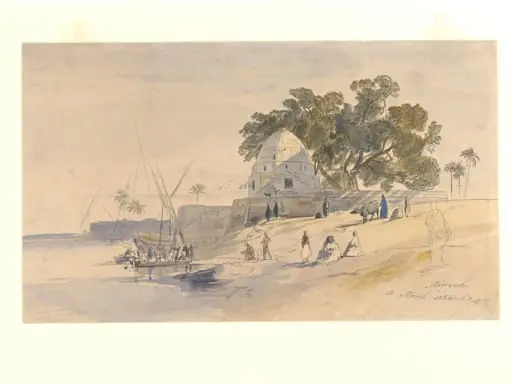
Mosque at Bahrain of Persian origin
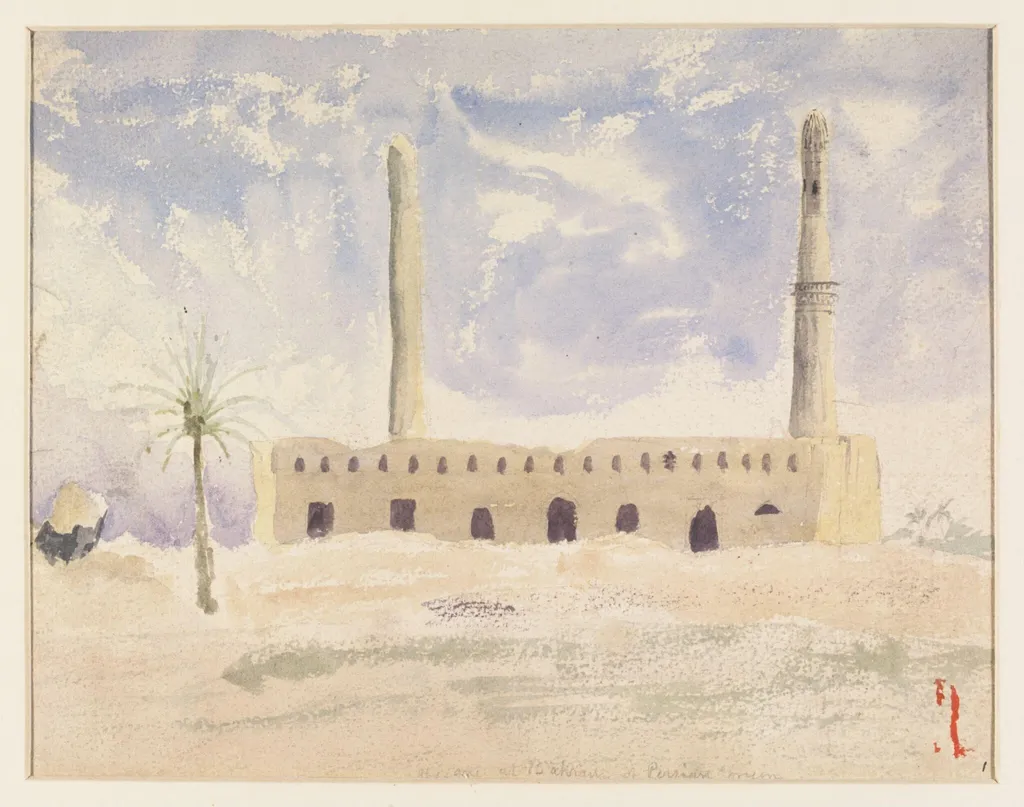
Mosque at Bahrain of Persian origin is a watercolor work on paper by the Impressionist artist Arthur William Stiffe. It dates from 1864 and is held in the collection of the Victoria and Albert Museum.
About this work
Overview
Executed with loose brushwork and restrained tones, the work reflects the artist’s interest in documenting architectural forms encountered during his travels.
Created around 1864 by Arthur William Stiffe, this watercolor depicts a modest mosque in Bahrain, rendered in a spontaneous, observational style. Executed with loose brushwork and restrained tones, the work reflects the artist’s interest in documenting architectural forms encountered during his travels. It is part of the Victoria and Albert Museum’s collection, where it serves as a quiet record of 19th-century visual encounters in the Gulf region.
Subject & Meaning
The painting presents a low, square structure with arched windows and two slender minarets, standing alone in a barren landscape. A single palm tree beside it suggests the presence of life amid aridity. The scene conveys stillness rather than grandeur, emphasizing the mosque’s integration into its environment. It reflects a contemplative approach to religious architecture, avoiding ornamentation in favor of atmospheric presence.
Technique & Style
Stiffe employed watercolor with a light, sketch-like hand, using diluted pigments to suggest form rather than define it. The muted palette, soft blues, pale ochres, and greys, enhances the sense of heat and solitude. Brushstrokes are fluid and unrefined, capturing the immediacy of observation.
The composition avoids detail, favoring a sense of place over architectural precision, aligning with travel sketch traditions of the period.
History & Provenance
The work entered the Victoria and Albert Museum’s collection as part of its broader effort to document global design and visual culture in the 19th century. While little is known of Stiffe’s journey to Bahrain, the painting likely originated from his time in the Persian Gulf region. Its preservation suggests it was valued as an ethnographic record, though not as a finished artistic statement.
Context
In the mid-1800s, British travelers and officials increasingly documented sites across the Middle East and South Asia. Stiffe’s watercolor fits within this trend, reflecting a Western gaze focused on architectural simplicity and environmental harmony. Unlike grander imperial commissions, this work avoids spectacle, offering instead a subdued, personal response to a remote religious structure.
Legacy
The painting endures as a modest but authentic example of 19th-century travel watercolor. It contributes to the historical record of Bahrain’s architectural landscape before modernization. While not widely exhibited, its presence in the V&A underscores the value placed on unembellished visual documentation from the period, offering insight into how distant places were perceived through intimate, firsthand observation.
Own this work as a print
Artist & collection
Artist
Arthur Stiffe painted watercolors of architecture in the 1800s, often focusing on distant places.

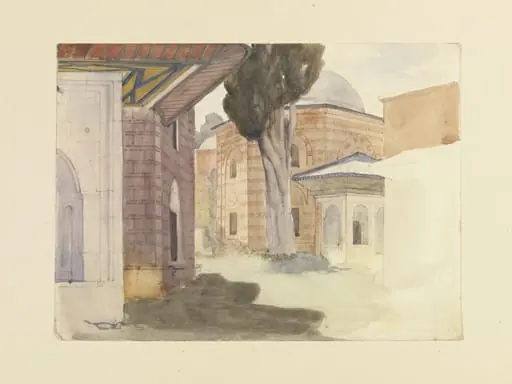 Türbes in the Royal Cemetery of the Muradiye (Murad II), Bursa
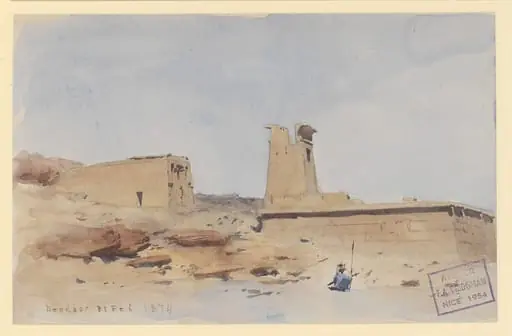 The Temple of Dendur, Showing the Pylon and Terrace
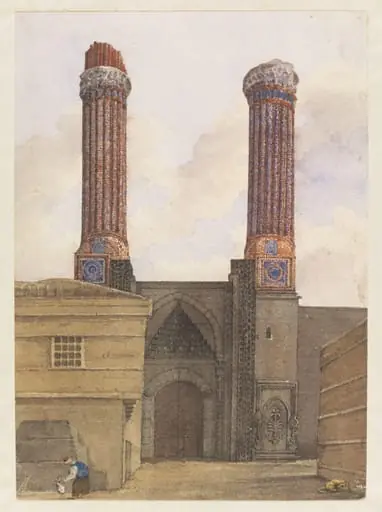 At Erzeroom The 2 Minarets iki minar
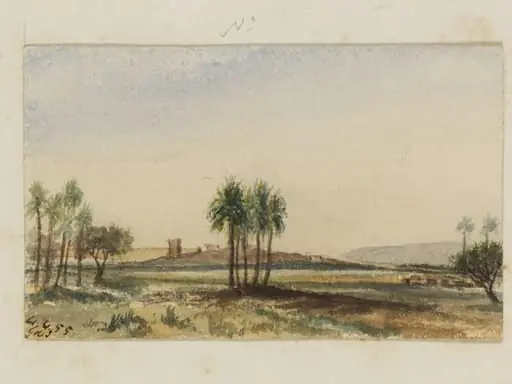 `Temple of Denderah. Distant view from bank of River. Upper Egypt'
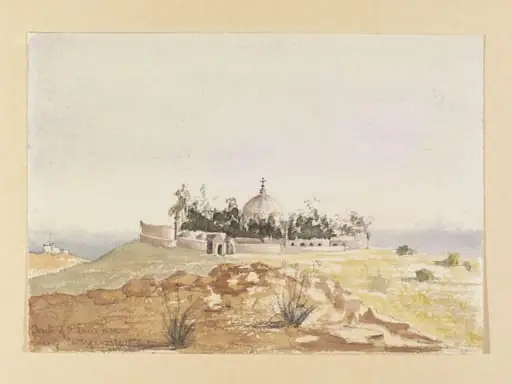 Tomb of St. Louis on the ruins of Carthage
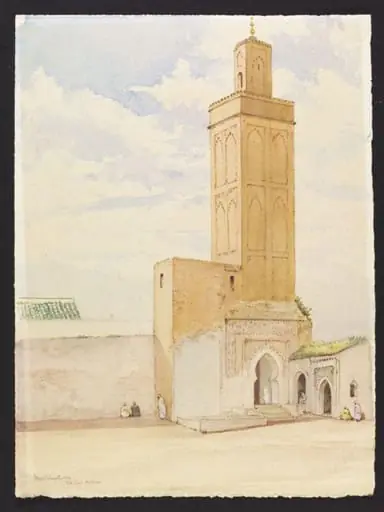 Mosque of Sidi Said bou Othman, Meknes
 Untitled
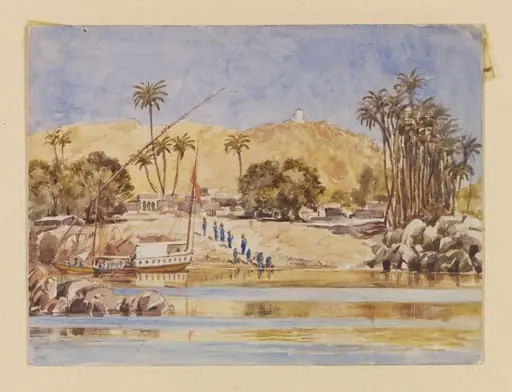 View on the Nile, opposite Aswan
 Minyeh, Egypt