Artwork
The Farm Yard
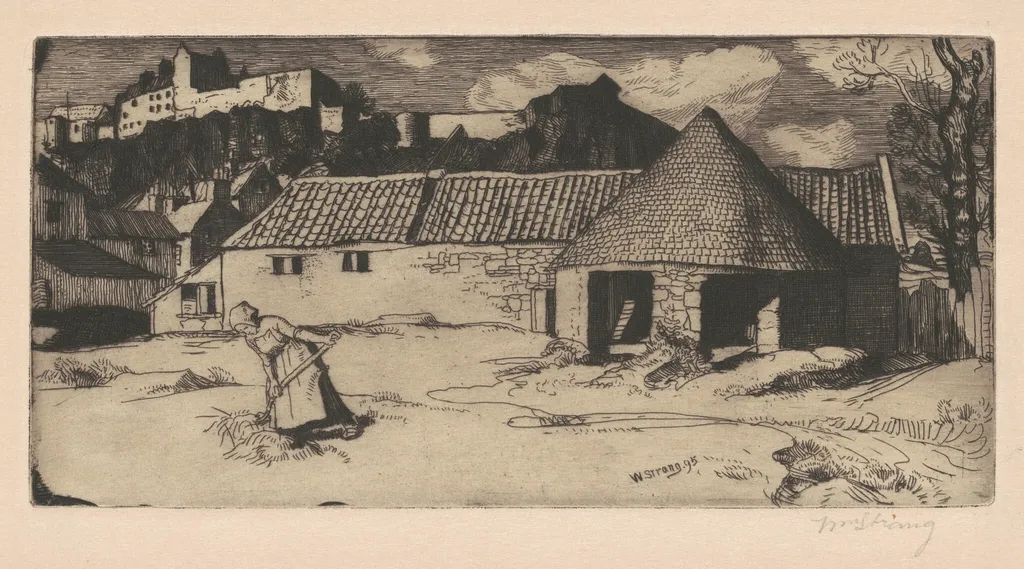
The Farm Yard is an ink print by the Impressionist artist William Strang. It dates from 1895 and is held in the collection of the National Gallery of Art.
- Inscription
- Inscribed:lower right in plate: W. Strang. 95; lower right in graphite: Wm Strang
About this work
The artist used lines and shading to show light and texture, notice how the hay looks almost three-dimensional.
This black-and-white print shows a quiet farm scene. A person is sweeping hay in a dirt yard, while two old stone buildings sit nearby. One has a peaked roof made of wooden shingles, and the other looks like a barn. In the background, a village with simple houses and a church tower sits against rolling hills.
The artist used lines and shading to show light and texture, notice how the hay looks almost three-dimensional. This was made in 1895, long before color printing.
Next, check out the technique: etching to see how artists like this carved images into metal plates.
Overview
The Farm Yard is a 1895 print by William Strang, a Scottish painter and printmaker, executed in etching with printed tone on laid paper.
Subject & Meaning
The print depicts a serene rural scene: a figure sweeps hay in a dirt yard surrounded by old stone buildings, with a village and rolling hills in the background. The composition conveys a sense of quiet, everyday life.
Technique & Style
Strang employed etching and printed tone to capture the textures and lighting of the scene, creating a detailed and nuanced representation of the farm yard. The use of black and white emphasizes the play of light and shadow.
History & Provenance
The Farm Yard is part of the National Gallery of Art's collection in Washington. Created in 1895, it reflects Strang's skill as an illustrator, honed through his work with literary figures like Bunyan and Kipling.
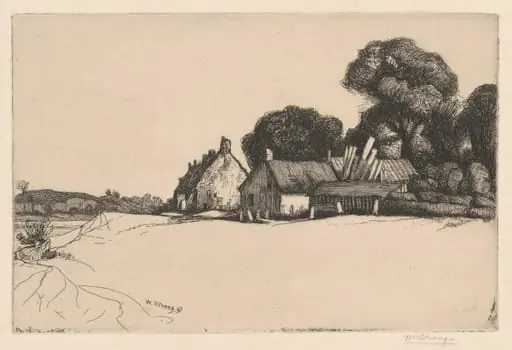
Artist & collection
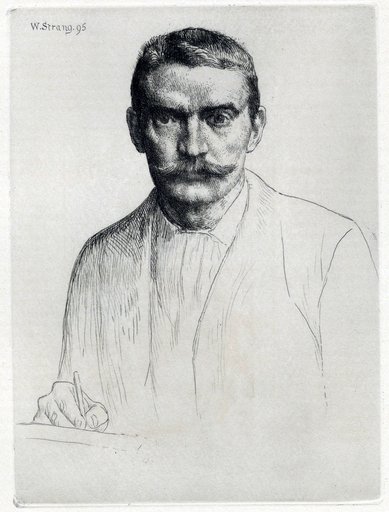
Artist
William Strang was a Scottish painter and printmaker, notable for illustrating the works of Bunyan, Cervantes, Coleridge, Kipling, and others.

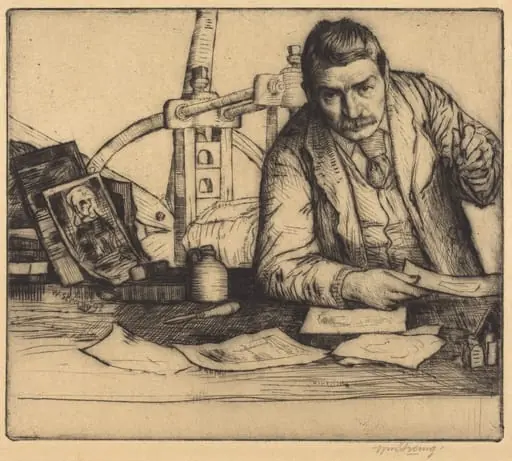
- Kilcreggan
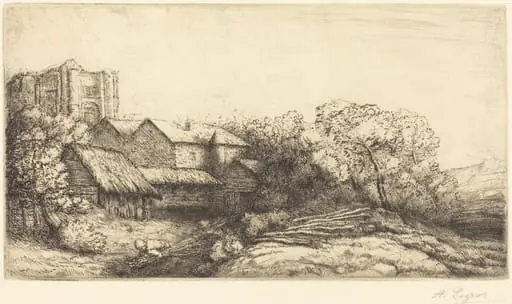 Farm at the Monastery (La ferme de l'abbaye)
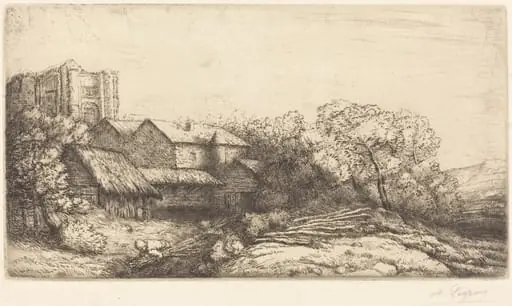 Farm at the Monastery (La ferme de l'abbaye)
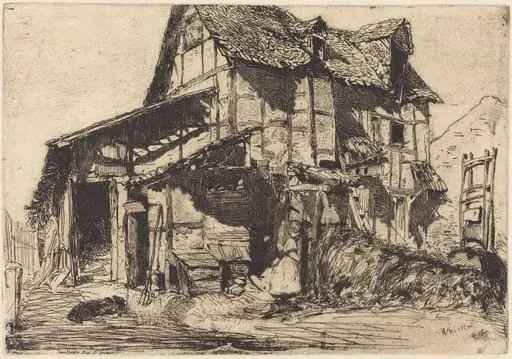 The Unsafe Tenement
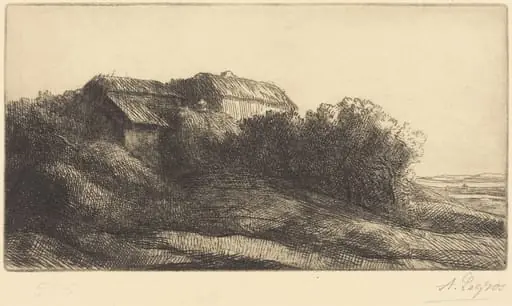 Cottage on a Hillside (Chaumiere sur le coteau)
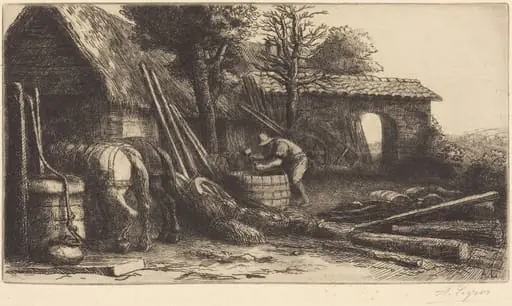 The Cooper (Le tonnelier)
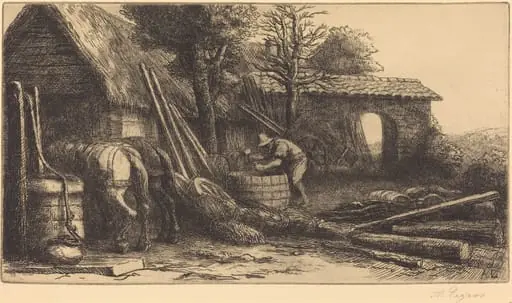 The Cooper (Le tonnelier)
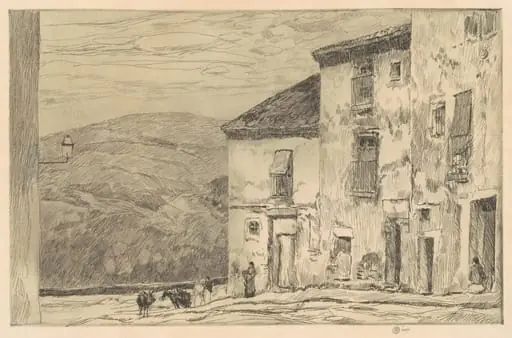 Toledo
 Shelter for the Poor, Vendee (Le nid de pauvres, Vendee)
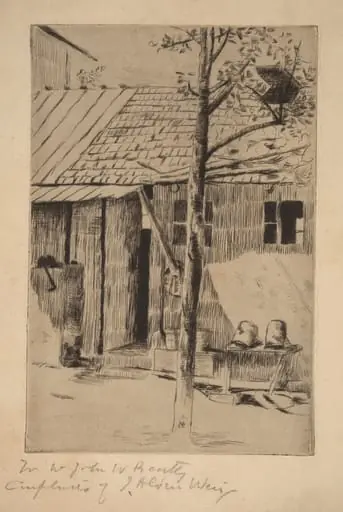 Dooryard, Buckets and Tree
 The Unsafe Tenement
 A Devonshire Village